Banff National Park
I can’t believe it’s been two years since everything changed. Losing Michael after a long illness. Having my second-career job outsourced. Becoming an empty nester. All within a few months. I know now that God did not want me to sit around and feel sorry for myself. I needed to get out and see the country. Michael always wanted to RV around the country, so part of this was to honor him.
In 2025, I covered 14,000 miles. Explored 15 national parks. 31 states. And got to see friends and family I had not seen in a while. Yeah, I think I could get used to this lifestyle.
This year, I decided to explore the West Coast, PNW, and British Columbia. This also included 10 more national parks (plus 3 in Canada), countless amazing waterfalls (a personal favorite), and so many epic, scenic places. Mountains, valleys, rainforests. Giant trees, beautiful flowers. And the nicest people you could ever meet. From all over the world.
I really thought I had seen the most beauty I could possibly see.
And then came … Banff National Park. Oh my Lord, my life is complete. Truly.
Day 1: LAKE LOUISE, MY OH MY
Banff NP has been near the top of my bucket list for a long time. I had planned to stay five nights in the area, and since I like the cold, it was a perfect time of year to come! (Yes, it was only September, but at that latitude, it was more like a Texas winter!) We stayed at a campground inside the park, where temps at night dropped to the 20s! It’s a good thing I learned how to winter camp before I actually had to do it. Electric tank heaters? Check. Fresh water system? Check. Enough propane to run the heater? Check. And can I just say that, while I don’t like to BE cold, I absolutely LOVE the cold. The fresh, crisp air is life-giving. And I sleep like a bear in hibernation, toasty and warm with 3 layers of clothing on plus sometimes even a knit cap. I can’t stand artificial heat, so kept the thermostat at 60 at night. Am I crazy? Maybe. But I do remember that when I was growing up in Maryland, we’d often experience winter nights below freezing. I would push my bed up to the window even at 4-below, crack it open just a bit, and pile on another blanket. That icy cold air blowing across my face was awesome. I’ve missed it. (But at the same time, need to be careful what I wish for, right?!)
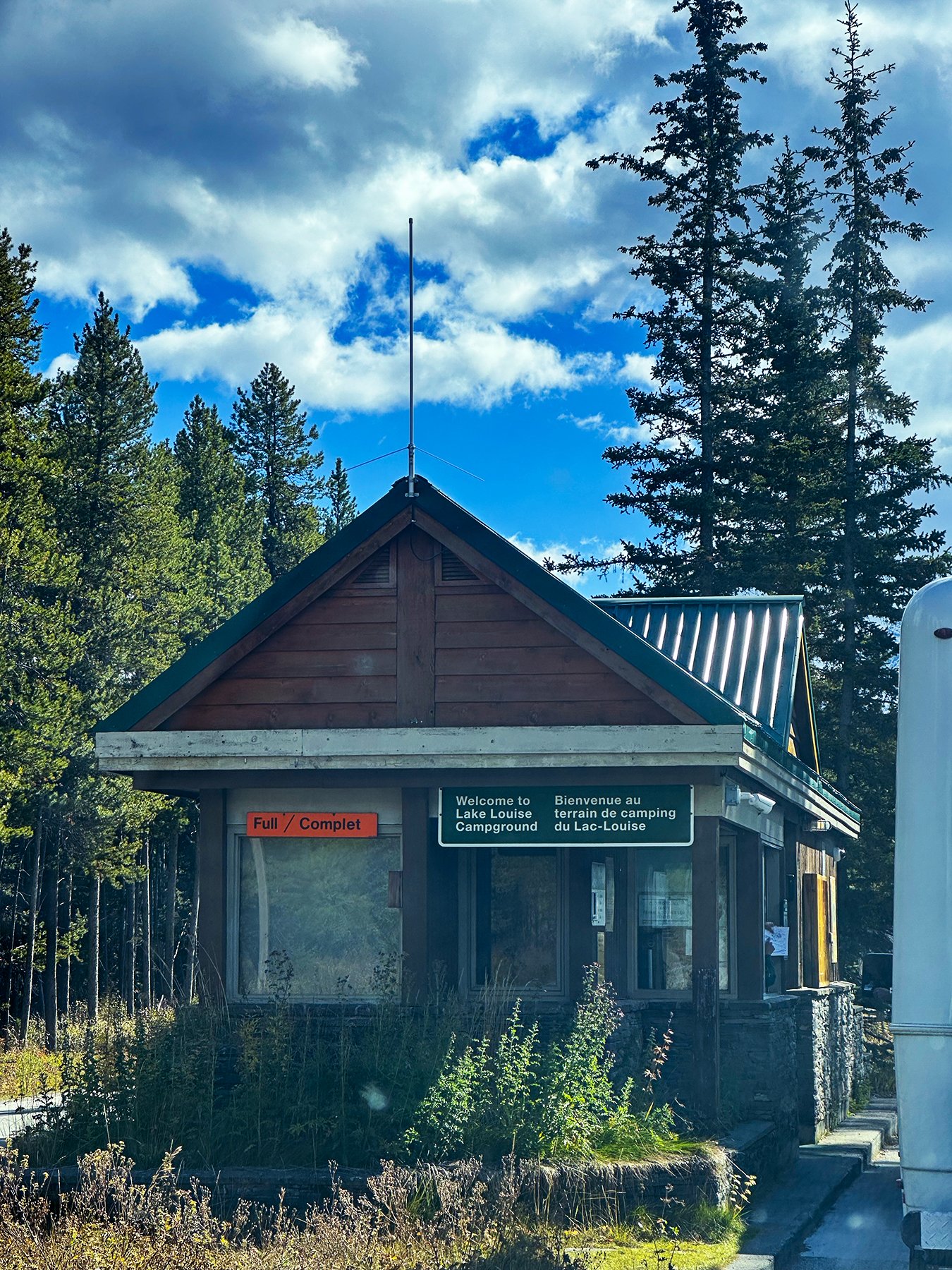
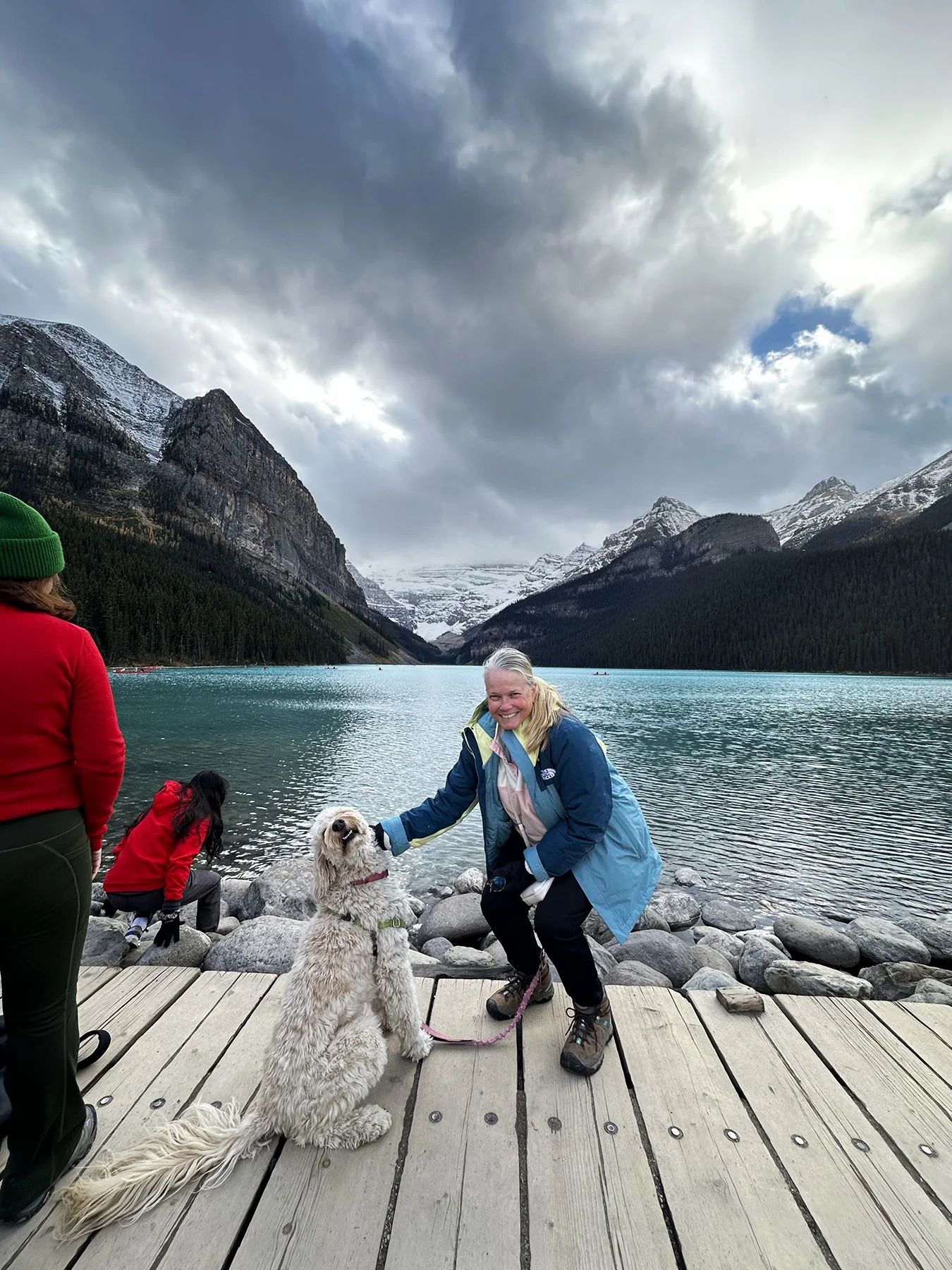
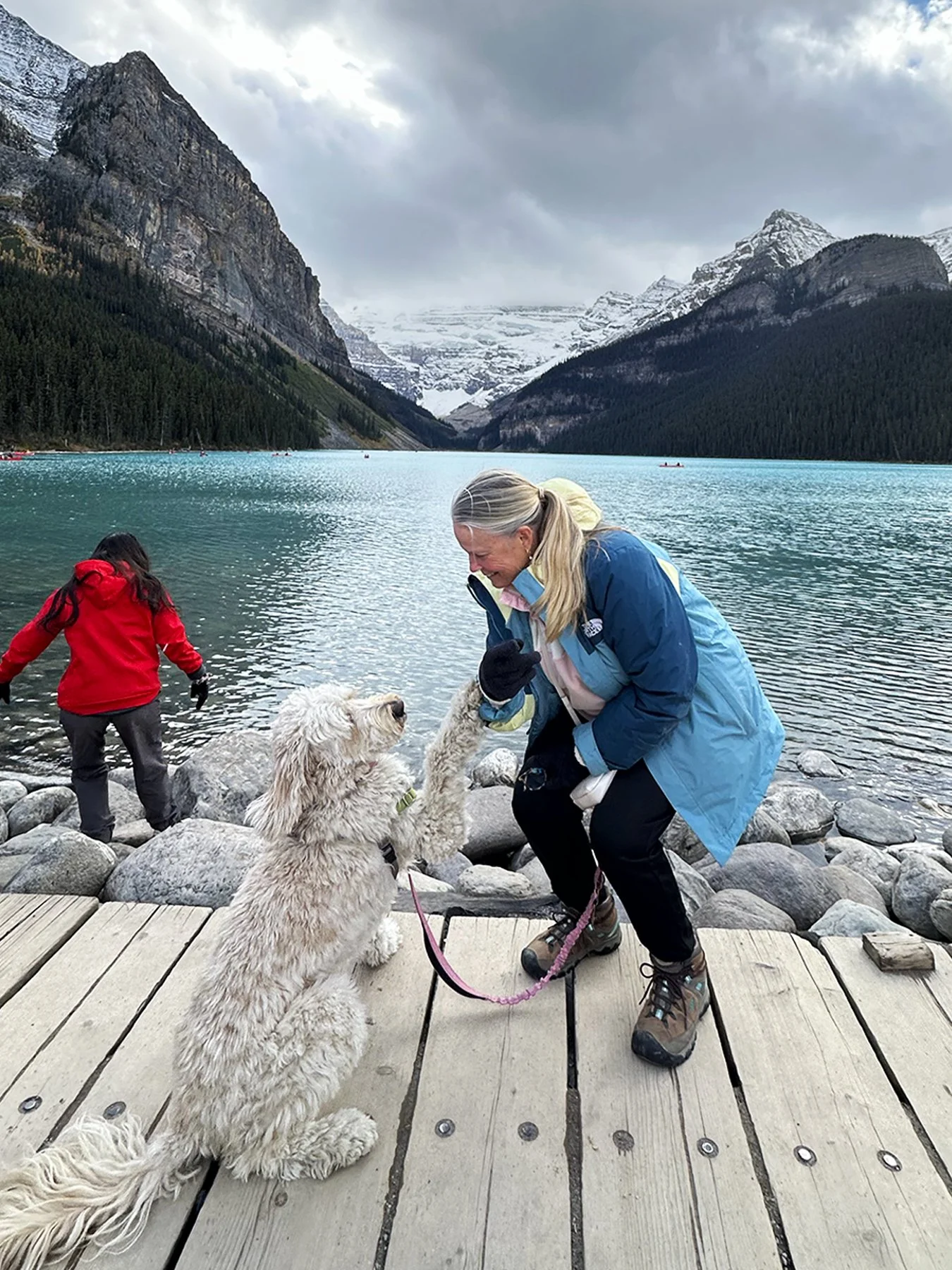
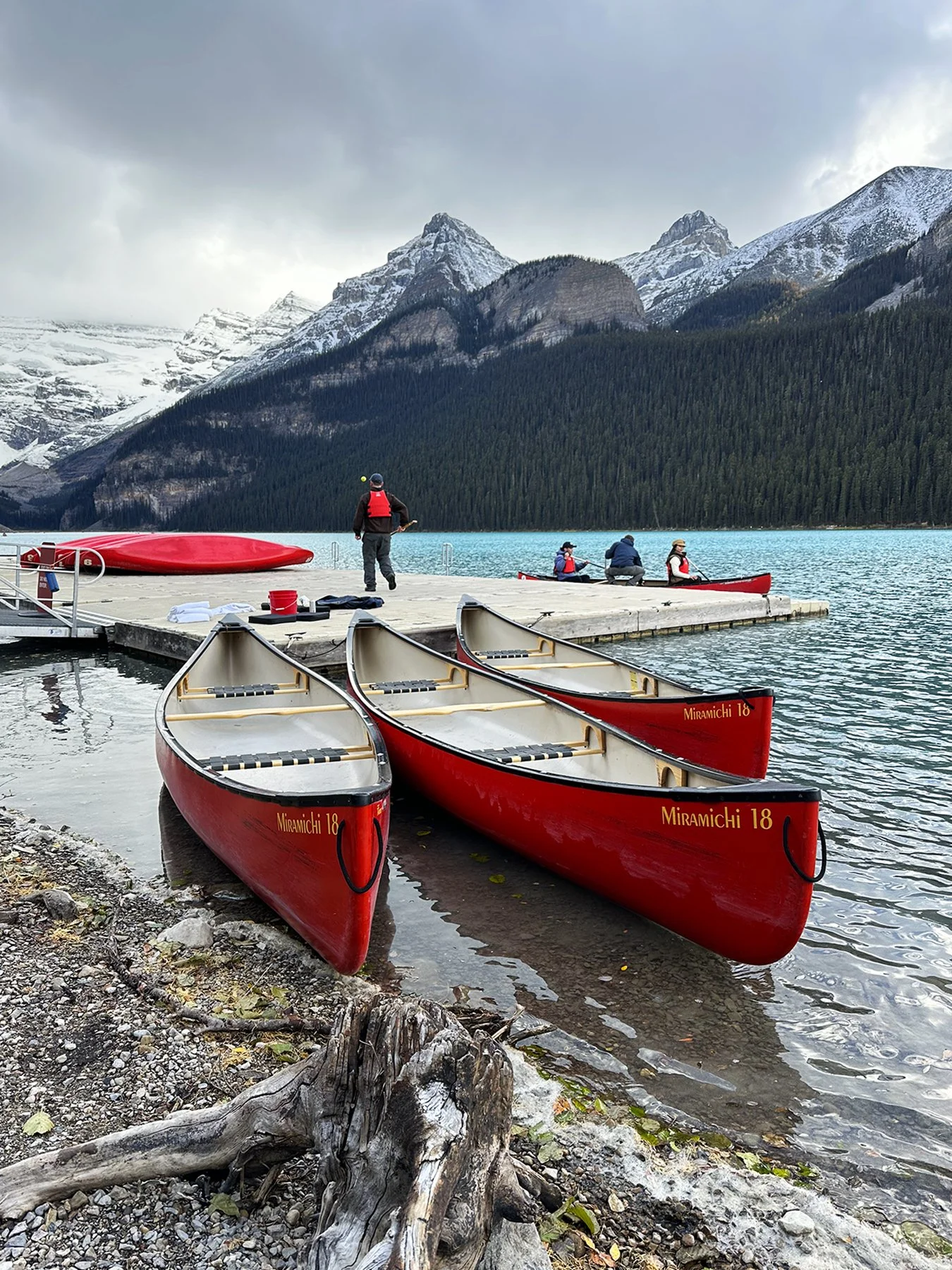
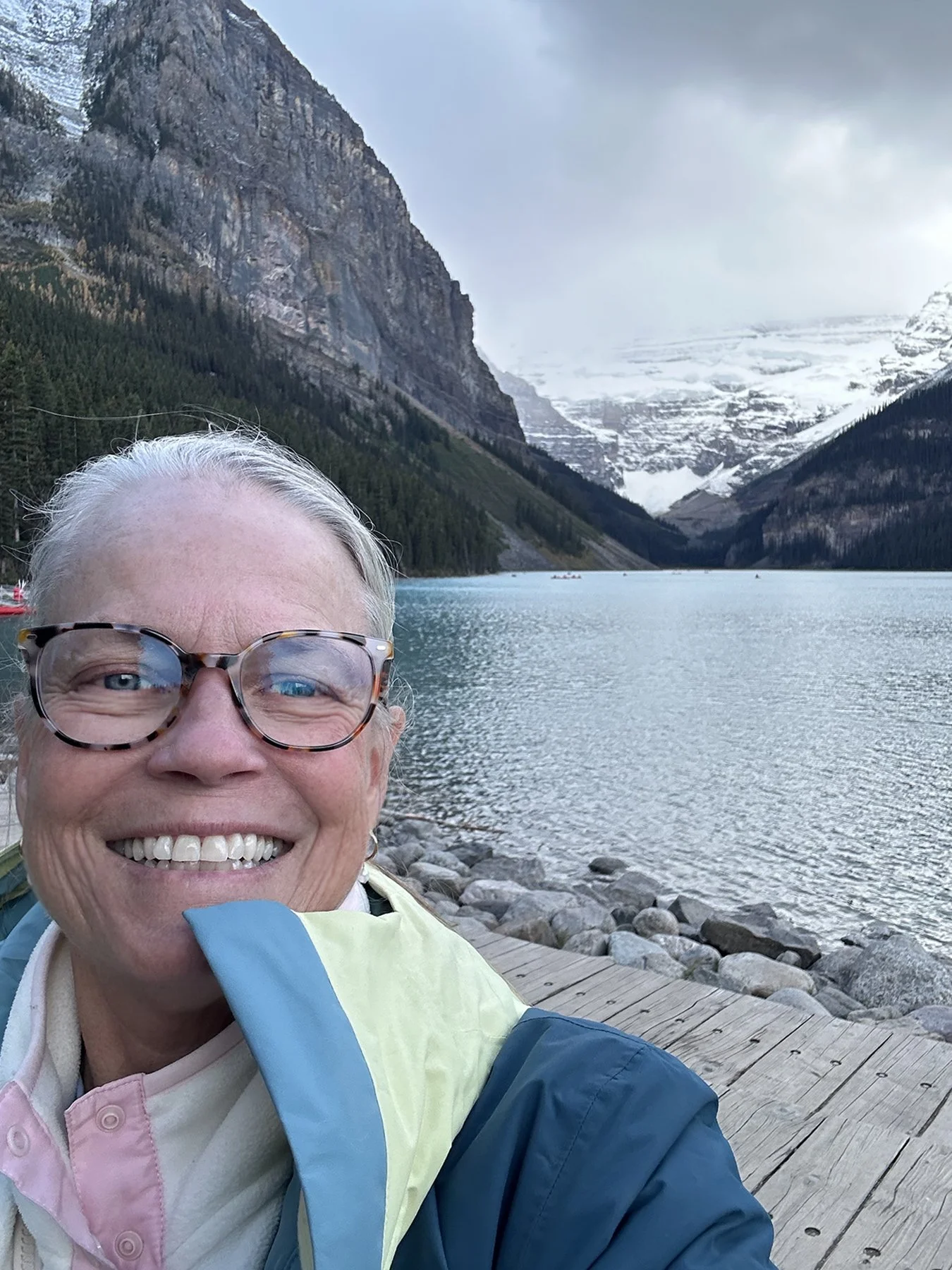
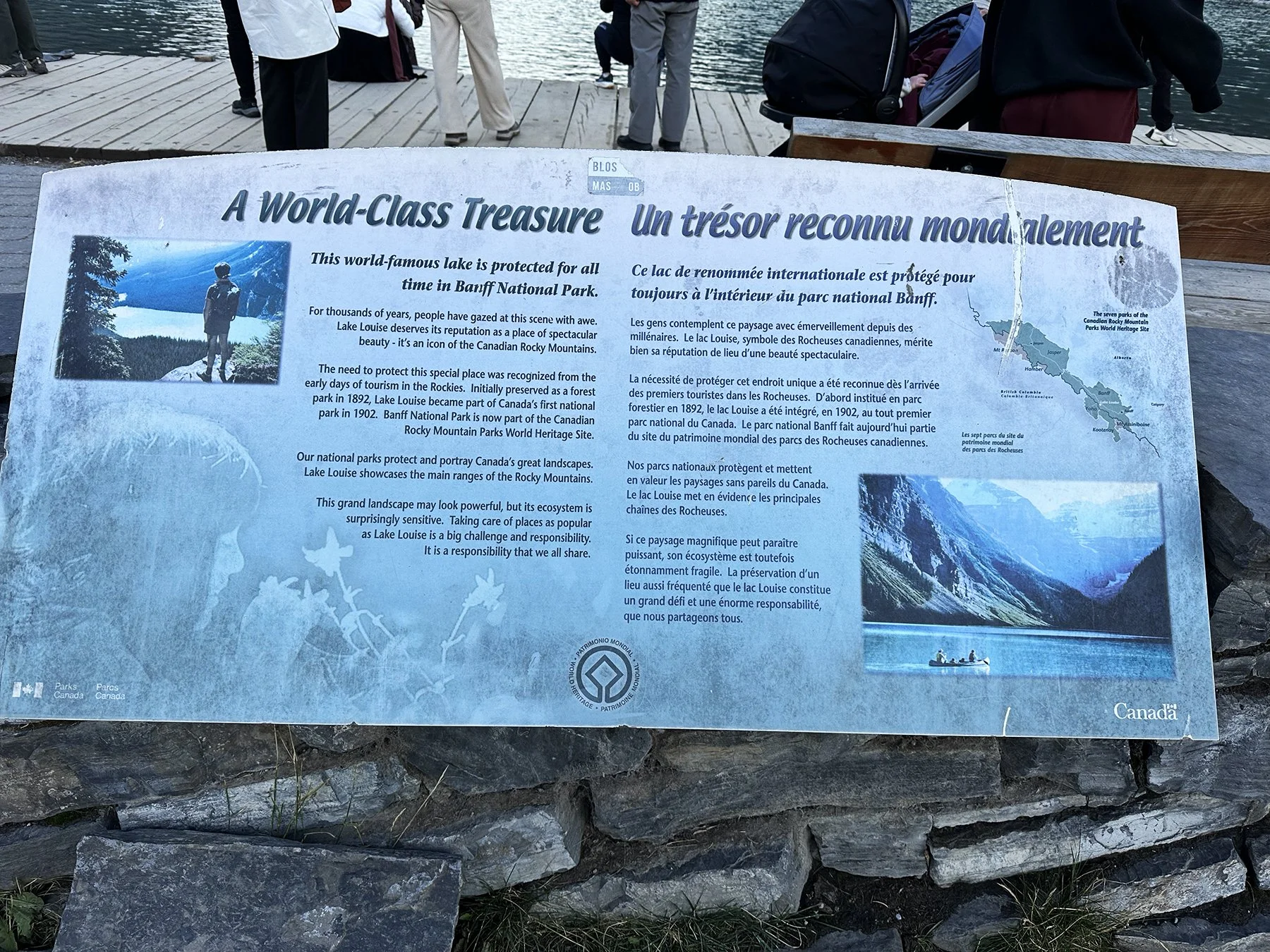
It’s normally quite the challenge to get to the famous Lake Louise; the lots tend to fill up before sunrise! We set up camp mid-afternoon, and I thought perhaps people were now leaving those coveted spots. So we headed up to the lake, just a few miles from the campground, and were thrilled to see a few open spots.
Y’ALL.
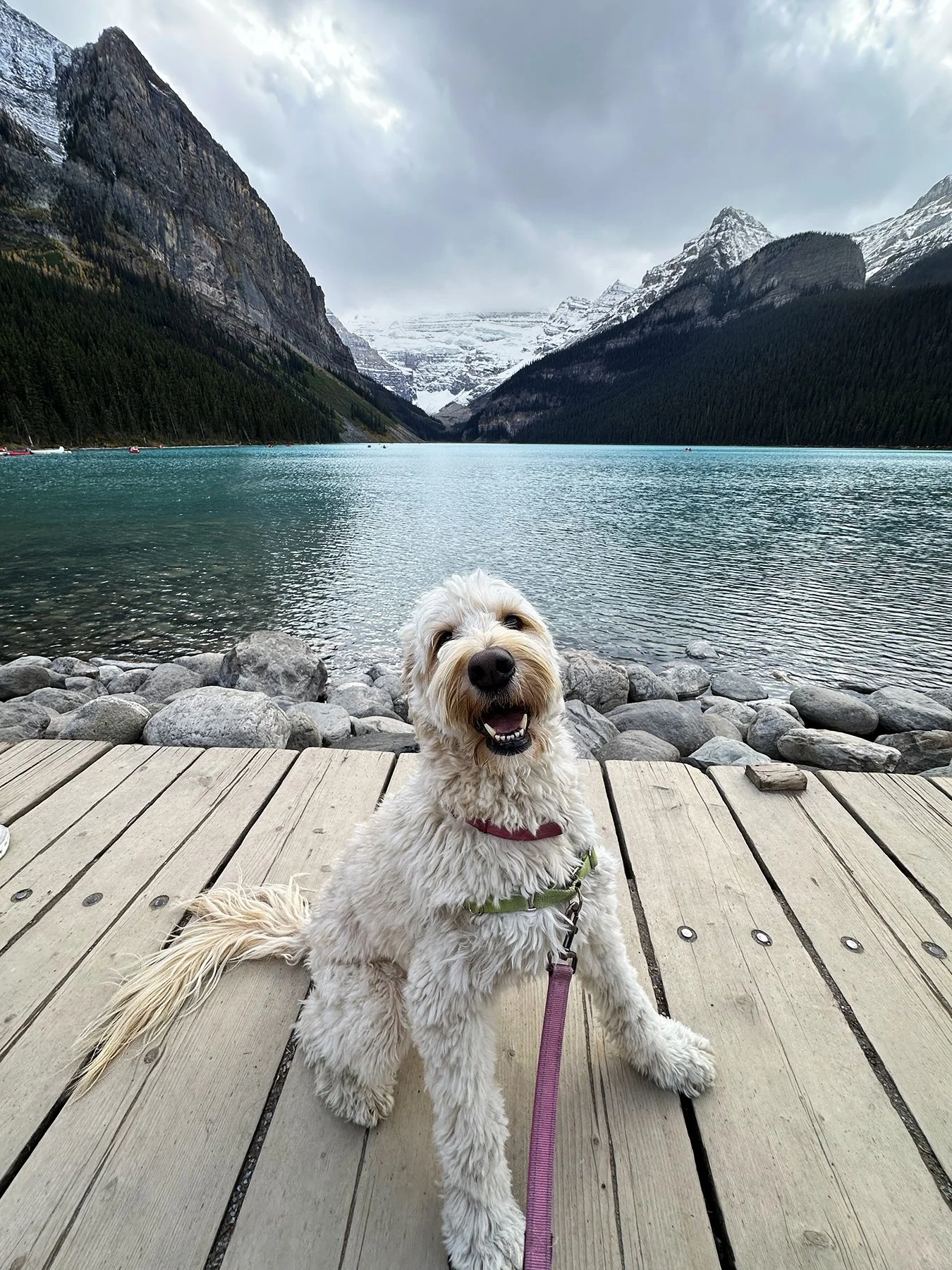
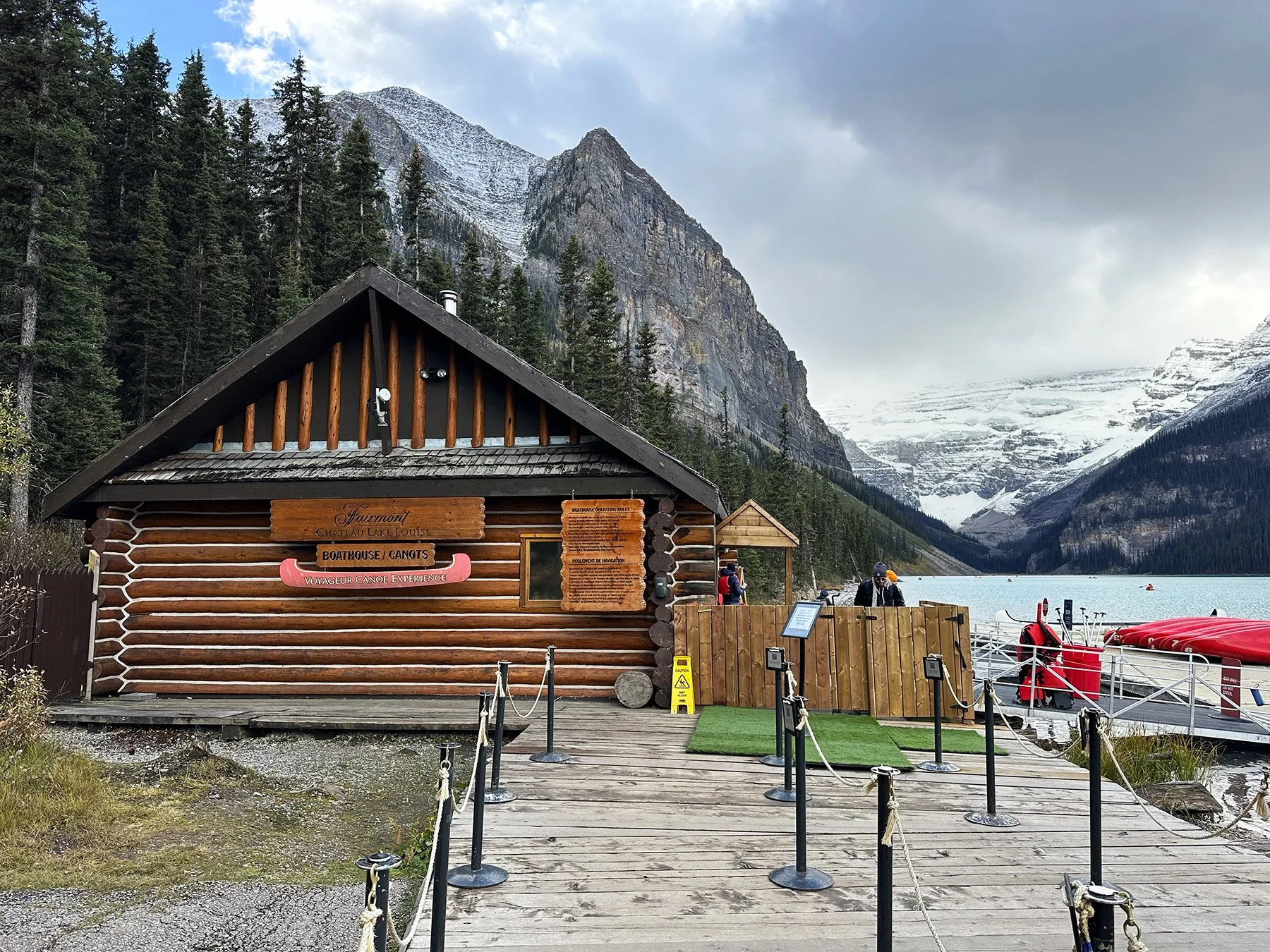
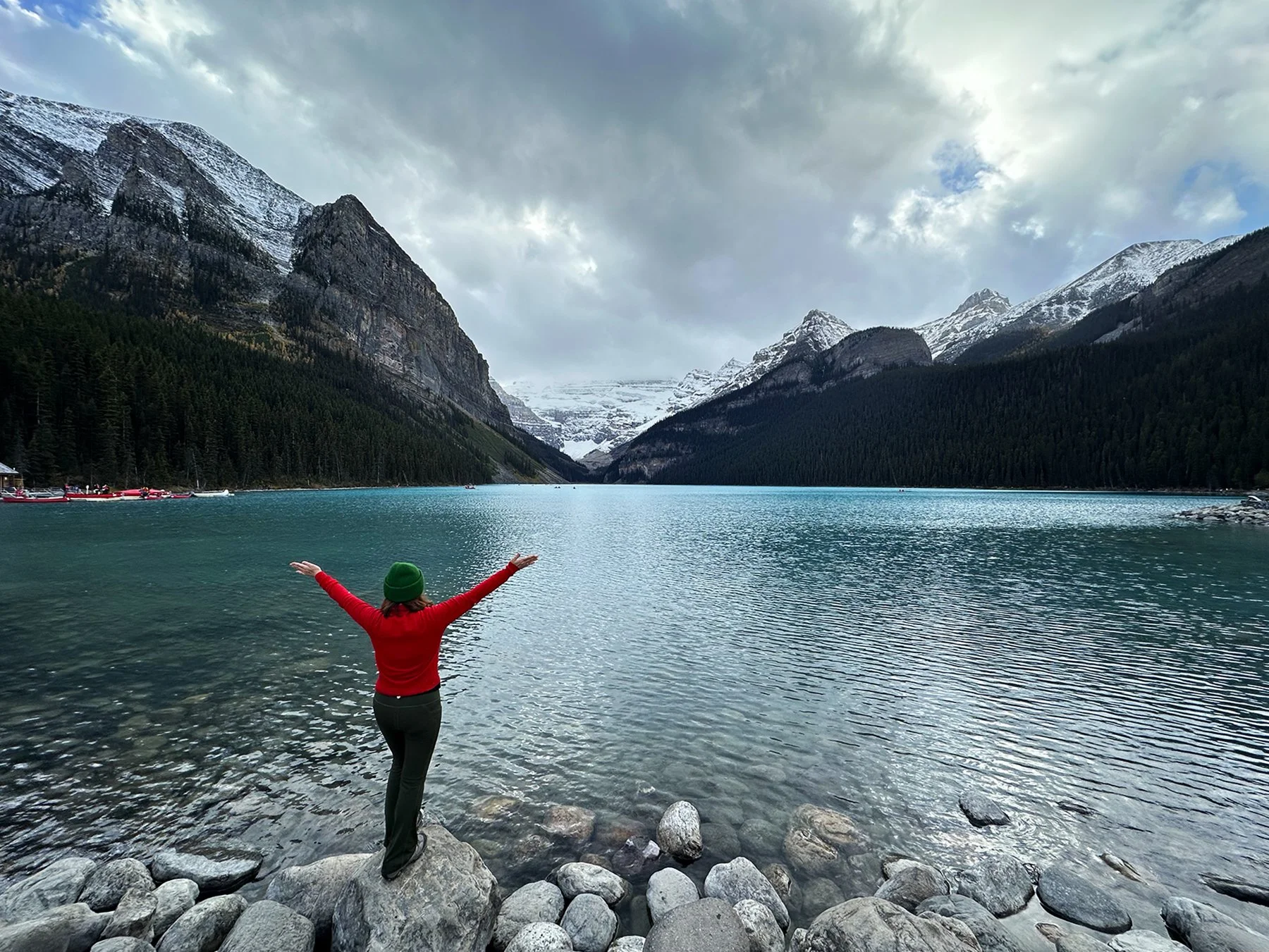
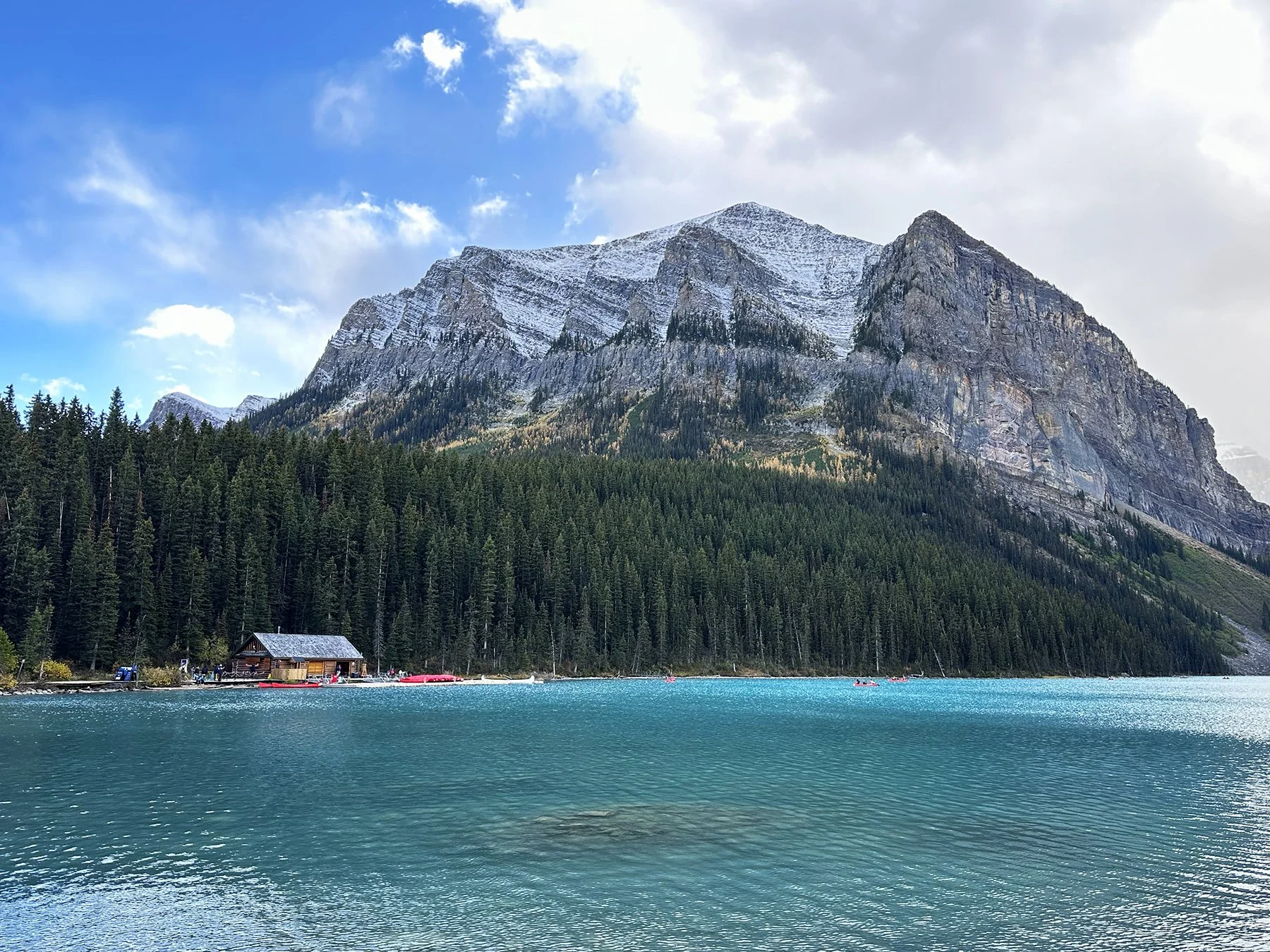
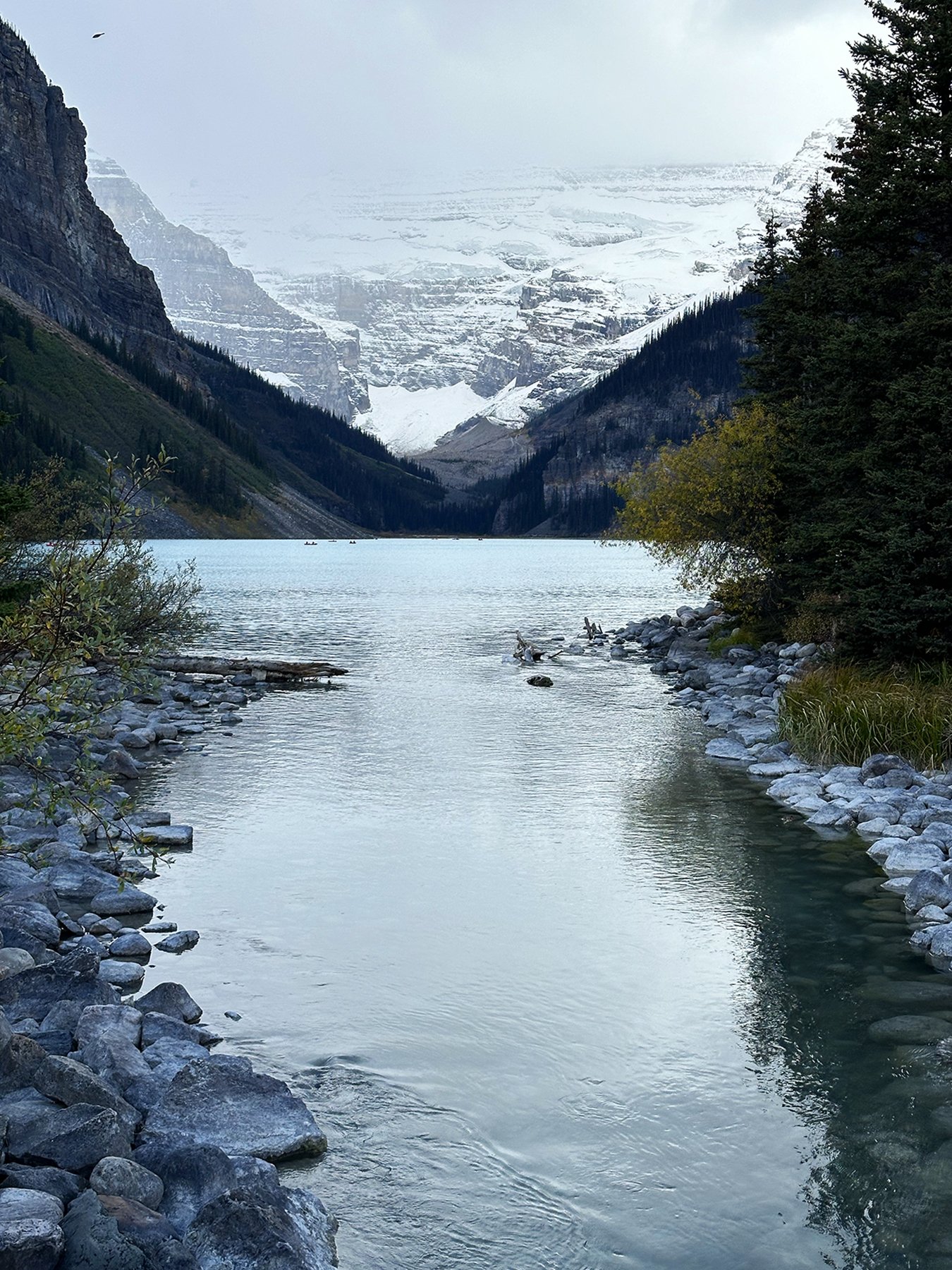
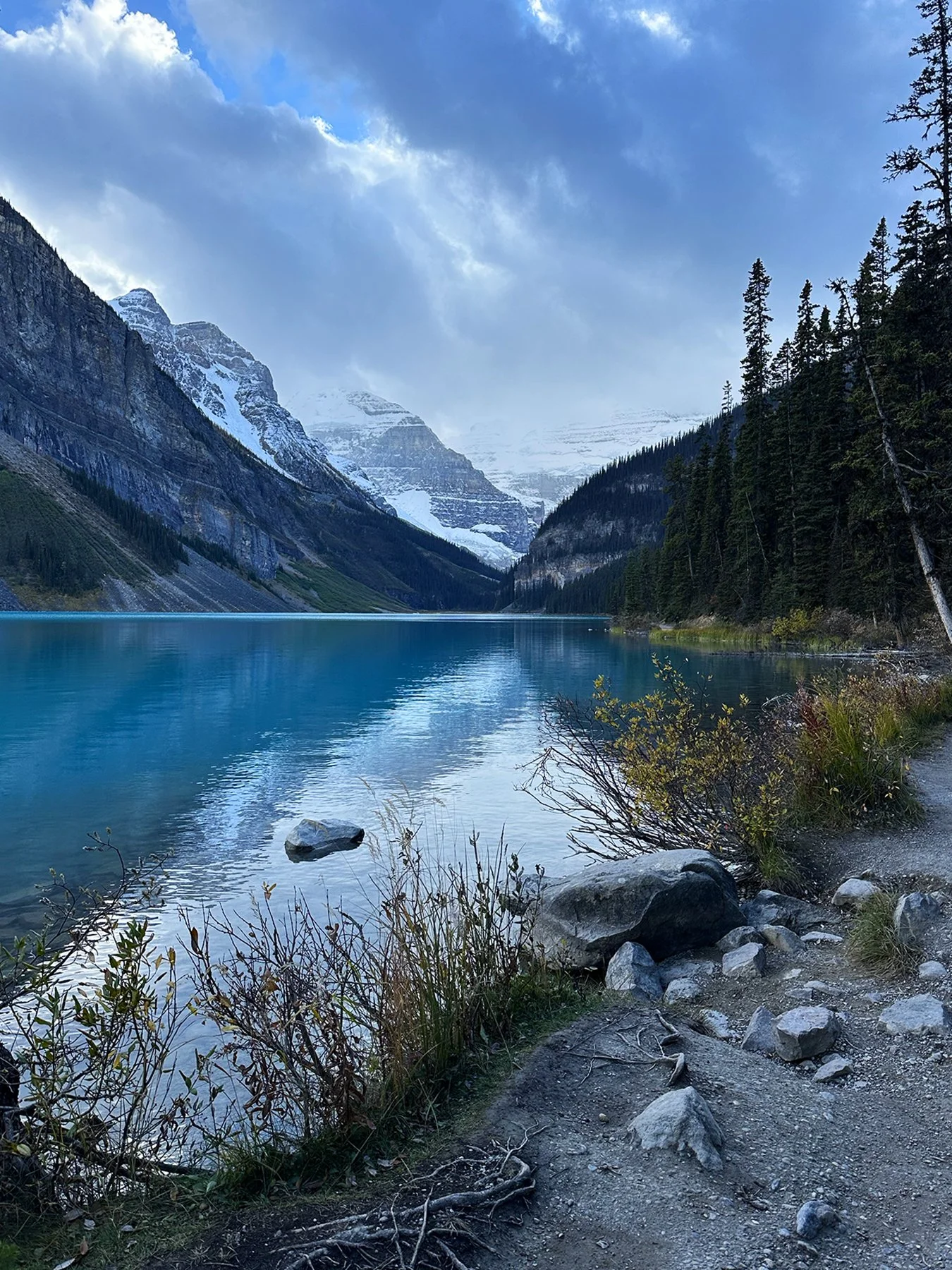
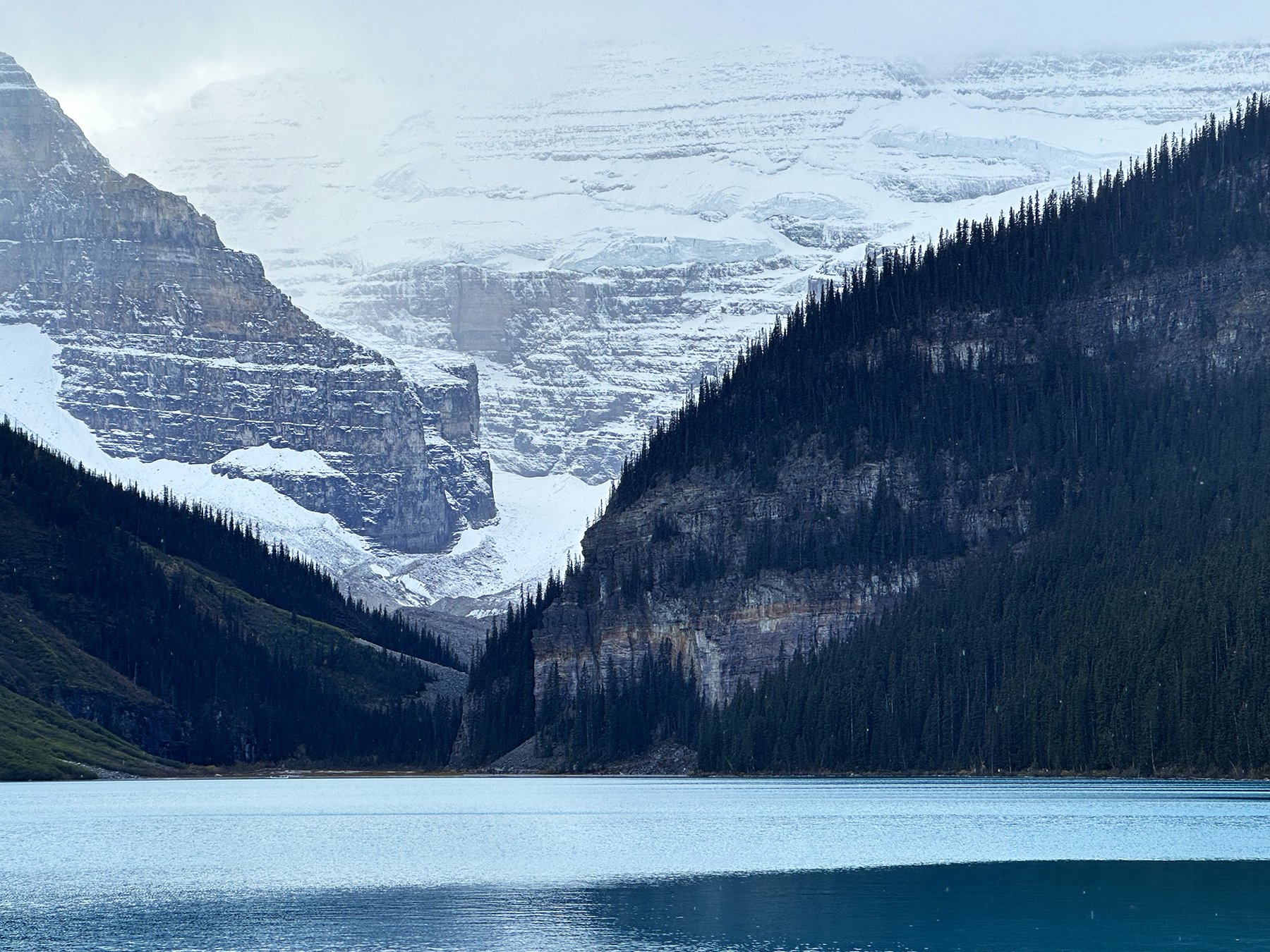
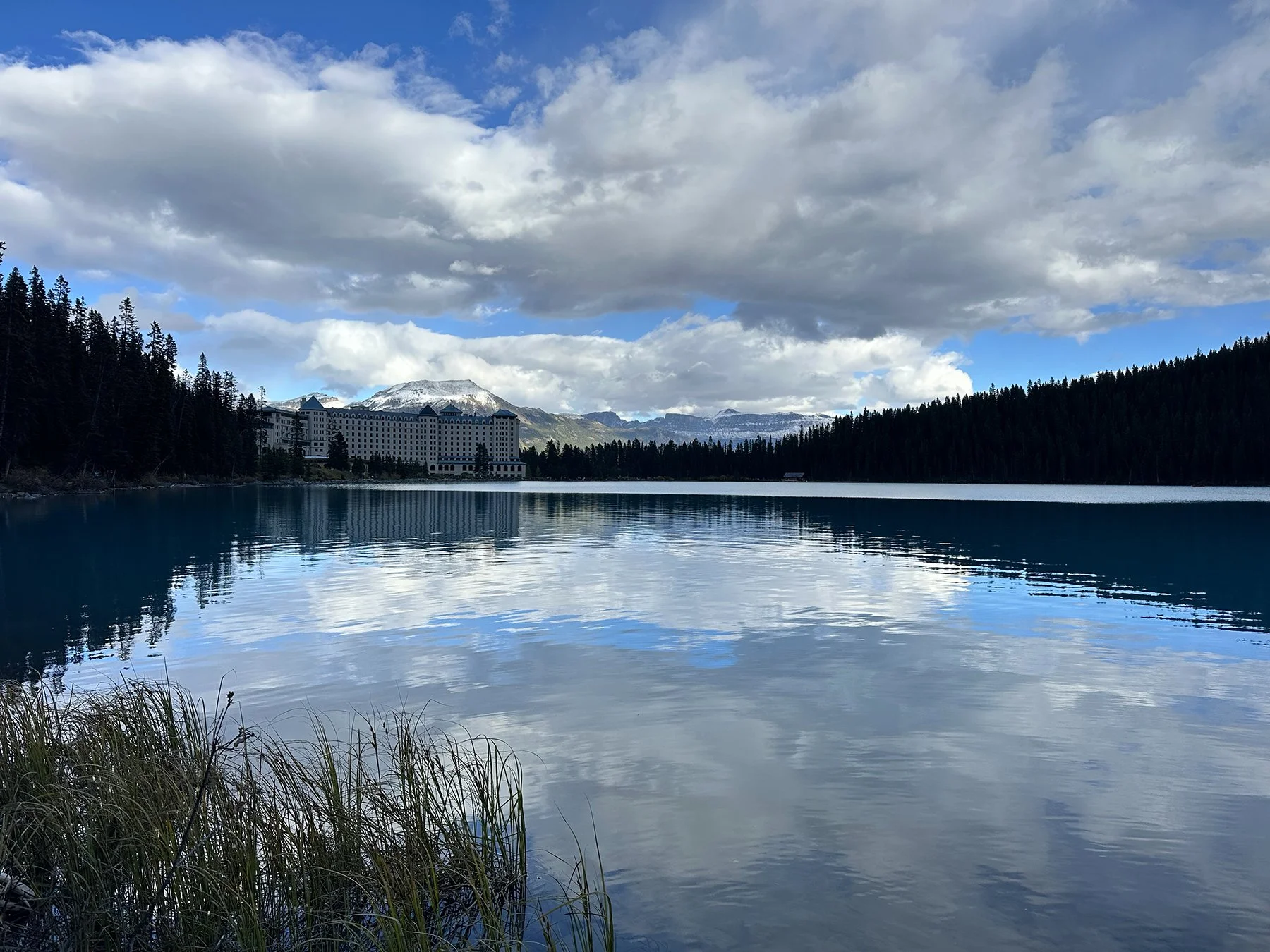
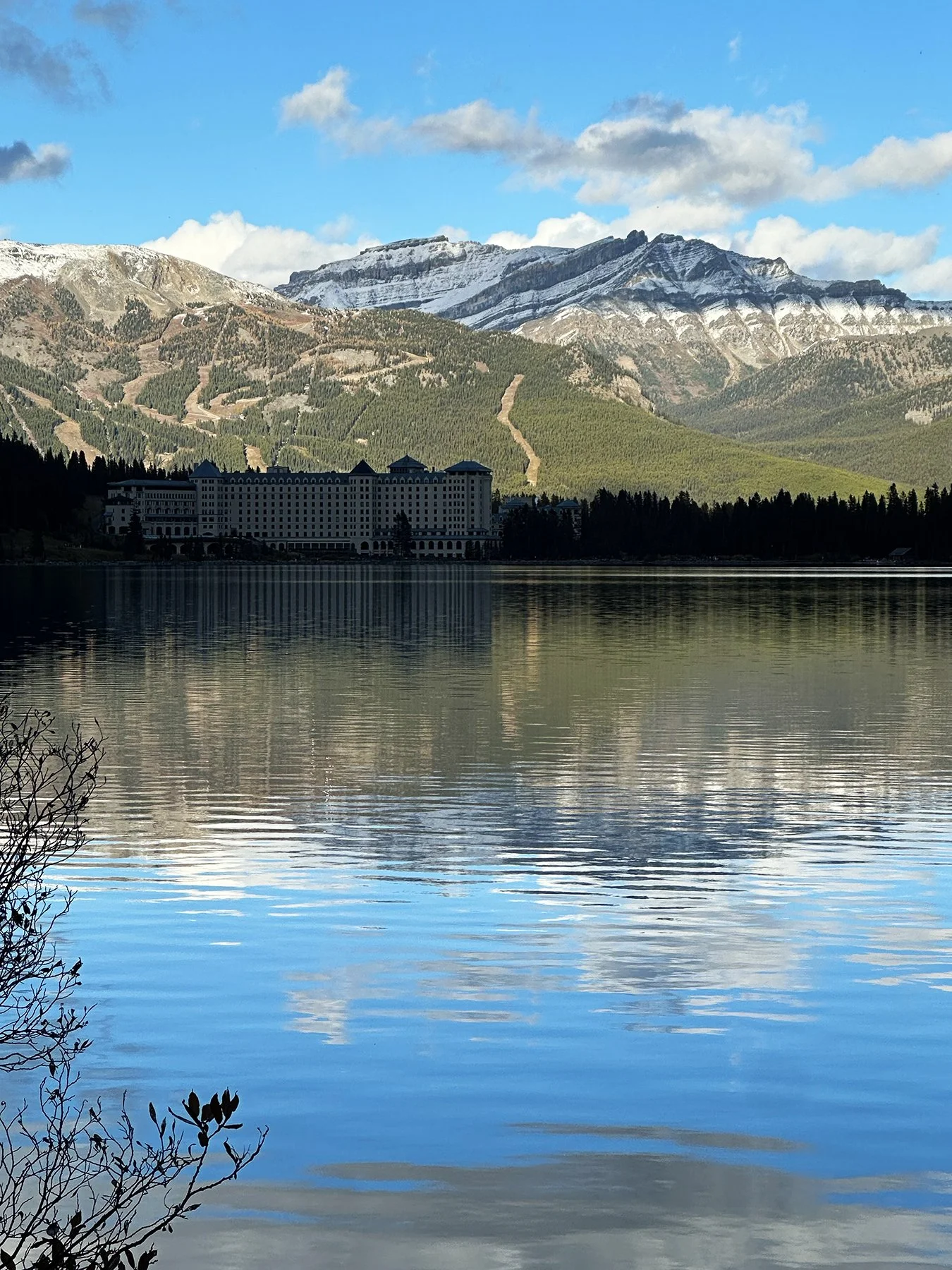
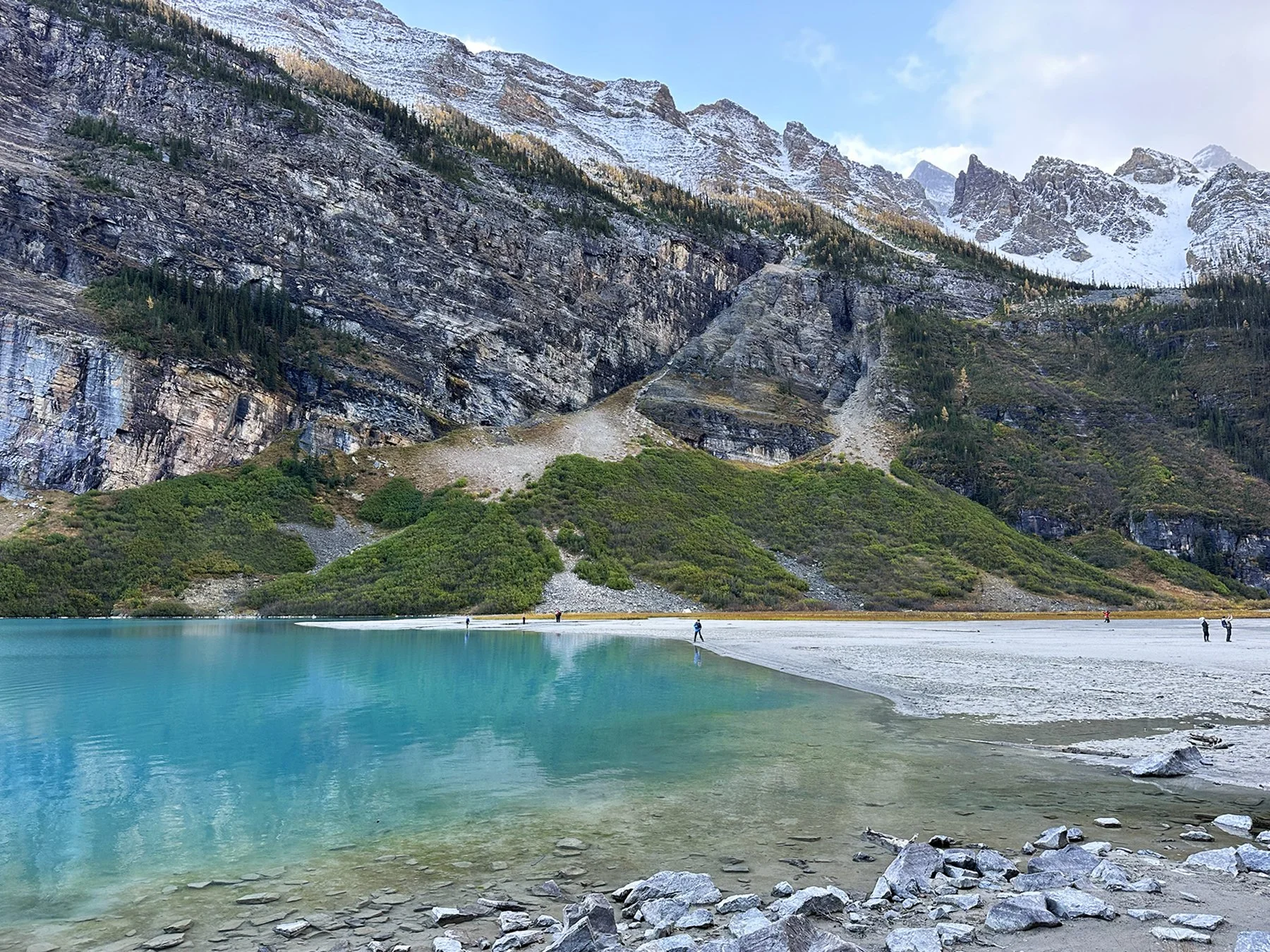
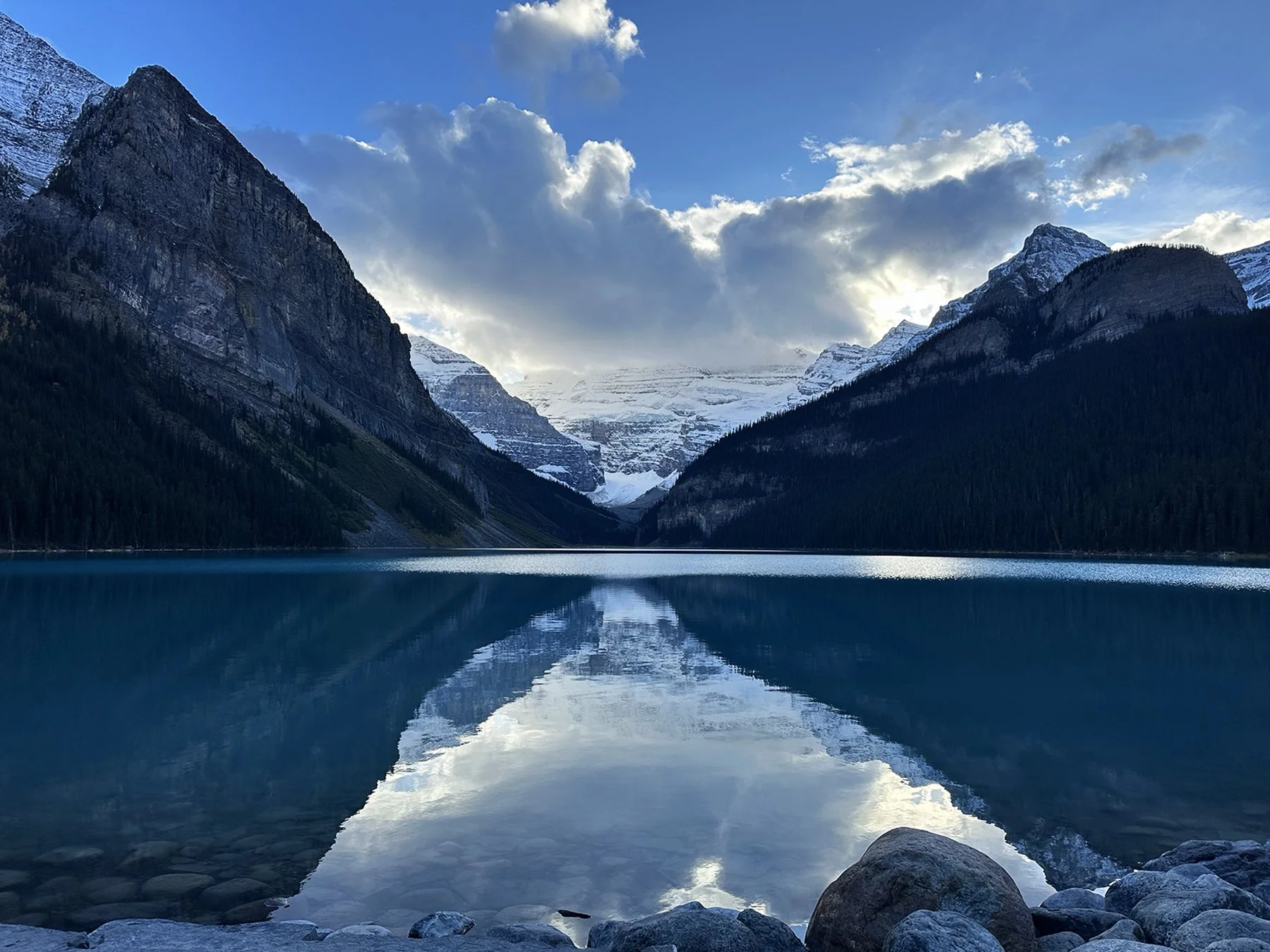
Walking up to the lake for the first time left me absolutely breathless. I cried. I really did. (And those of you who know me, know that I’m not a crier!) I was just so stunned by the beauty. There were even some snowflakes falling. Could it get any better?
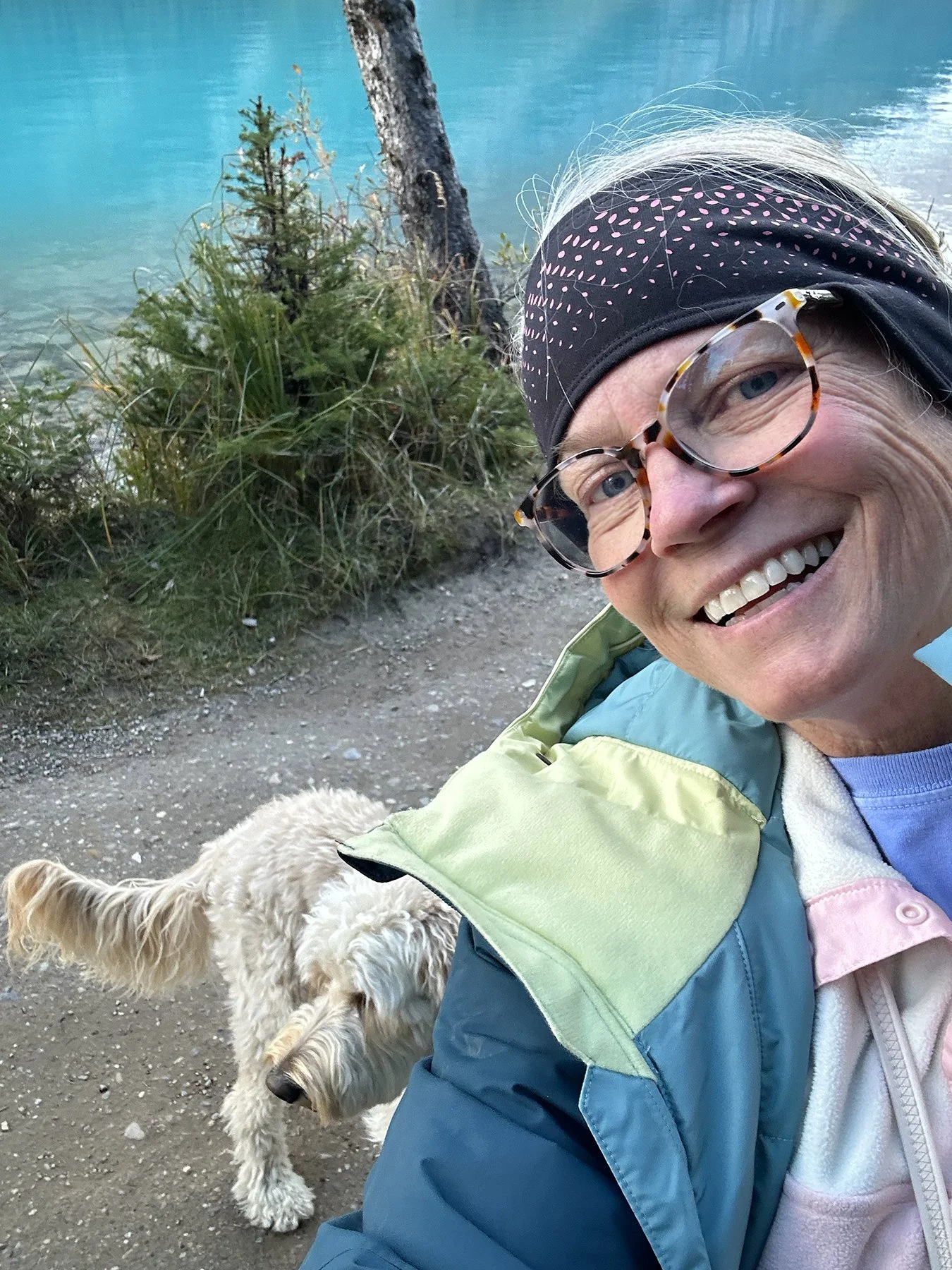
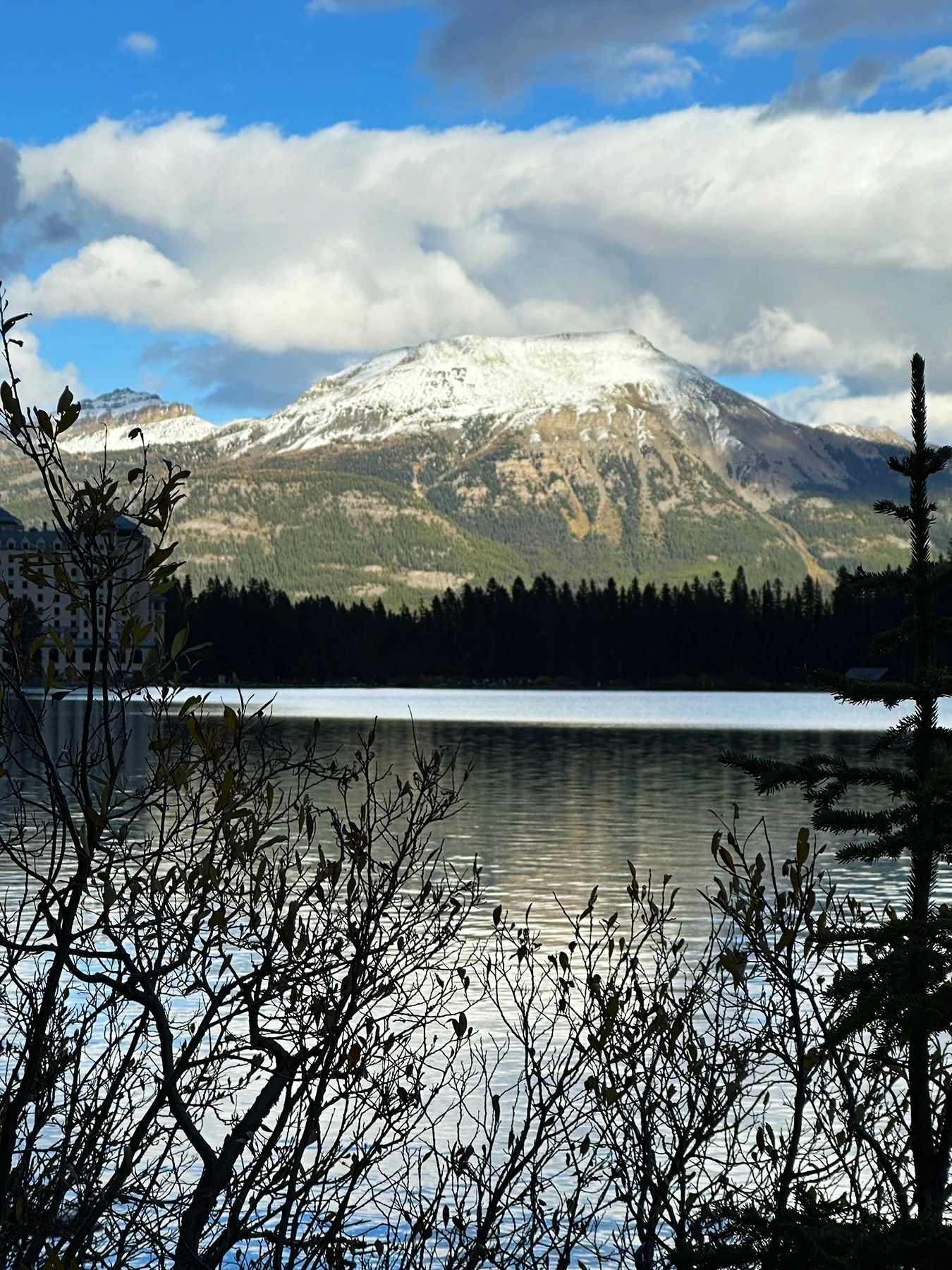
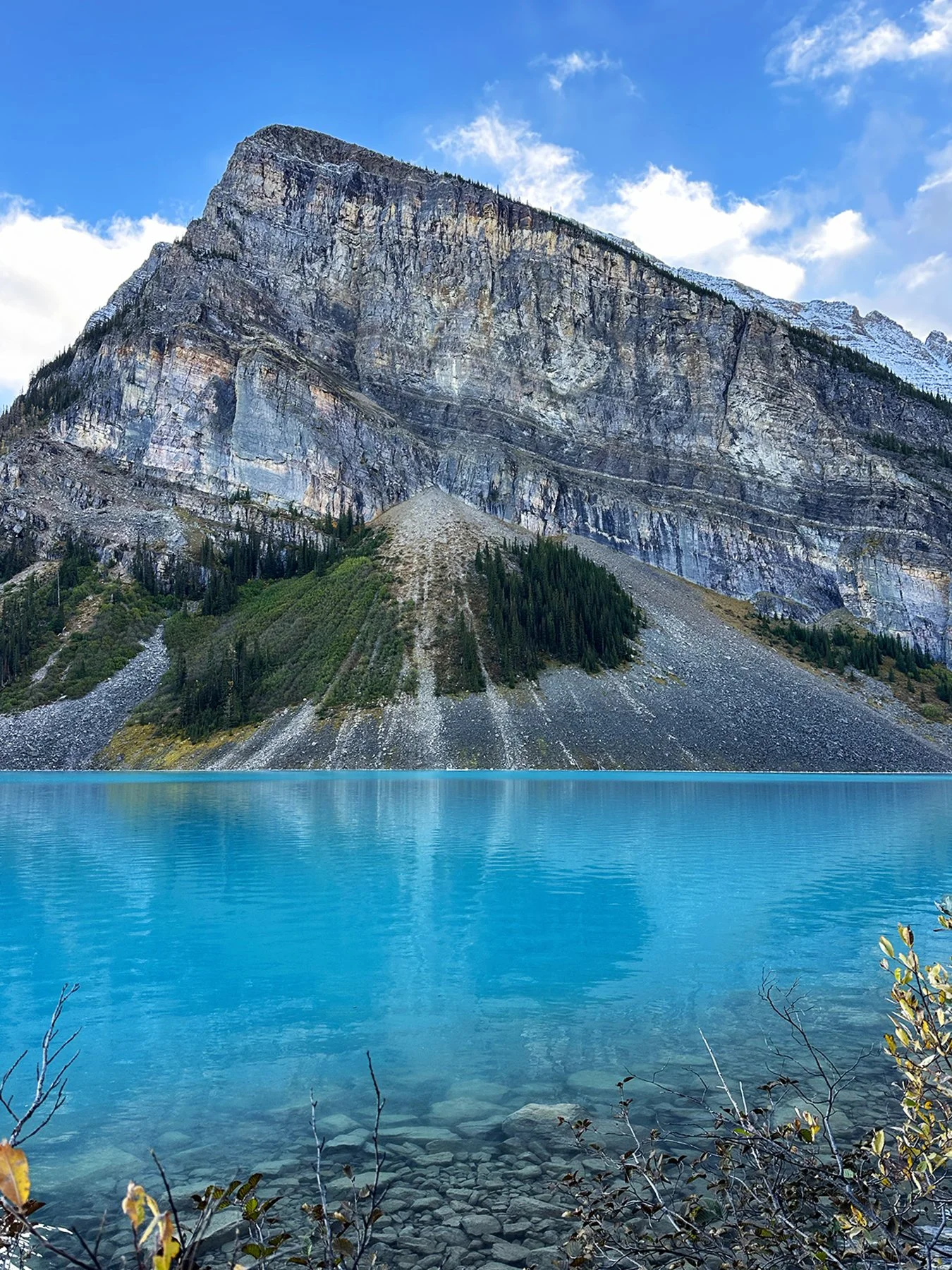
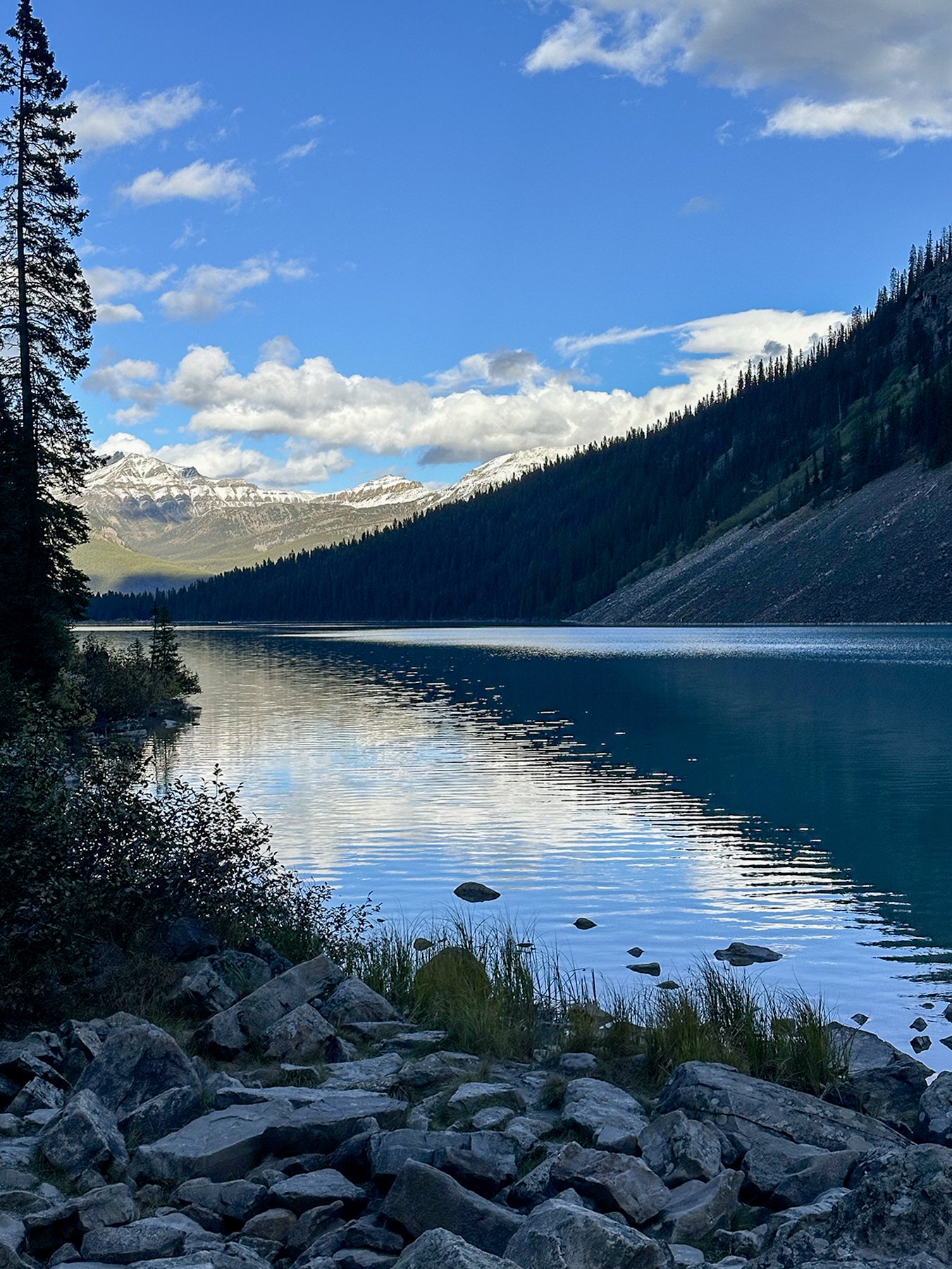
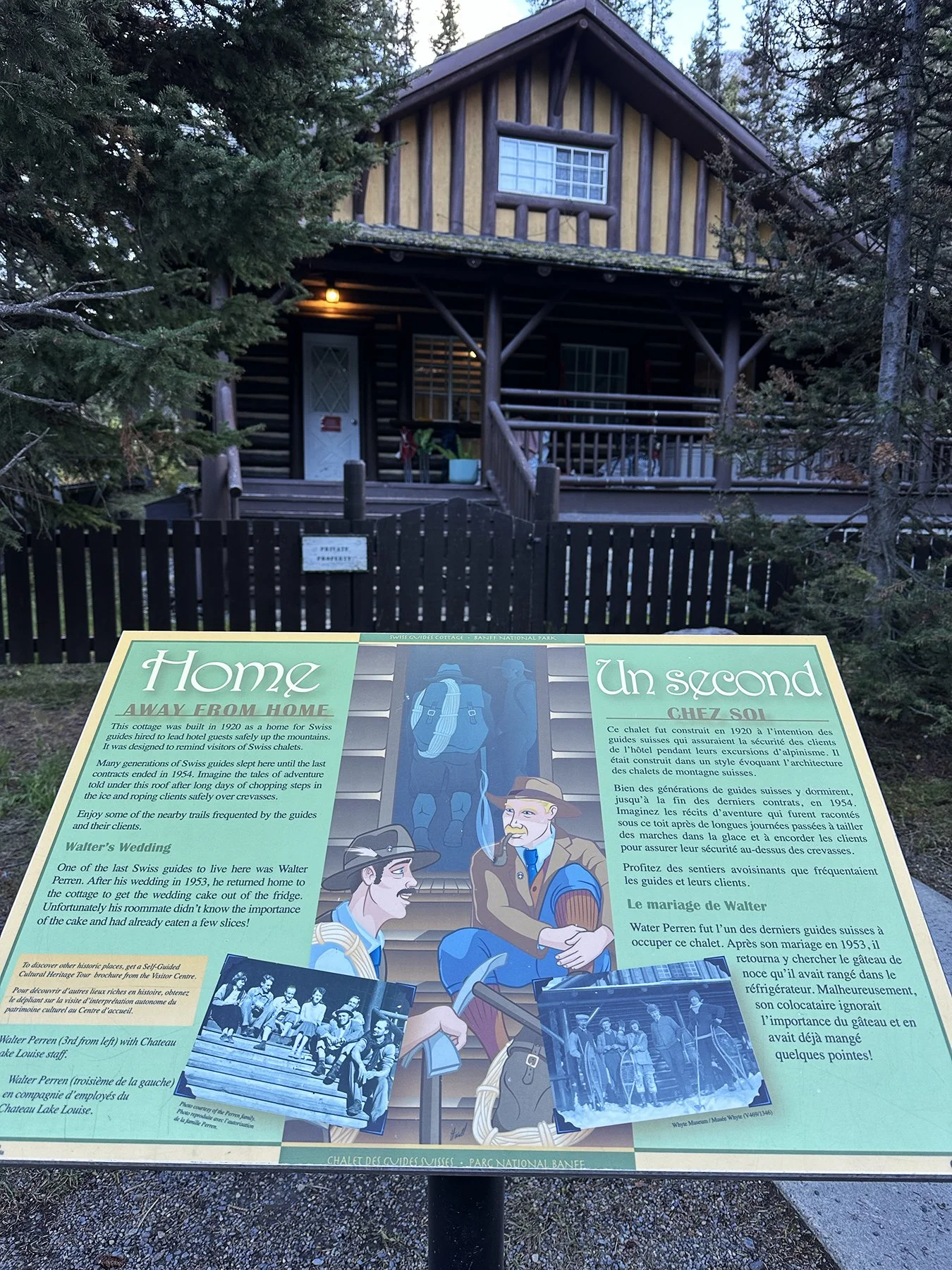
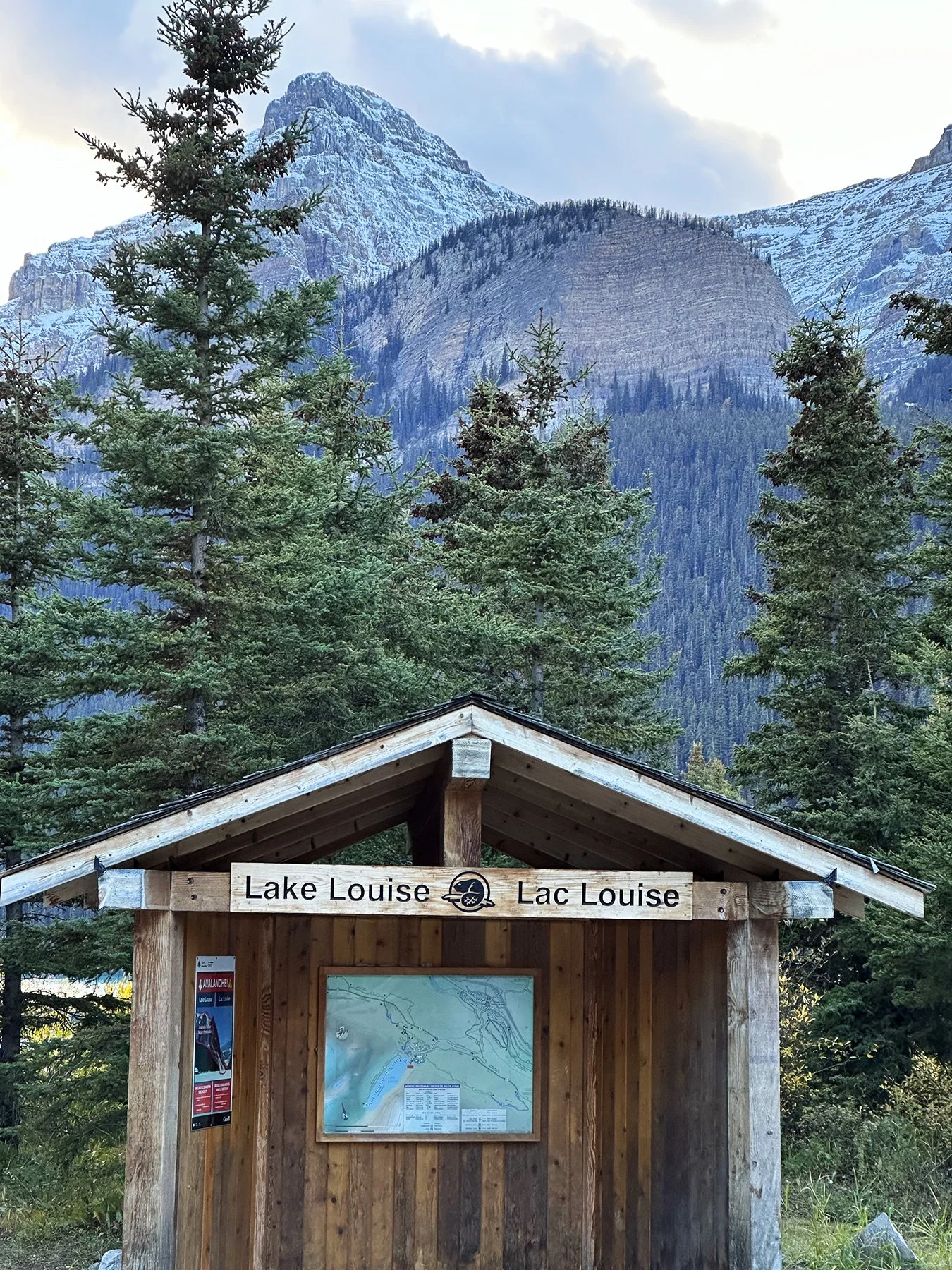
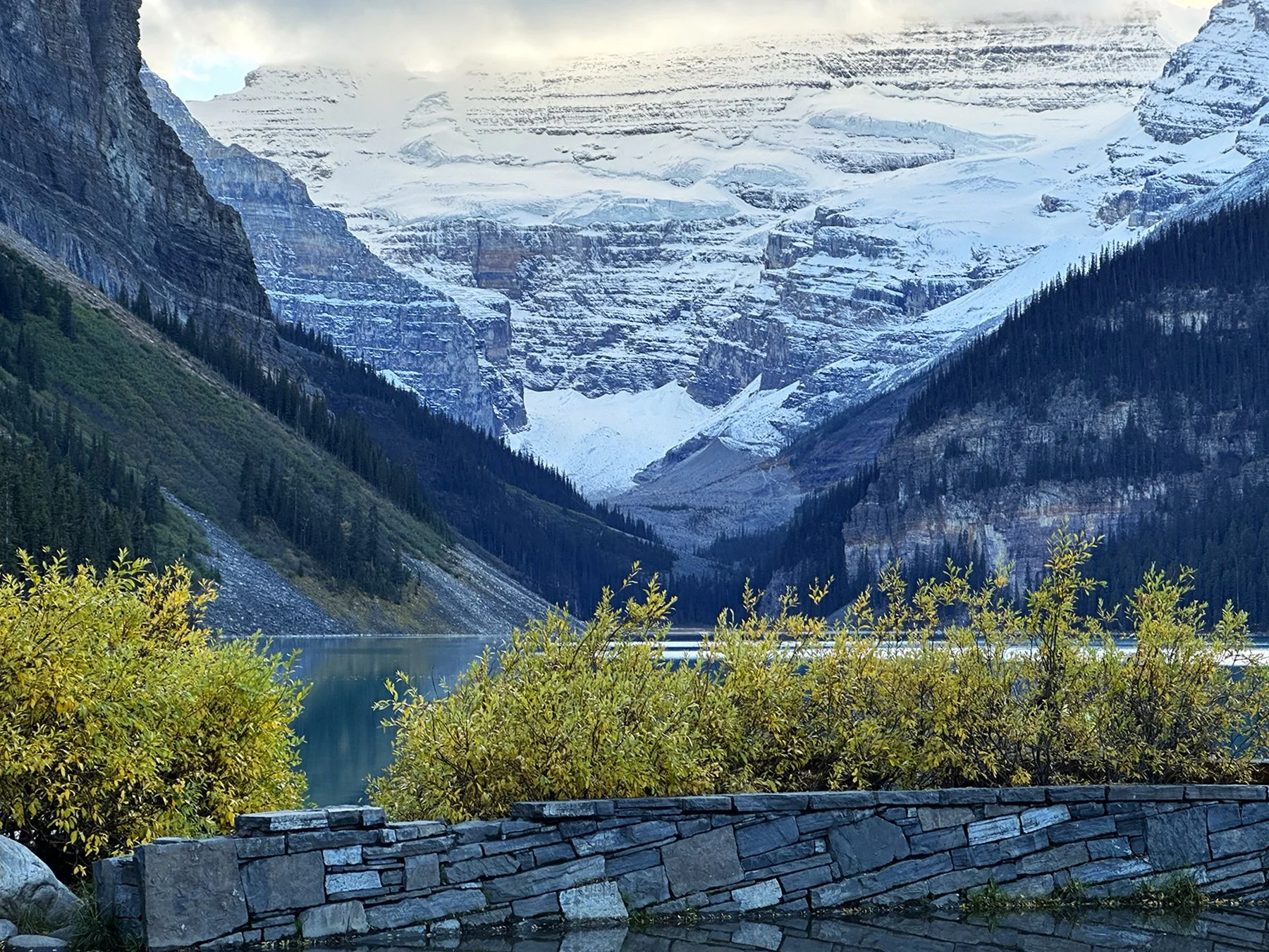
Fun Facts:
• Lake Louise was named after the Princess Louise Caroline Alberta (1848-1939), the fourth daughter of Queen Victoria.
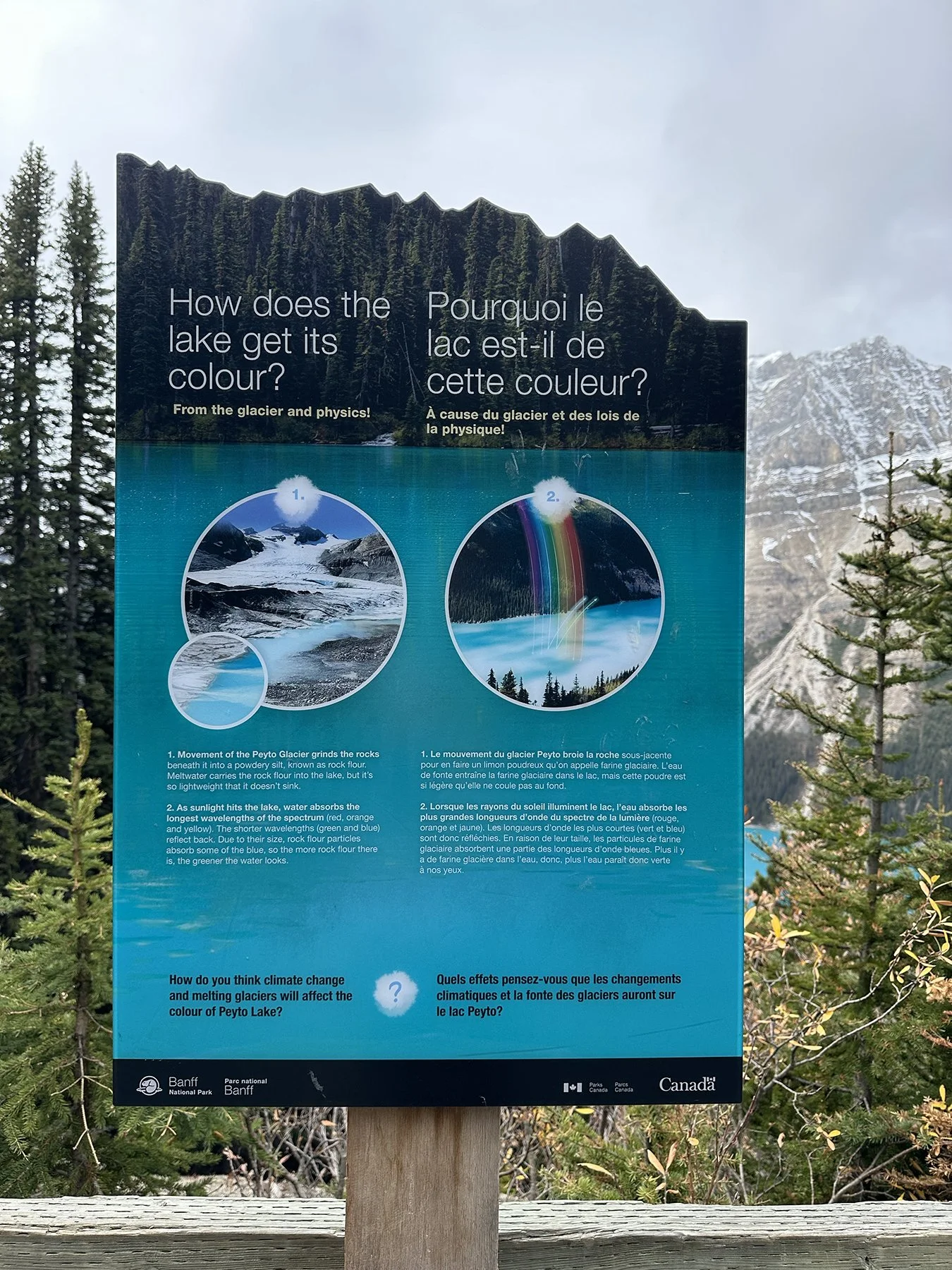
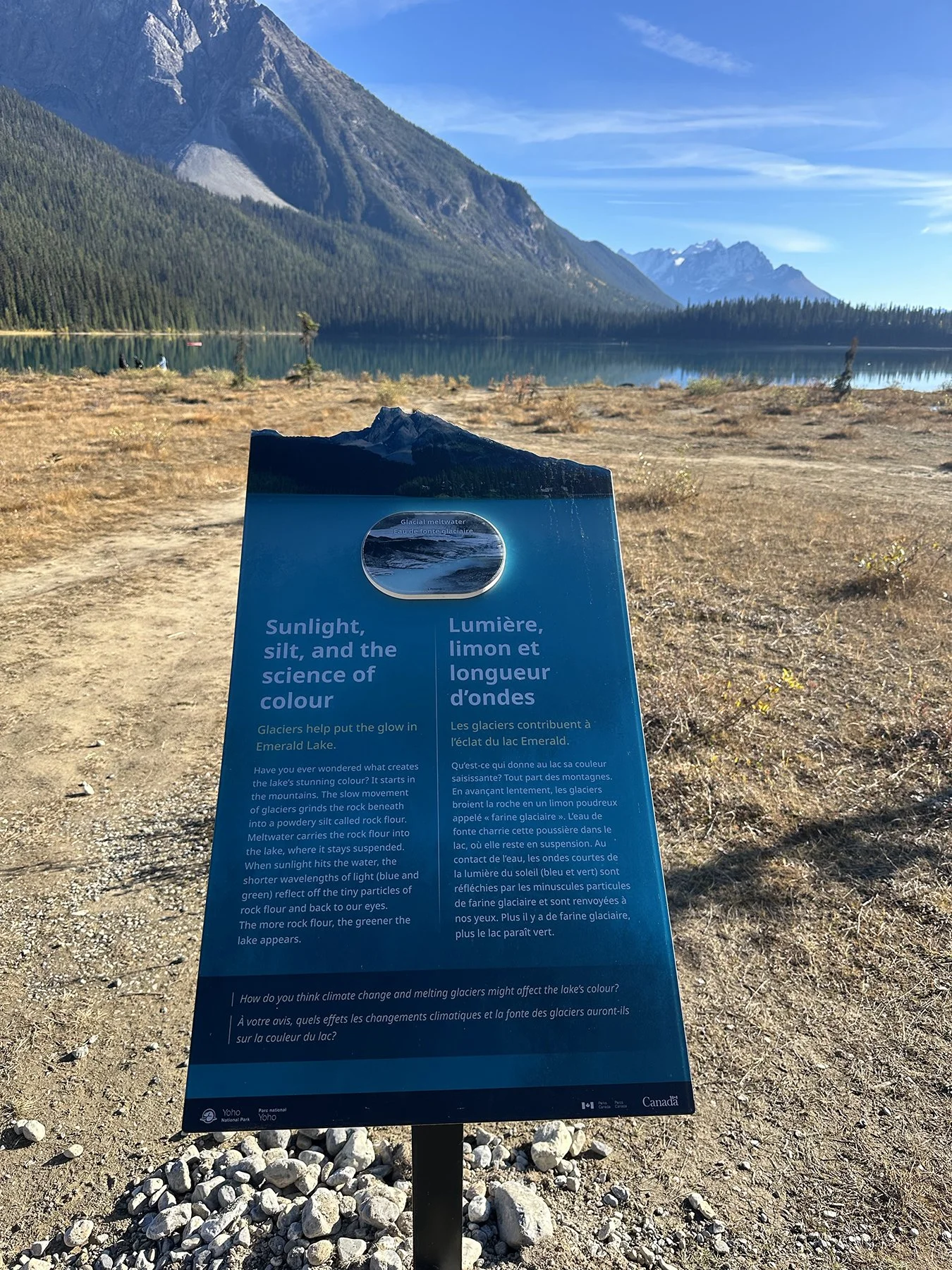
• The turquoise color of the water comes from rock flour carried into the lake by melt-water from the glaciers that overlook the lake.
• Fairmont’s Chateau Lake Louise, one of Canada’s grand railway hotels, is located on Lake Louise’s eastern shore. It is a luxury resort hotel built in the early decades of the 20th century by the Canadian Pacific Railway.
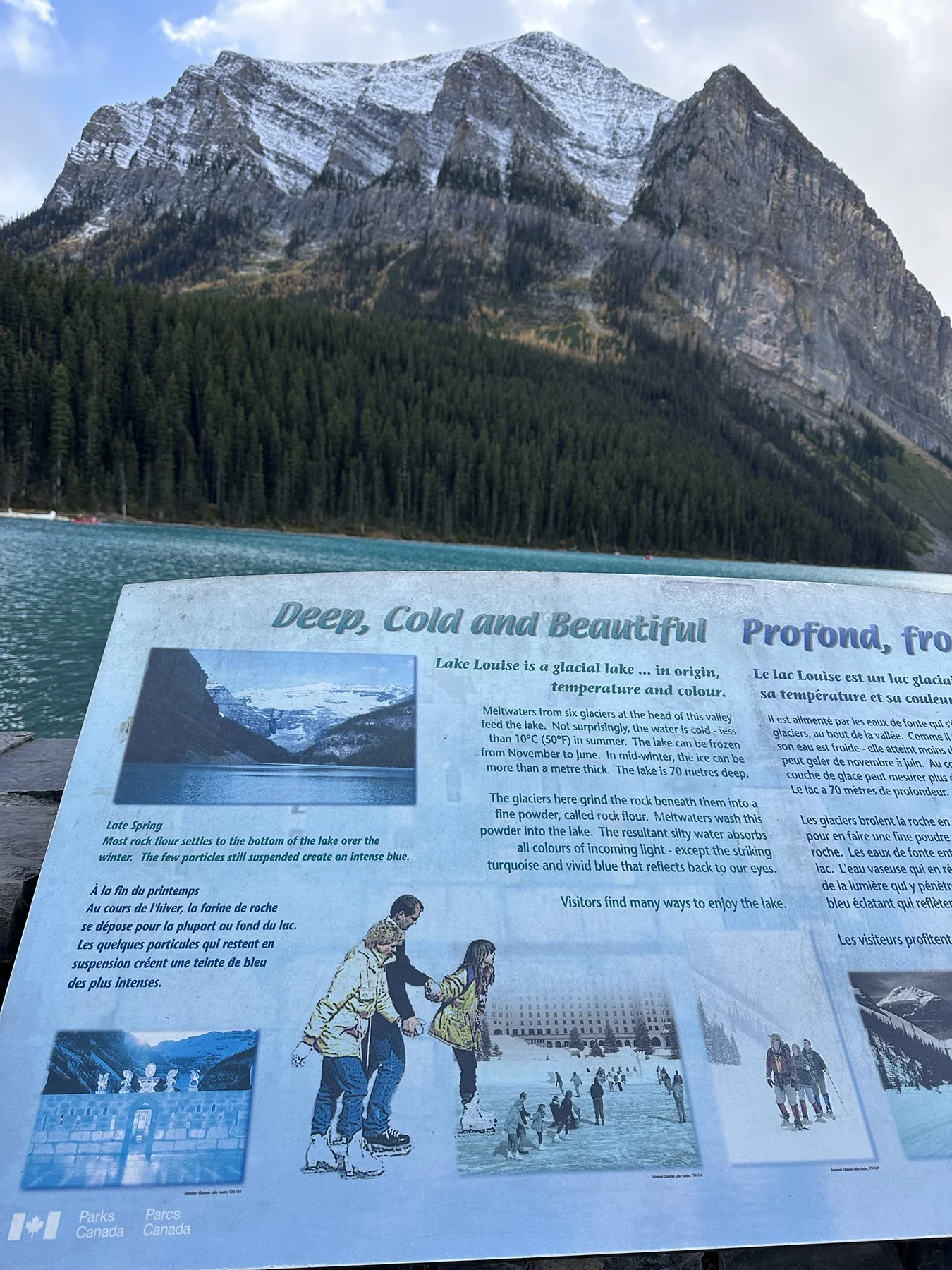
“Deep, Cold and Beautiful … Lake Louise is a glacial lake … in origin, temperature and color. Meltwaters from six glaciers at the head of the valley feed the lake. Nor surprisingly, the water is cold – less than 50°F in summer. The lake can be frozen from November to June. (!!) In mid-winter, the ice can be more than a metre thick. The lake is 70 metres deep. … The glaciers here grind the rock beneath them into a fine powder, called rock flour. Meltwaters wash this powder into the lake. The resultant silty water absorbs all colors of incoming light – except the striking turquoise and vivid blue that reflects back to our eyes.”
Day 2: BANFF – THE TOWN
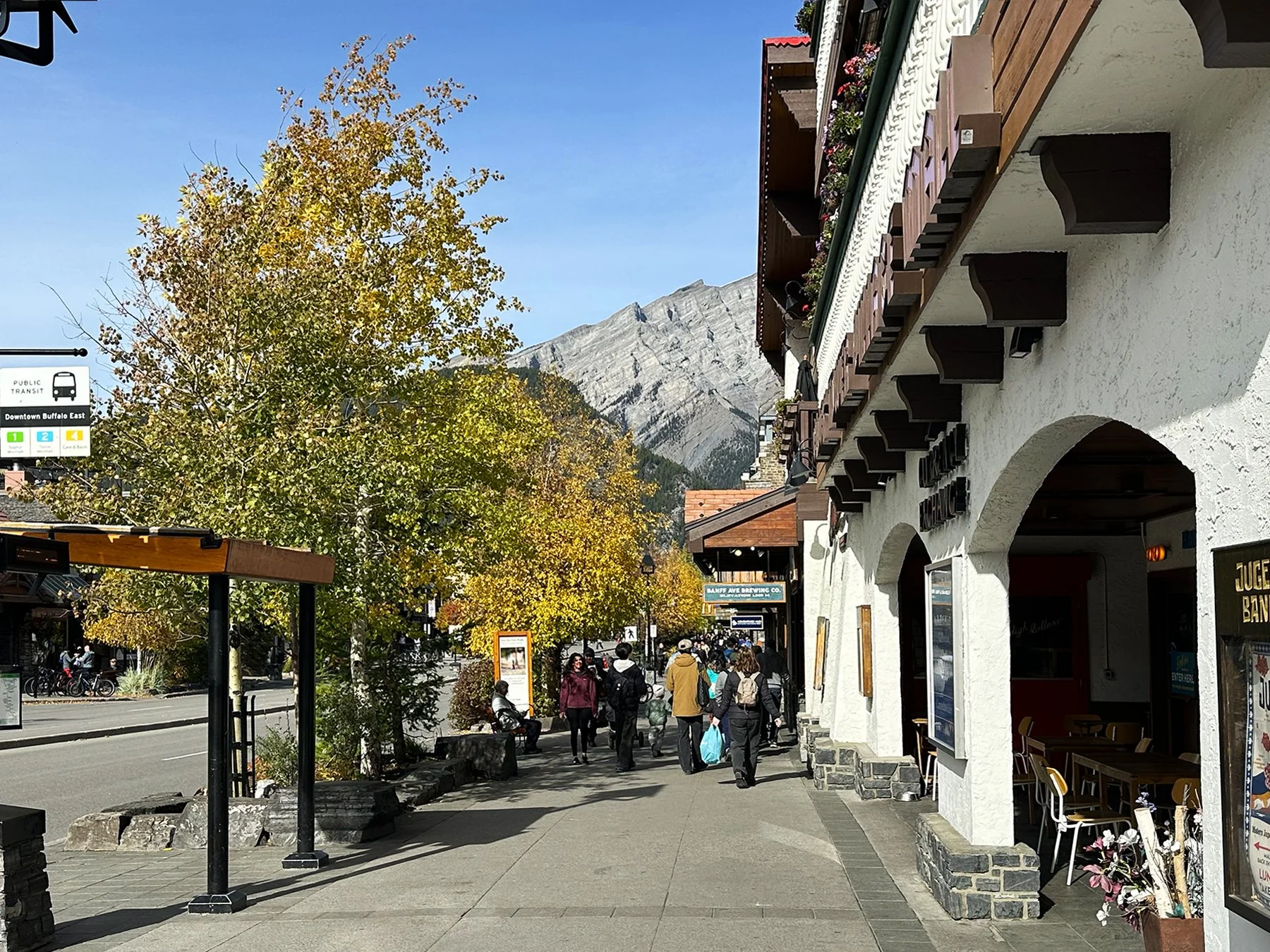
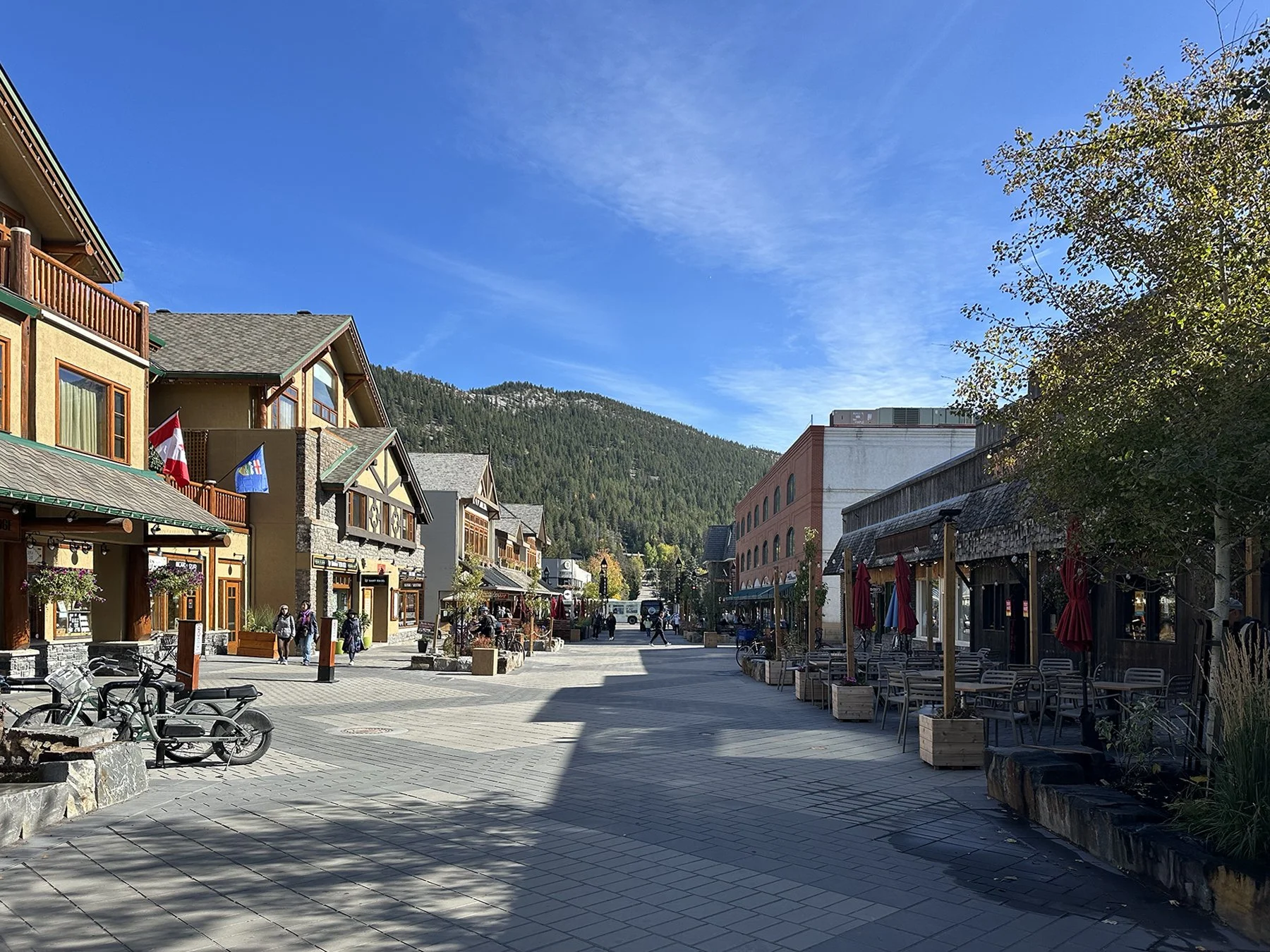
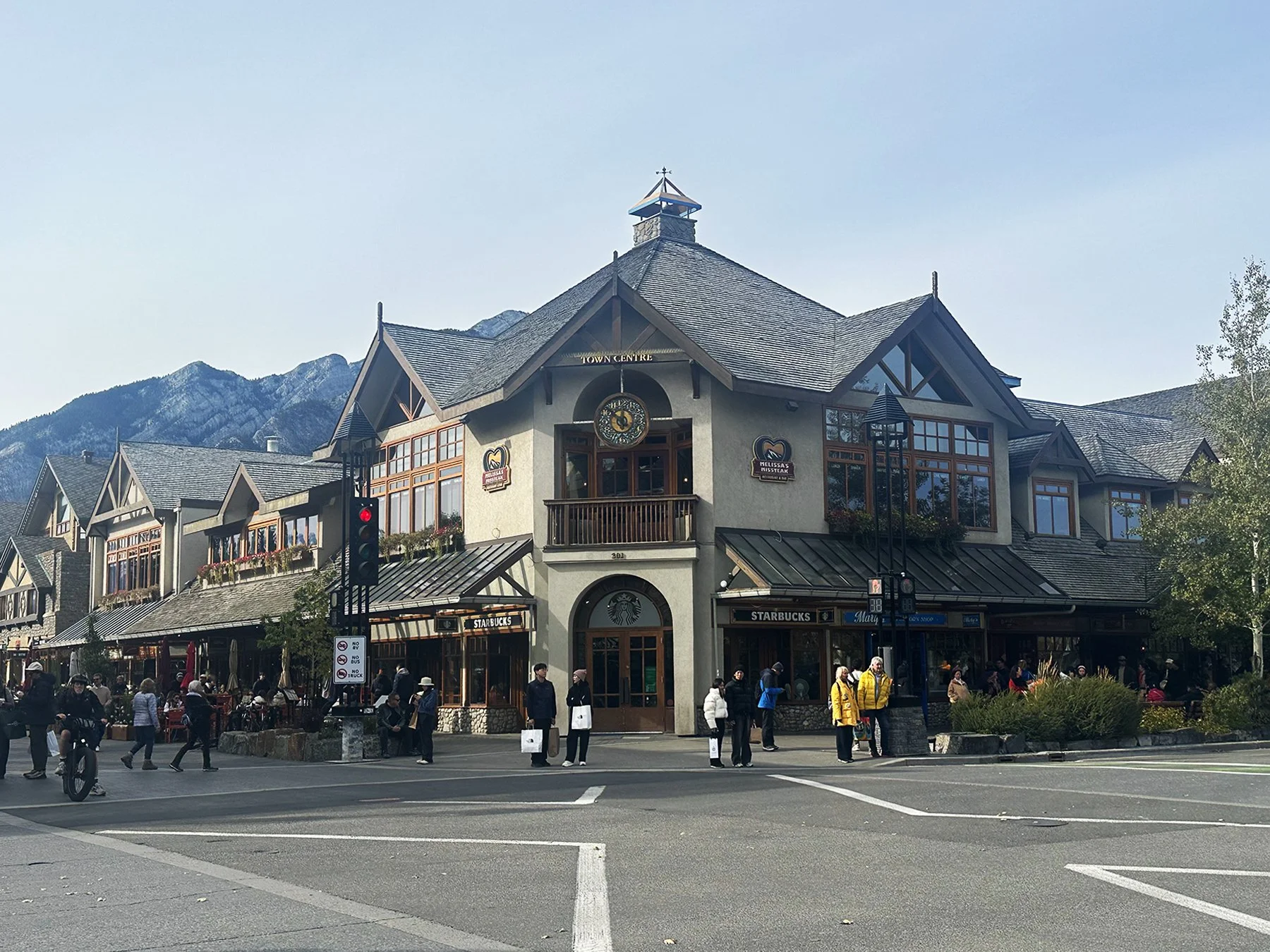
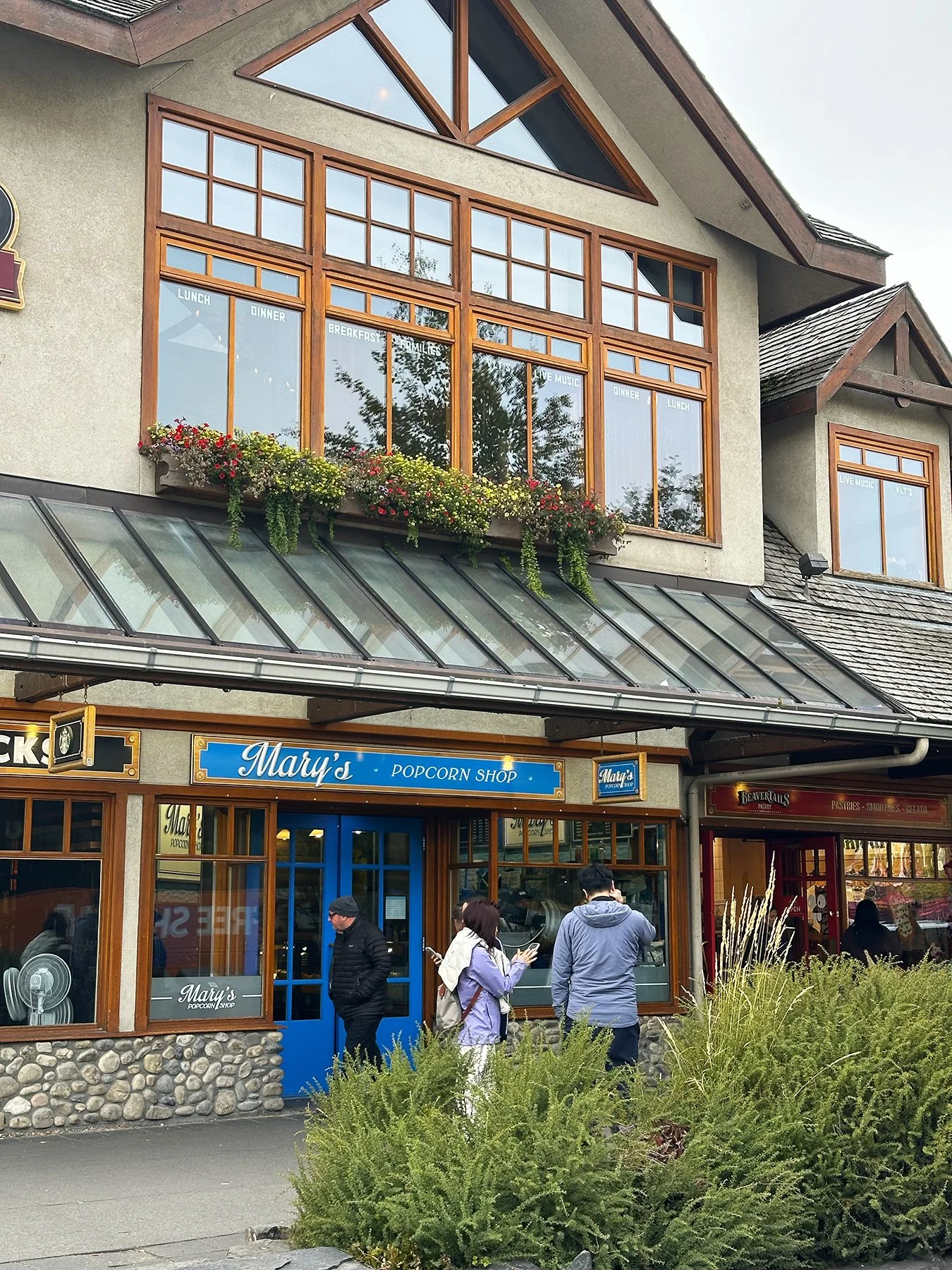
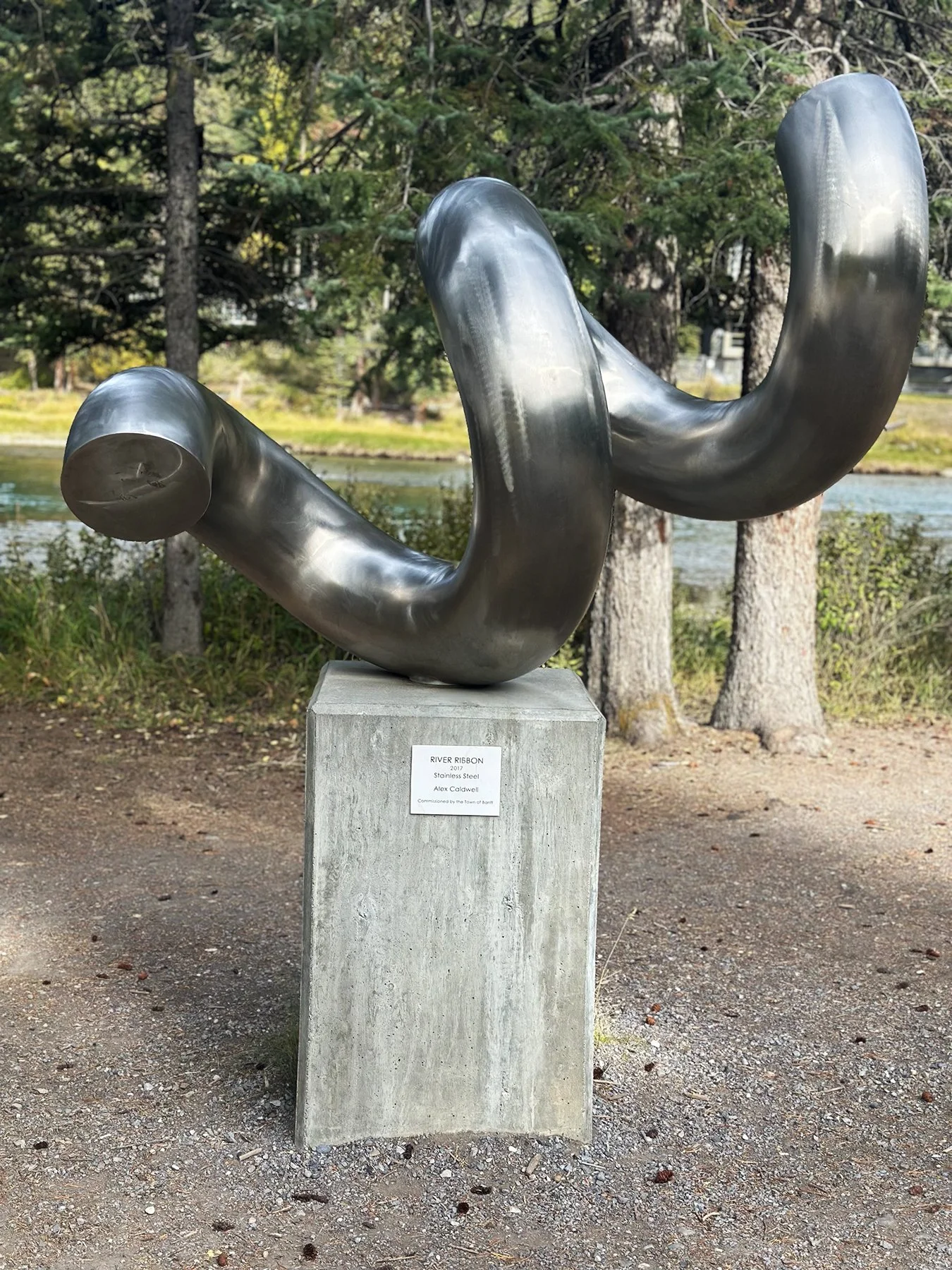
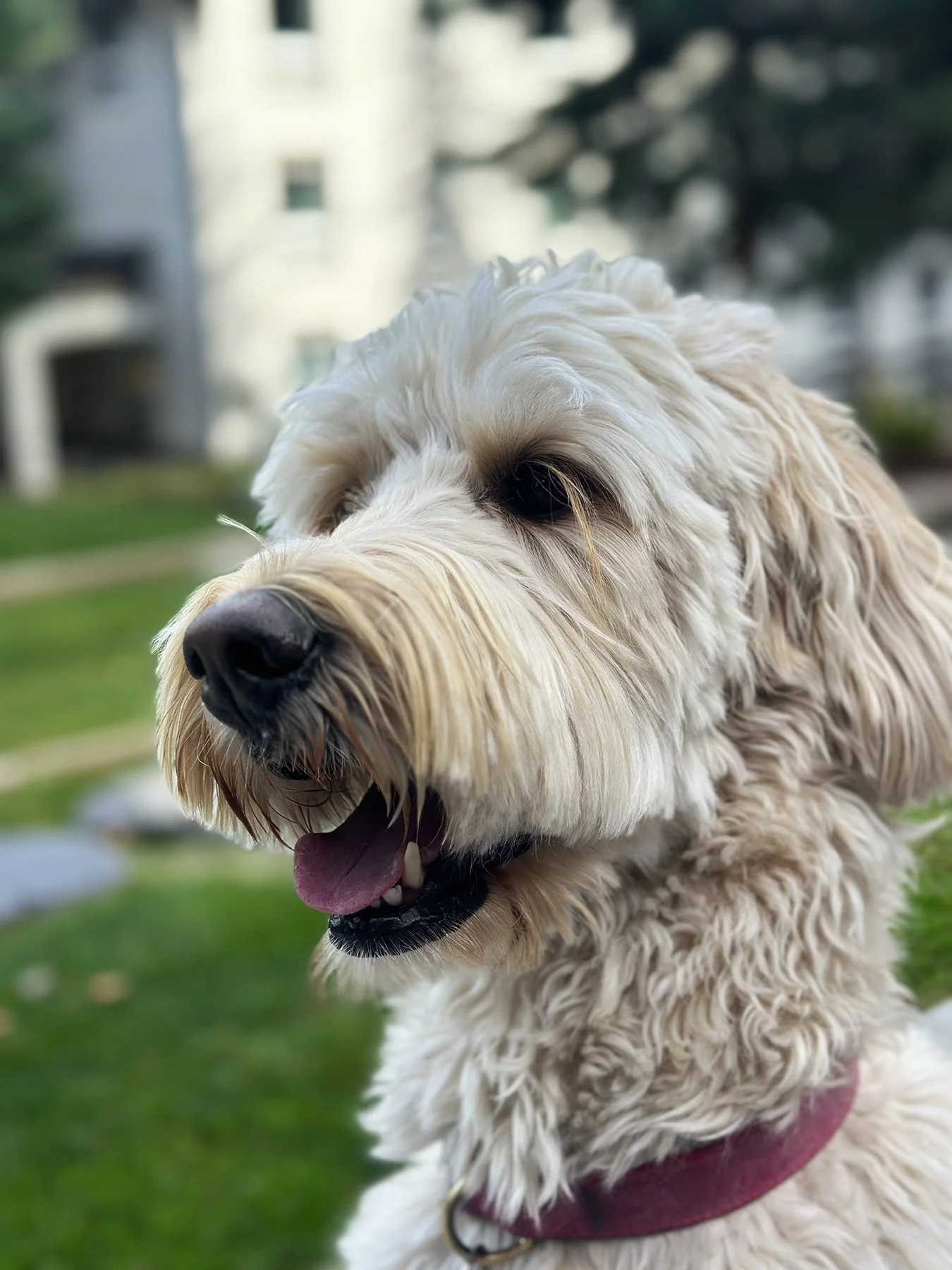
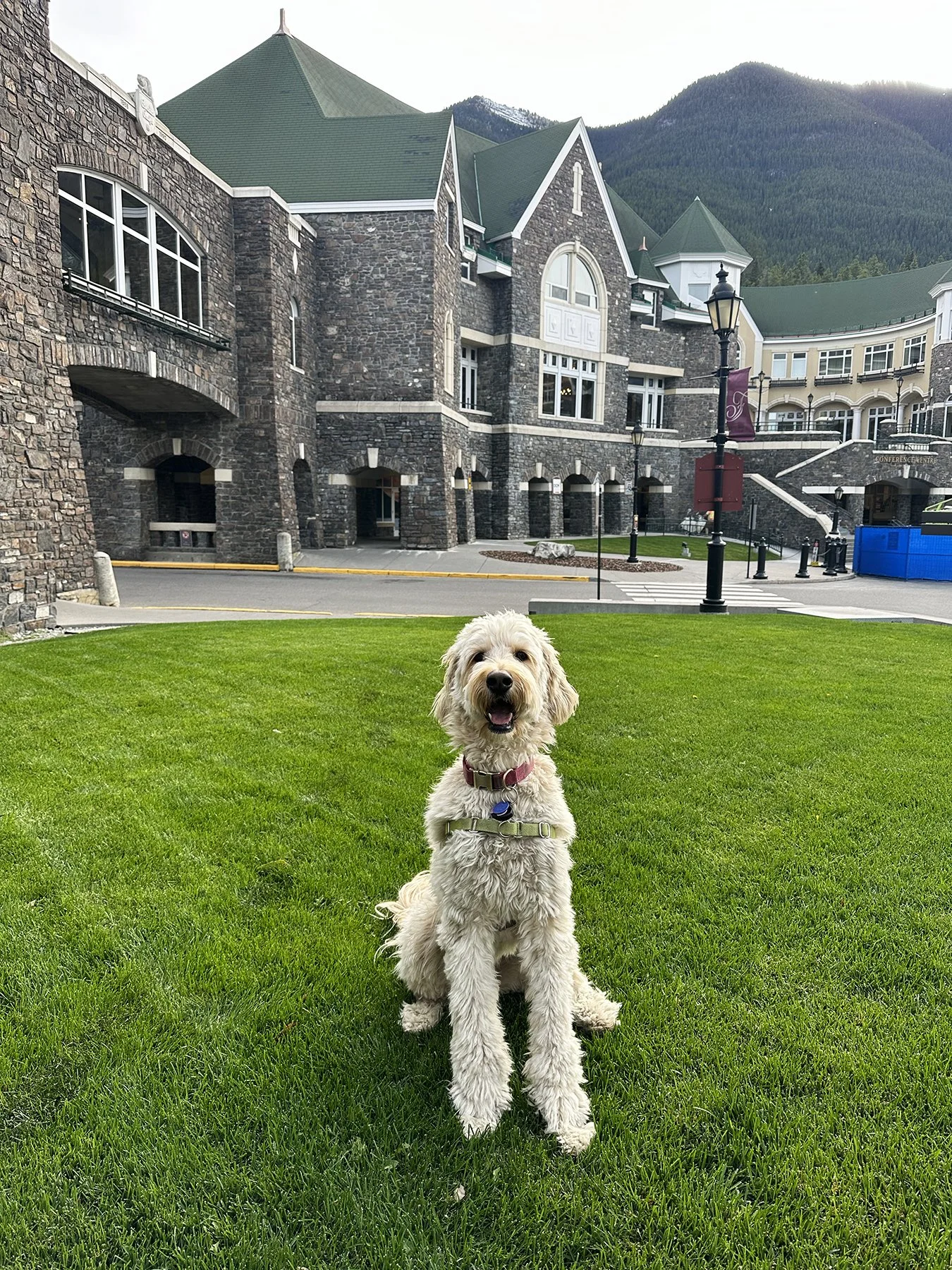
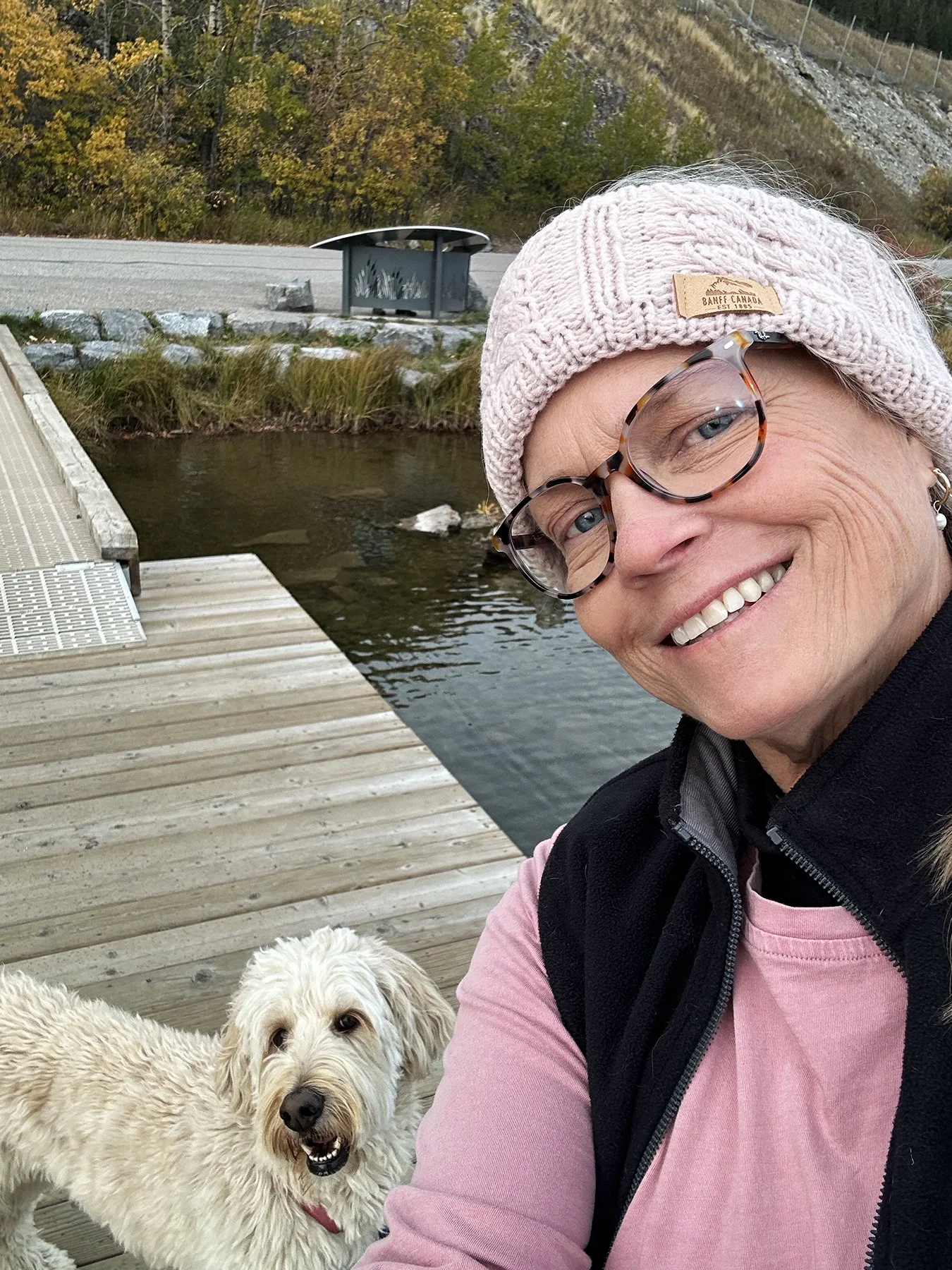
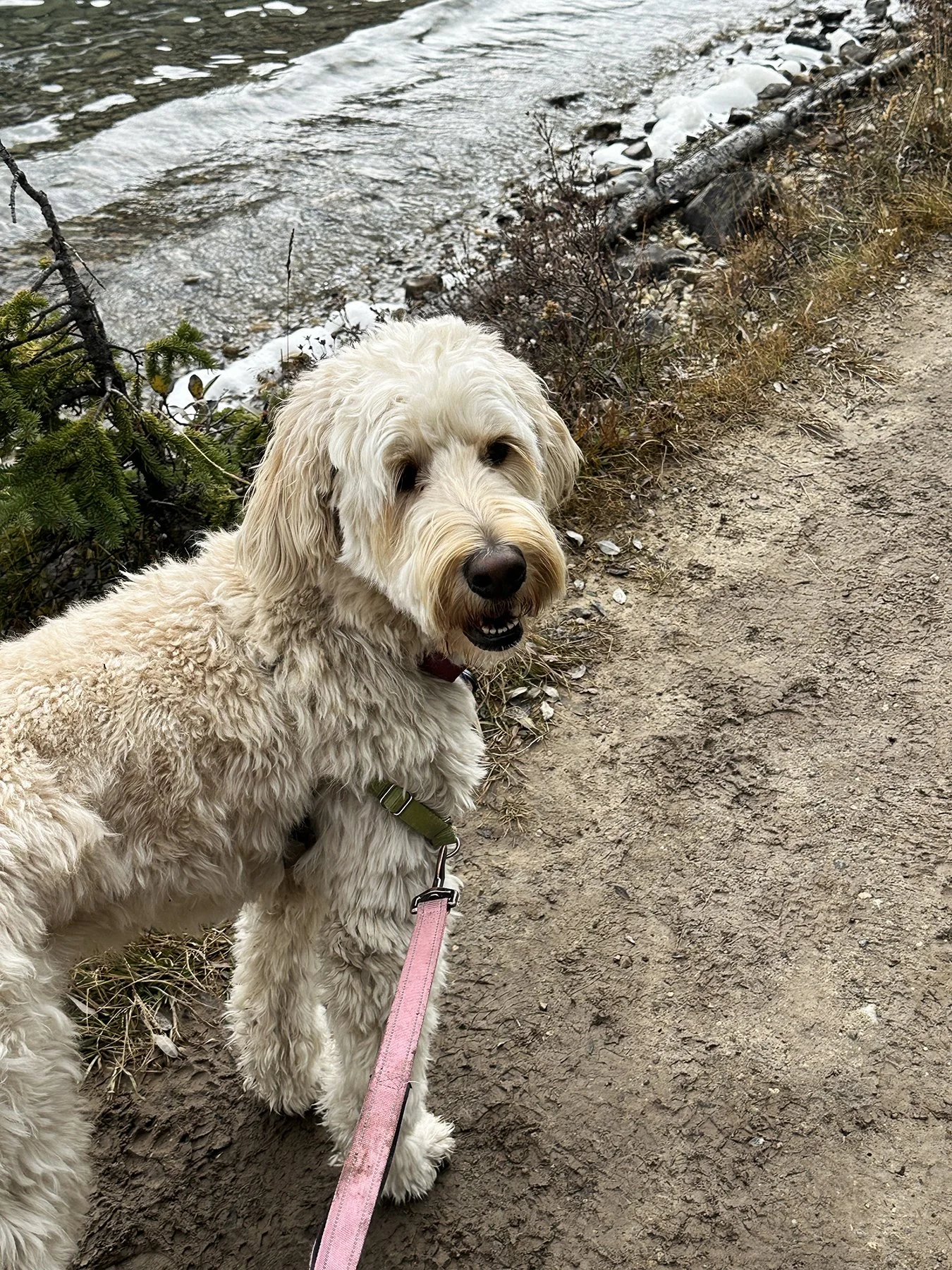
The next day, I decided to head over to Banff (the town). Man, do I love resort towns! We spent a bit of time just walking around; it wasn’t nearly as crowded as I imagine it to be in the summertime. It is actually one of Canada’s most popular tourist destinations, known for its mountainous surroundings and hot springs. It of course has quaint shops, local art, cafés and unique offerings. And, as usual, Maisie was the most popular tourist there! It’s a blast meeting people from all over the world who want to stop and pet her, talk about their dog, and sometimes even take a picture of her. (Funny, I know!)
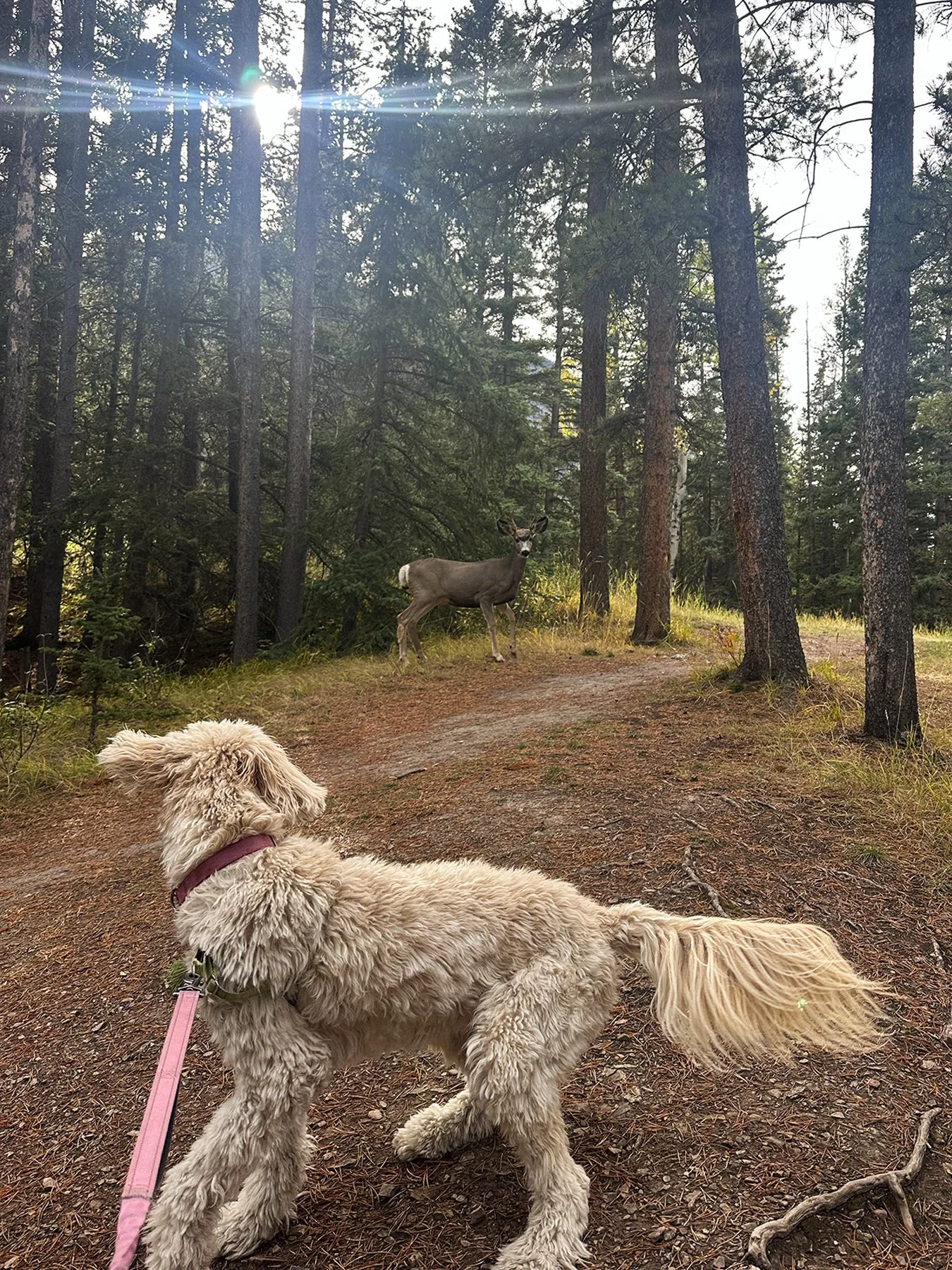
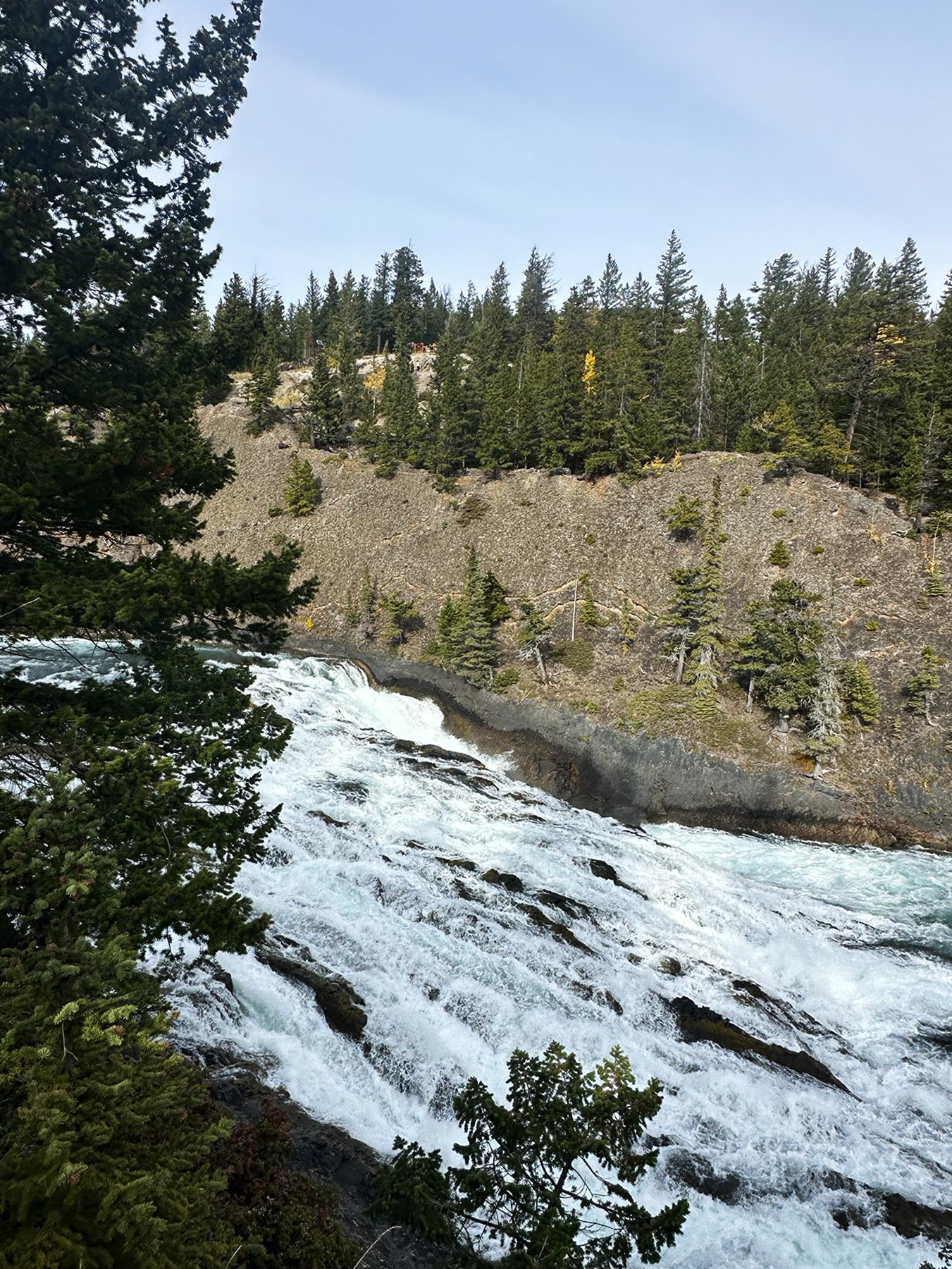
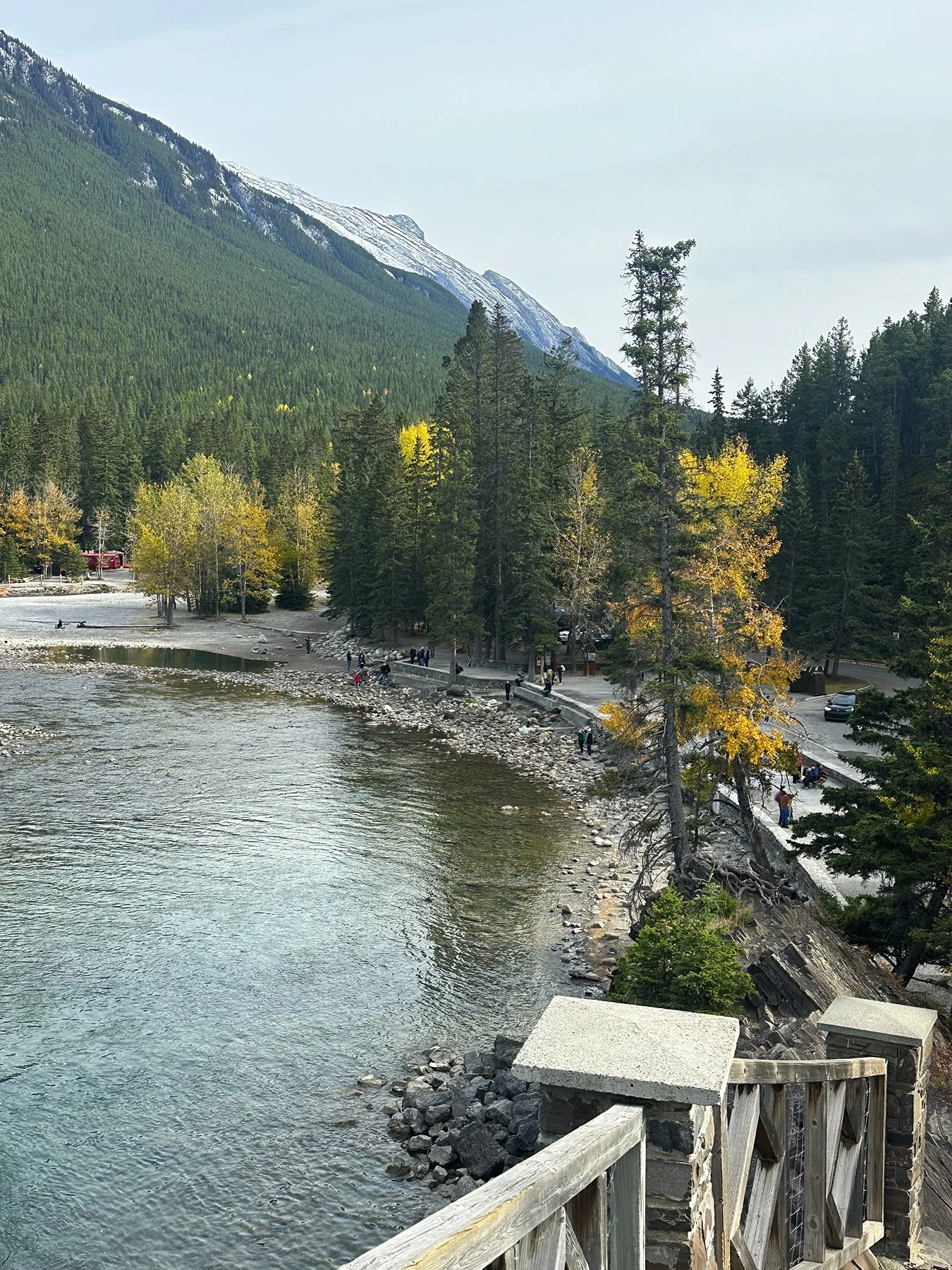
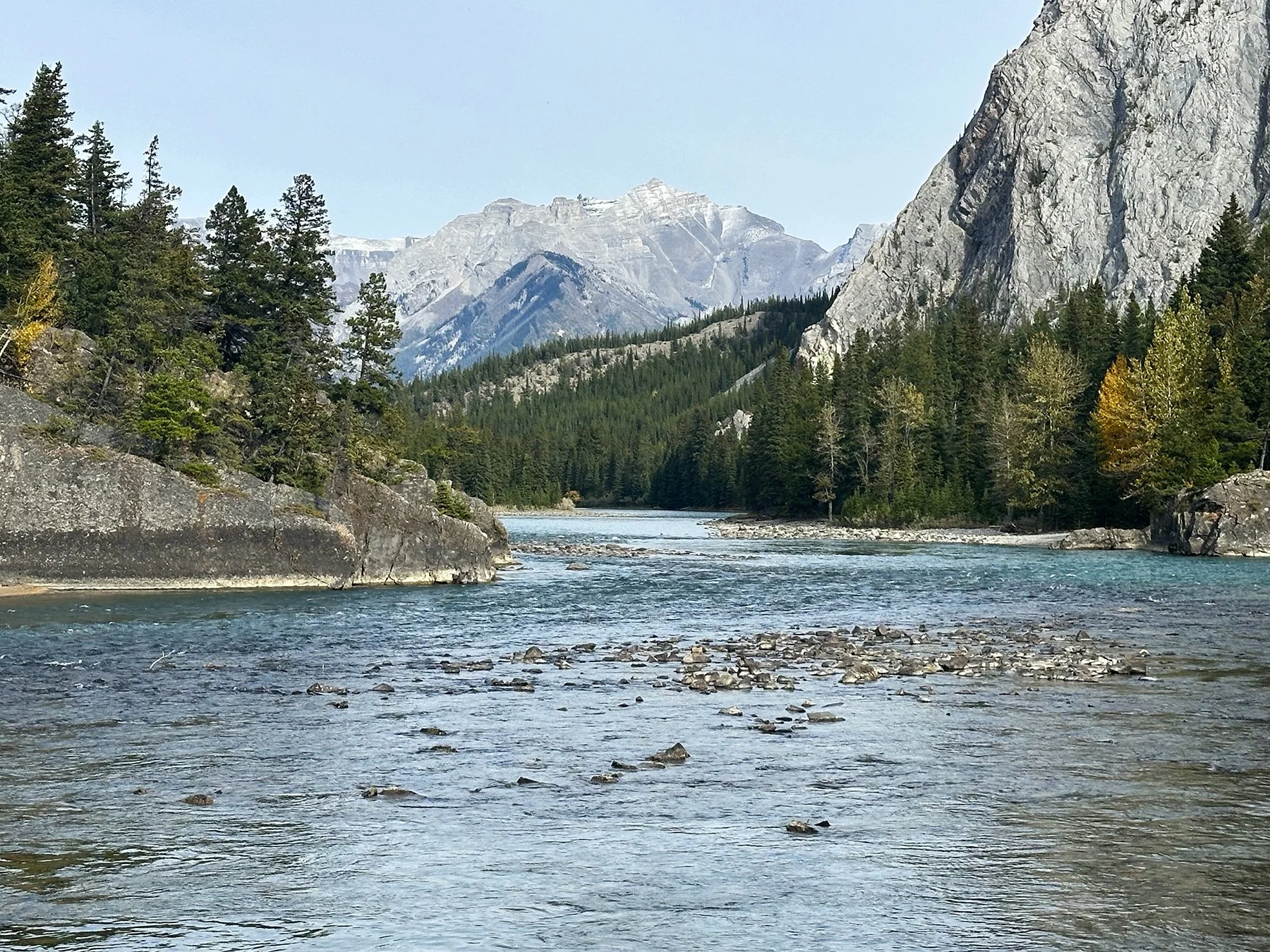
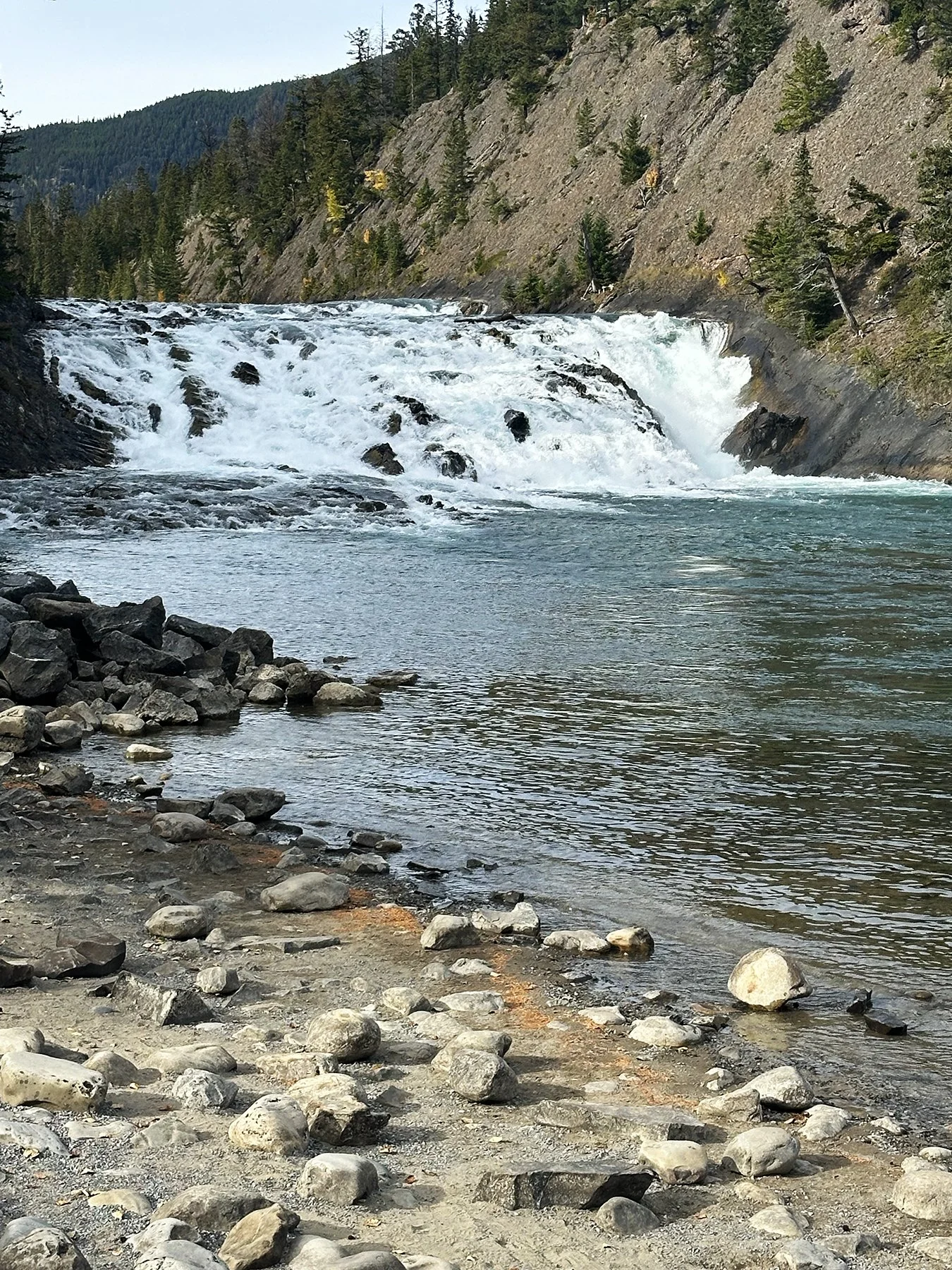
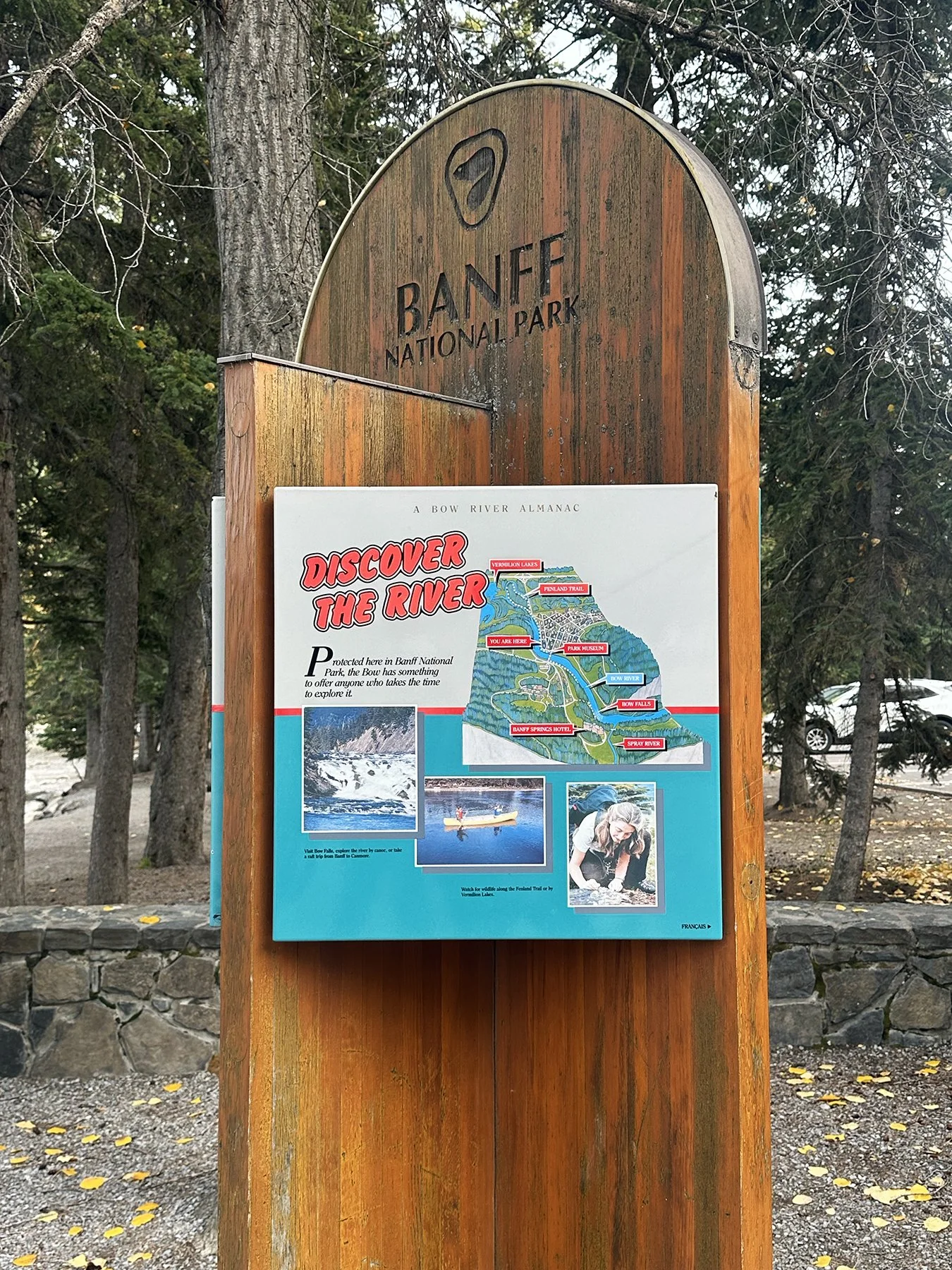
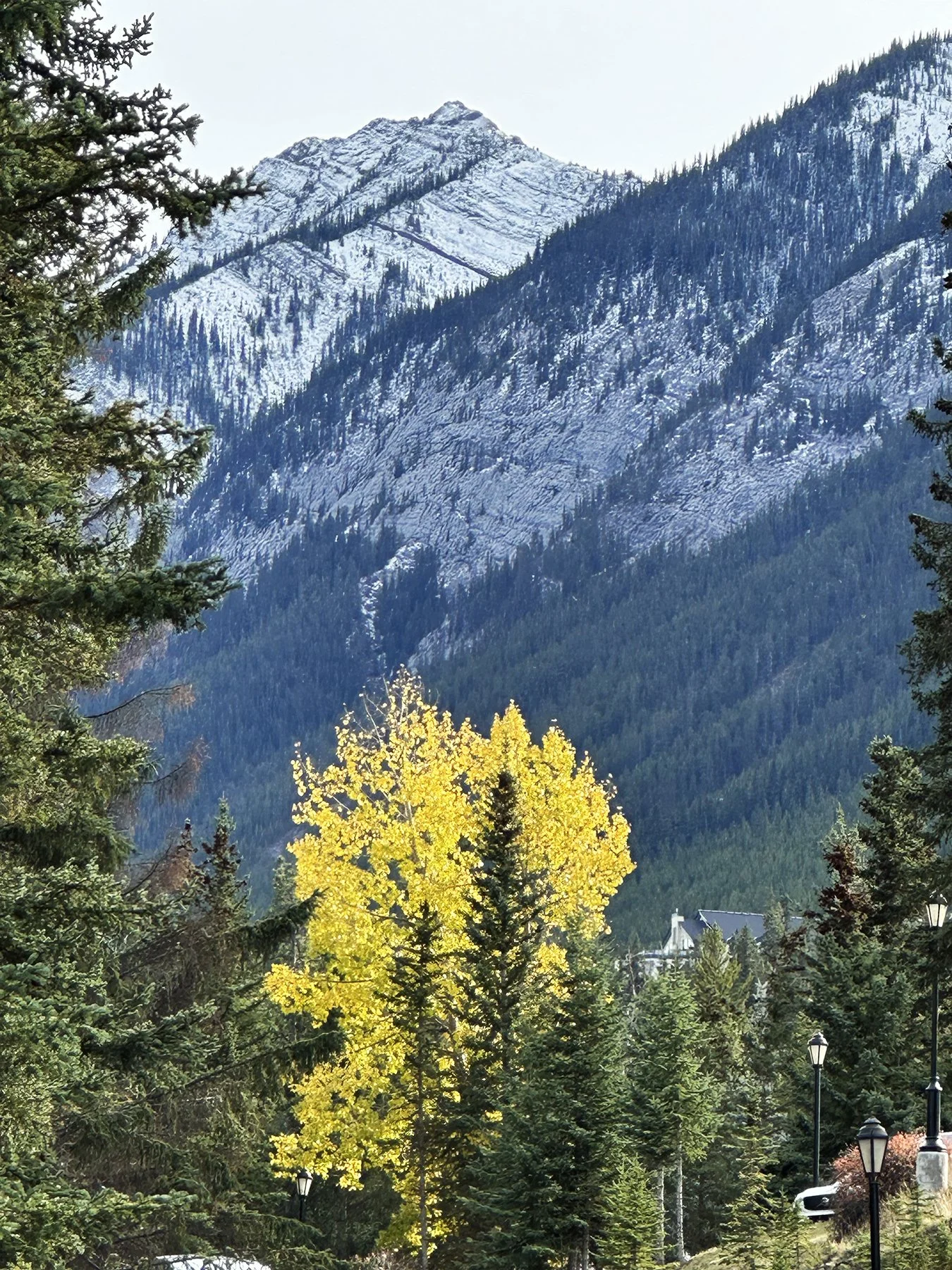
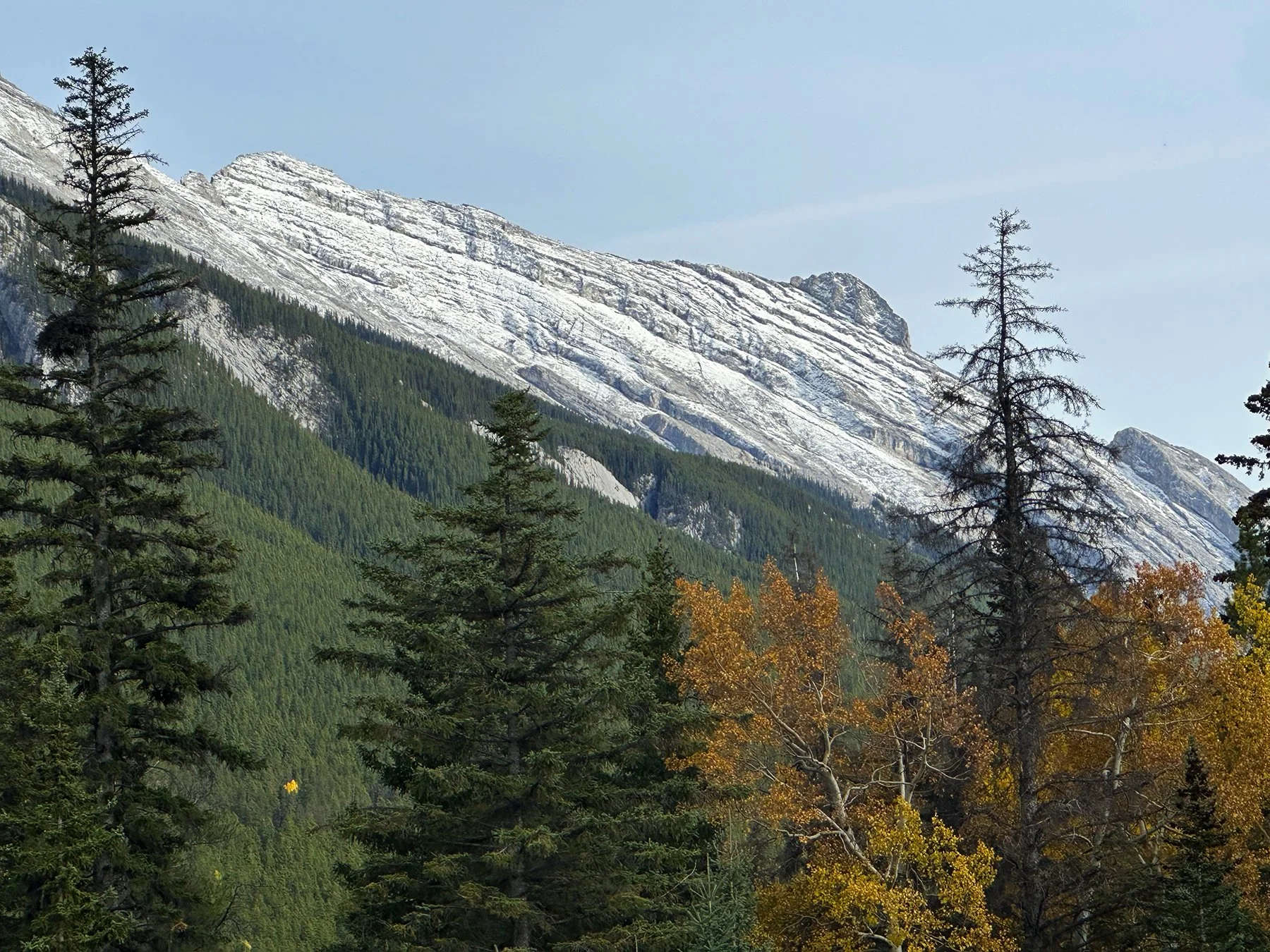
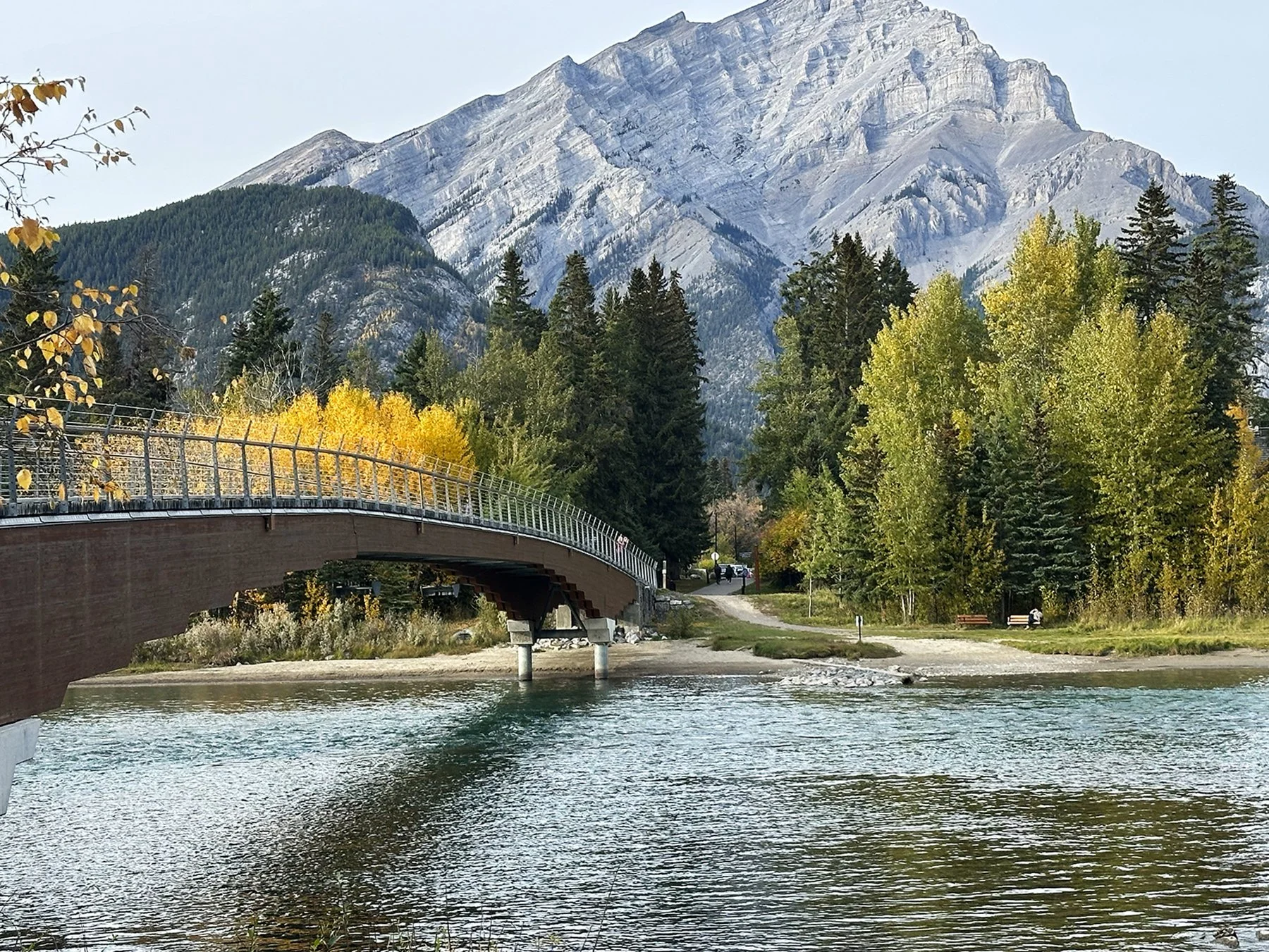
The town itself is surrounded by mountains, notably Mount Rundle, Sulphur Mountain, Mount Norquay, and Cascade Mountain. The Bow River slices through Banff and has trails you can walk or bike on alongside it. So Maisie and I took off down one of them and discovered some really pretty-but-small falls (Bow Falls), near the confluence of the Bow River and Spray River. Apparently, the 1953 Marilyn Monroe film River of No Return featured those falls. As we traversed the trail, I looked up to see an elk just 15 feet away or so, right at the same time that Maisie saw it. She got—let’s say—really excited. I was able to grab a quick photo which is actually quite hilarious.
“The Bow does not slide or rustle like Prairie rivers, but brawls across bars of blue pebbles, and a greenish tinge in its waters hints of snows.” – Rudyard Kipling
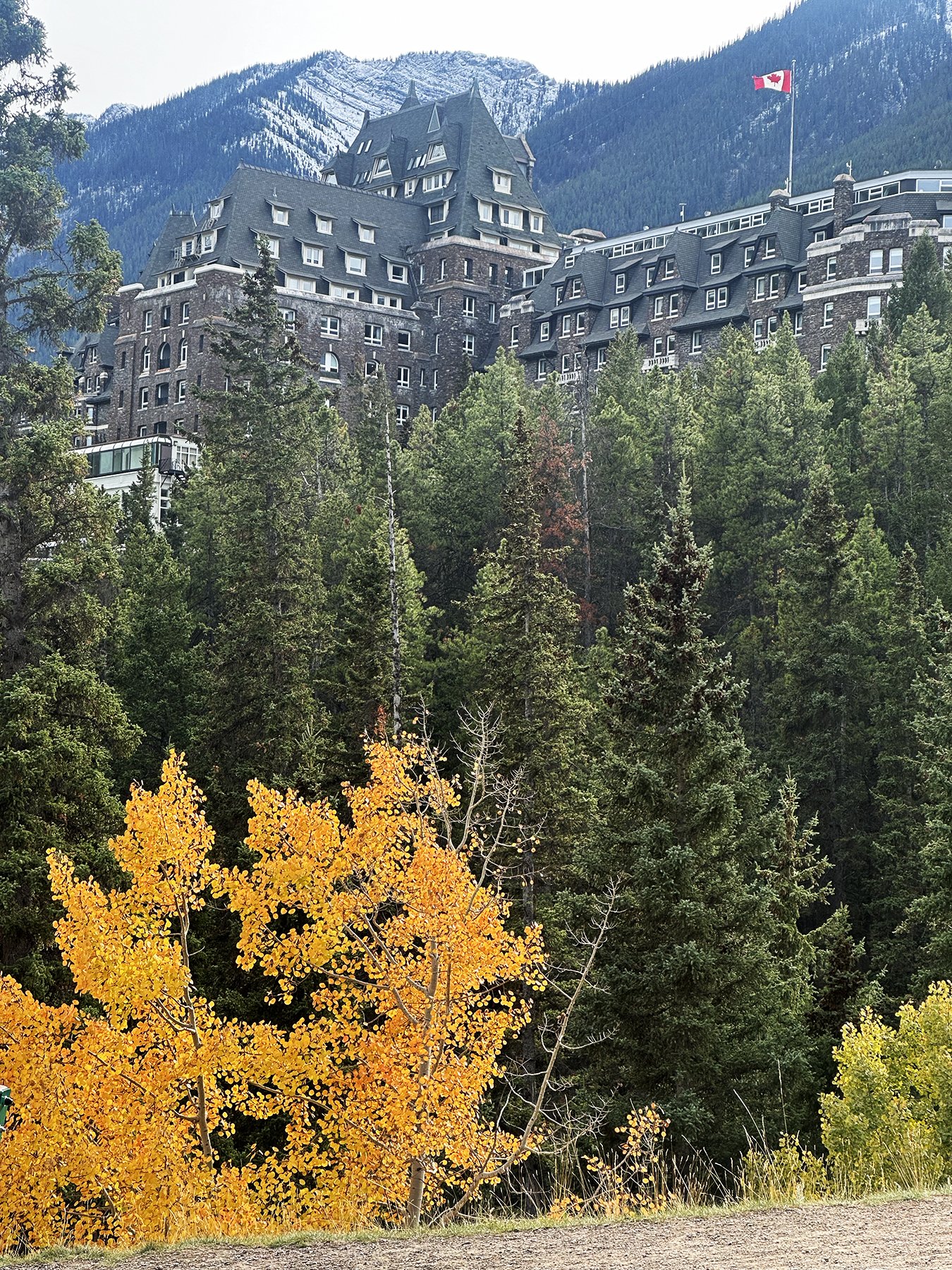
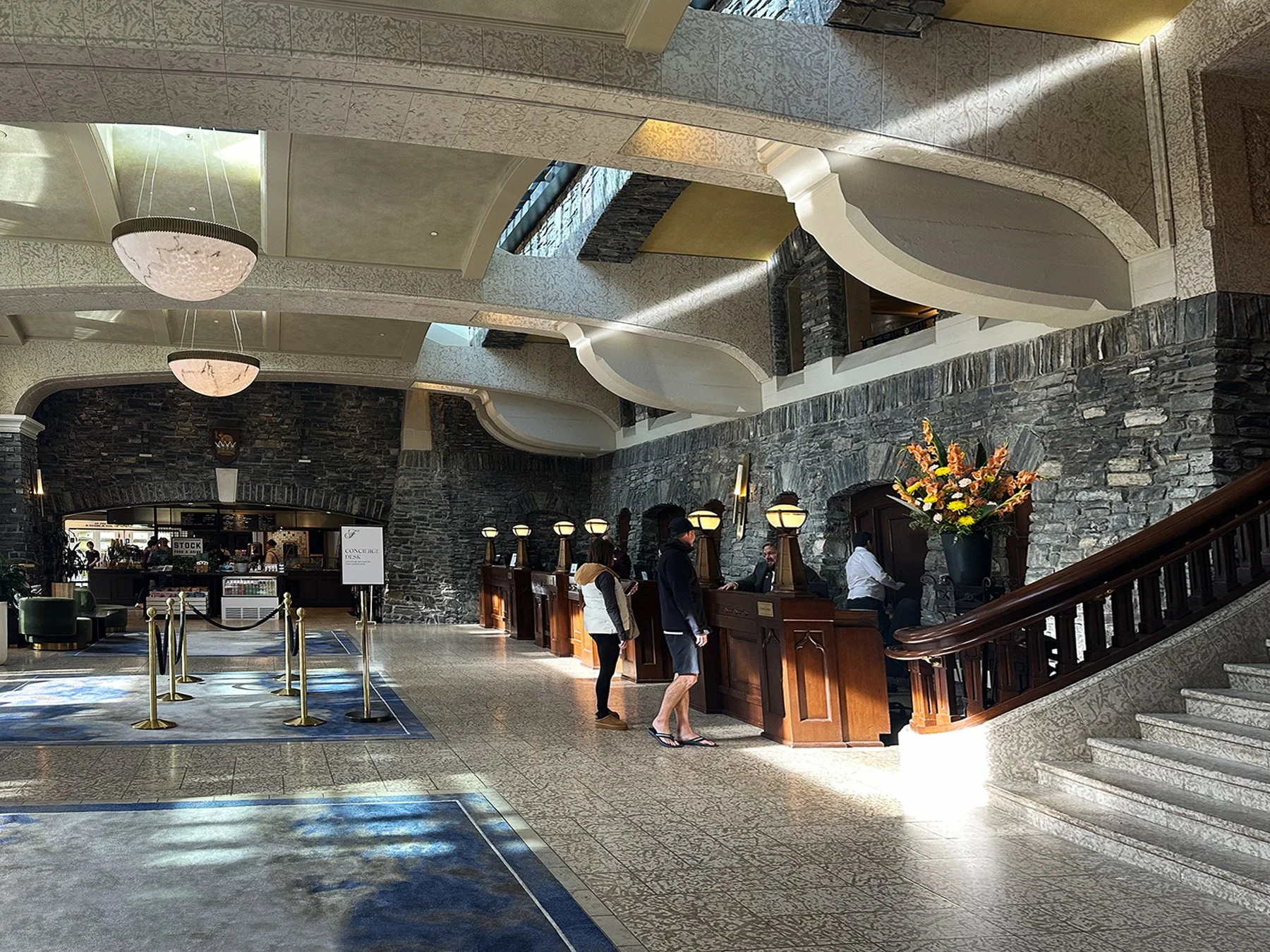
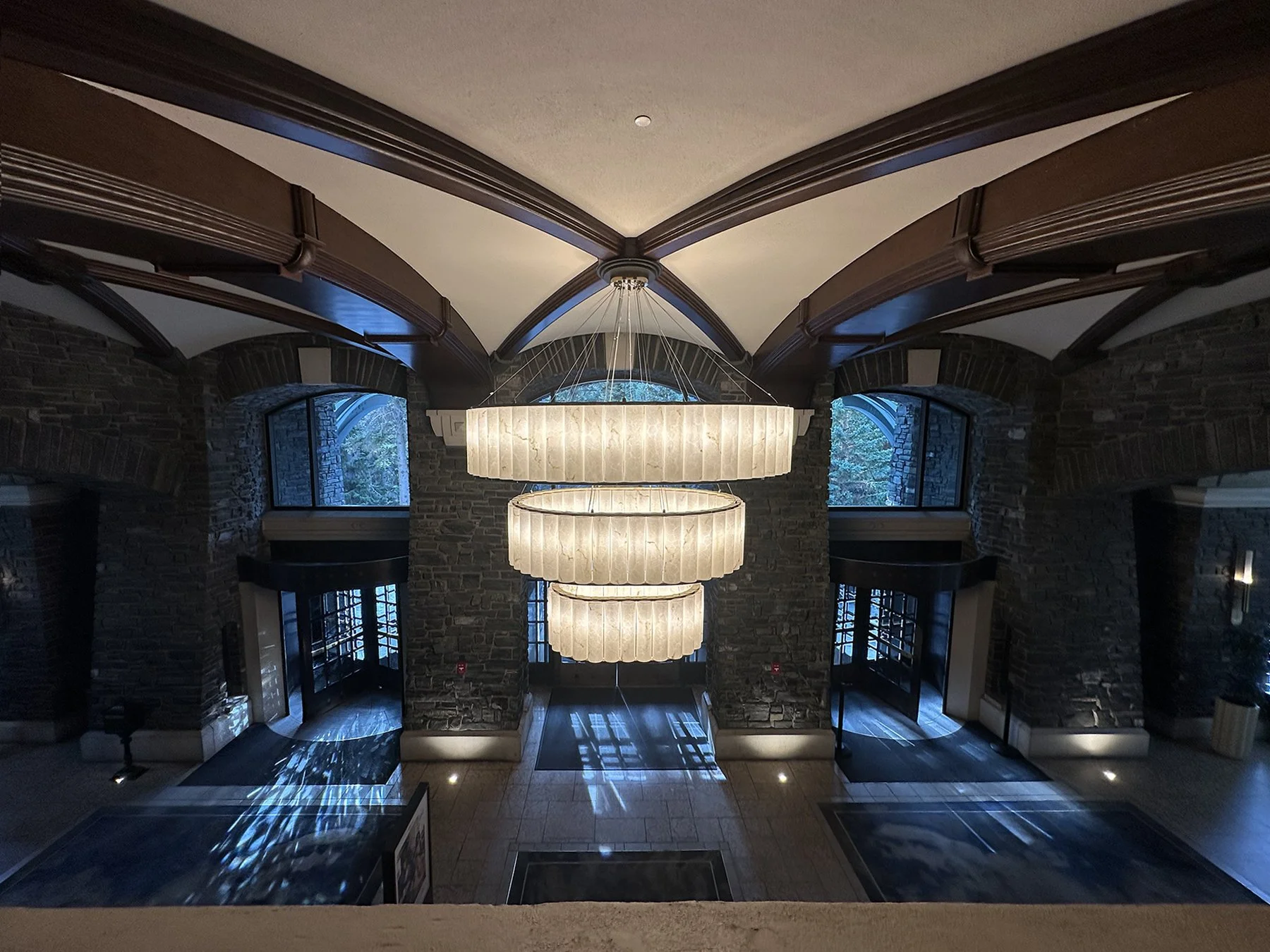
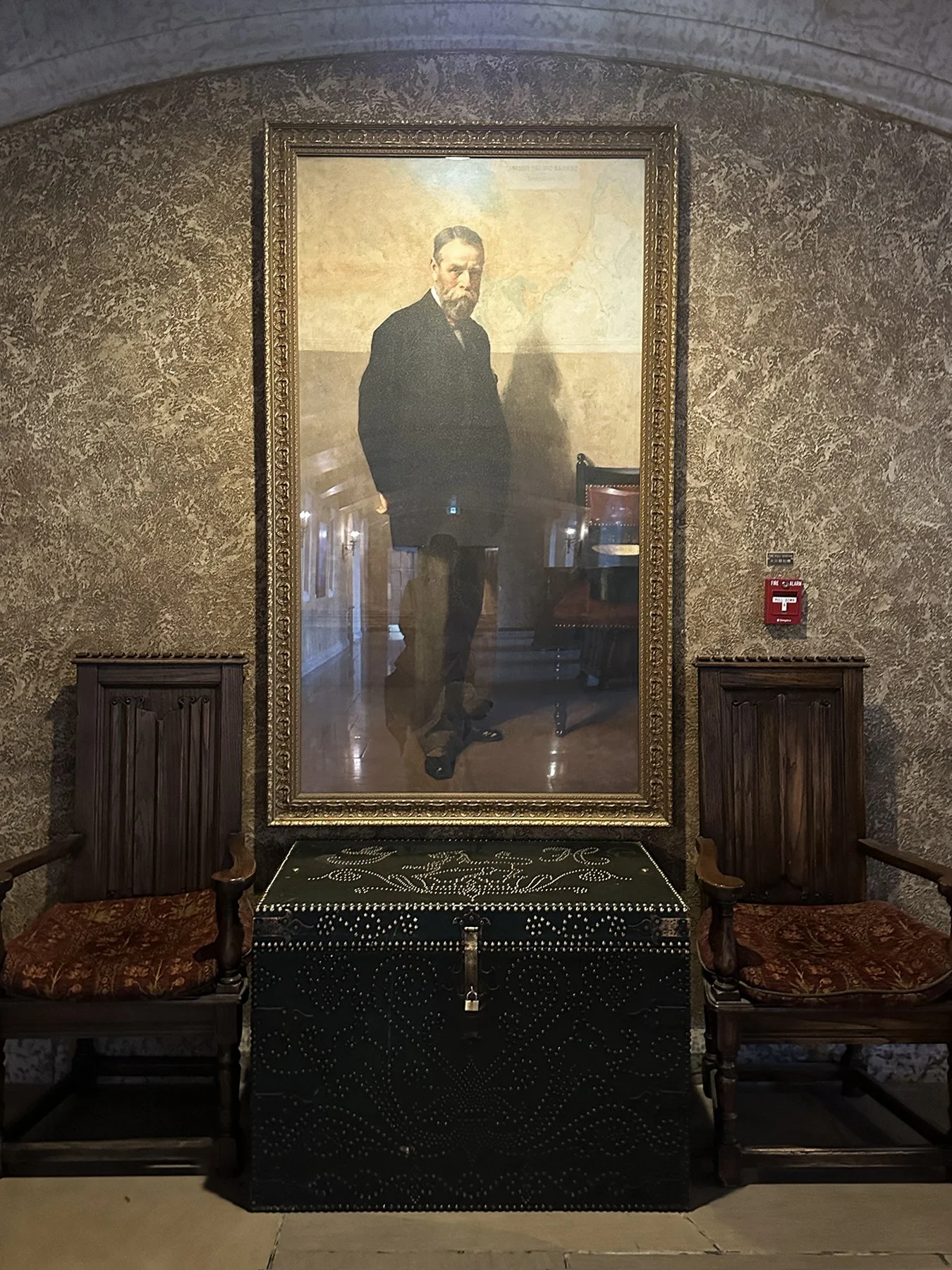
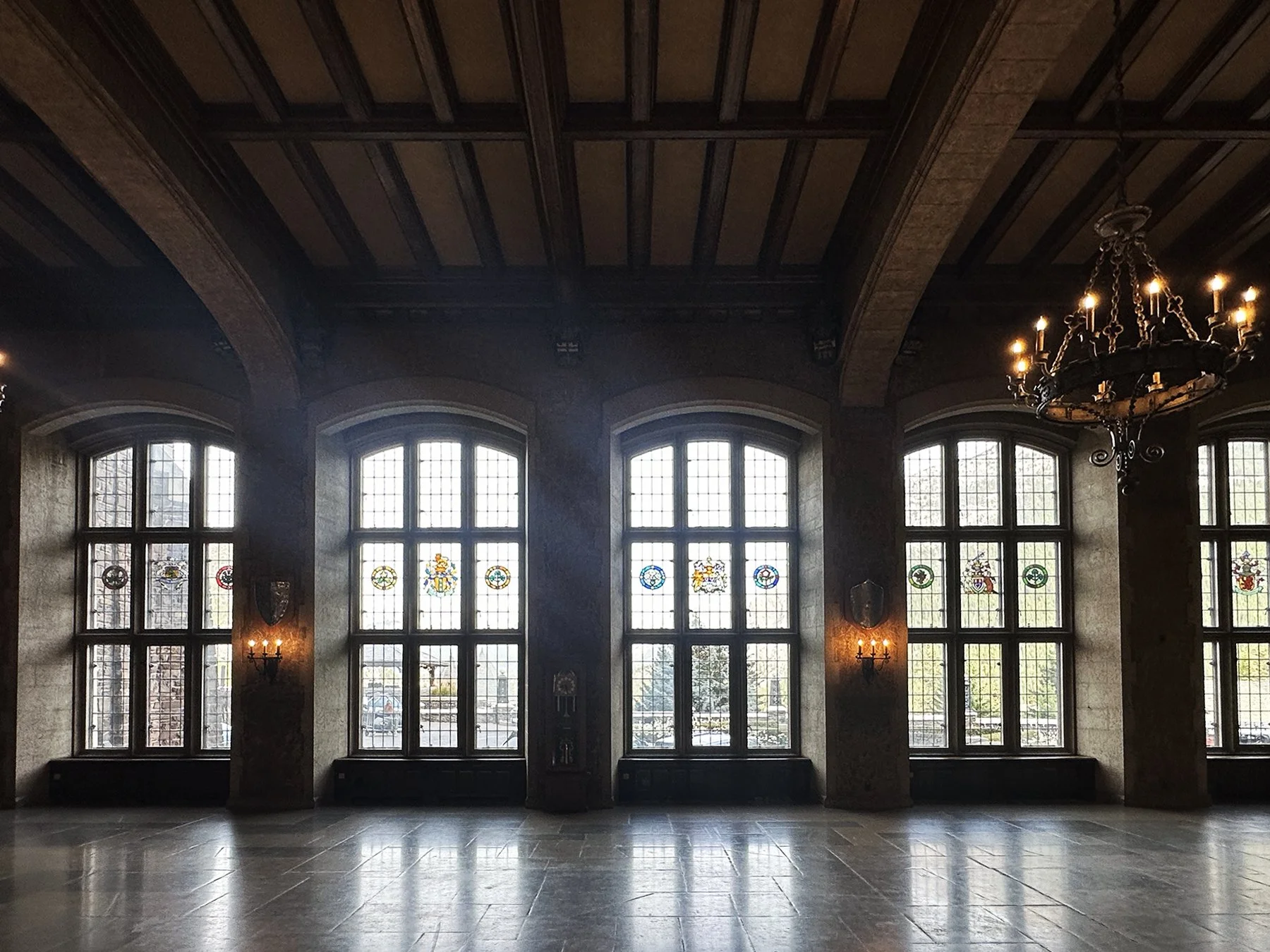
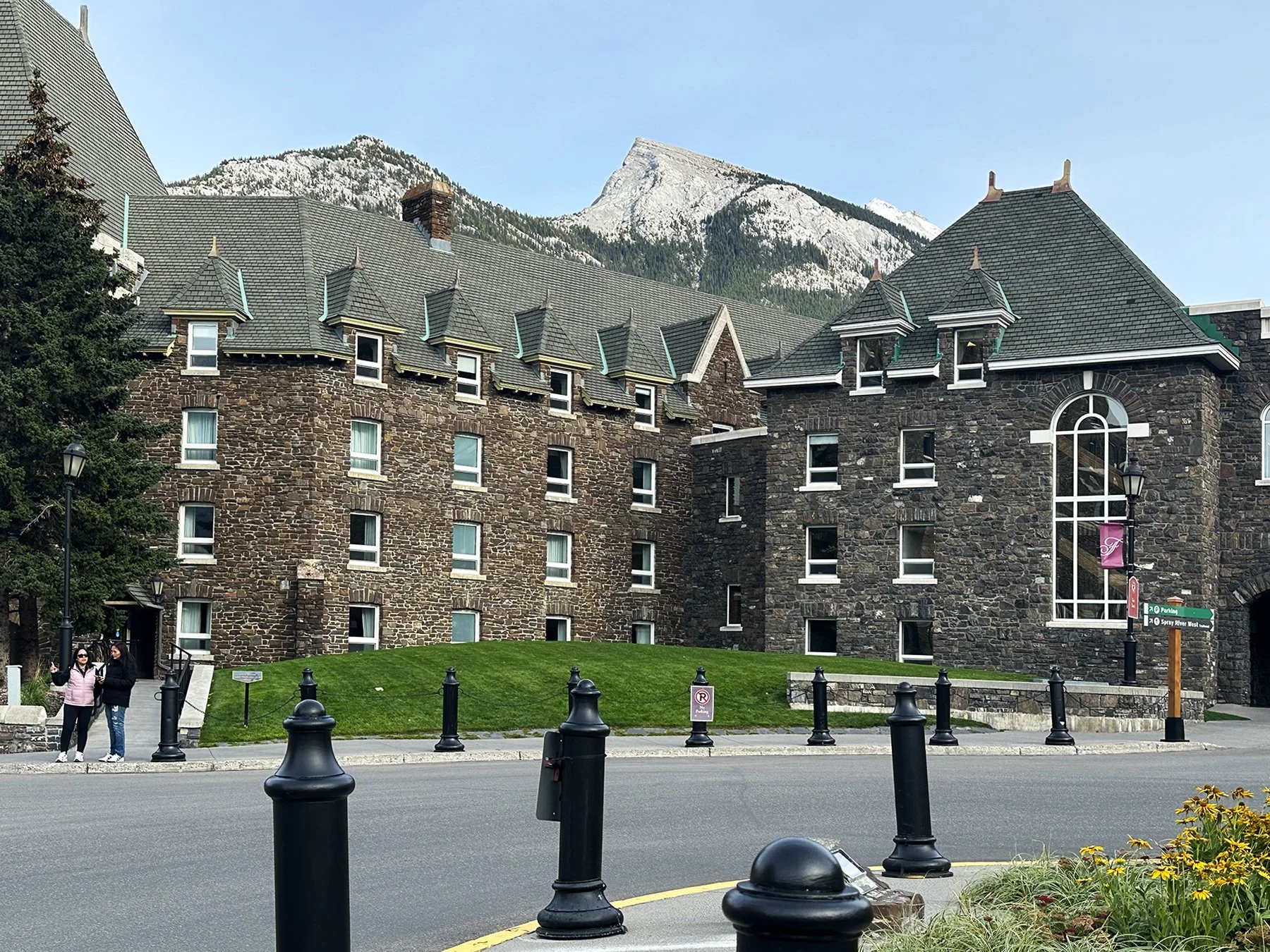
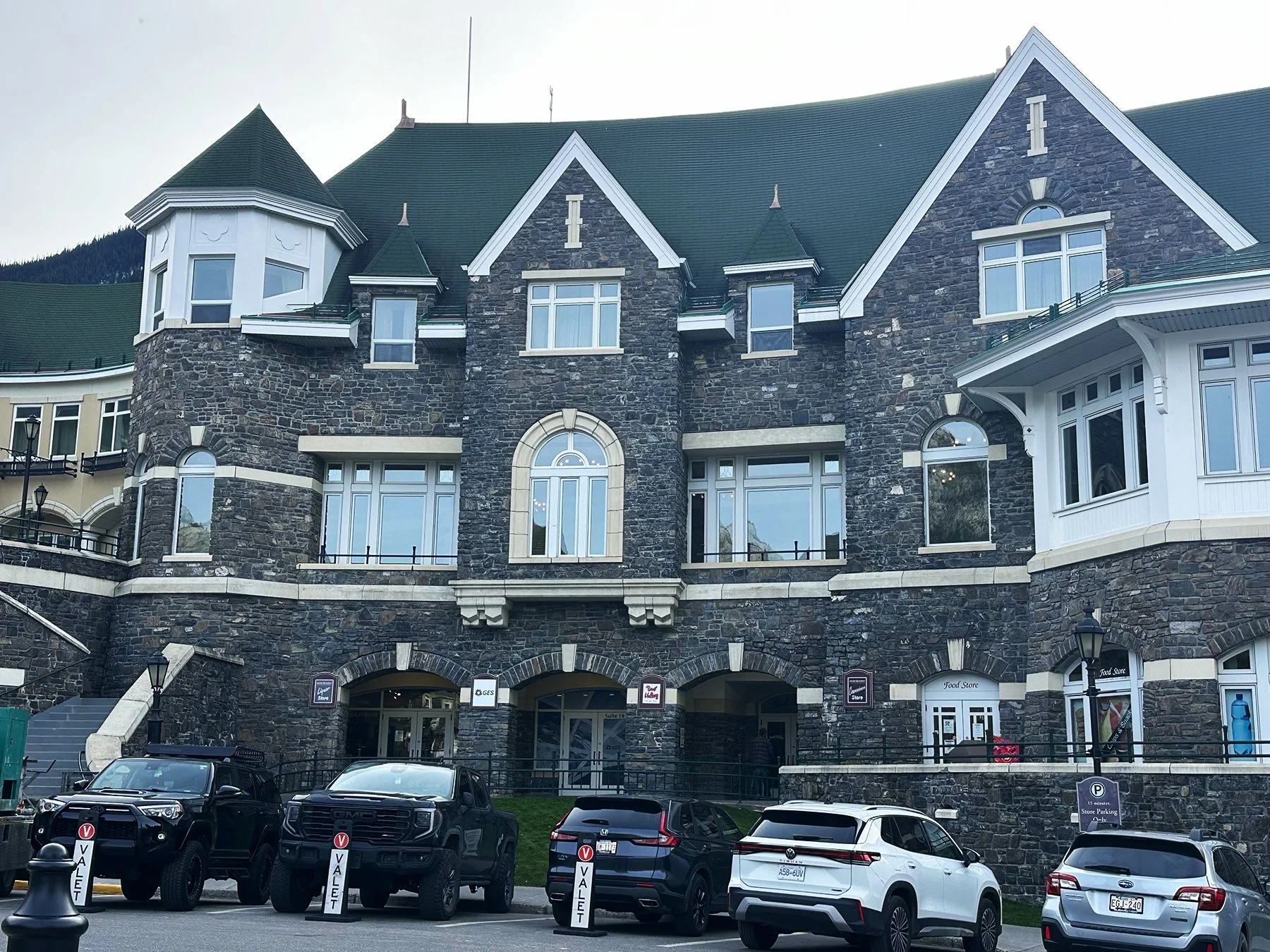
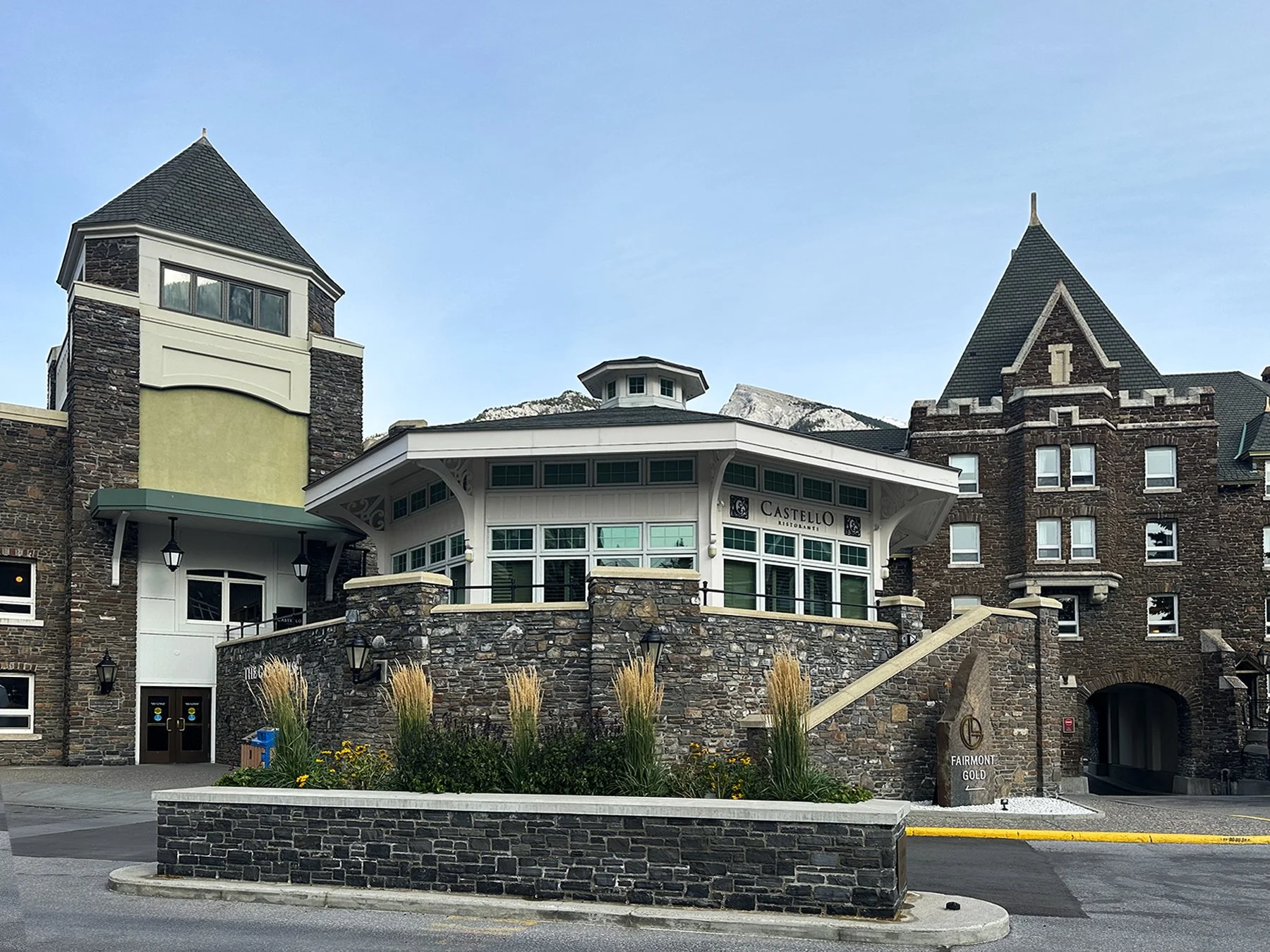
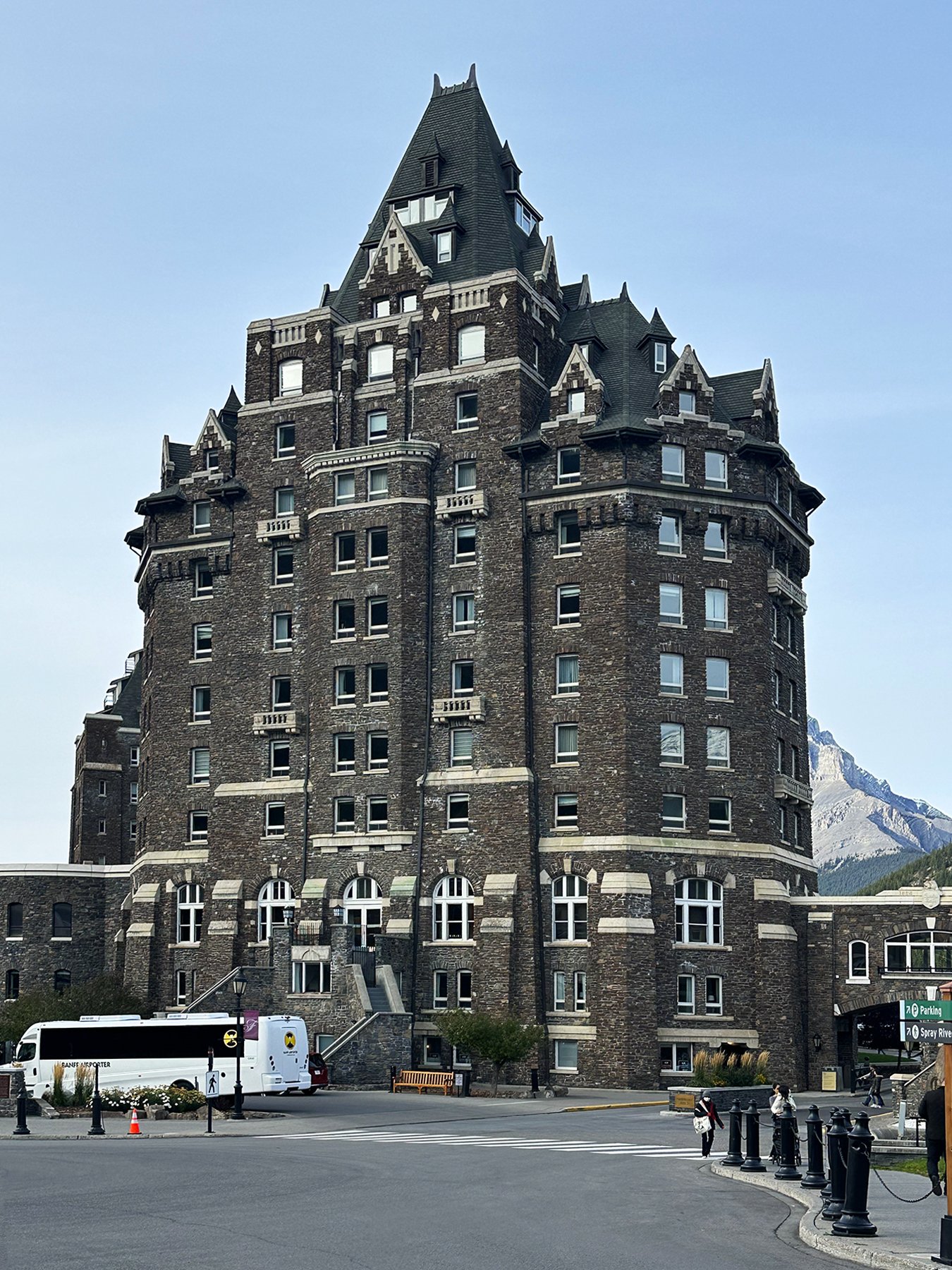
I’ve mentioned this before, but I really don’t take the time to completely research a place before I go exploring. So as we walked along the river, I glanced up high to my right to see what looked like an old European castle! Well, if you know me, you know I just had to go check it out. Did it matter that it was WAY up the hill and a fair distance away? Of course not. Turns out it is the Fiarmont Banff Springs, and here’s a little history:
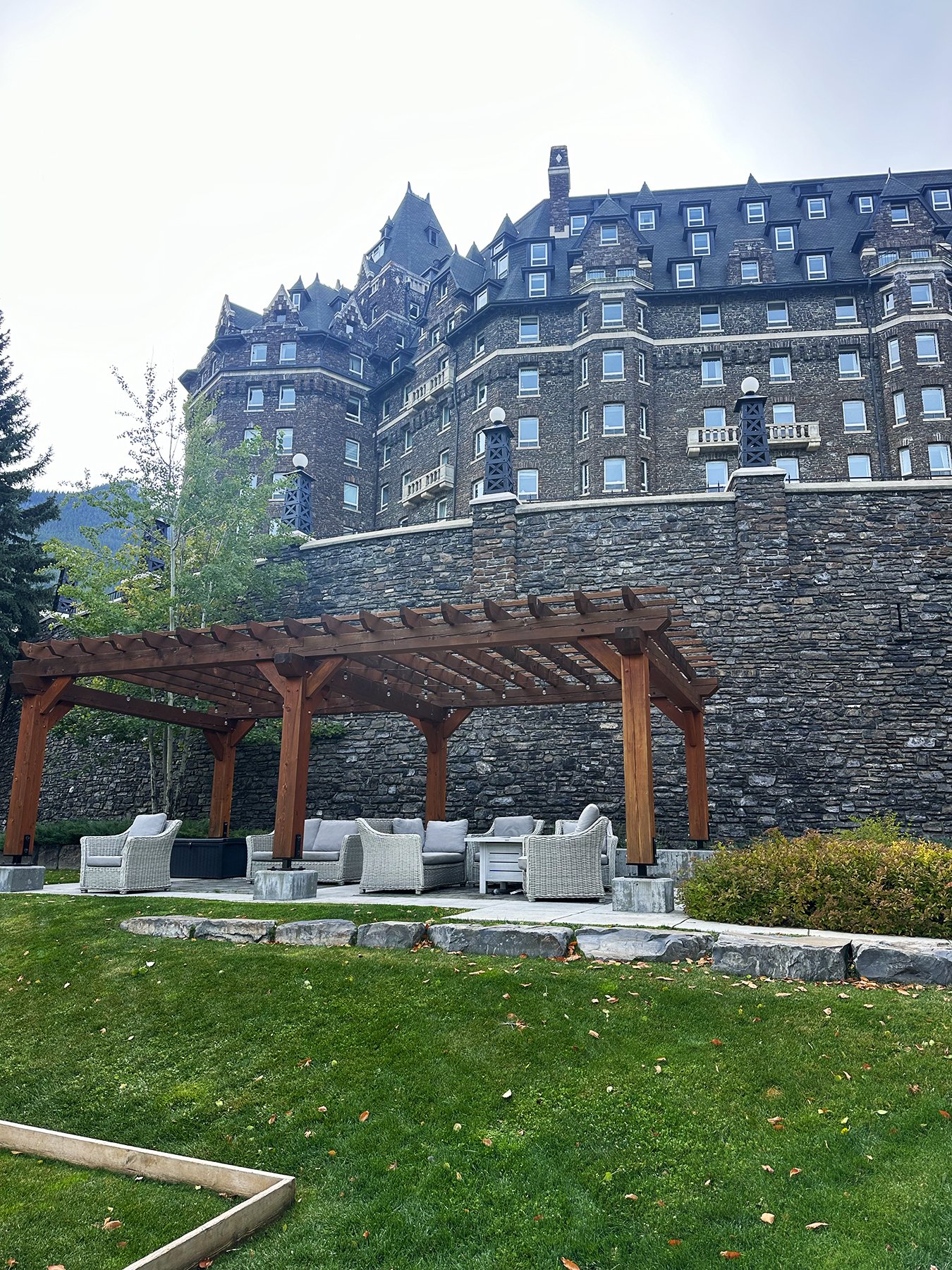
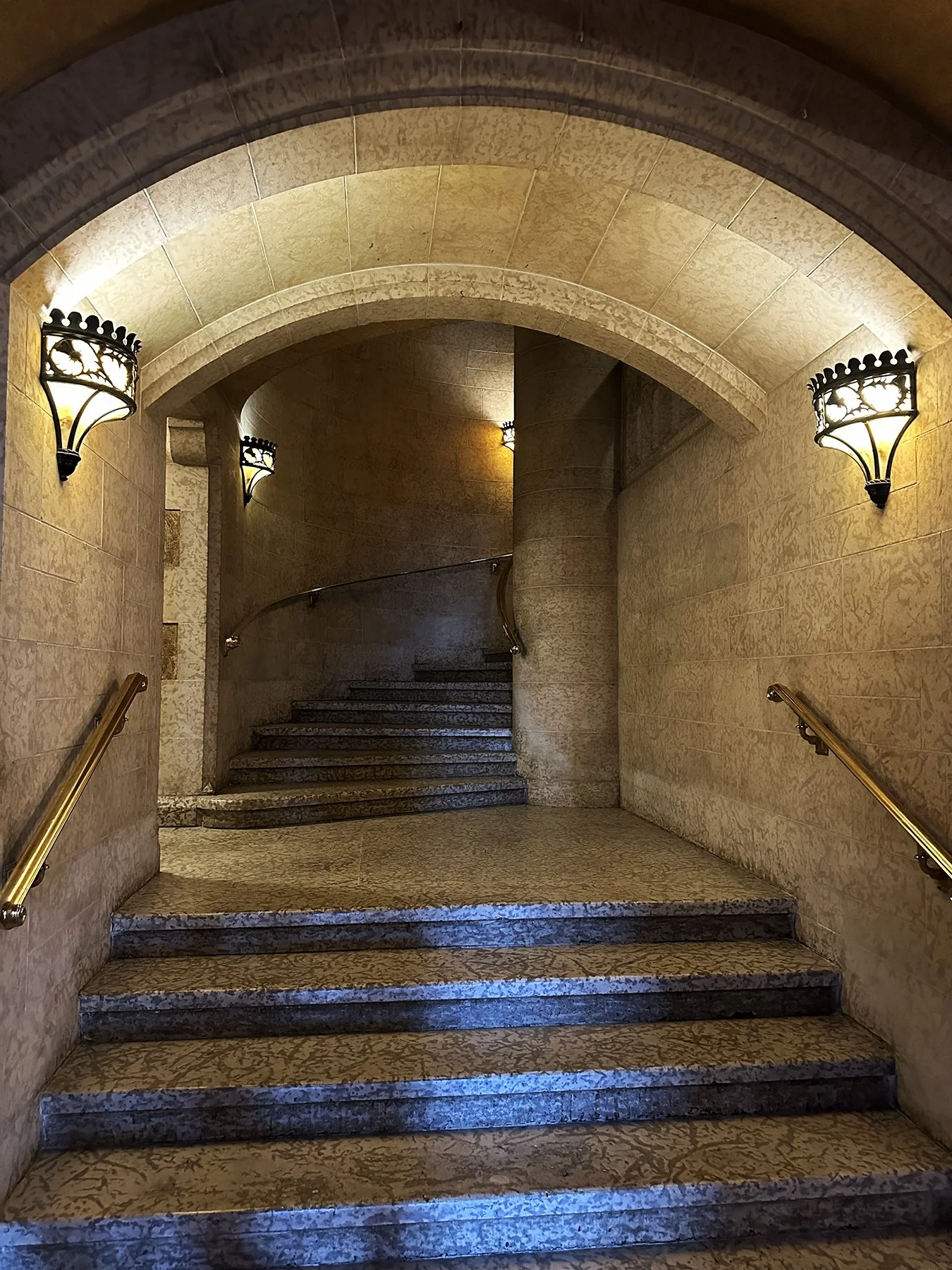
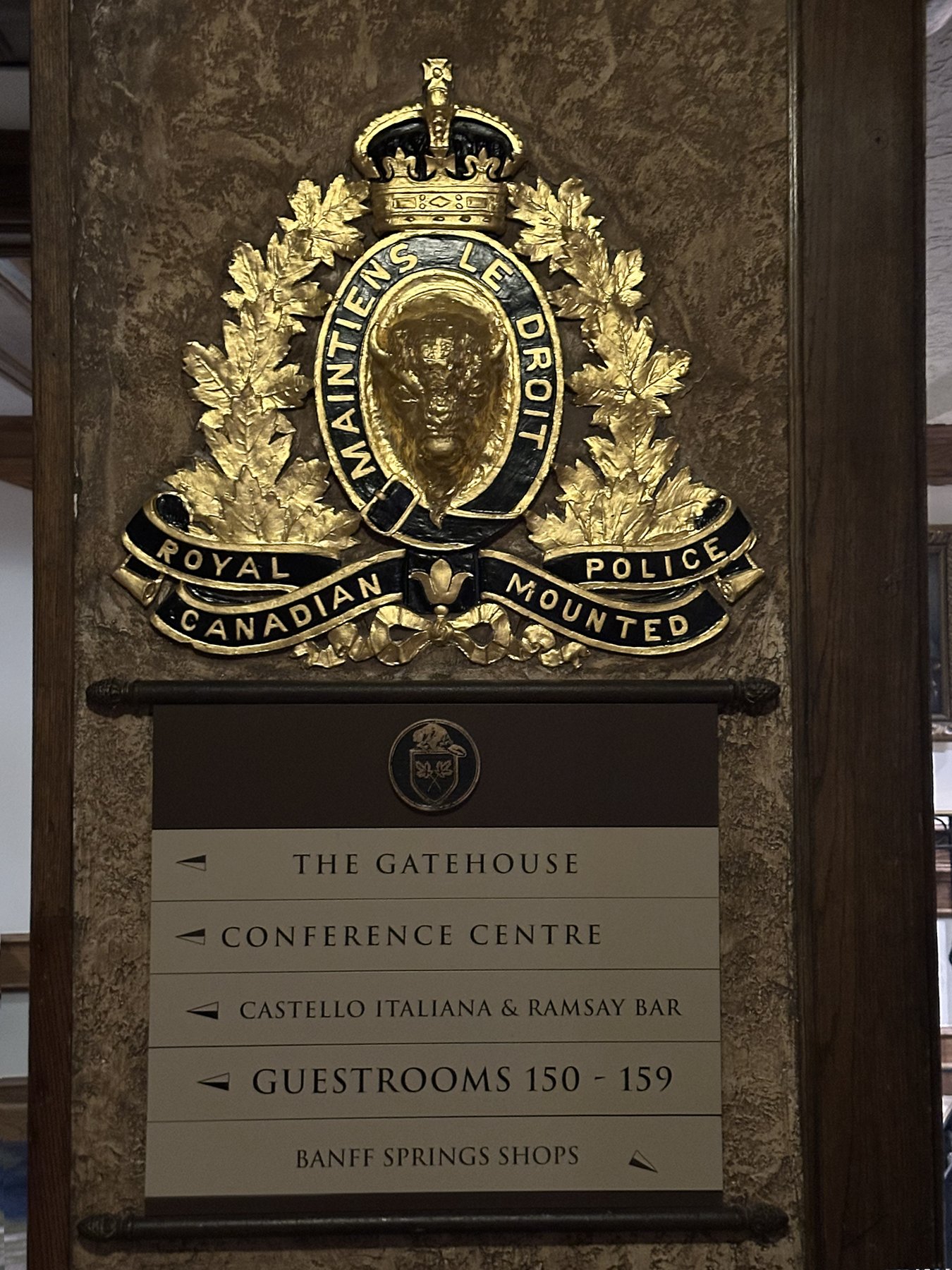
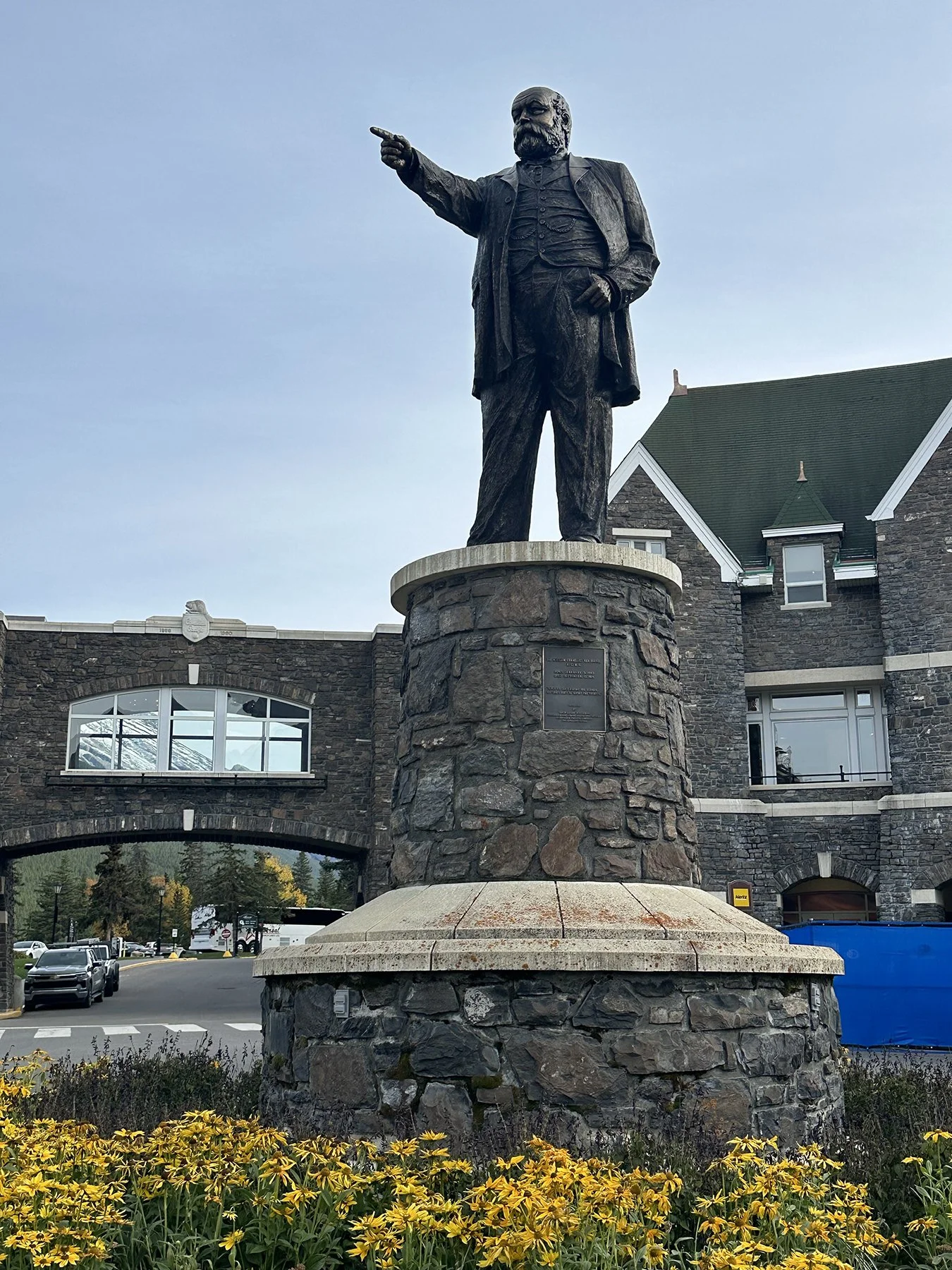
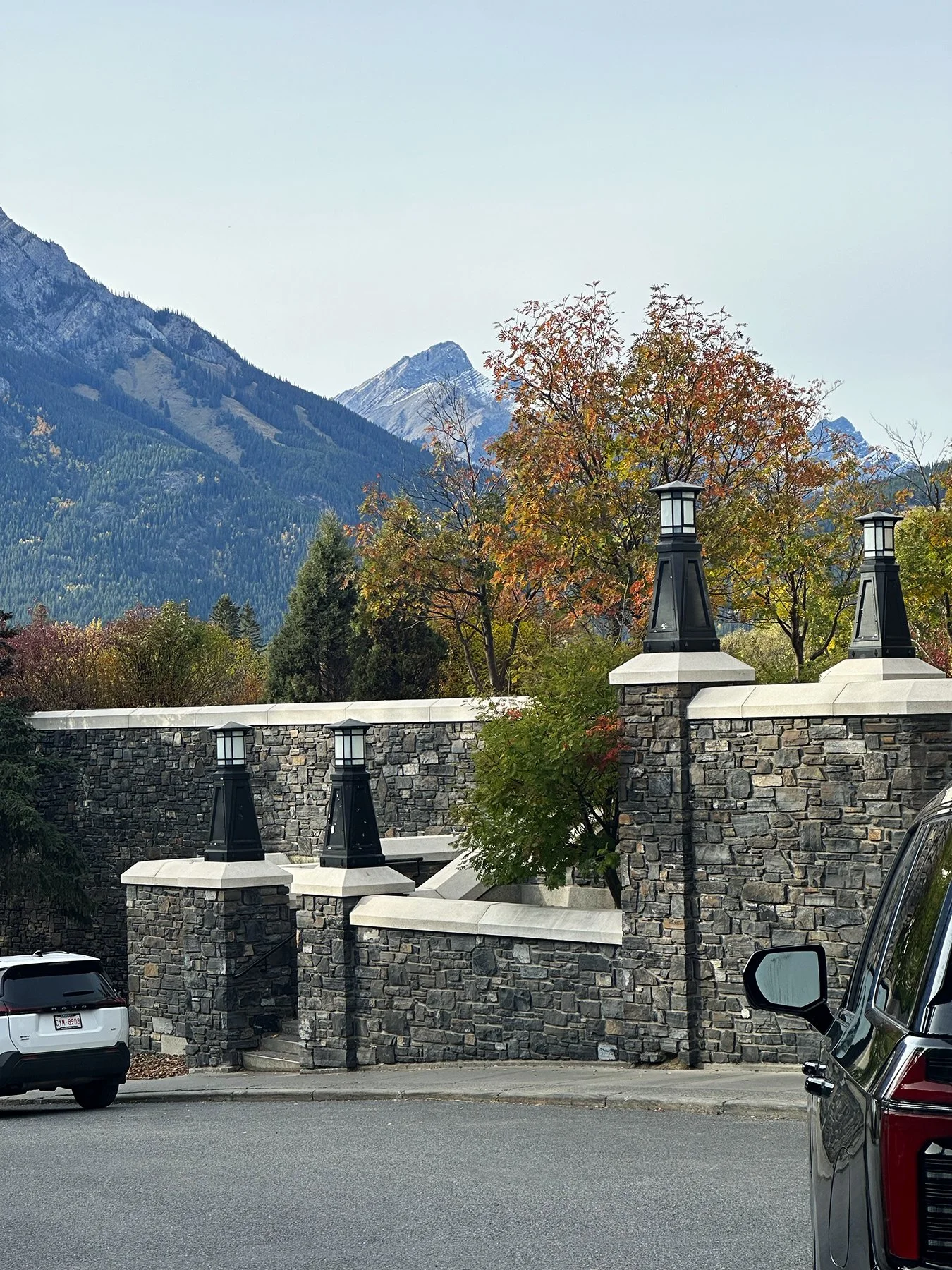
Fairmont Banff Springs was designed in the Scottish baronial style and is often called the “Castle in the Rockies.” It was first opened in 1888 by the Canadian Pacific Railway. The landmark was built to promote mountain tourism. Due to the increasing popularity of the hotel as an international mountain resort destination, a decision was made in 1910 to replace the wooden hotel. The rebuilt grand and luxurious hotel was completed on May 15, 1928. Styled in the spirit of a Scottish baronial castle, the thick limestone blocks used on the exterior were quarried from Mount Rundle, a short distance from the hotel along the Spray River. Hundreds of Italian stone cutters and Scottish stone masons were employed to complete the project.
One of the signs read: “This hotel is among the largest and most renowned of the fashionable resort hotels established along railway and steamship routes in Canada during the late 19th and early 20th centuries. Constructed by the Canadian Pacific Railway Company in stages between 1911 and 1928, the hotel developed an international reputation for excellence as a vacation retreat and became a symbol of the significance of tourism in the Canadian Rockies. Its striking natural setting, Cháteau-style design and lavish interior décor appealed to a wealthy clientele seeking a wilderness experience in opulent surroundings.”
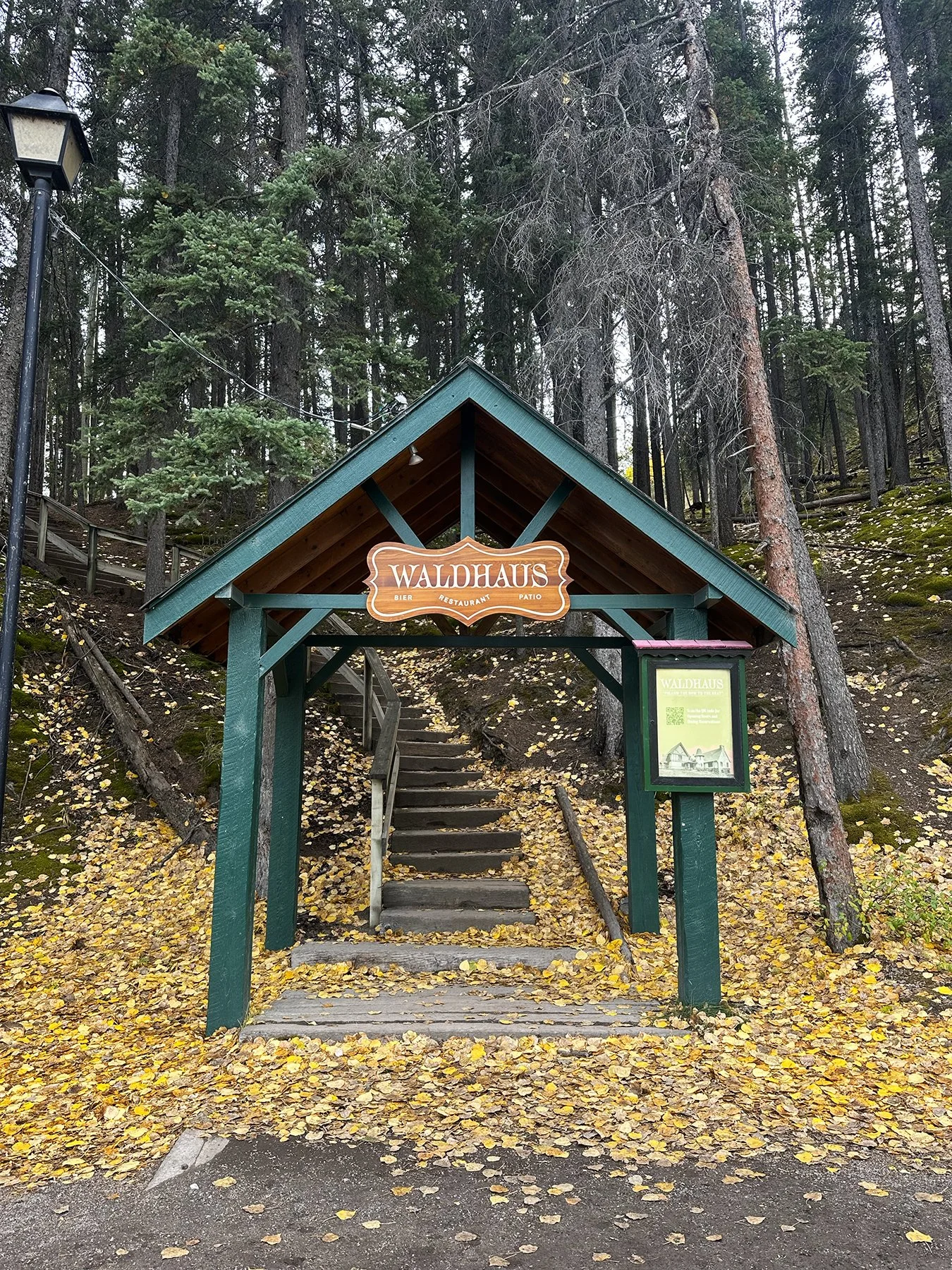
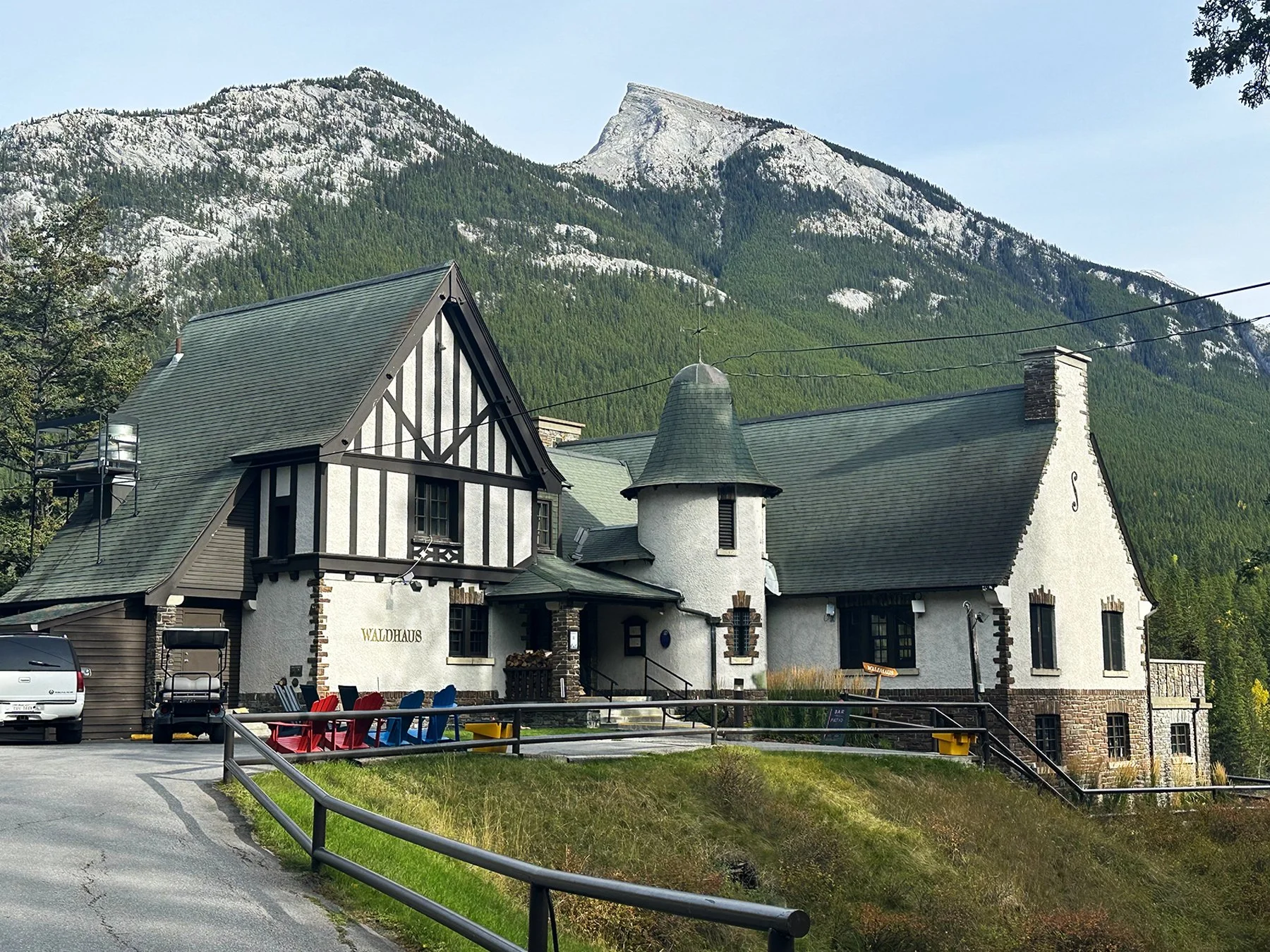
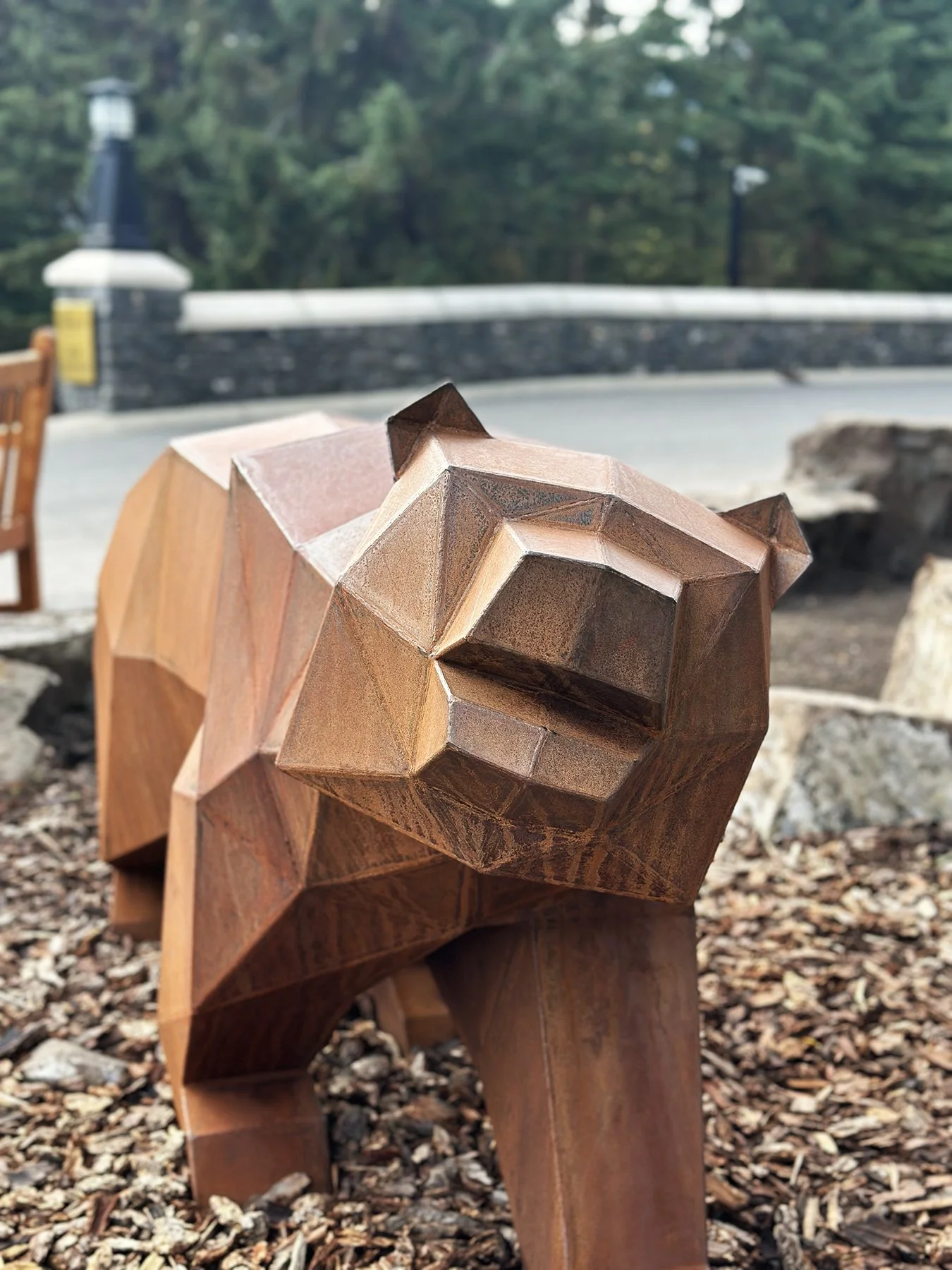
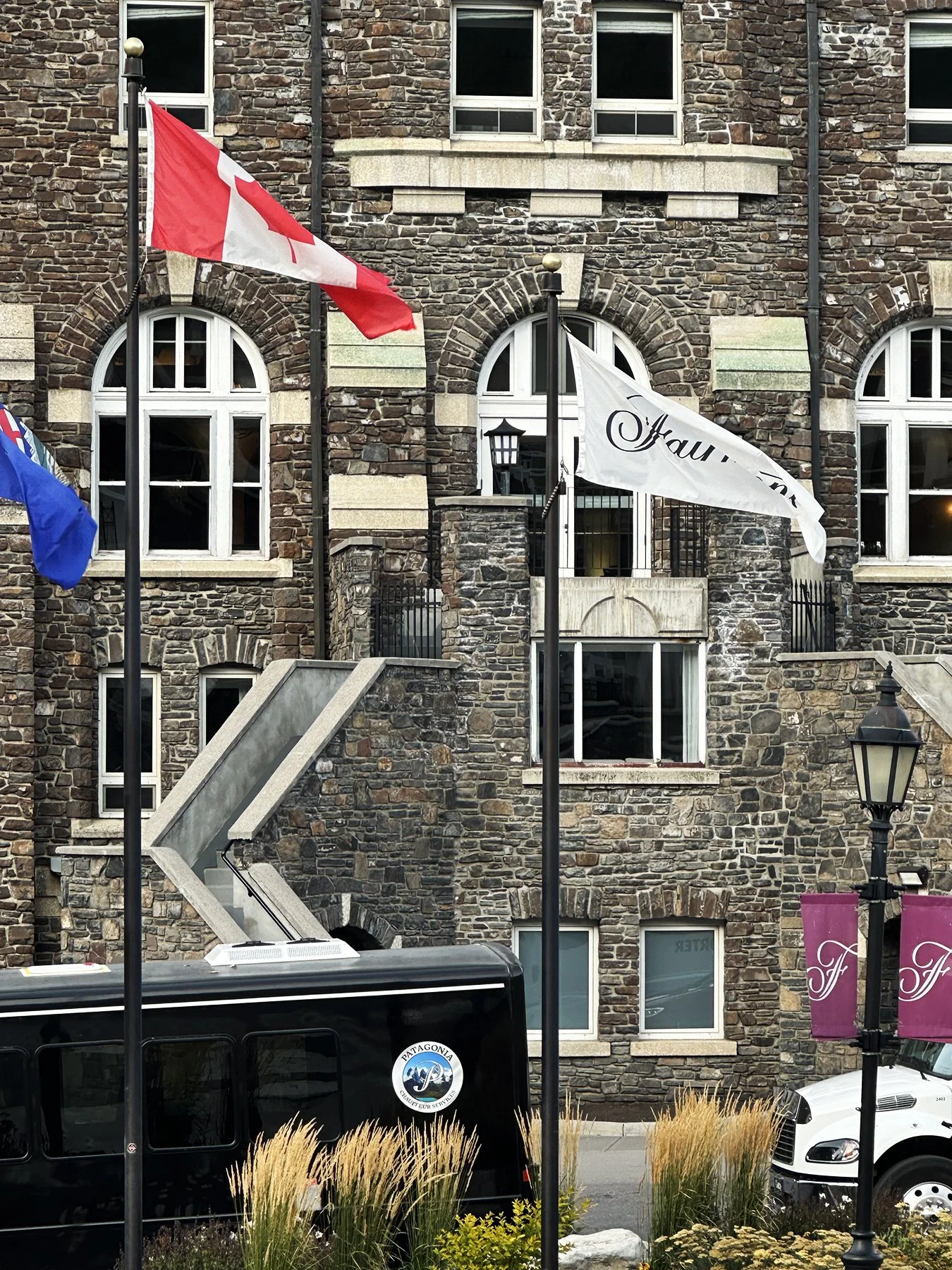
You know how sometimes you have to choose between asking permission and asking for forgiveness? Along my journeys with Maisie, I often will just enter a place with her like we own the place (so to speak). That’s what I did when we finally reached the “castle.” Happening upon one of the many side entrances, we just walked in and meandered around this fascinating piece of architecture. Everyone welcomed us like it was no big deal, which was certainly a pleasant surprise! The pictures tell the best story:
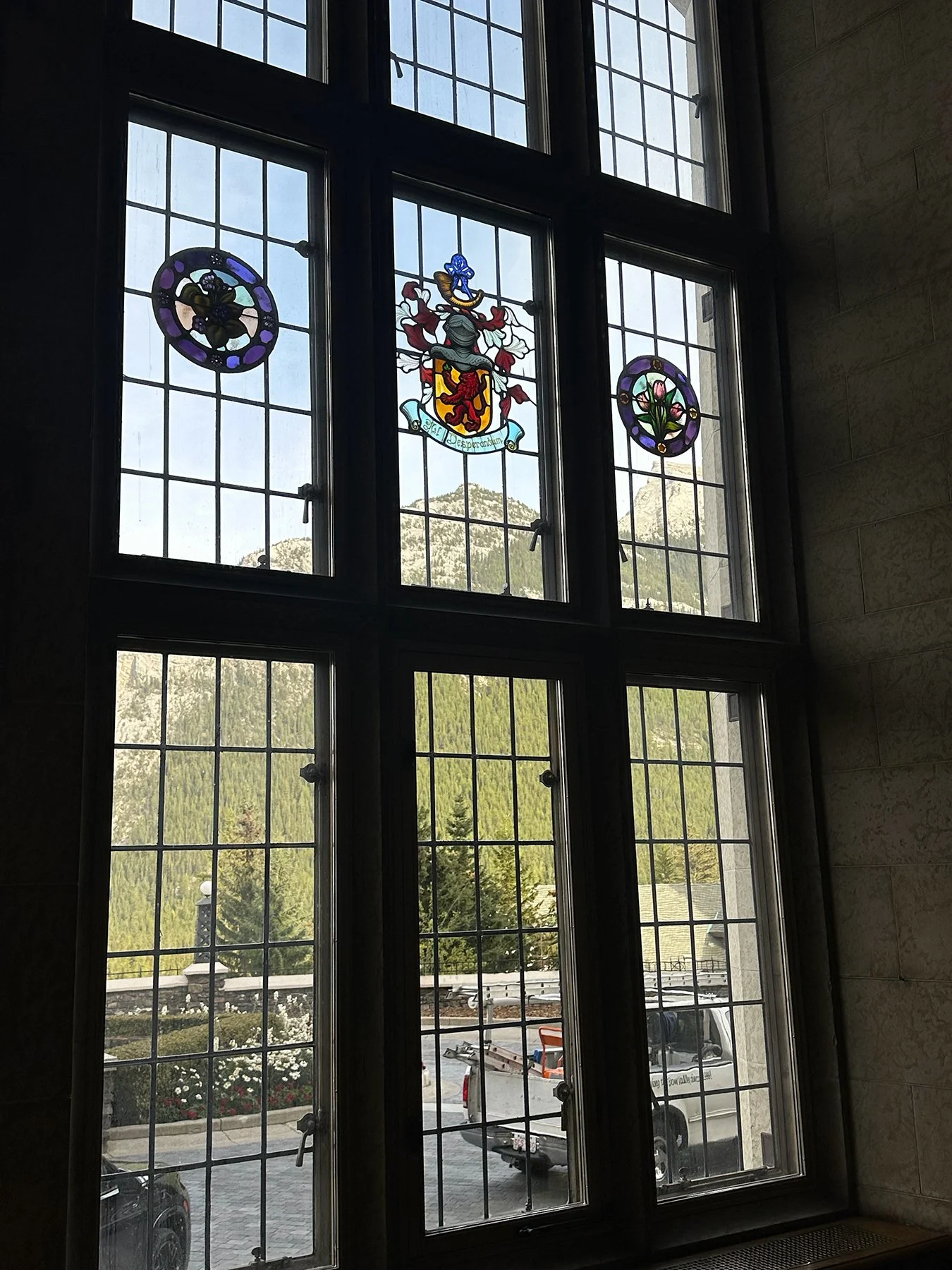
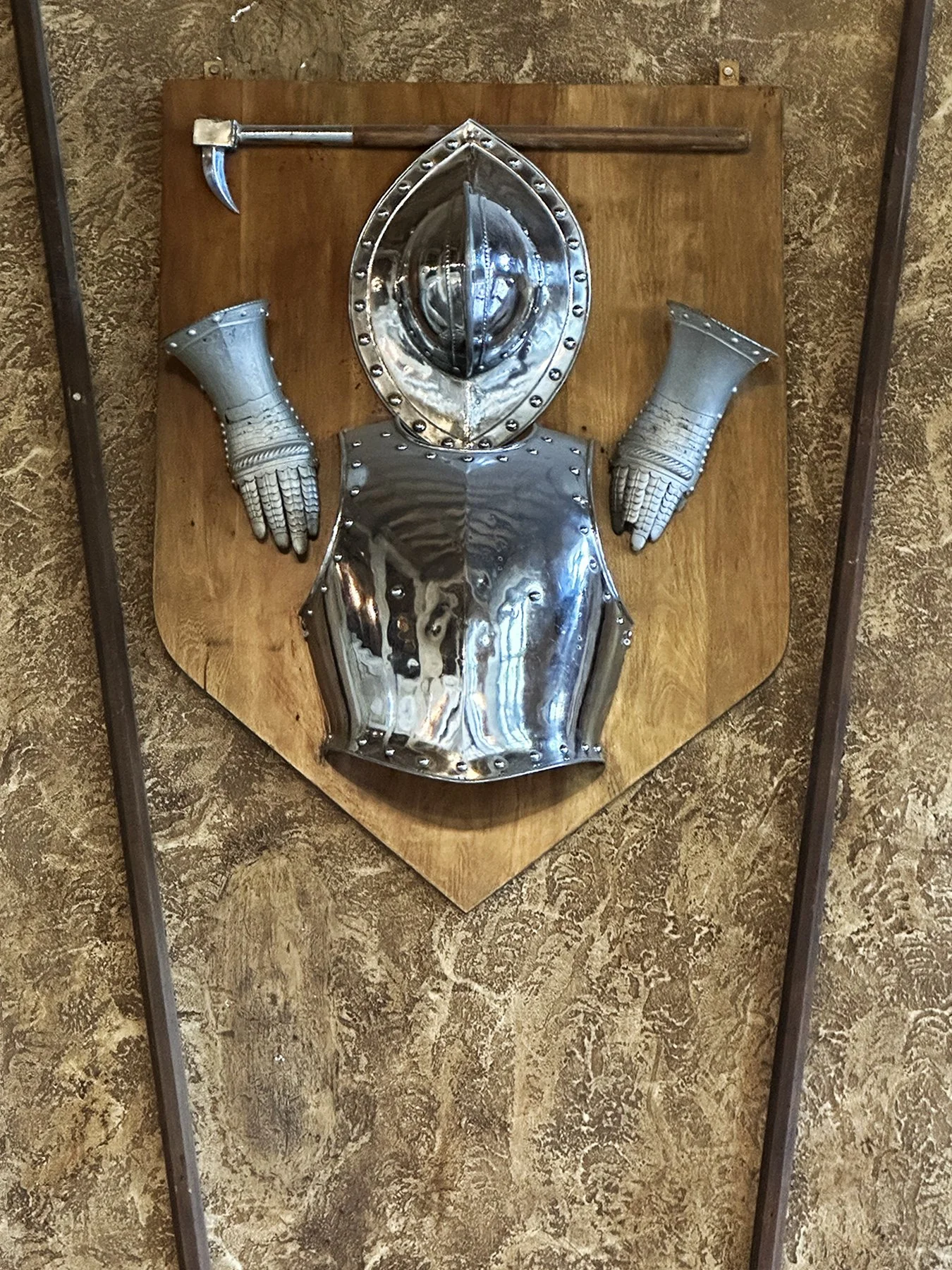
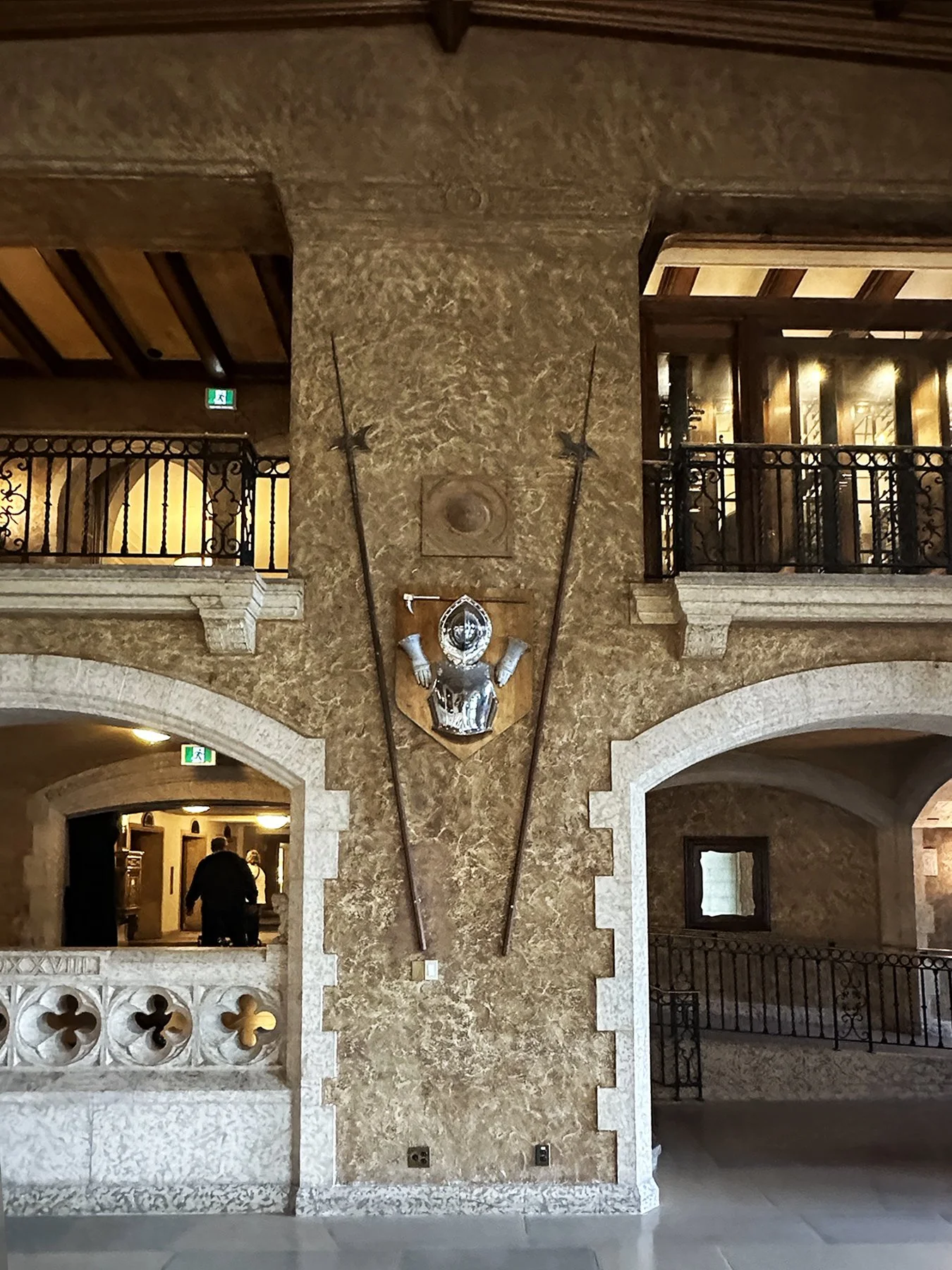
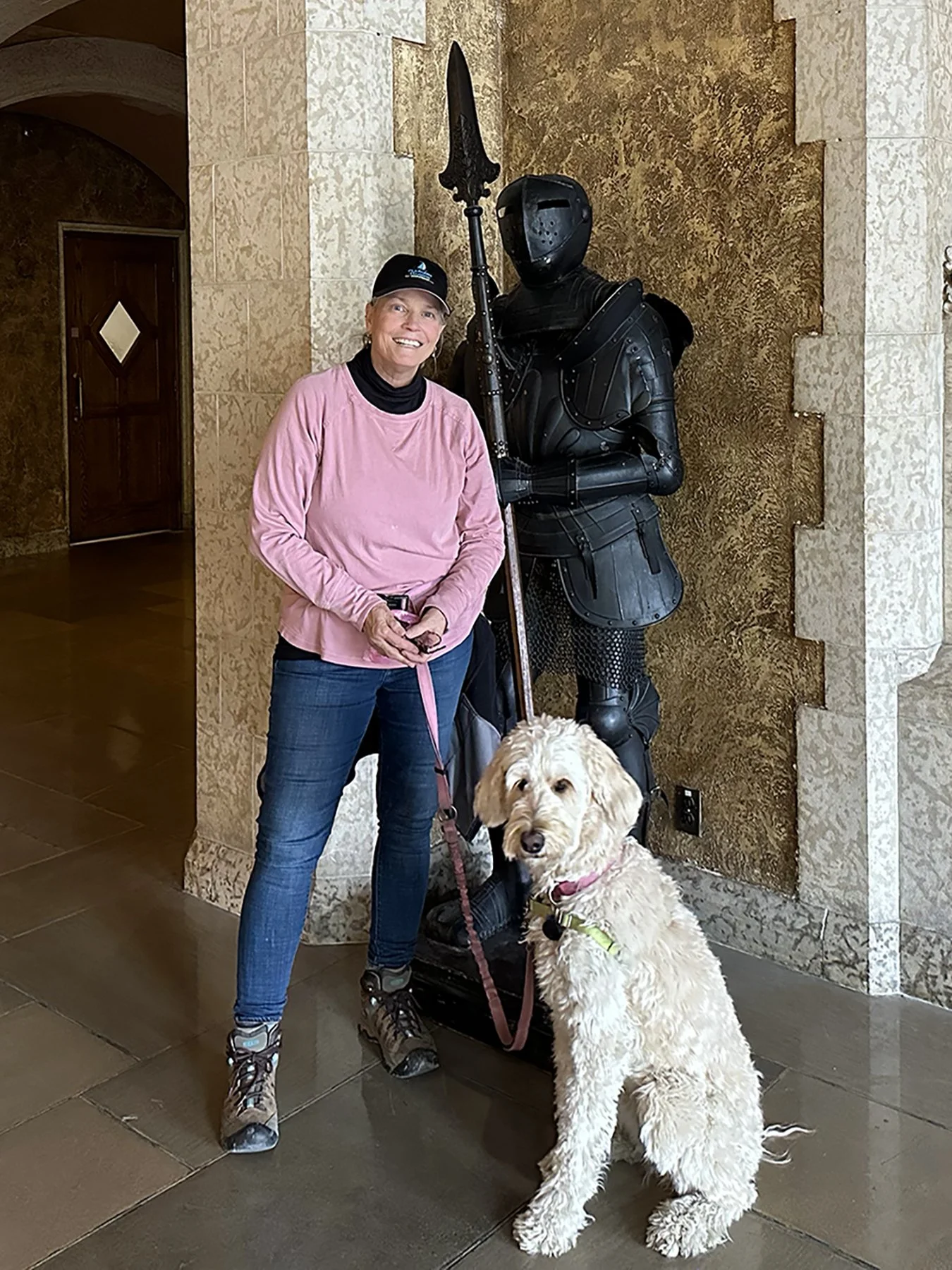
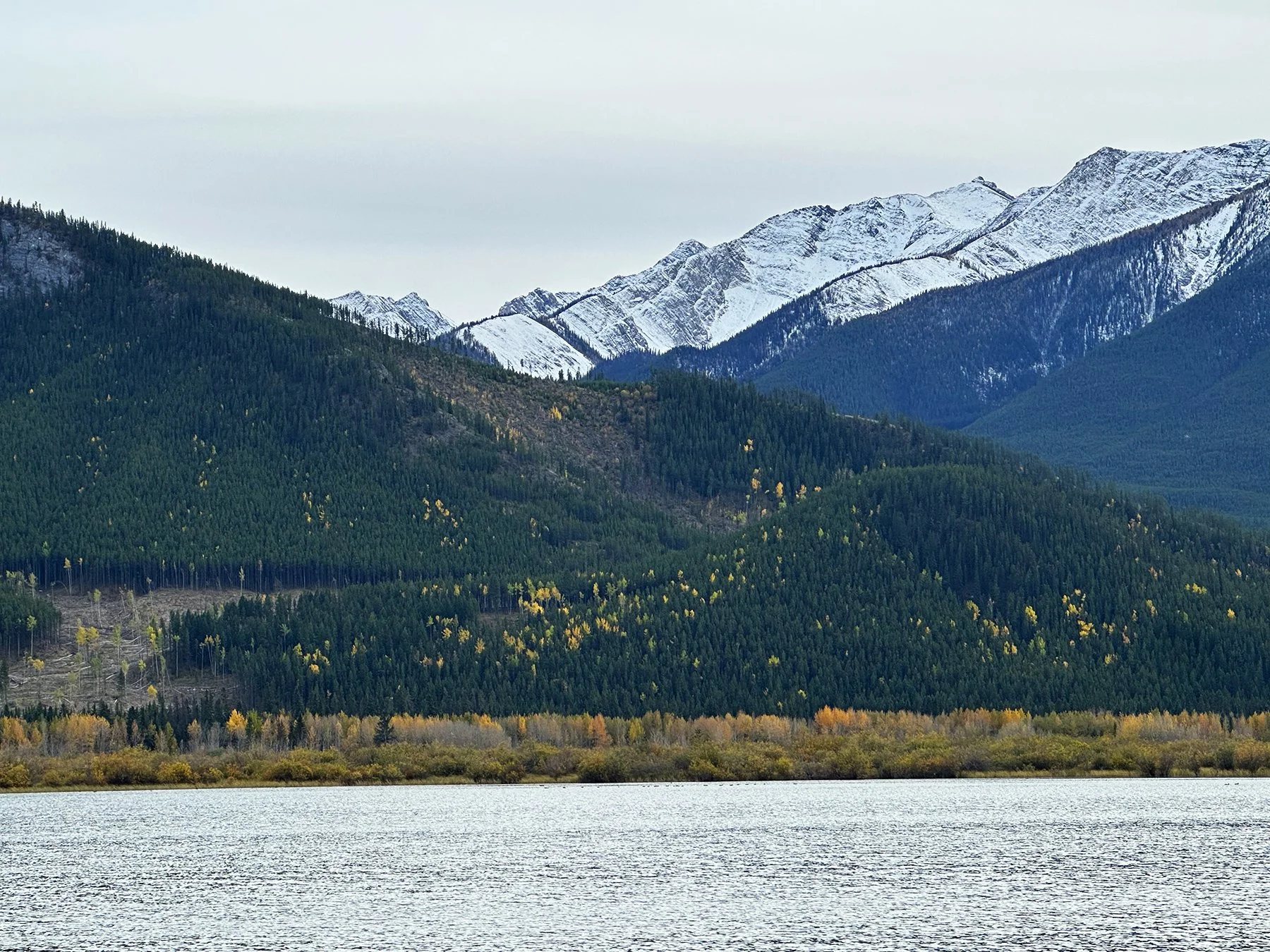
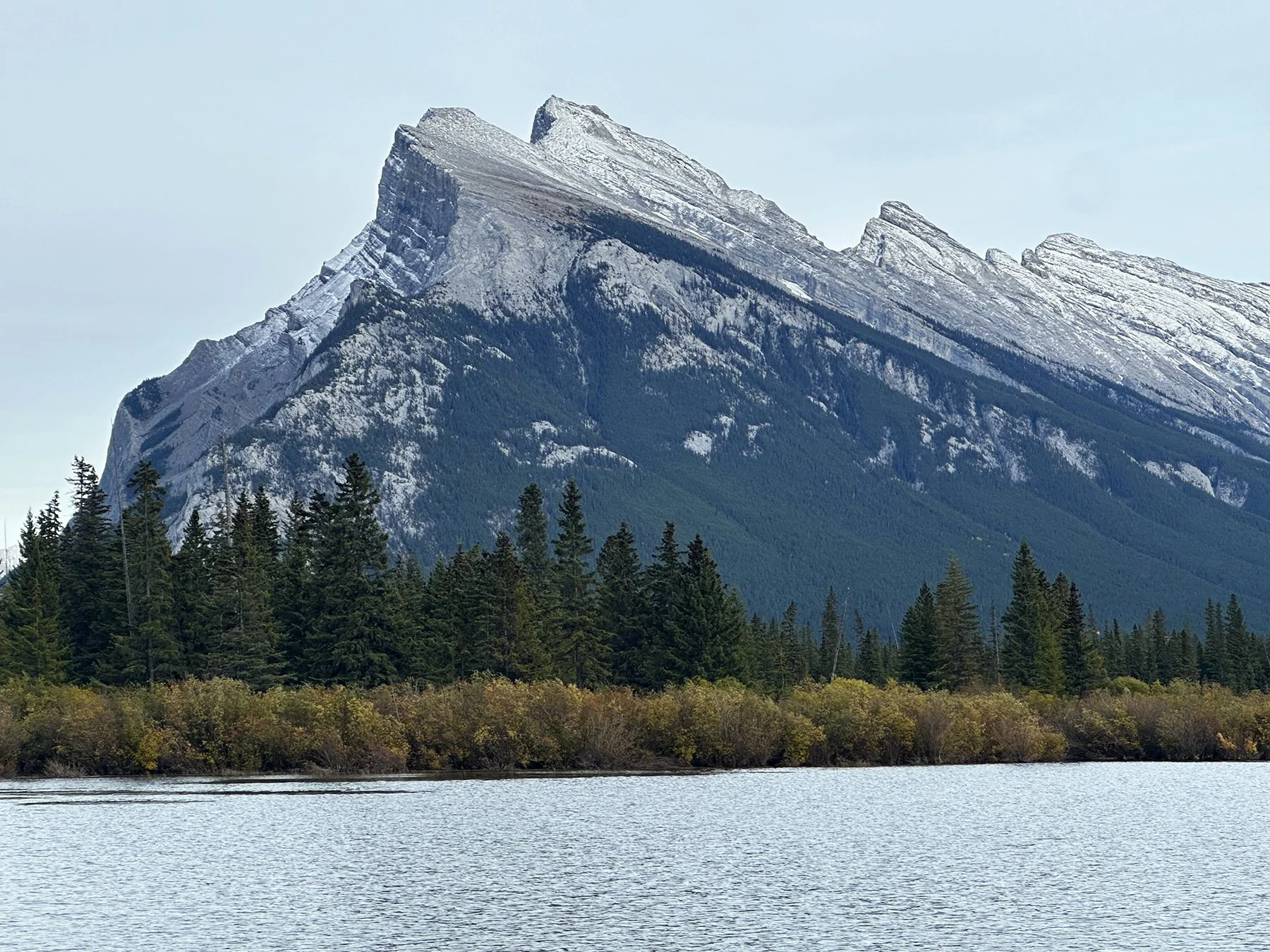
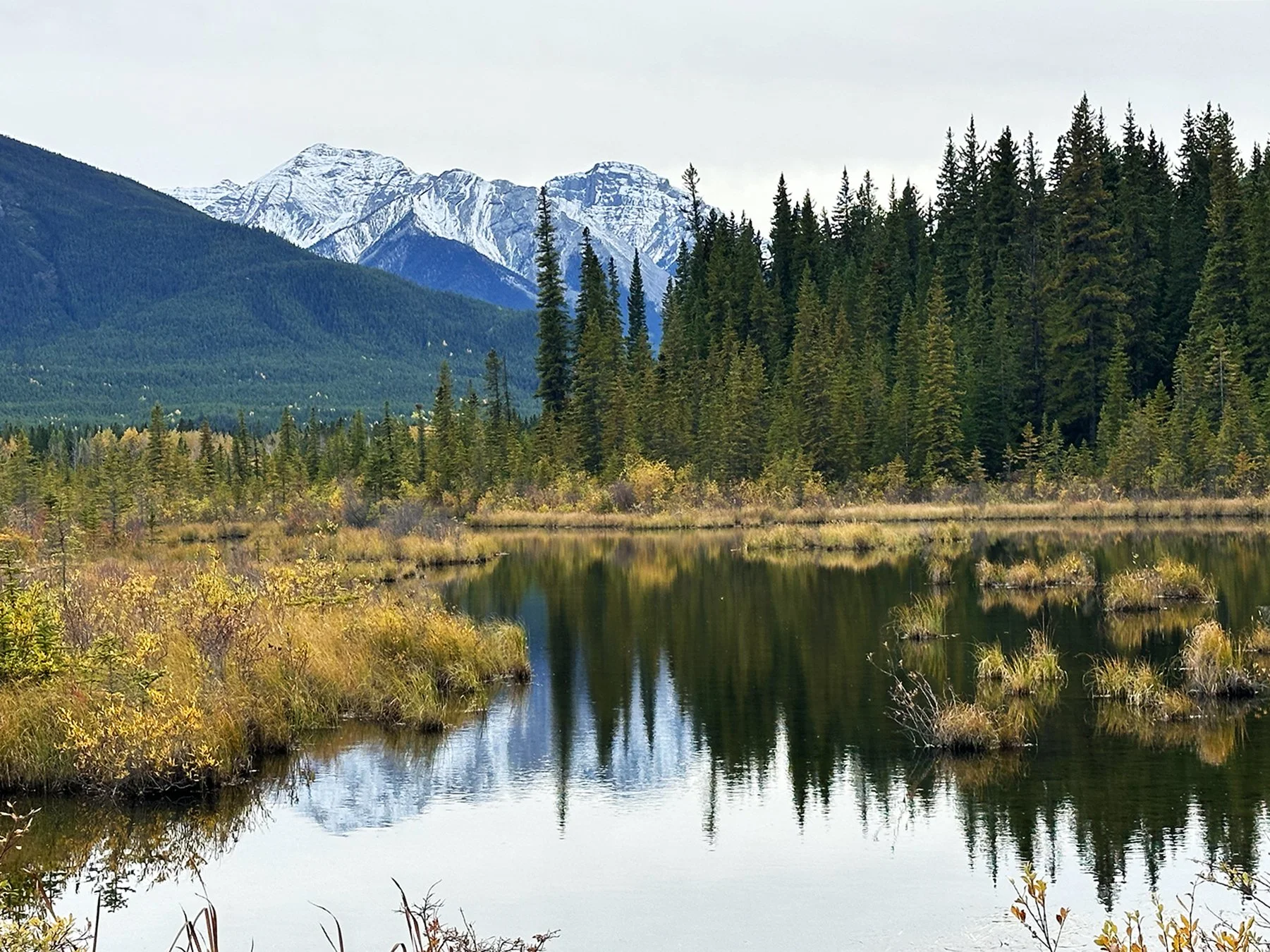
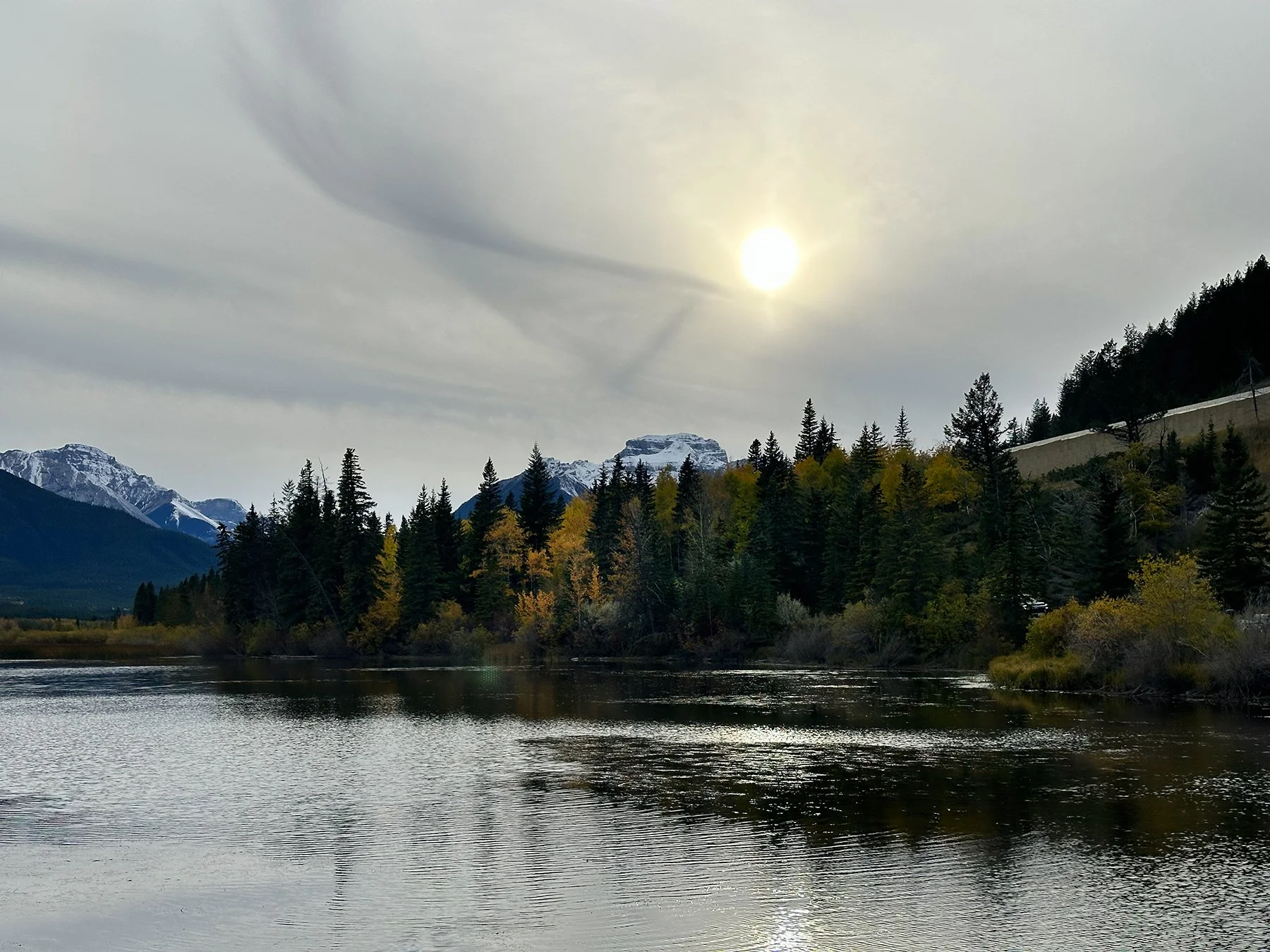
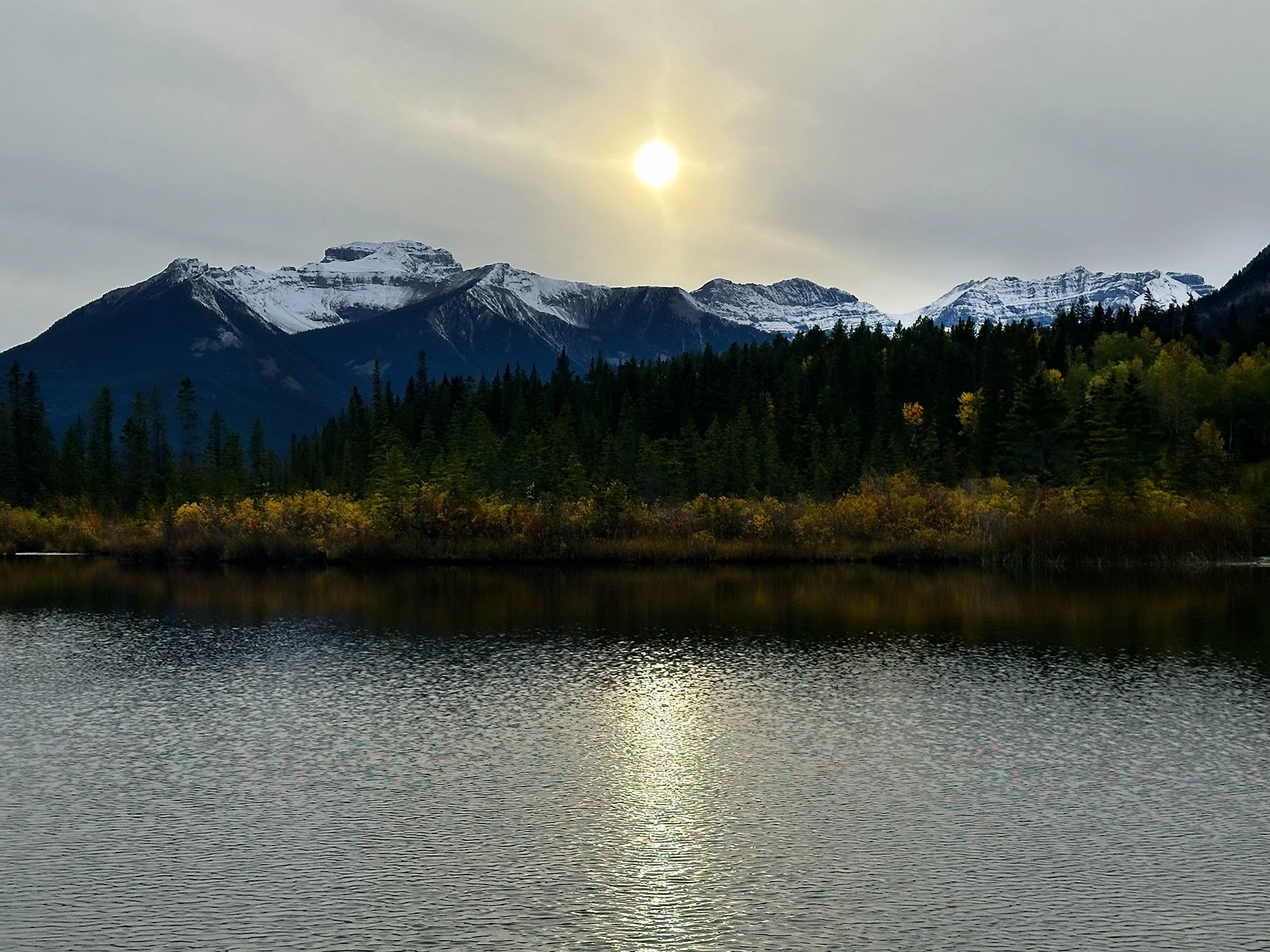
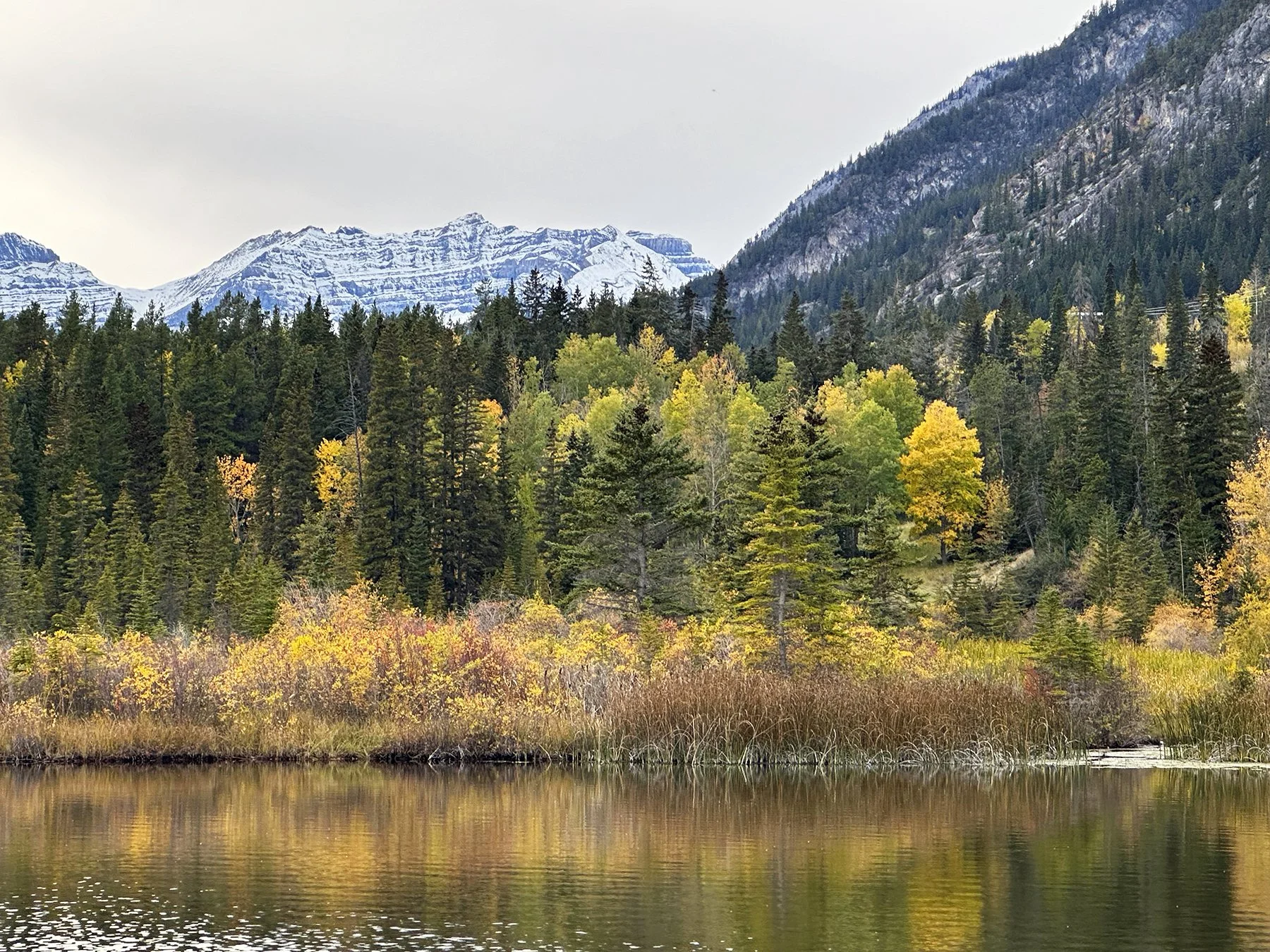
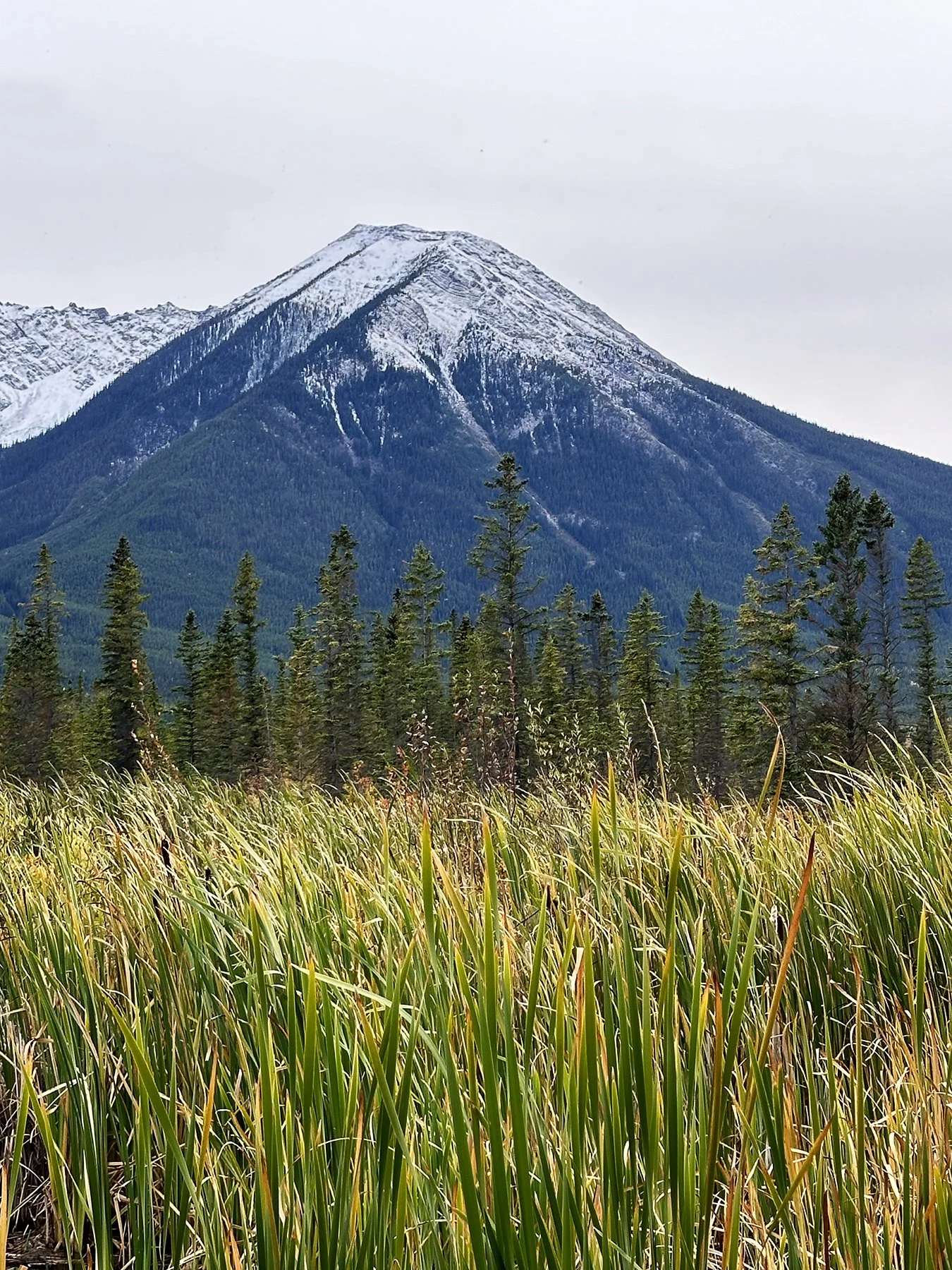
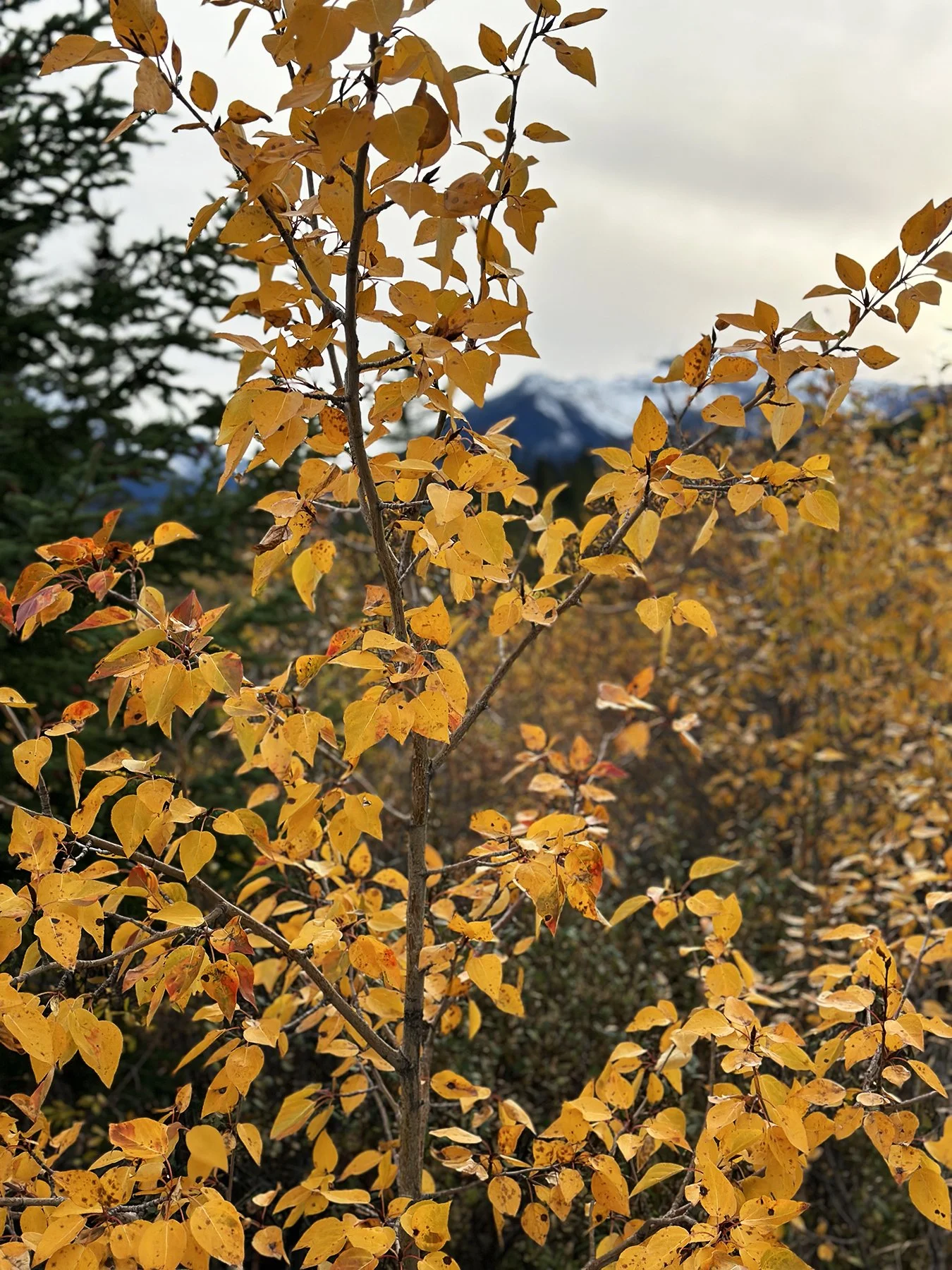
Tired but wanting to take advantage of our location, we went to Vermilion Lakes on our way back to the campsite. While it was a bit cloudy and cold, we loved exploring around the edges of the beautiful alpine lakes.
Day 3: ICEFIELDS PARKWAY
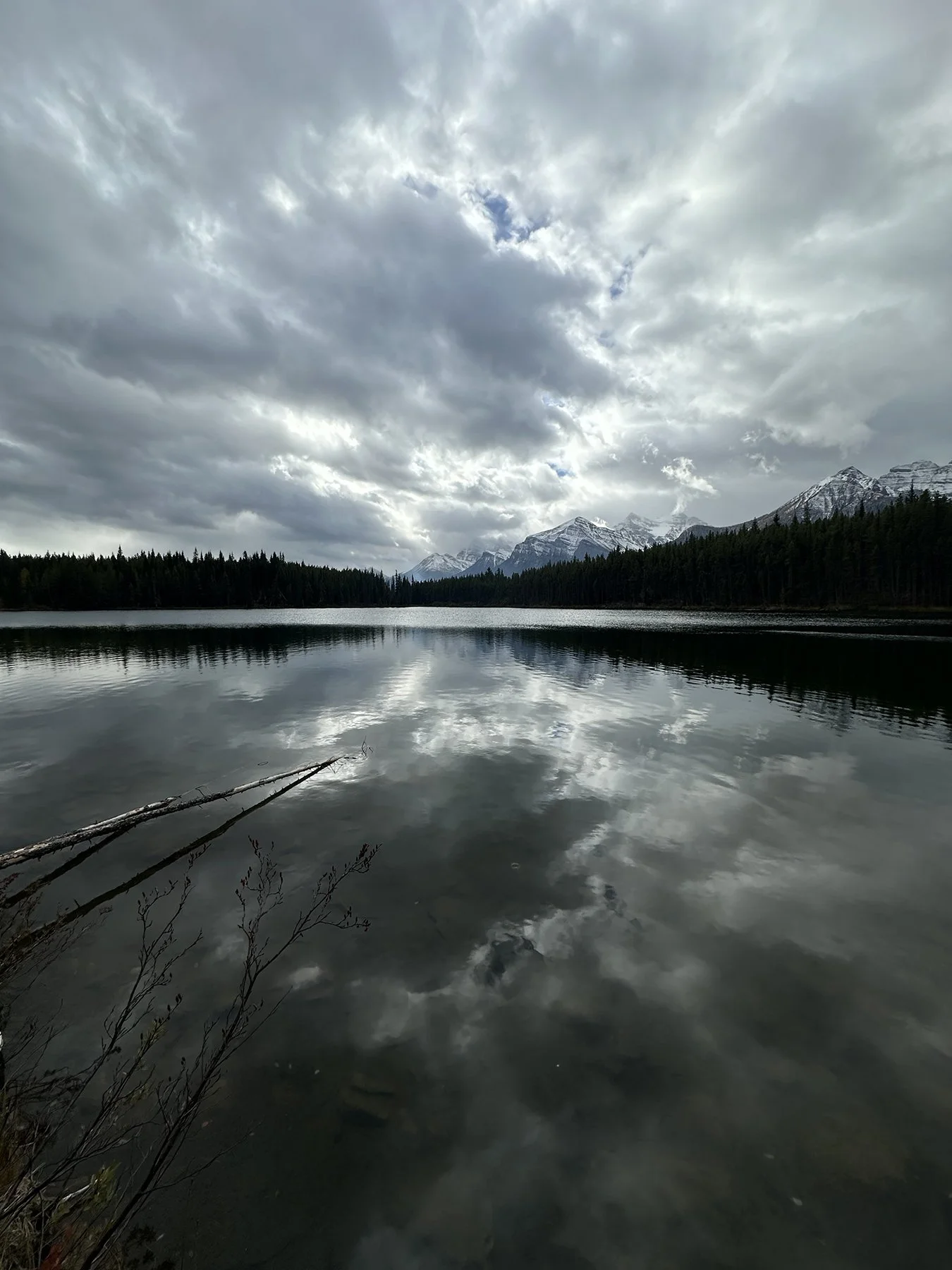
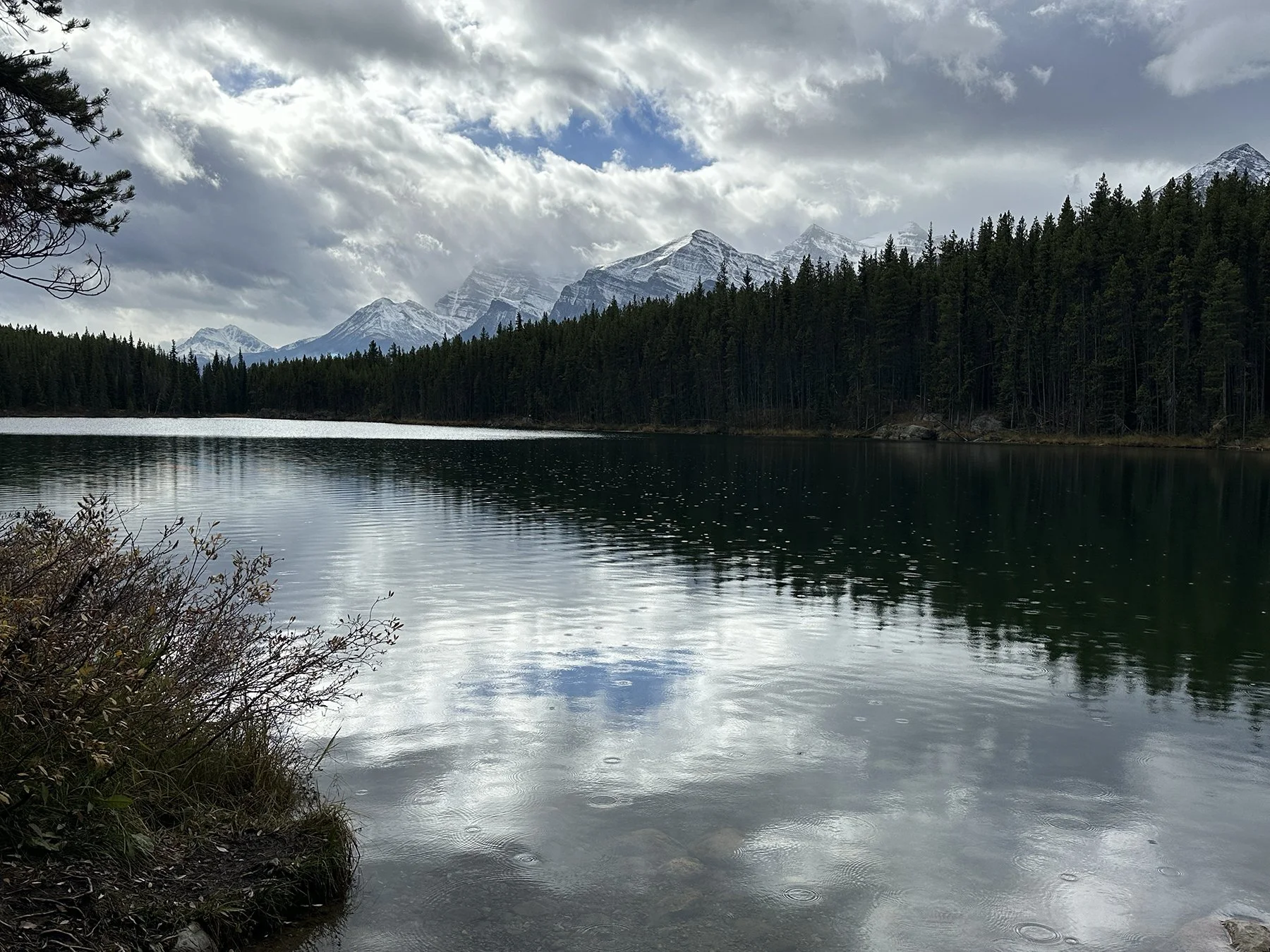
This was our jaw-dropping mountain scenery day. We traveled the legendary Icefields Parkway, having been told it is one of the world’s most spectacular drives. It connects Lake Louise/Banff NP with the Jasper townsite in Jasper National Park. It’s 144 miles long—a bit too much for us to take in in one day, although I’ve heard such great things about Jasper that I almost convinced myself to go. But man, oh, man, the views along the parkway were unparalleled. Seriously. Even though it was cloudy and a bit rainy, it was still absolutely gorgeous.
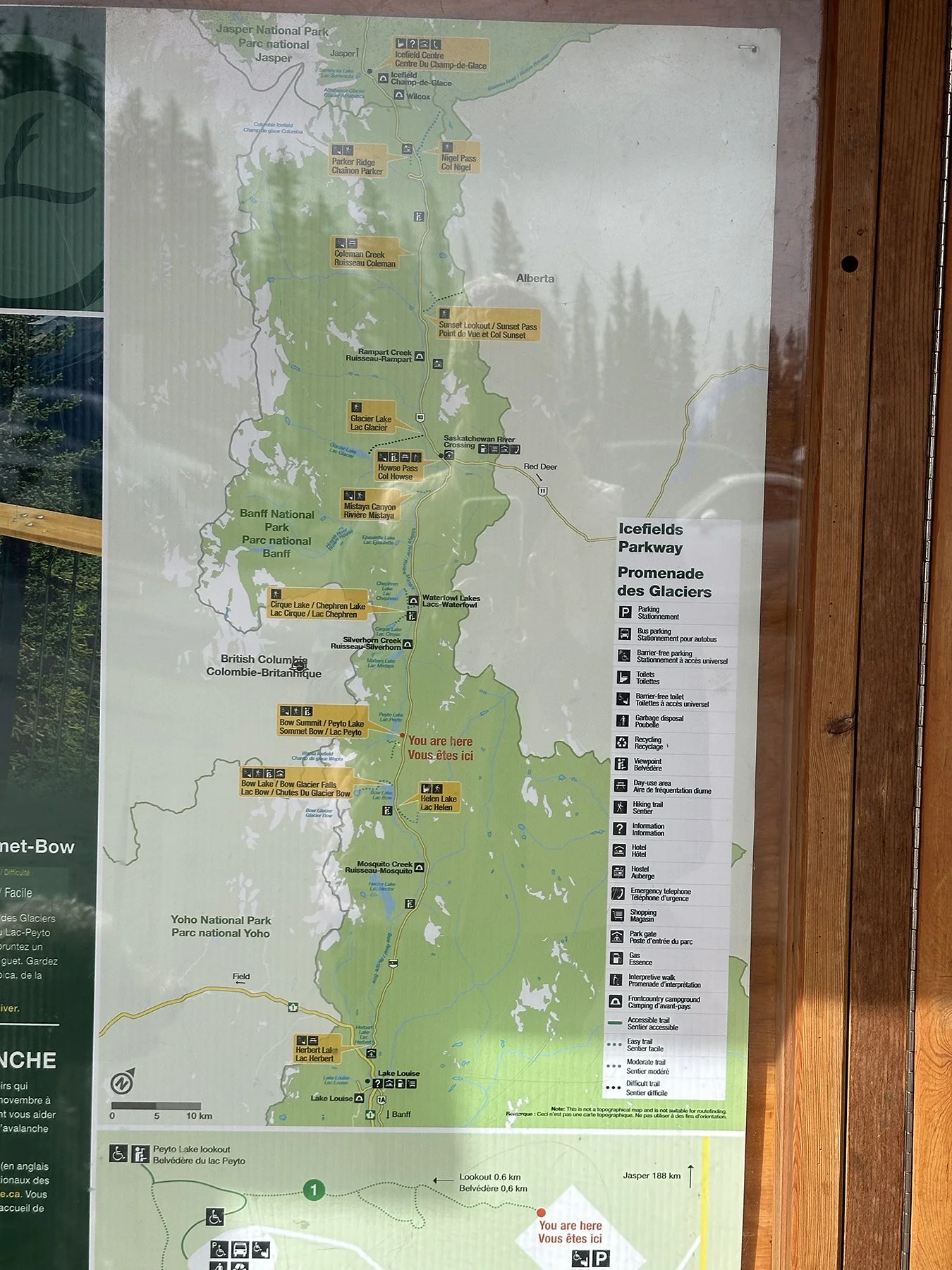
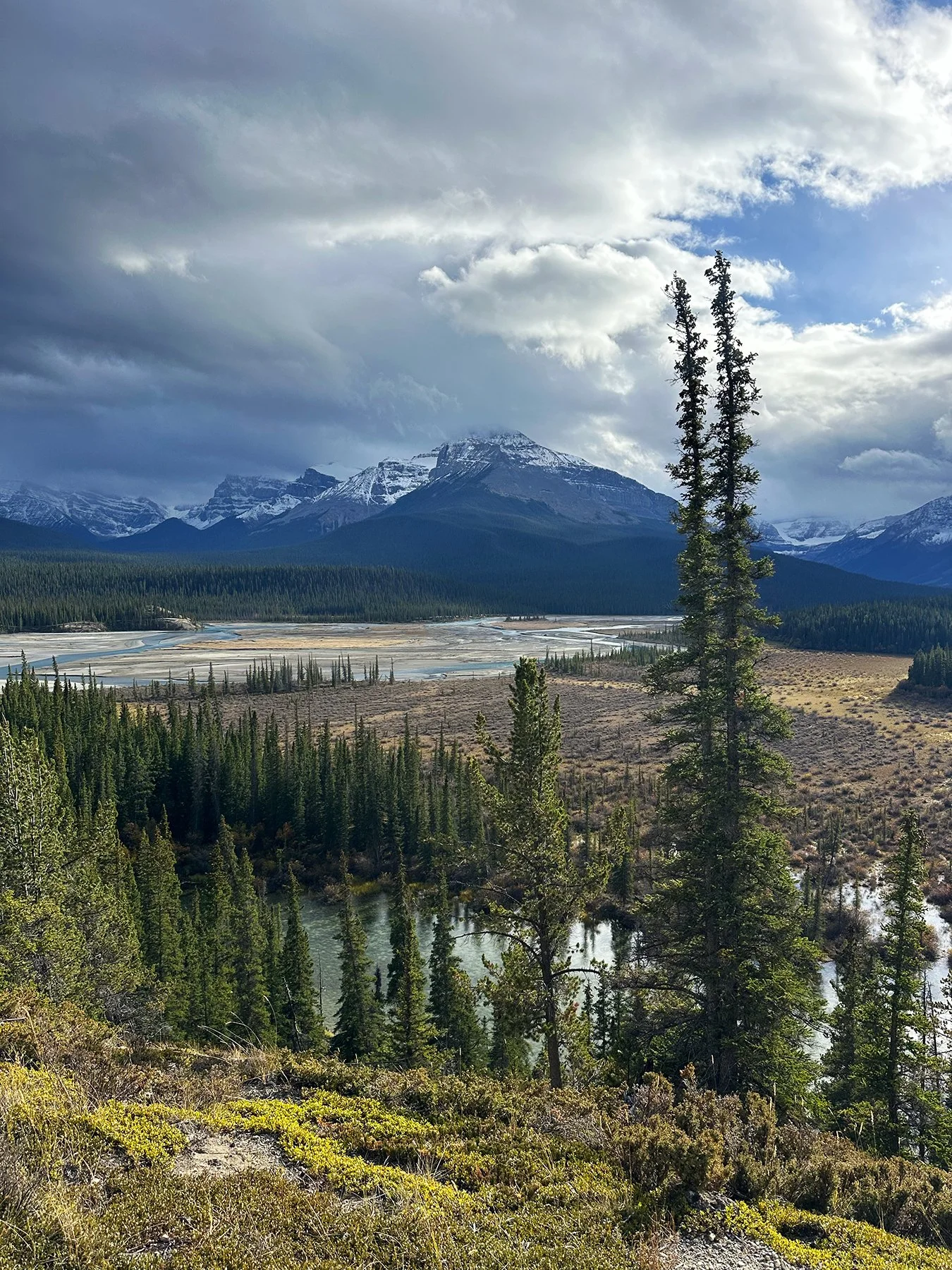
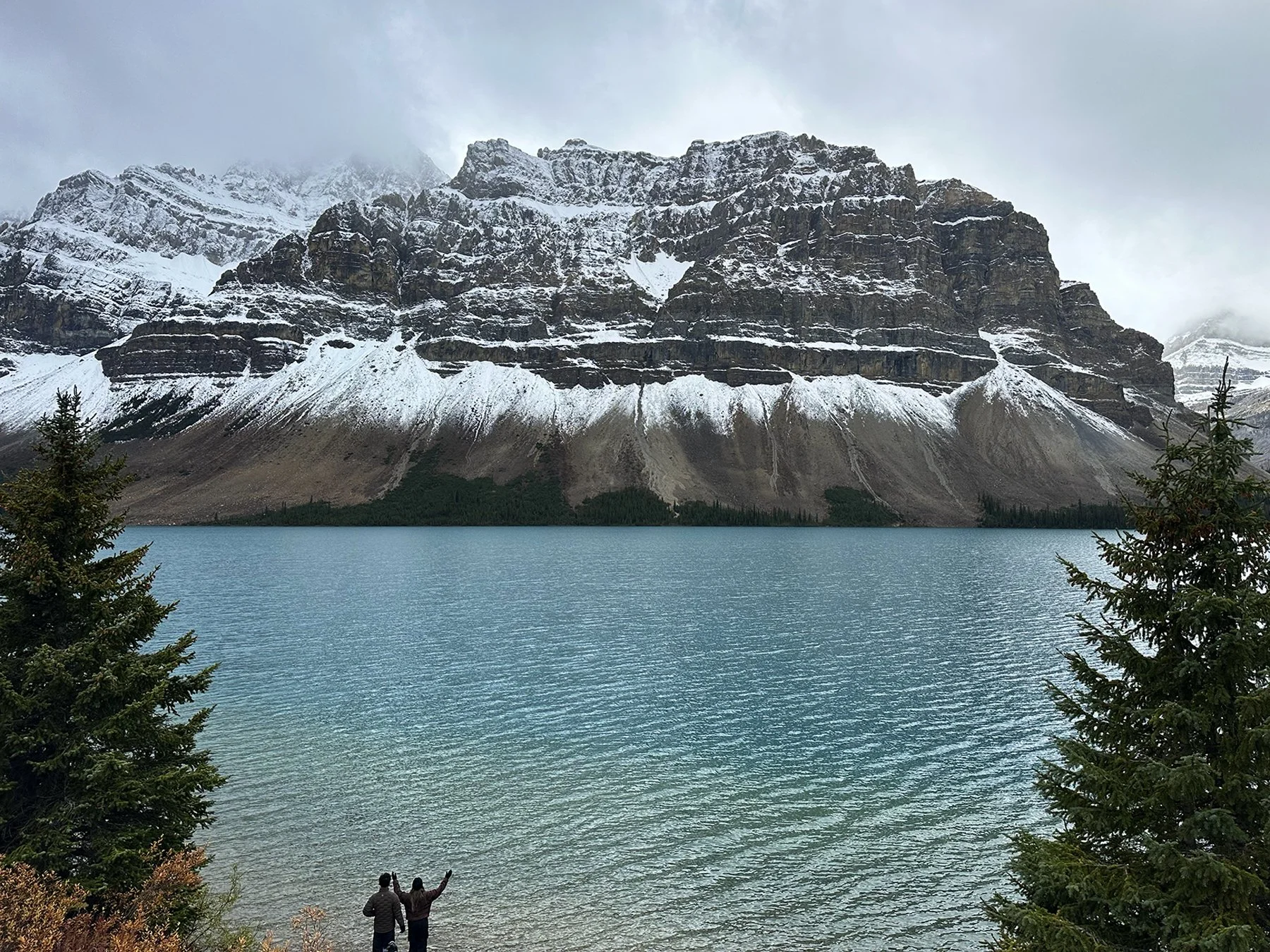
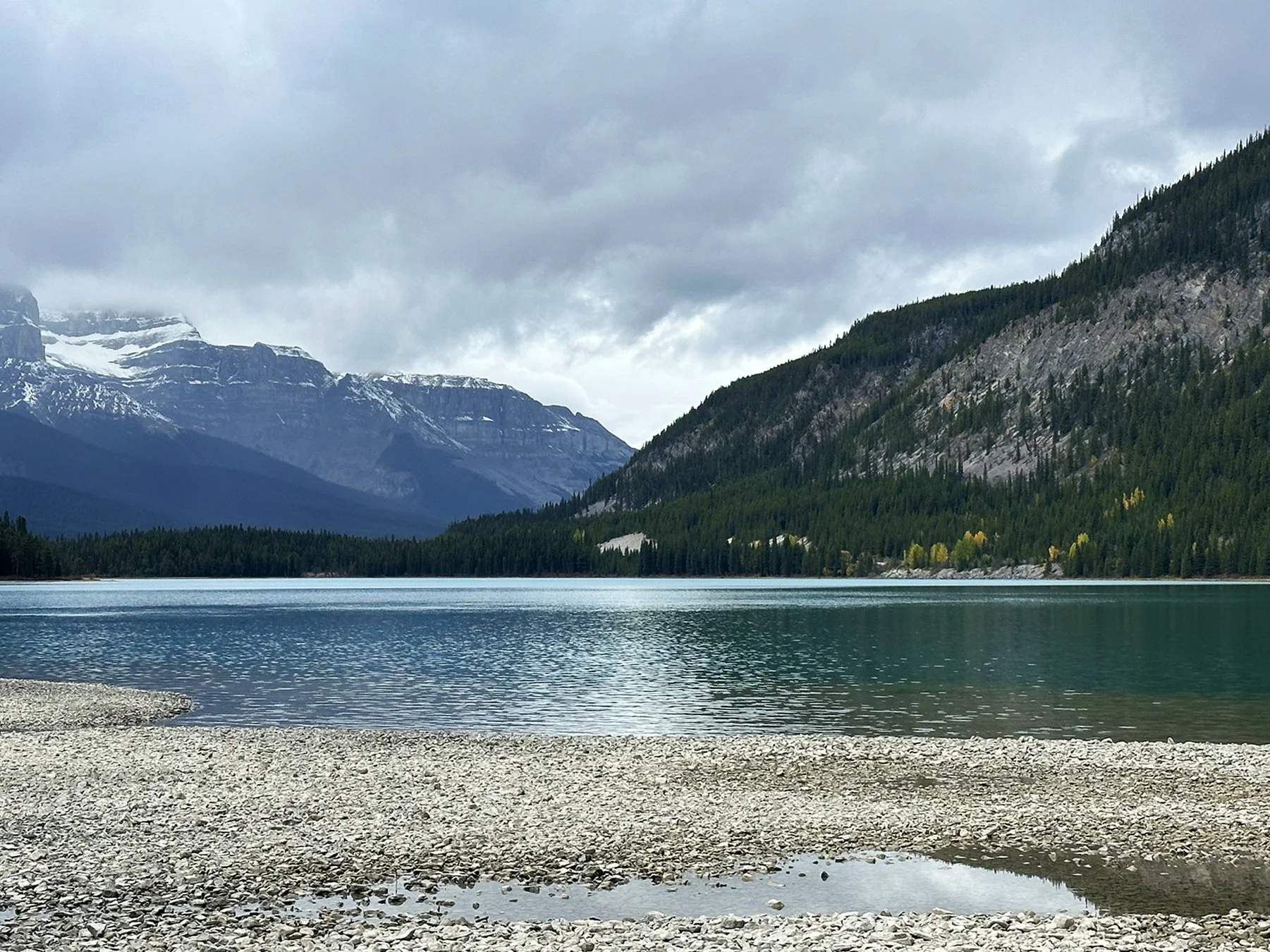
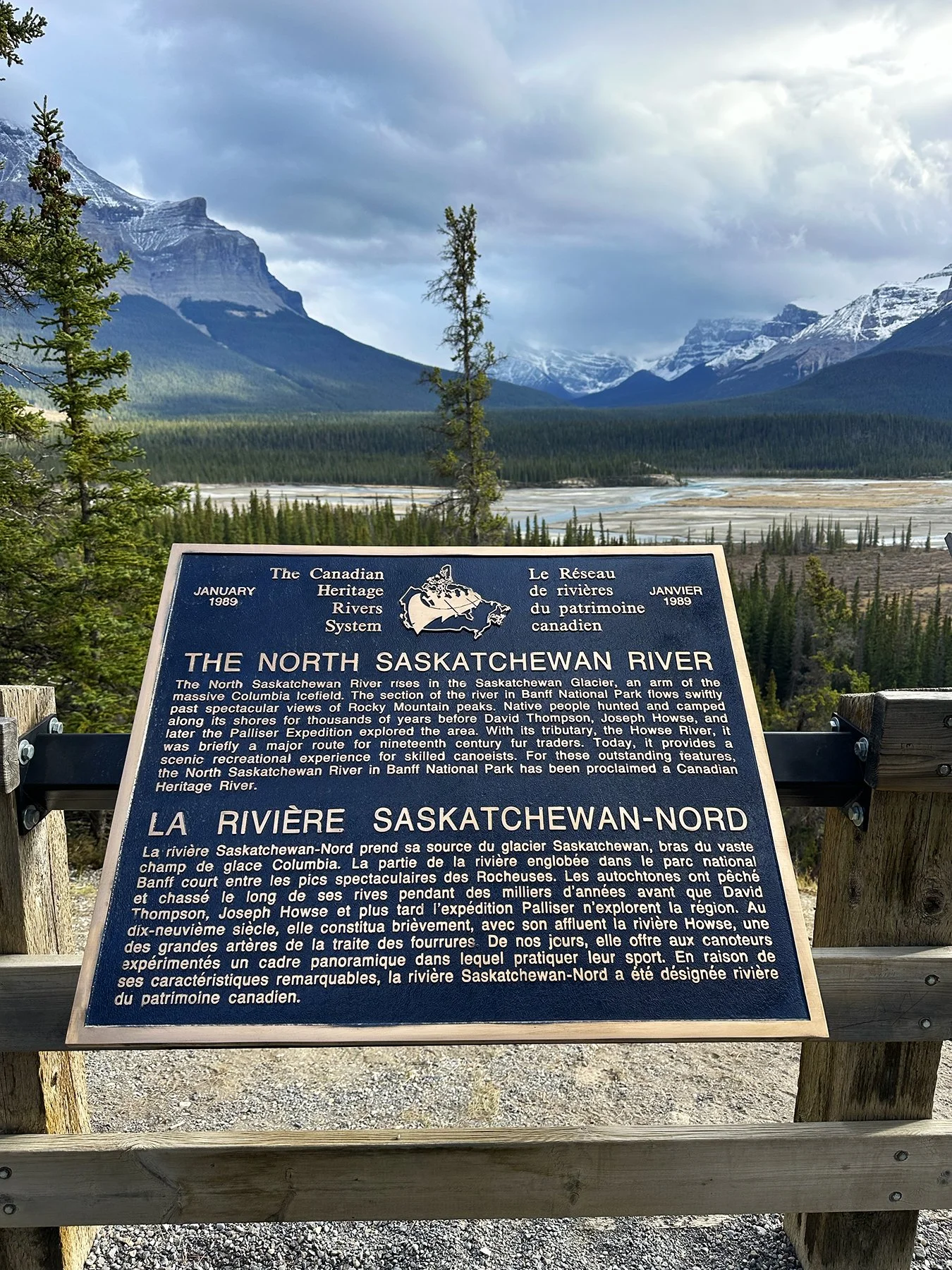
We stopped at all the iconic places, and hiked around a few of them, including the following:
Herbert Lake
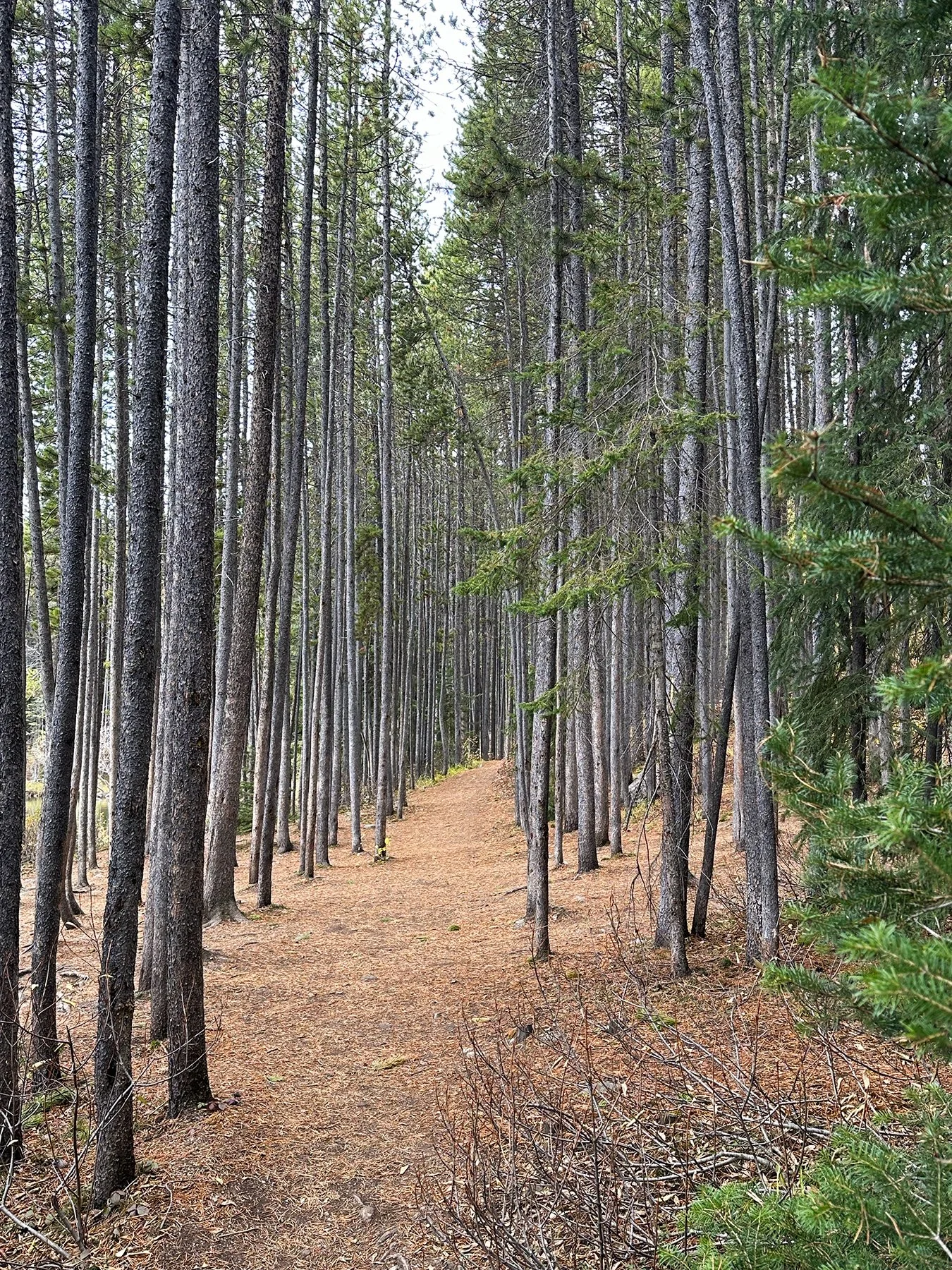
Crowfoot Glacier
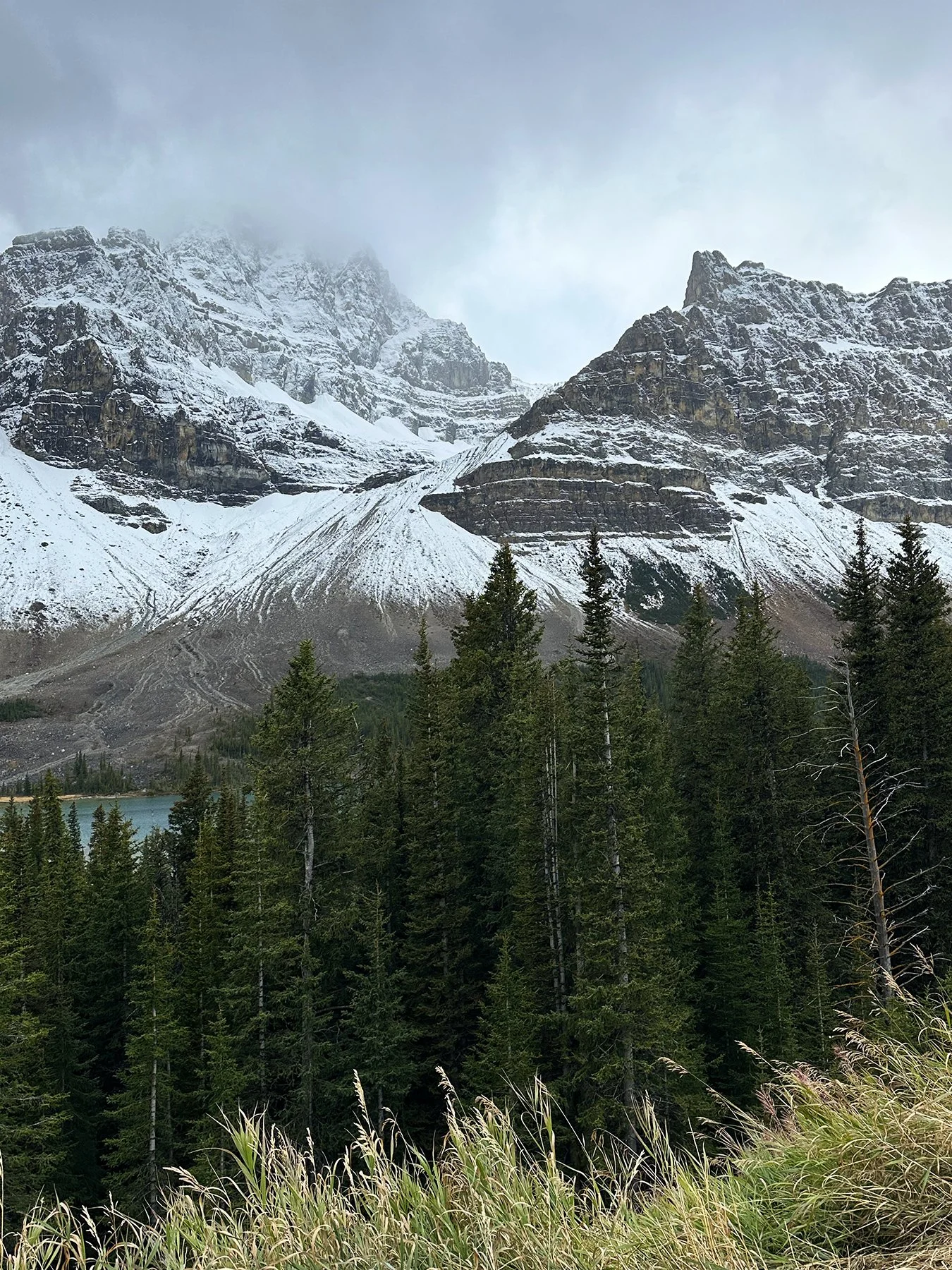
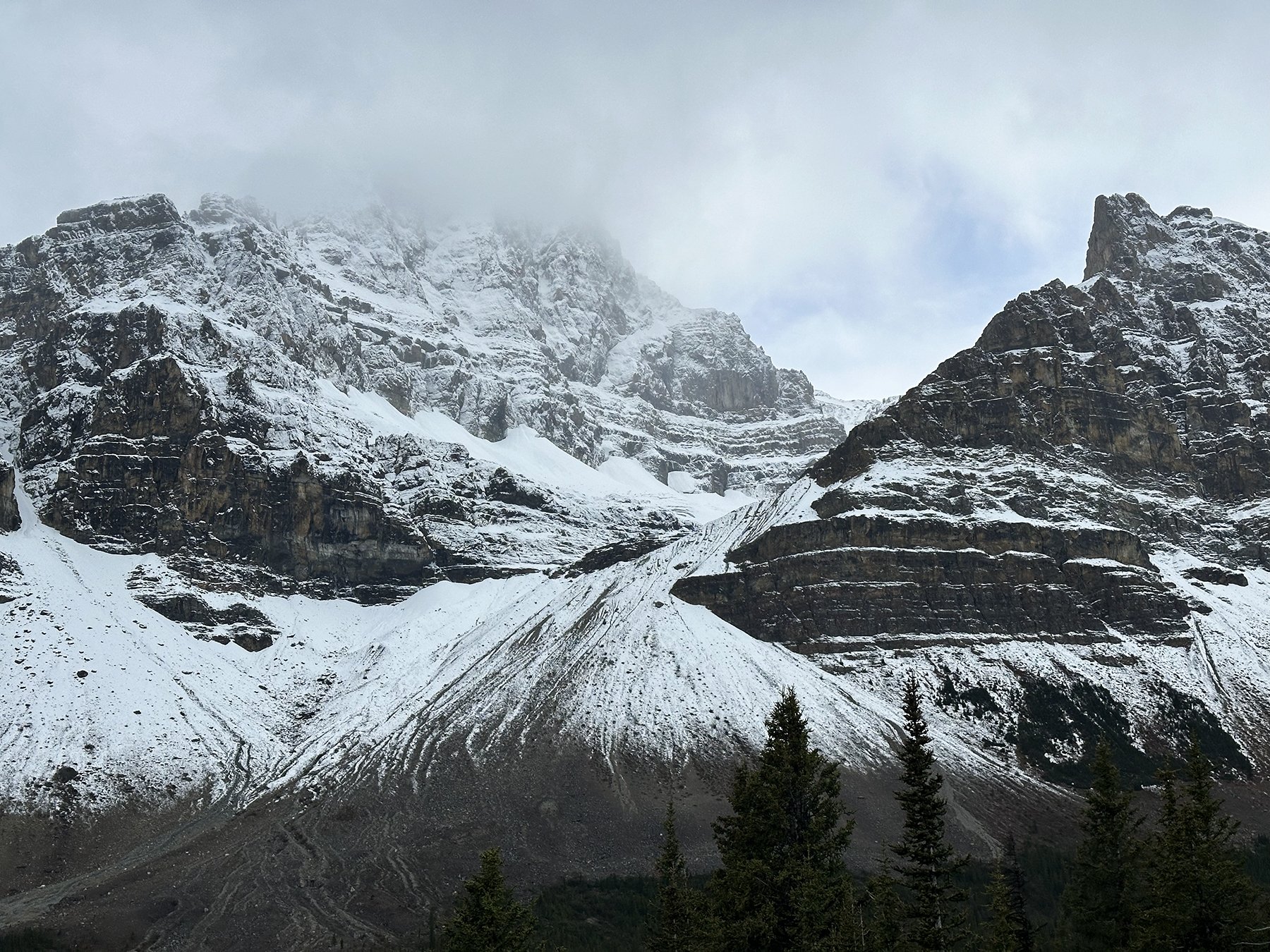
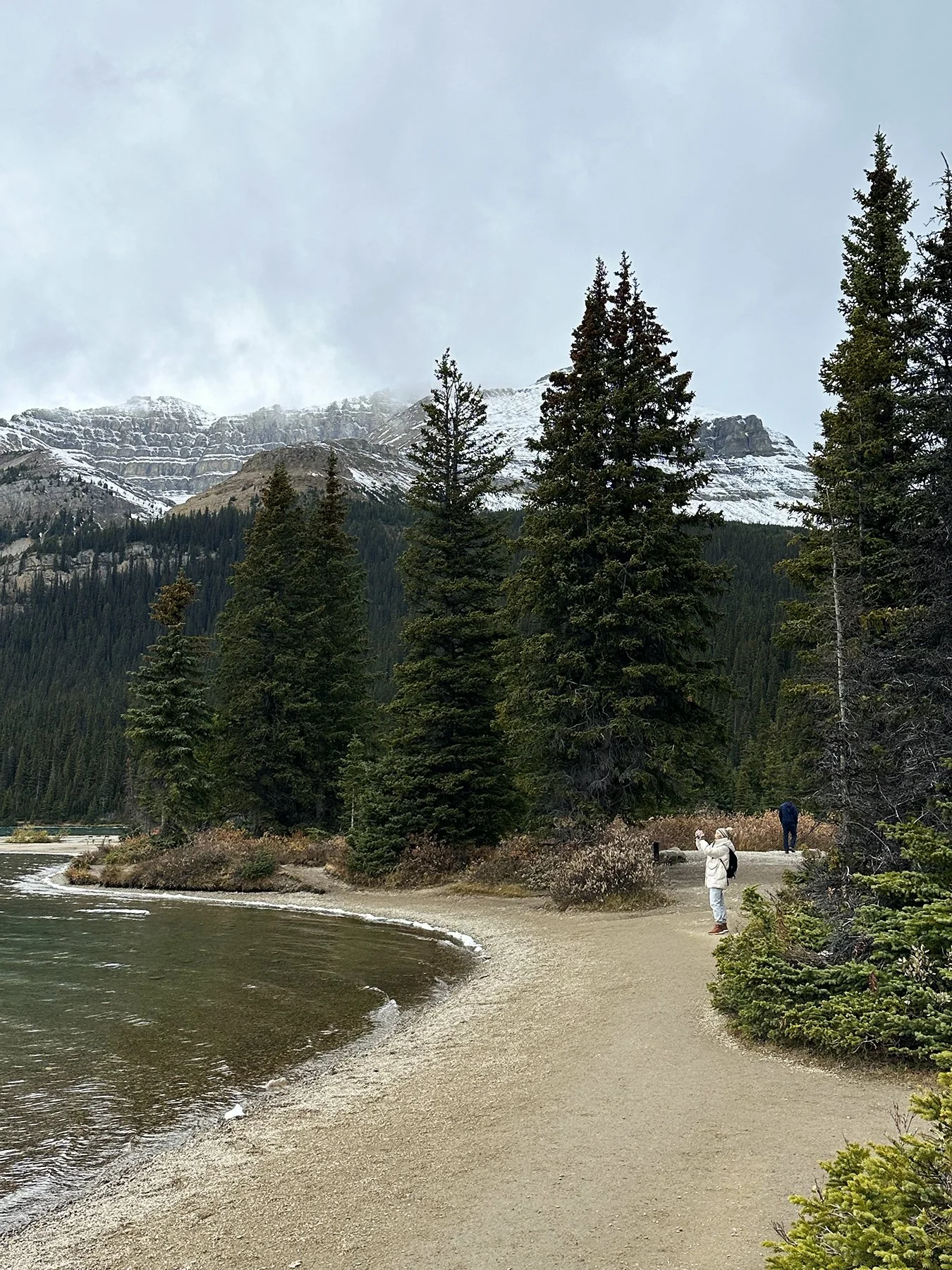
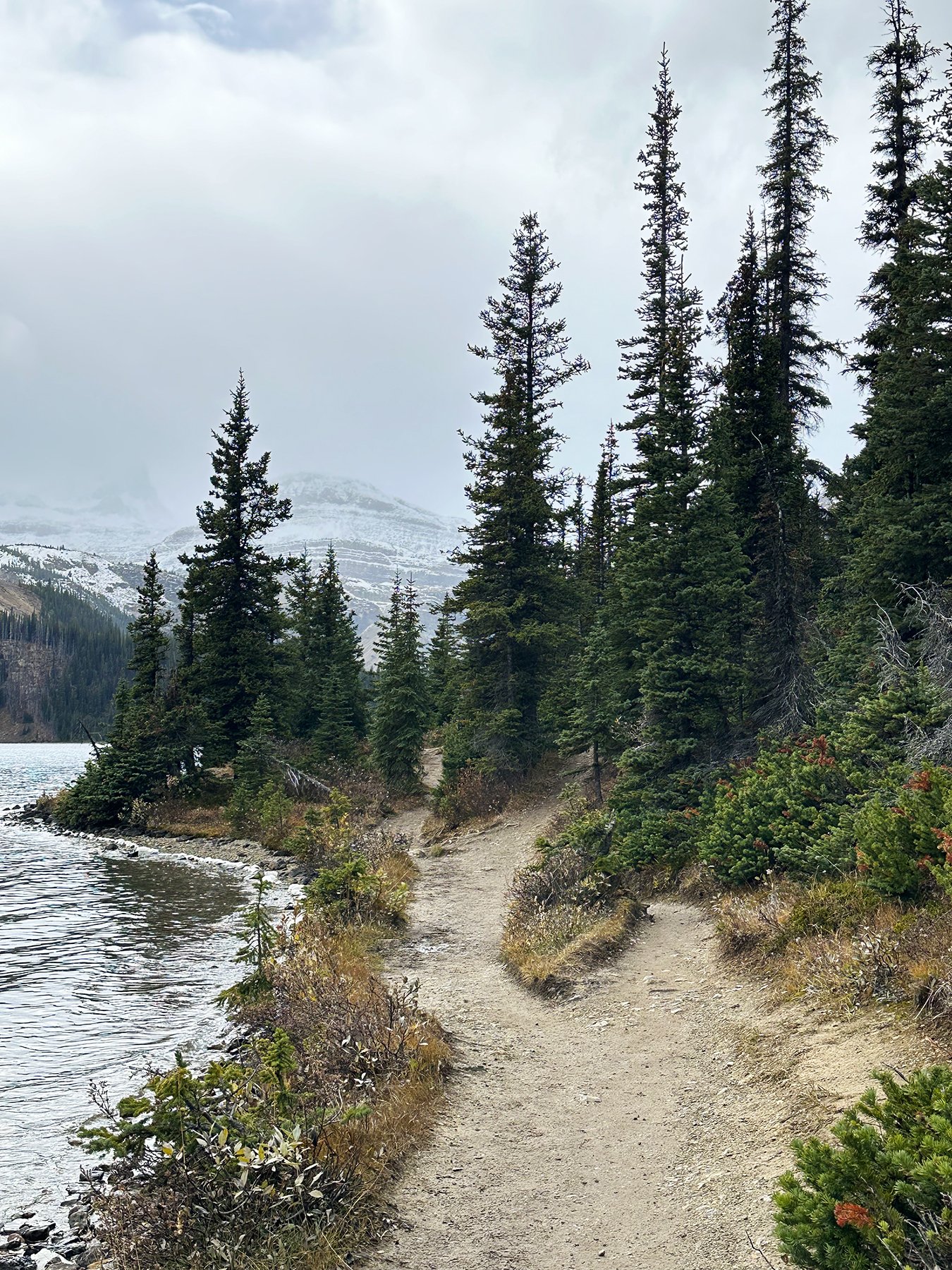
Bow Lake
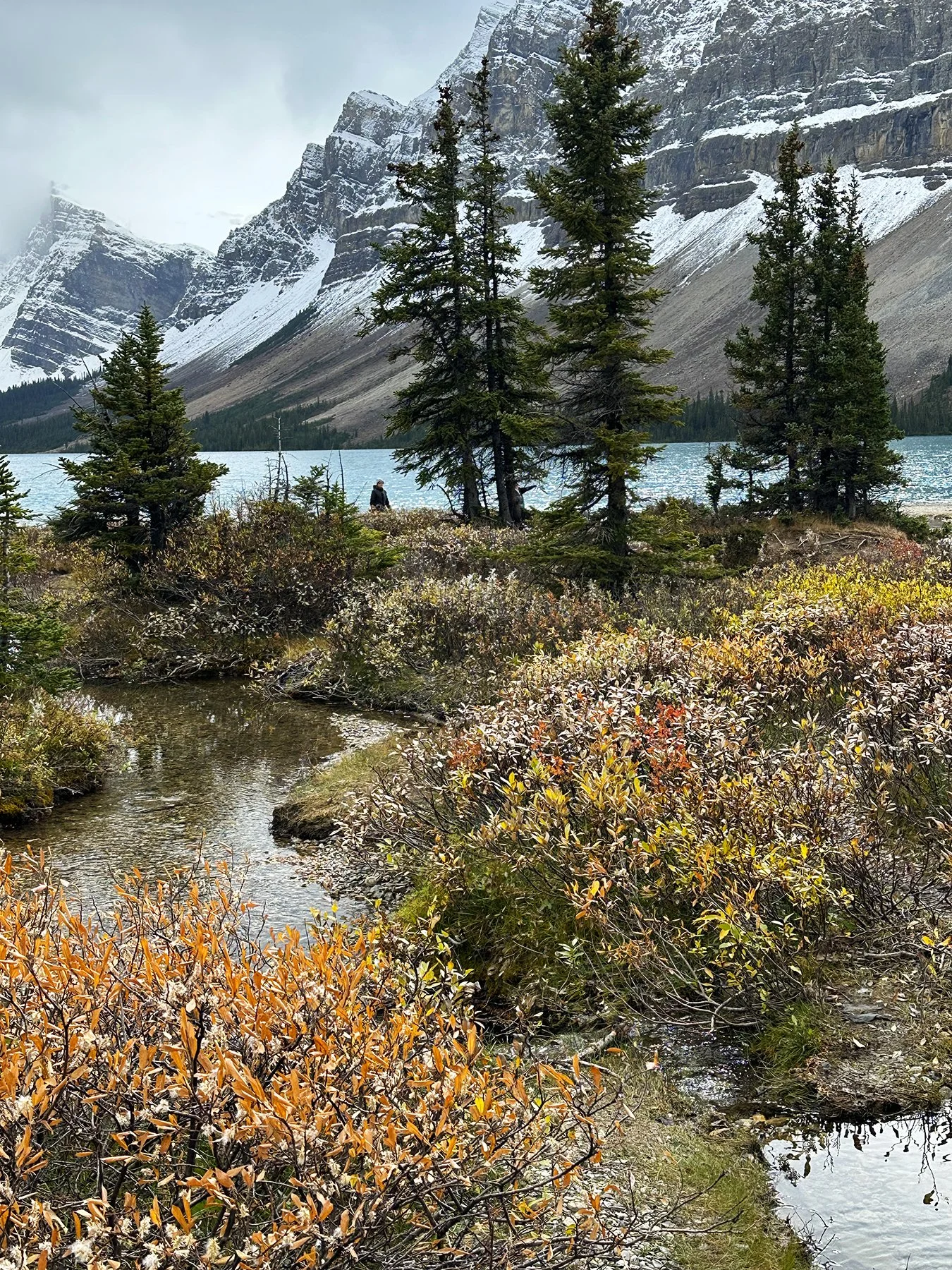
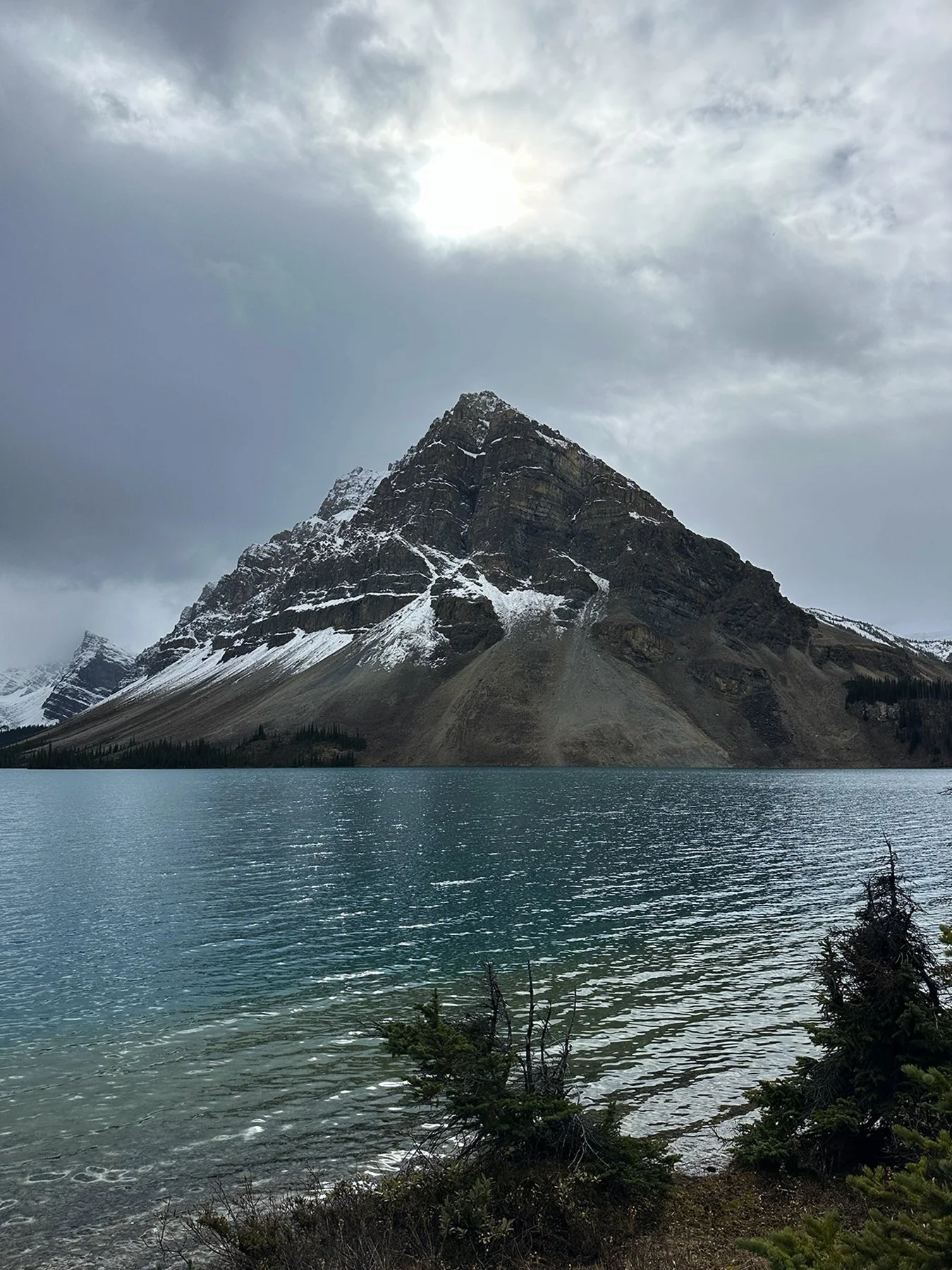
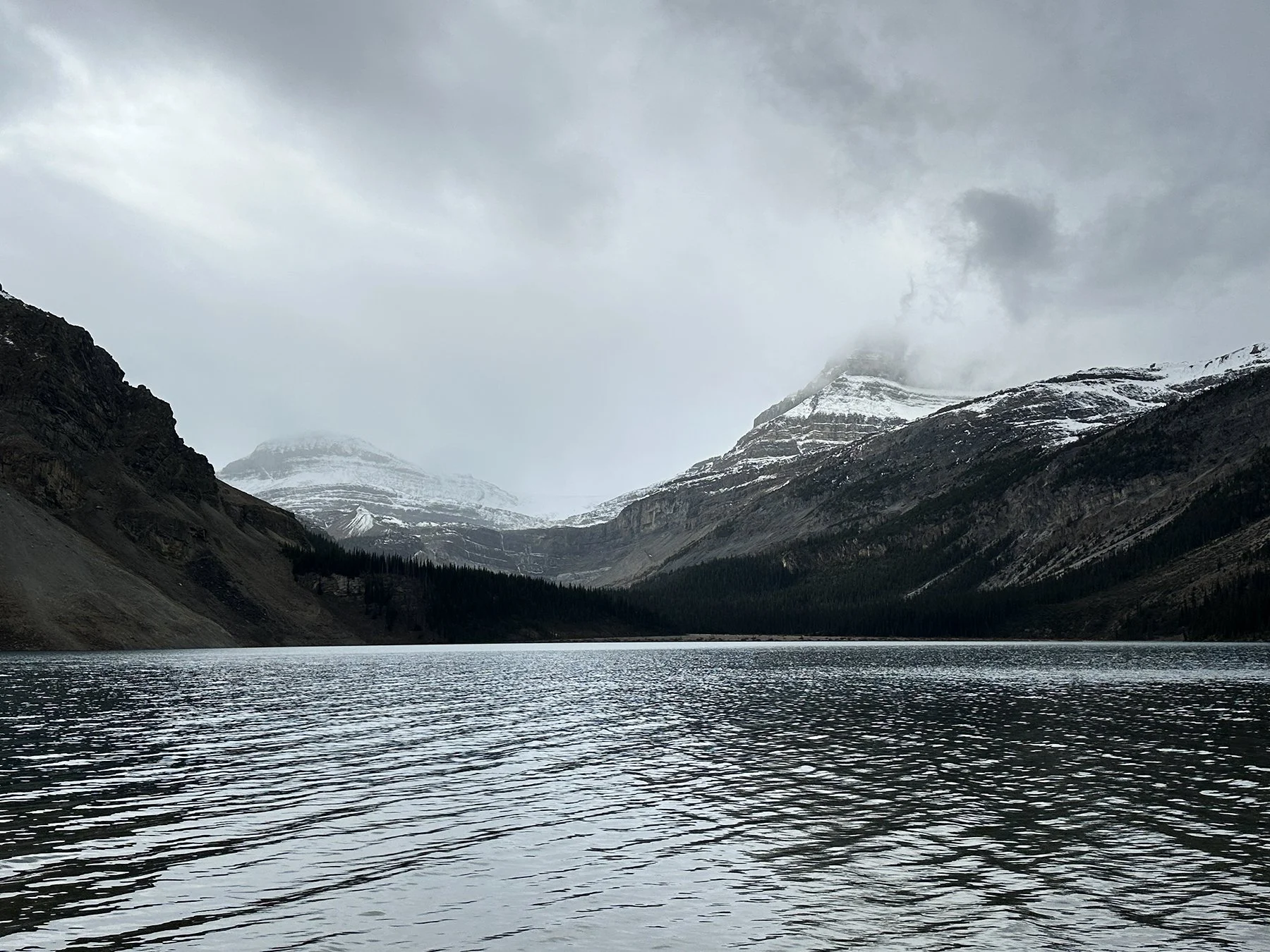
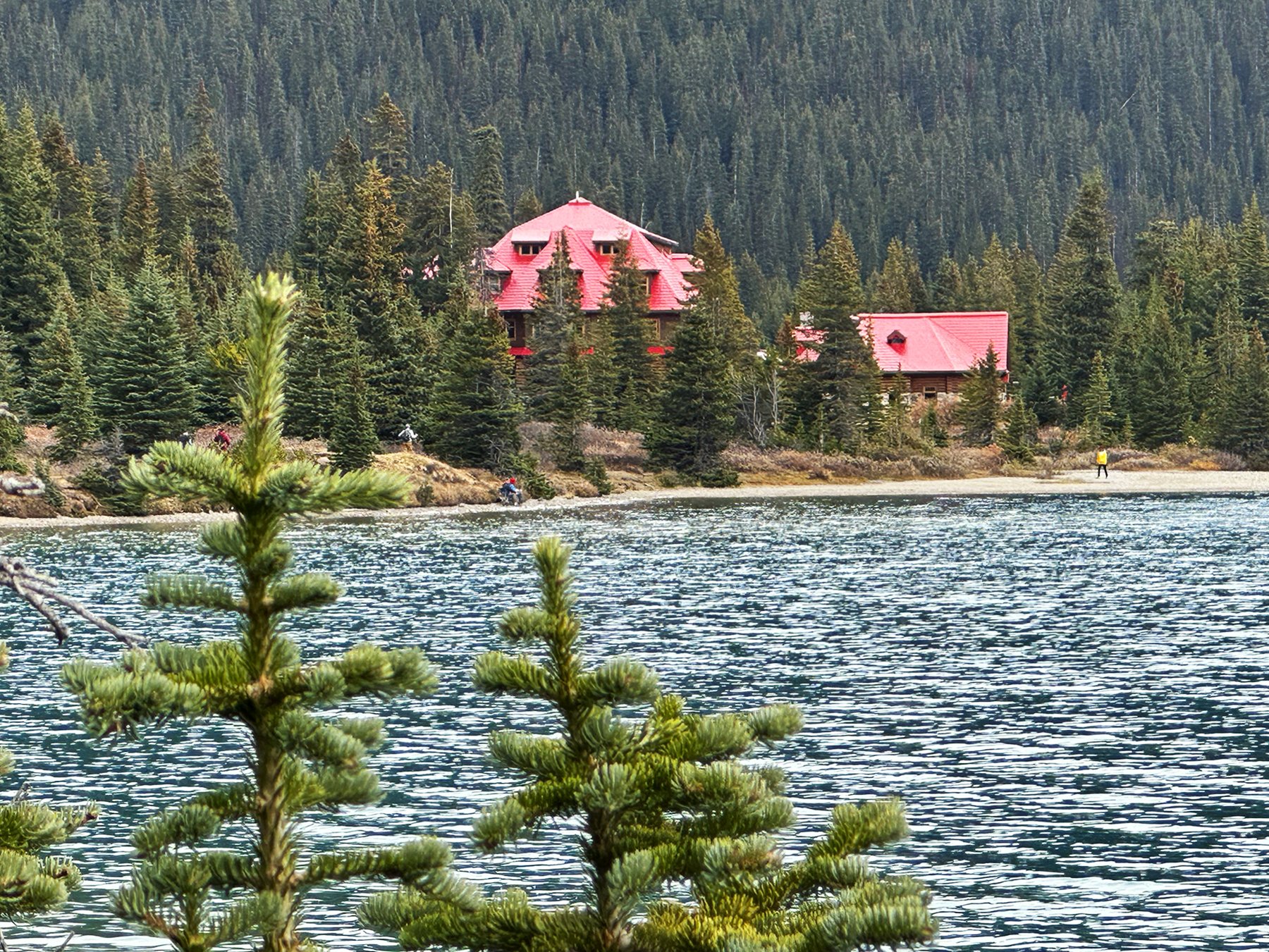
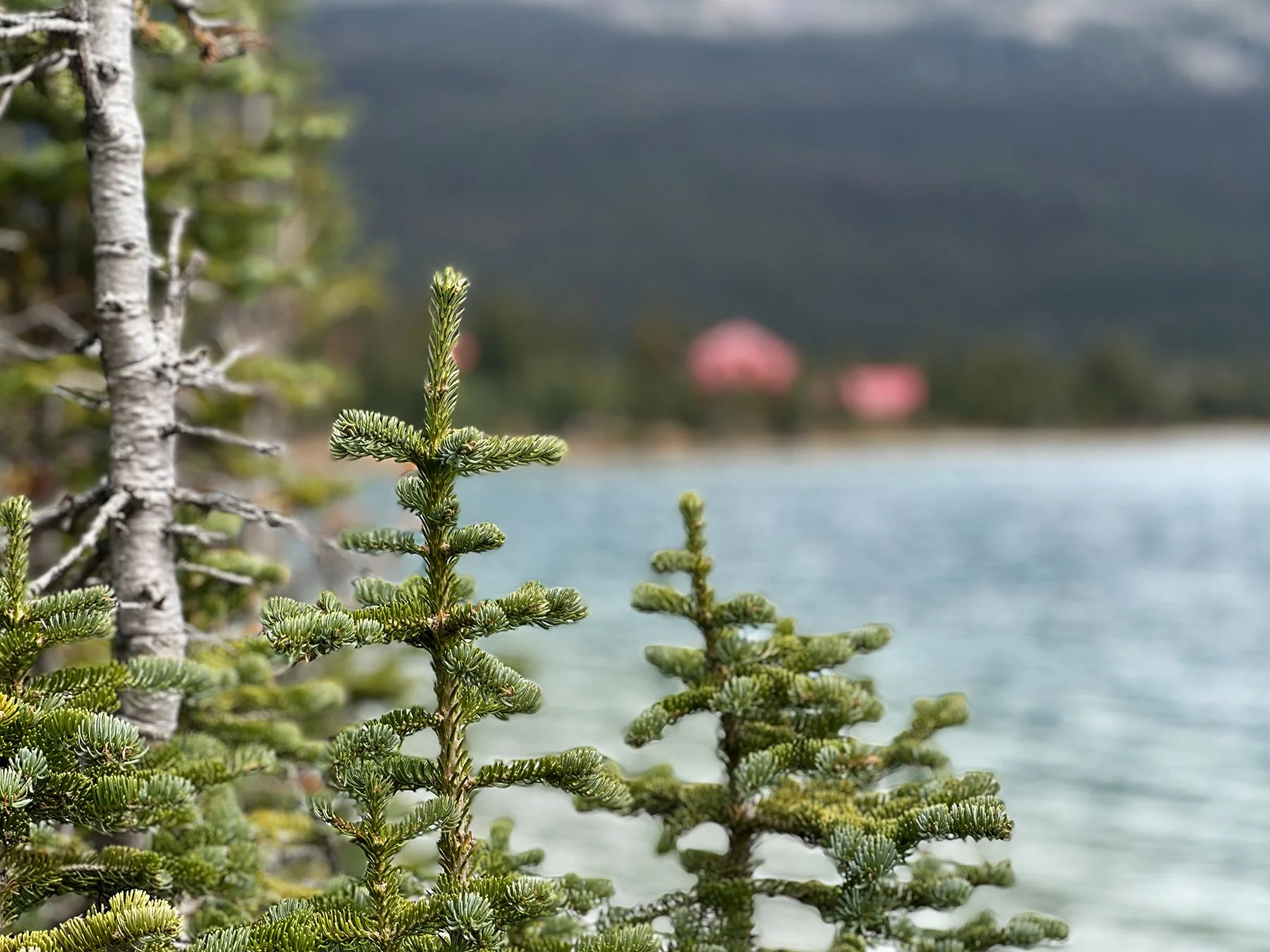
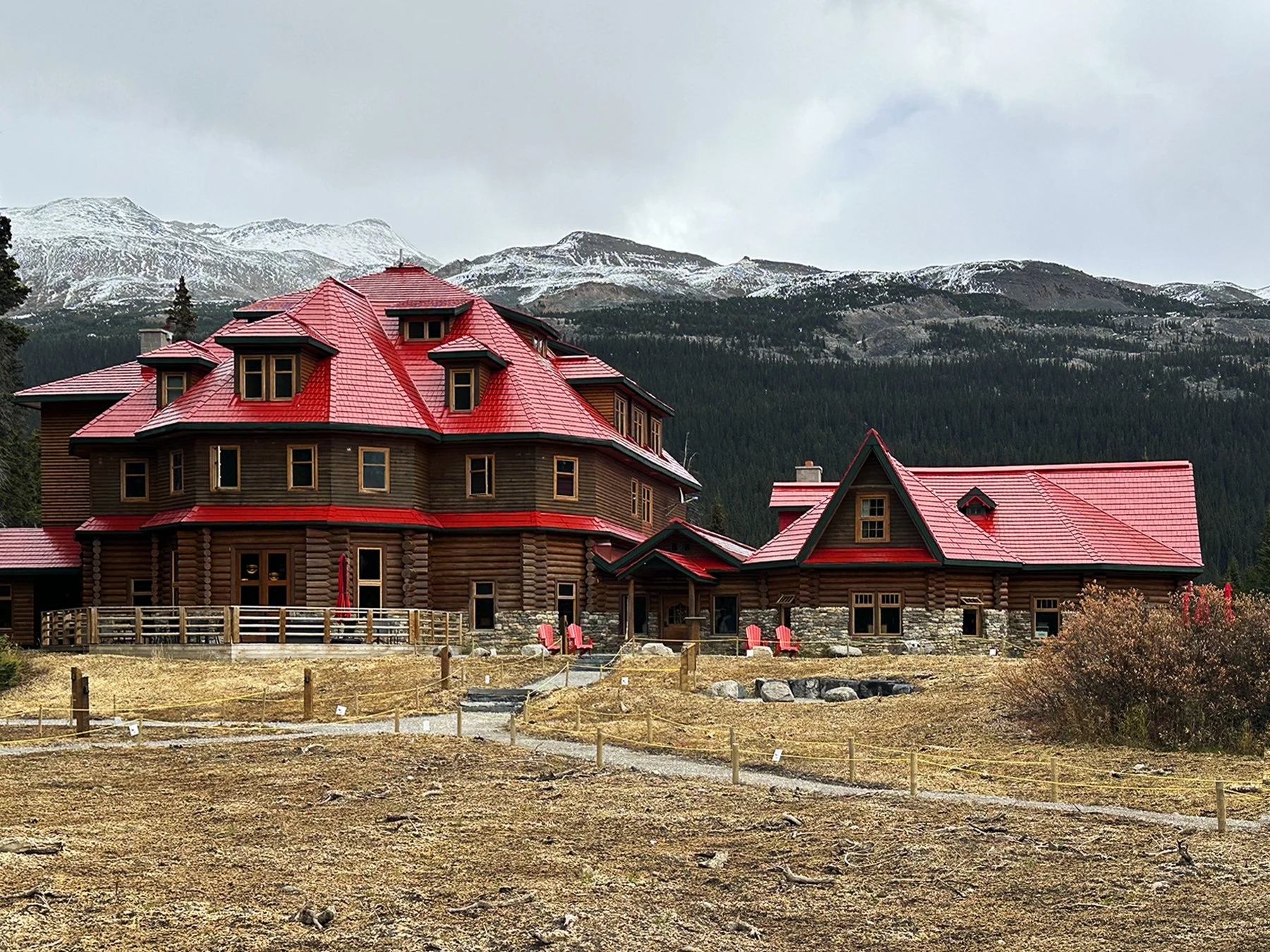
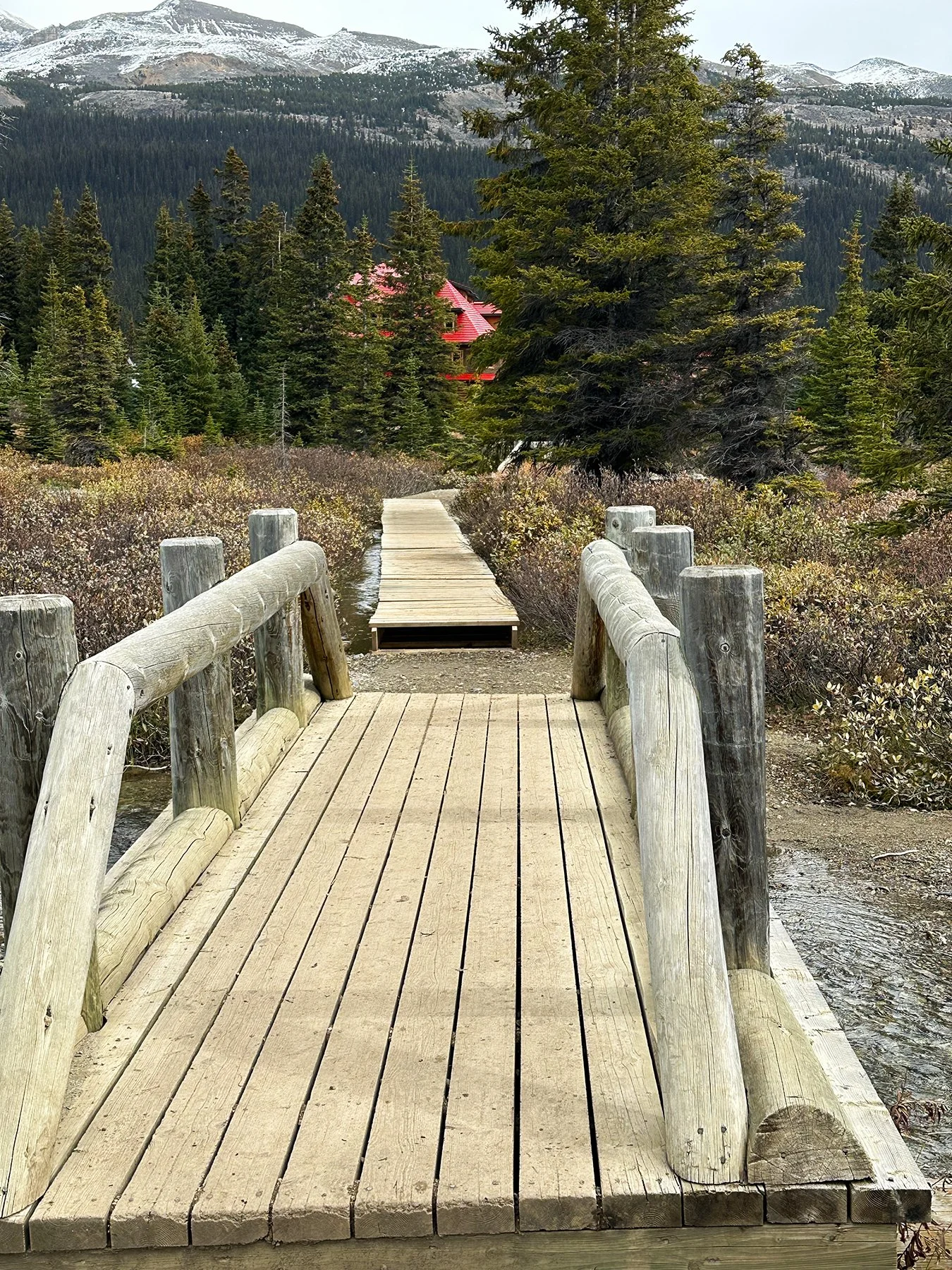
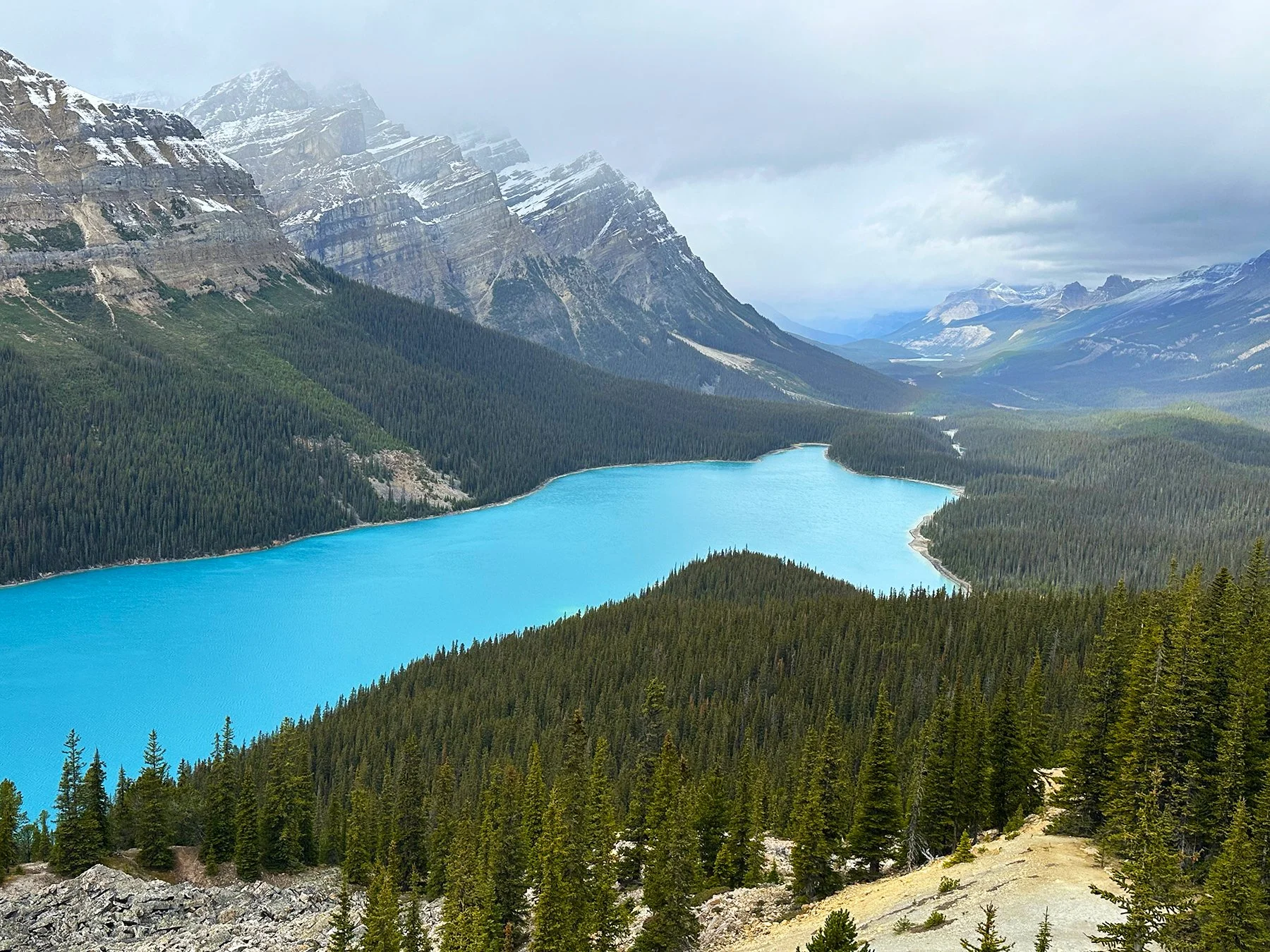
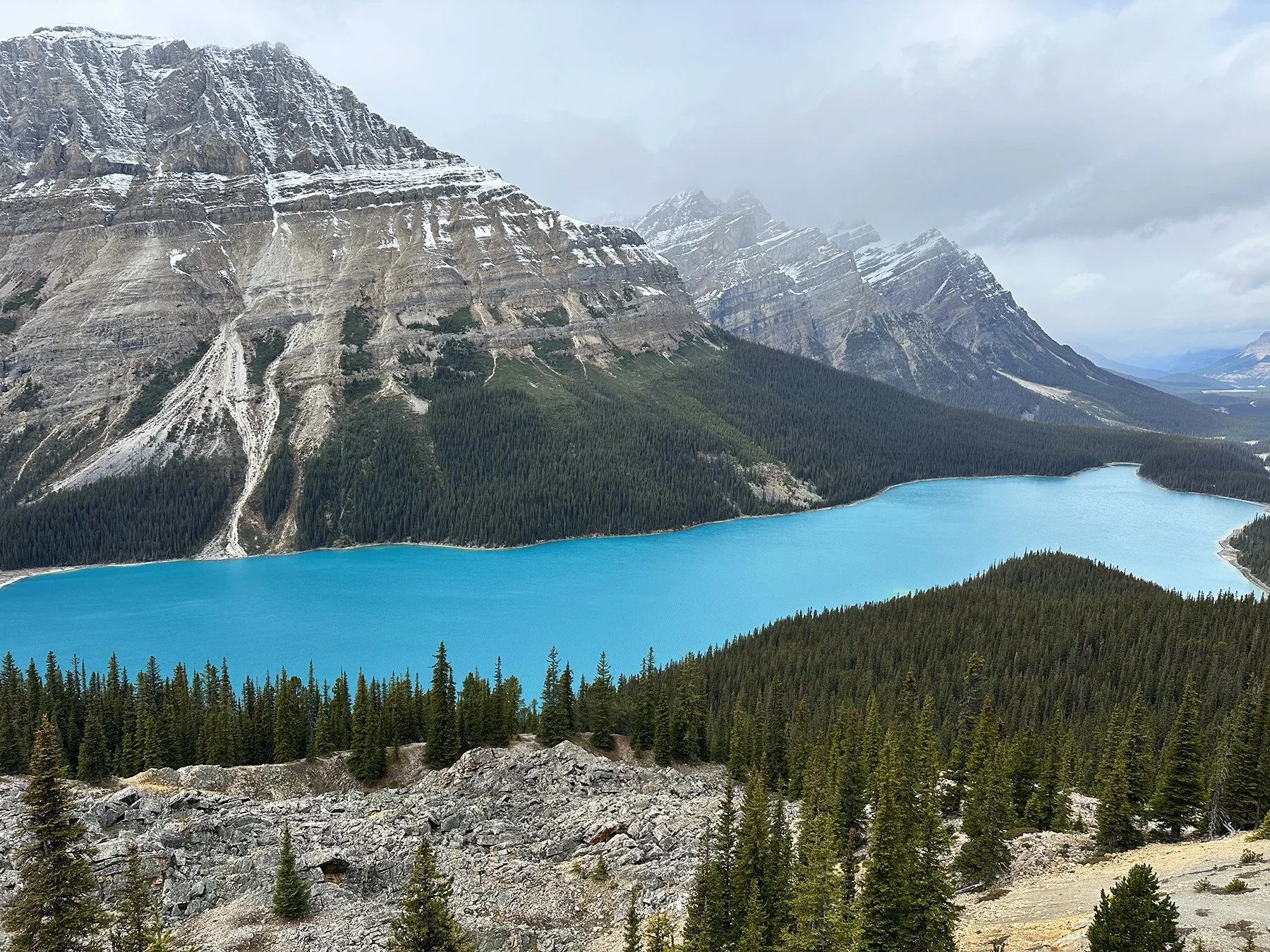
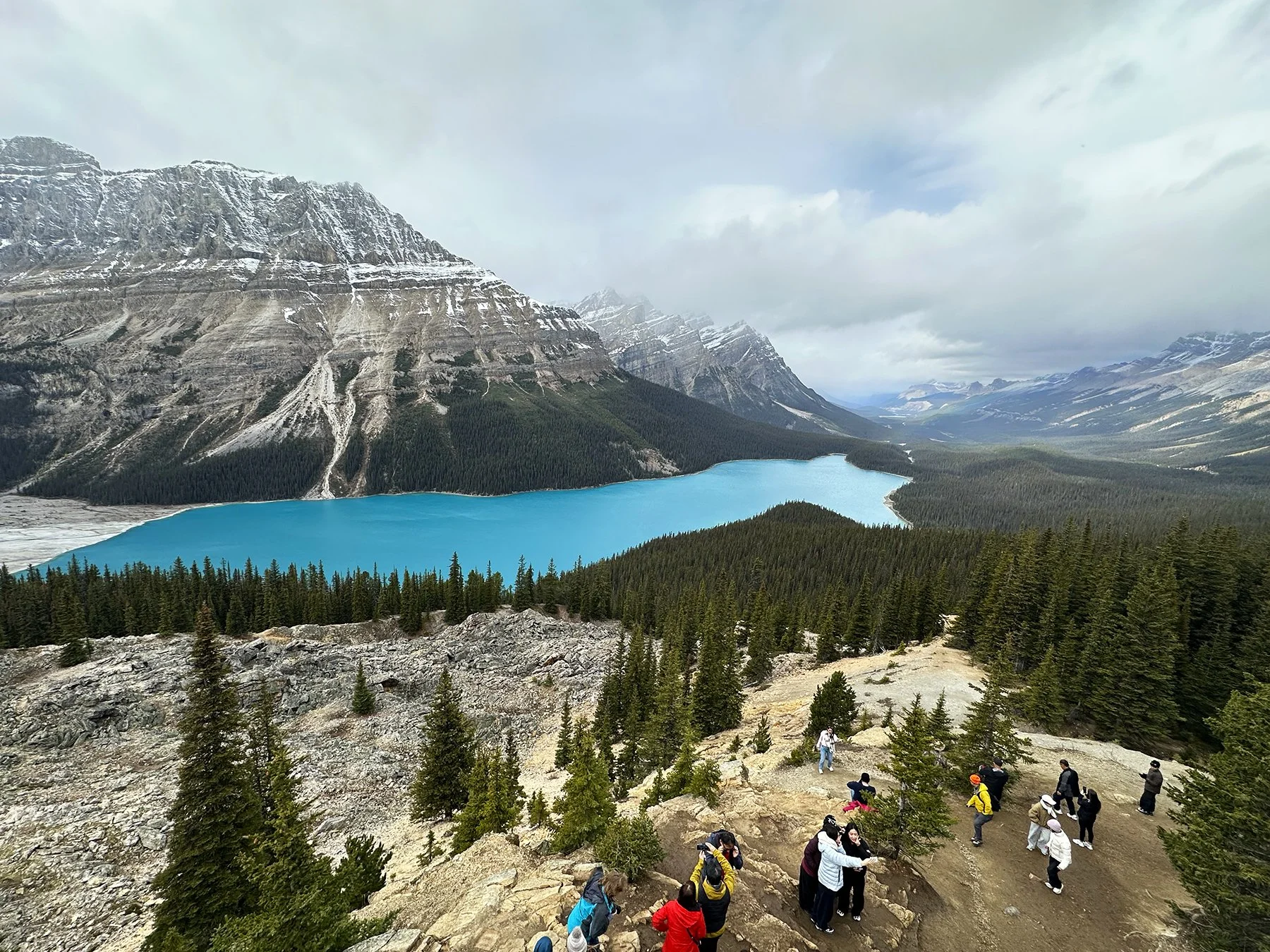
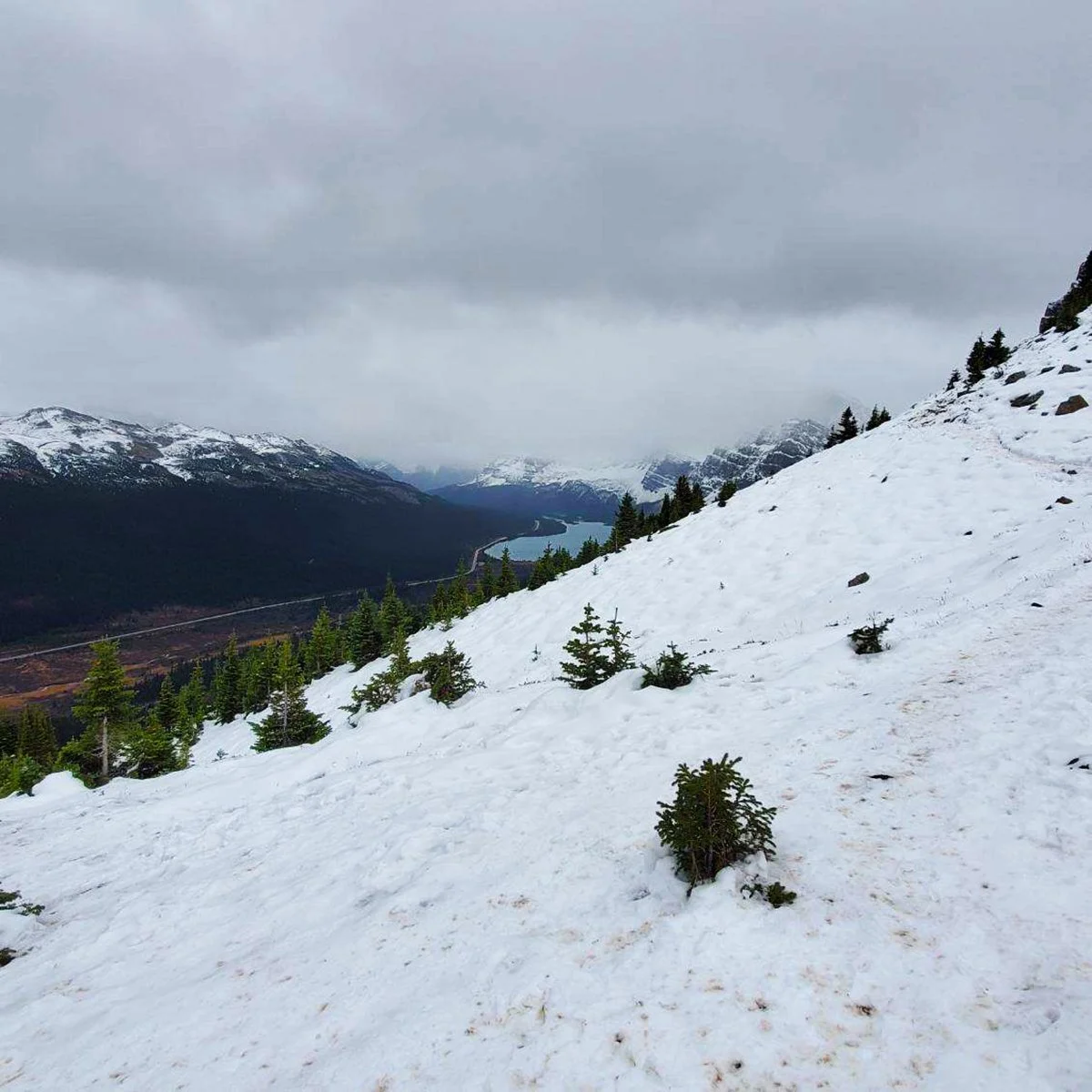
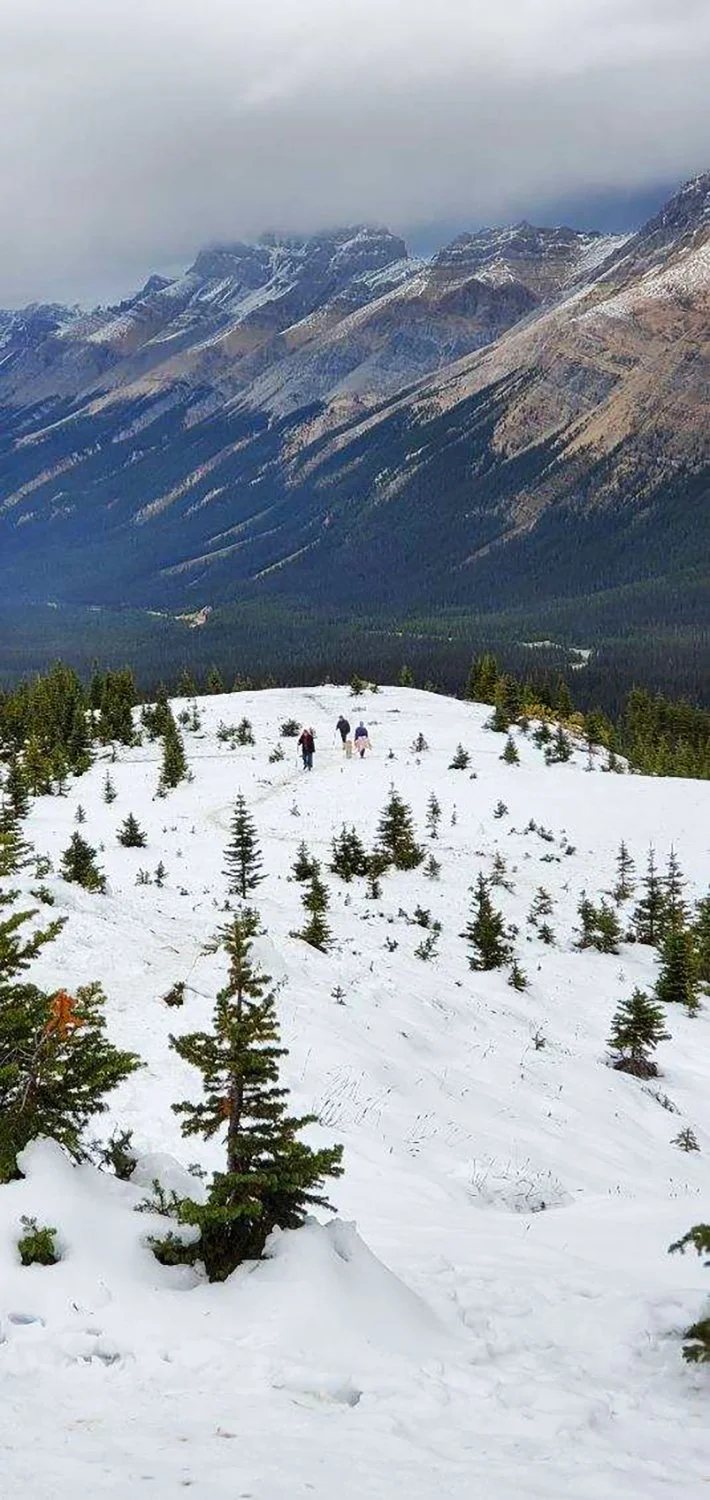
Peyto Lake and Bow Summit
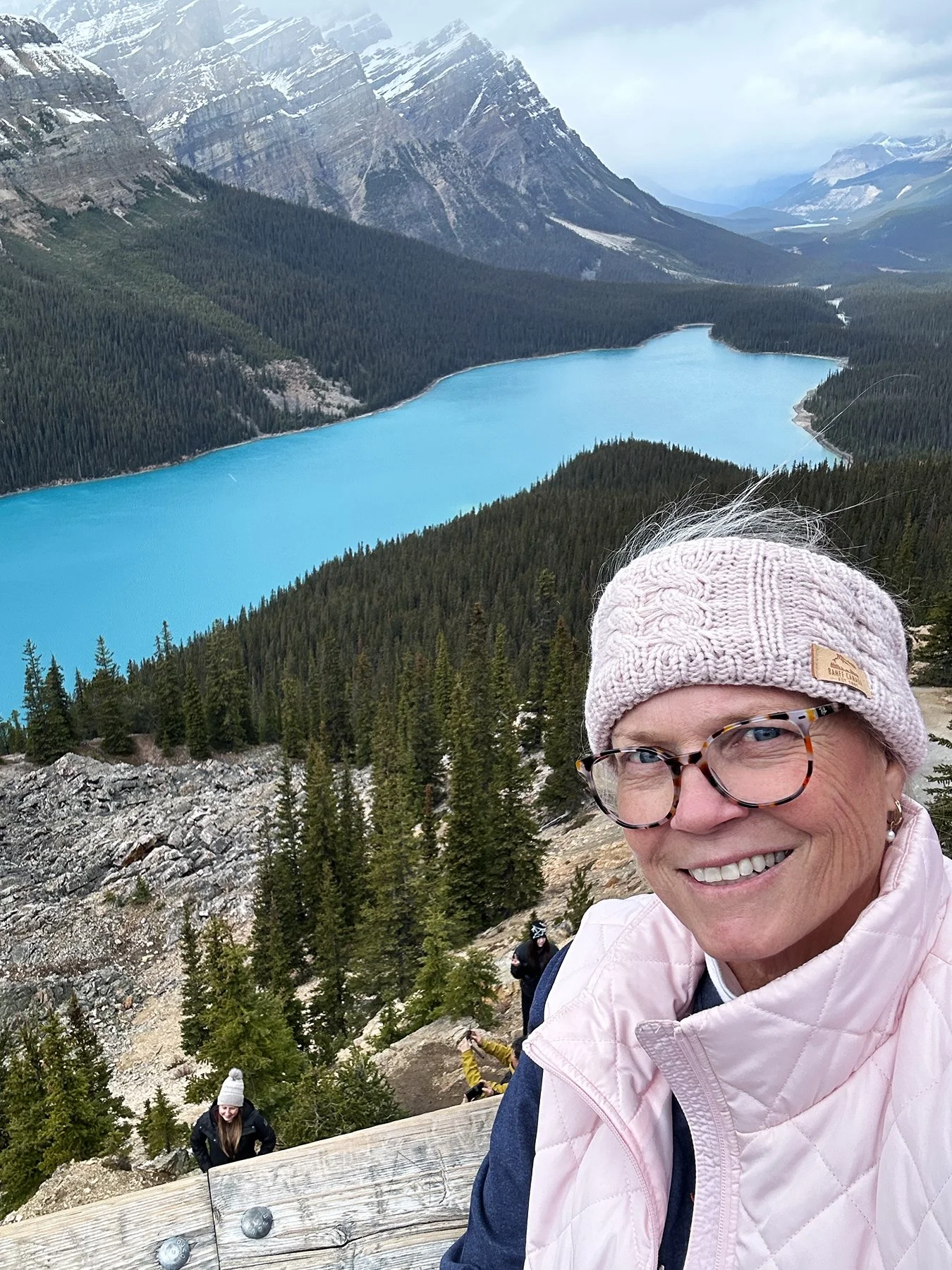
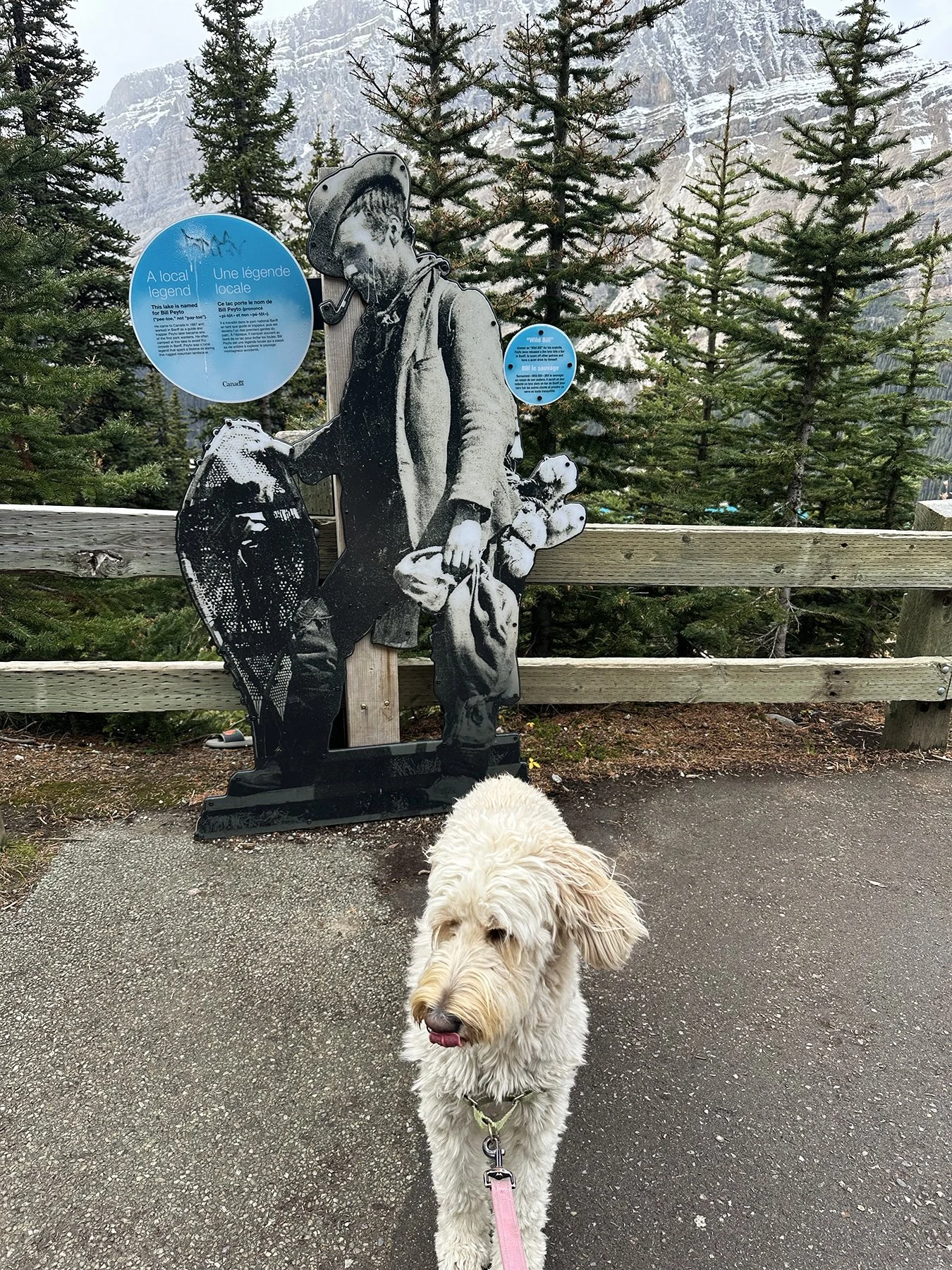
Peyto Lake, to me, was just as magnificent as Lake Louise. You can see from the pictures why it is famous for its distinct wolf’s head shape and bright glacial blue color. And the pictures don’t even really do it justice! Can you just imagine? Oh, my.
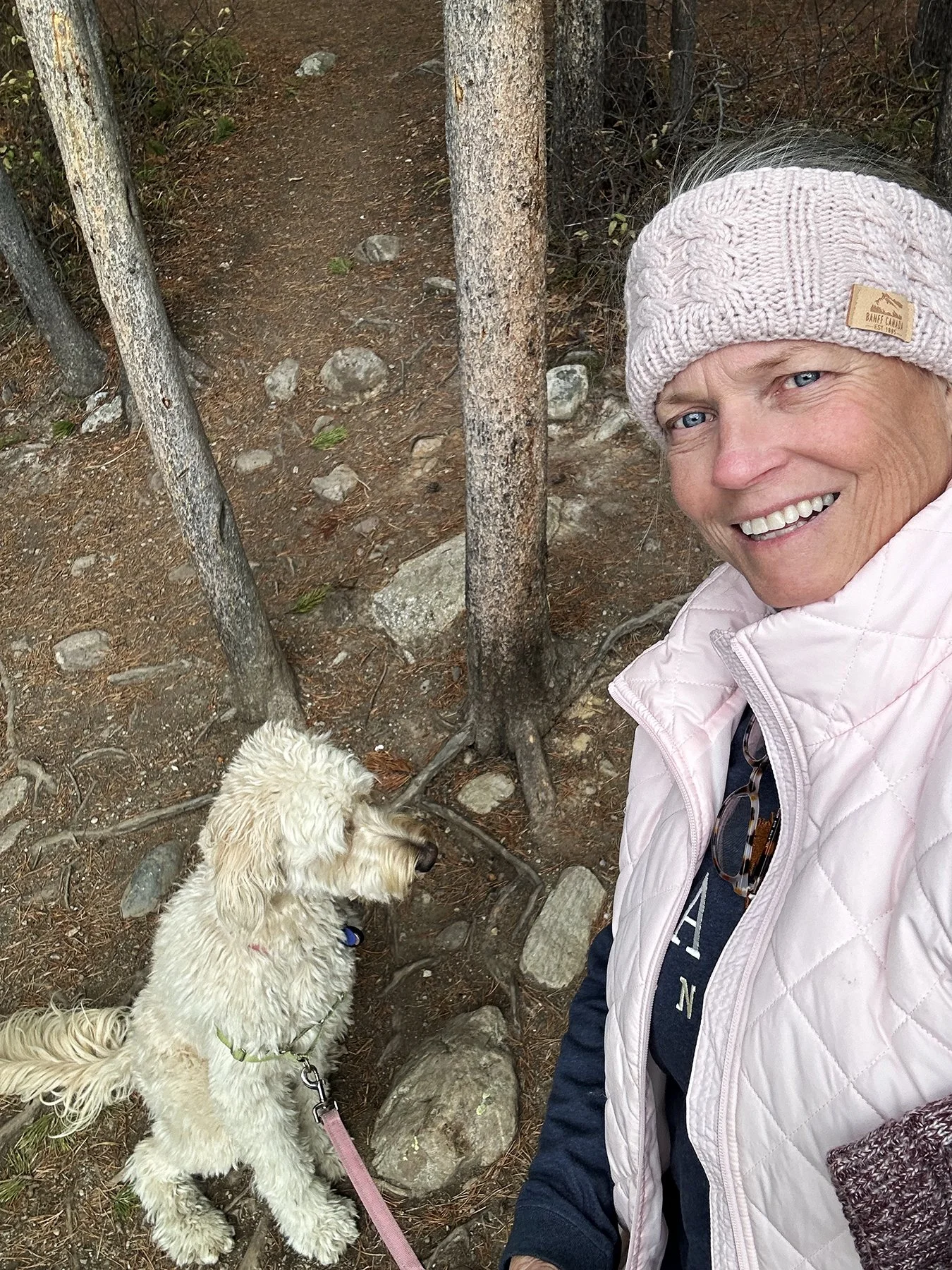
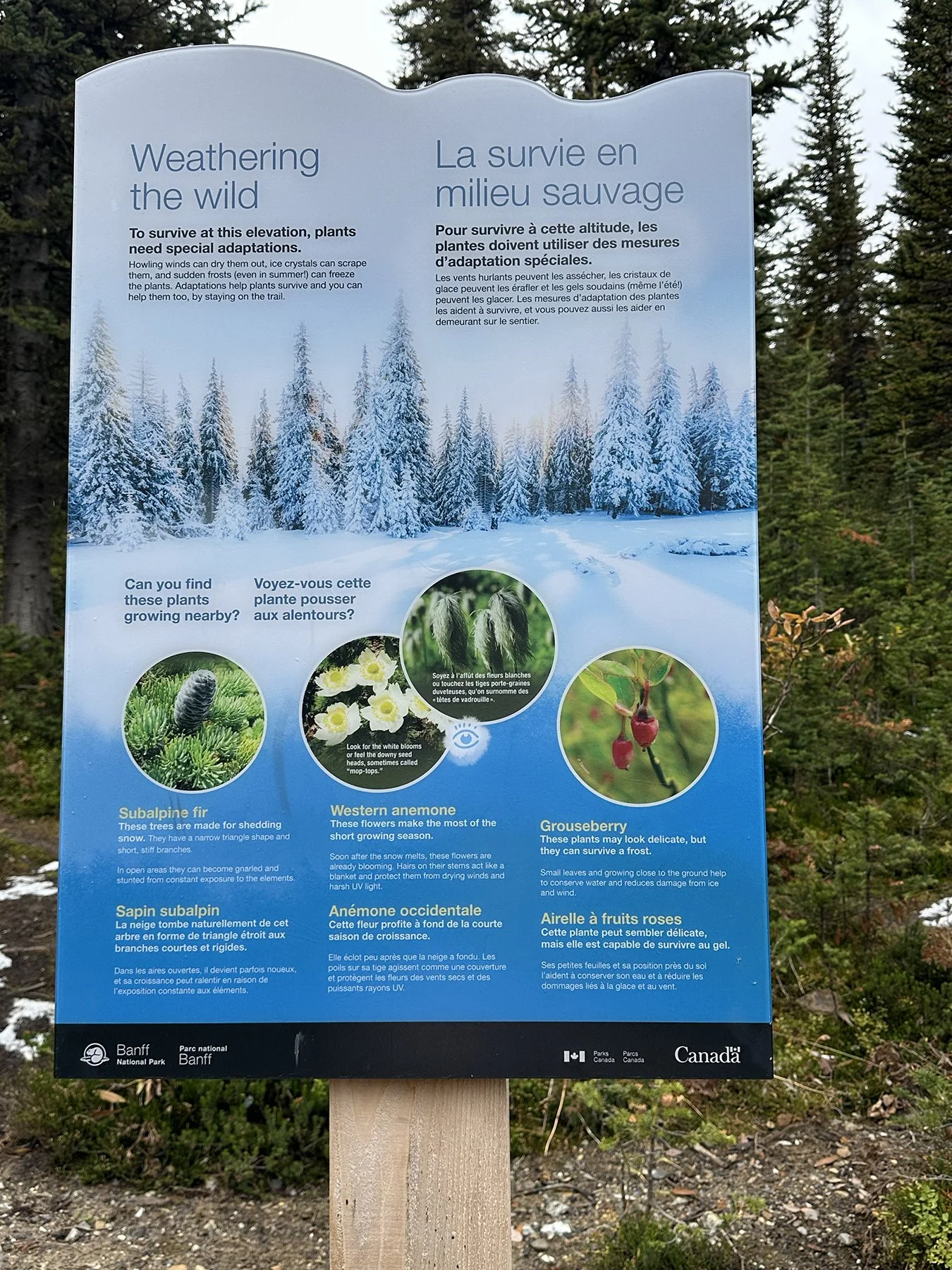
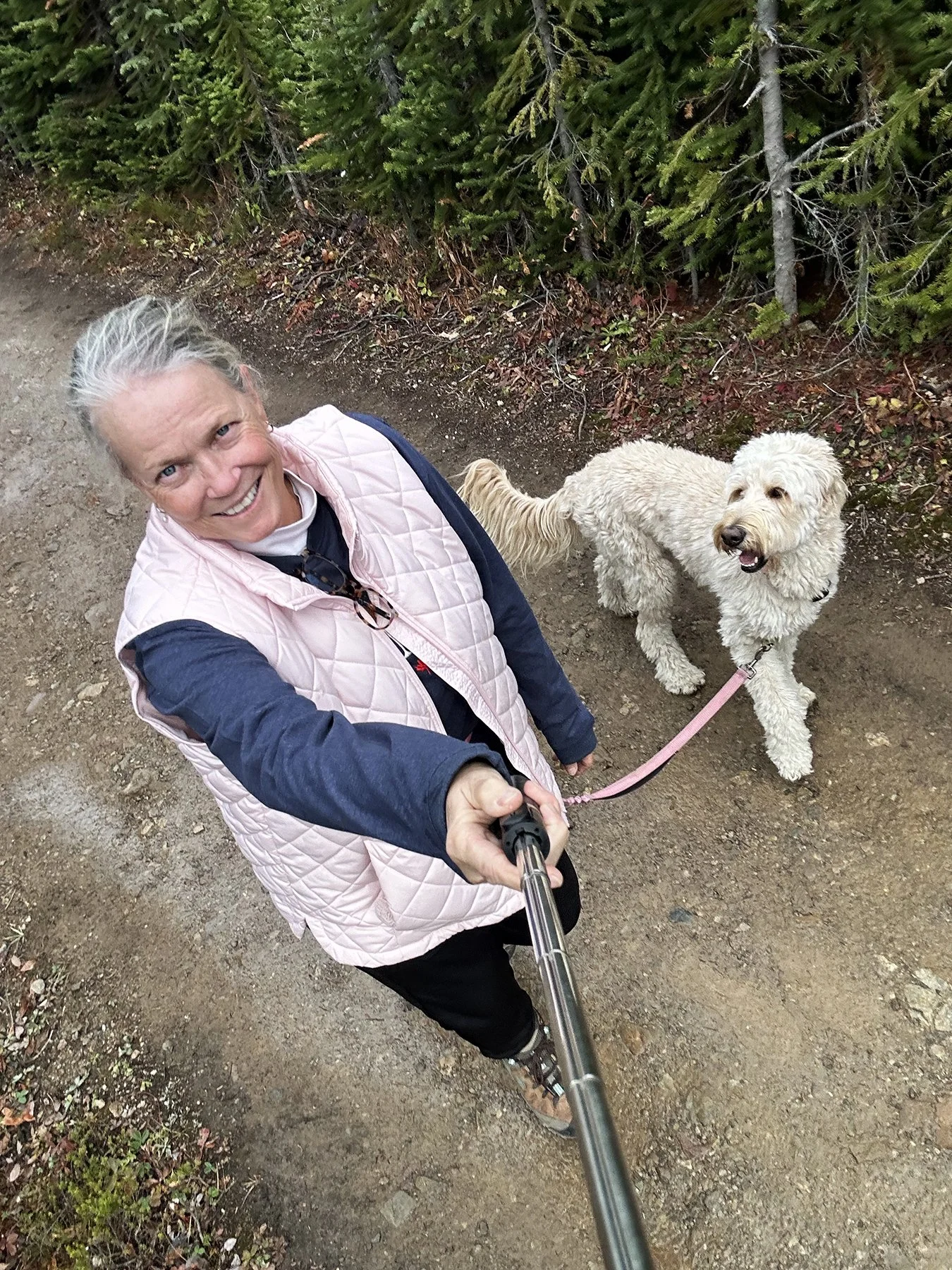
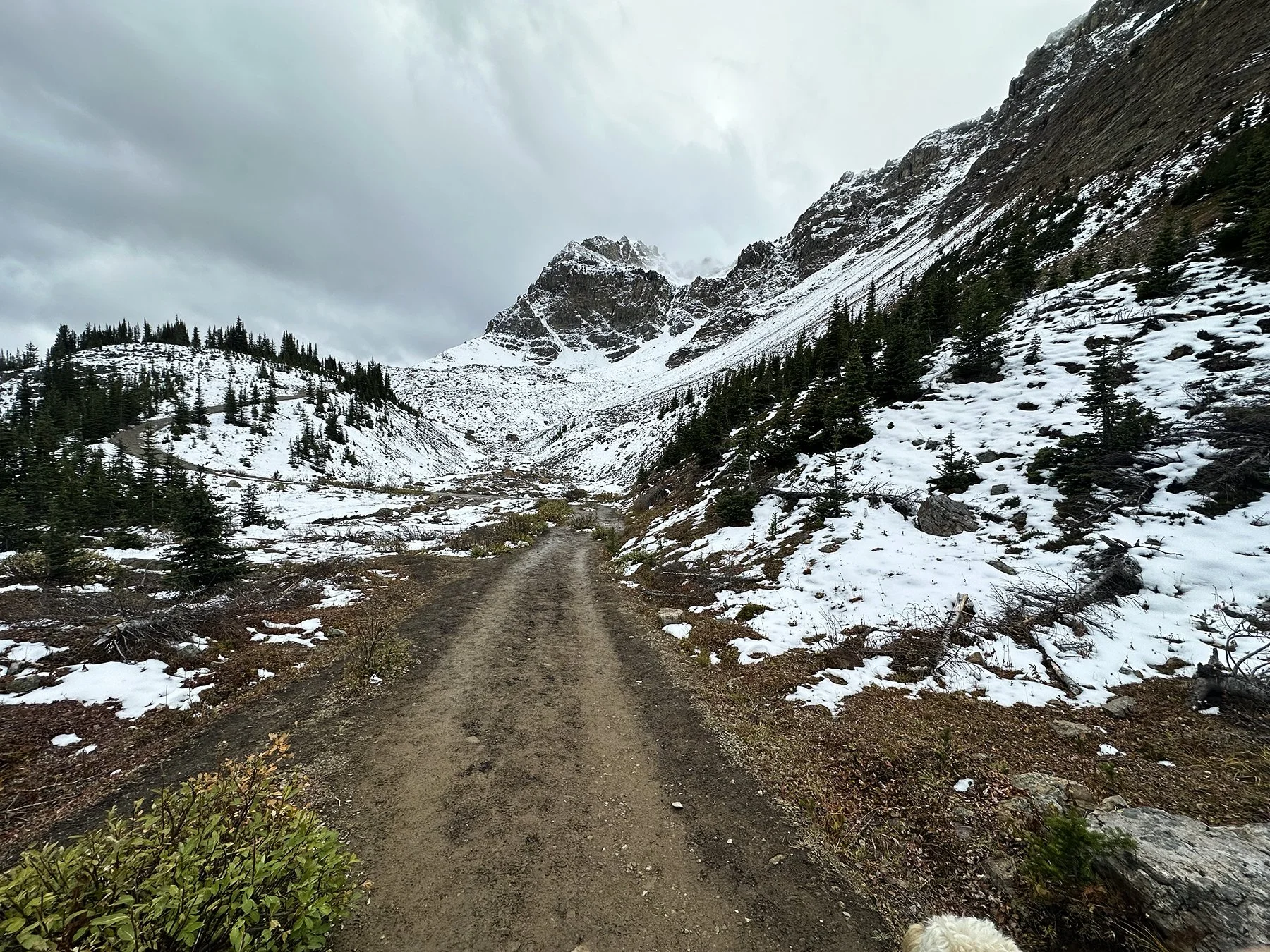
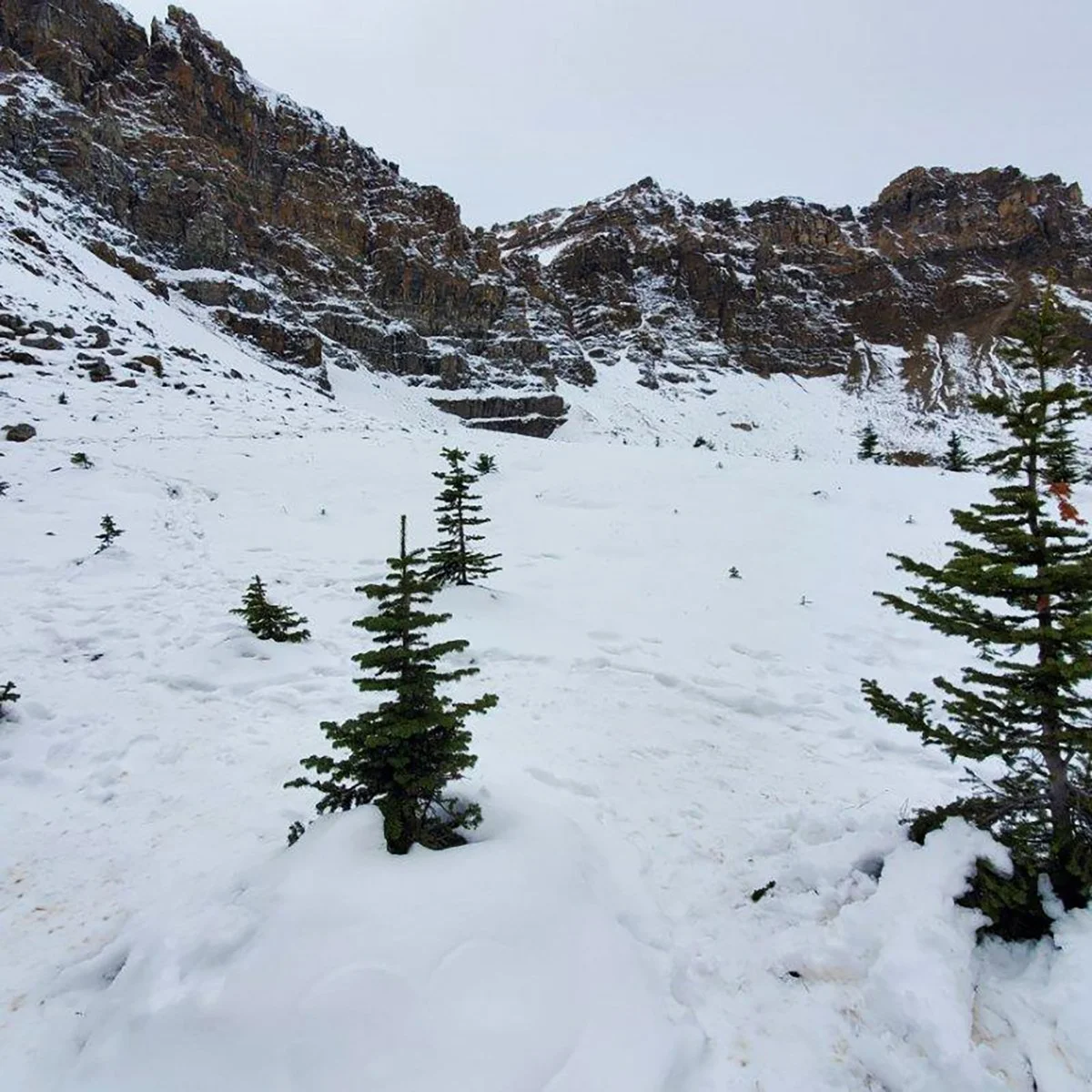
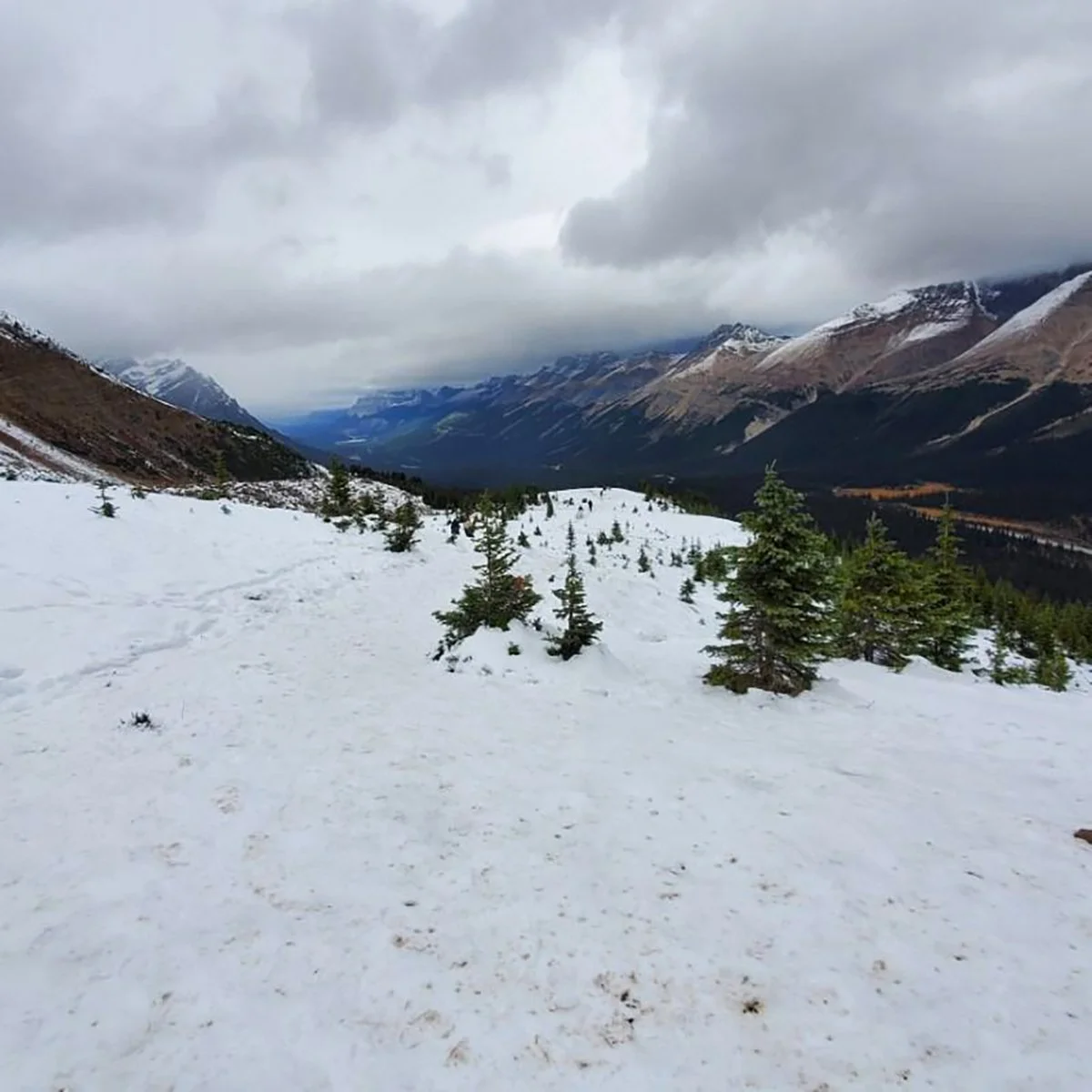
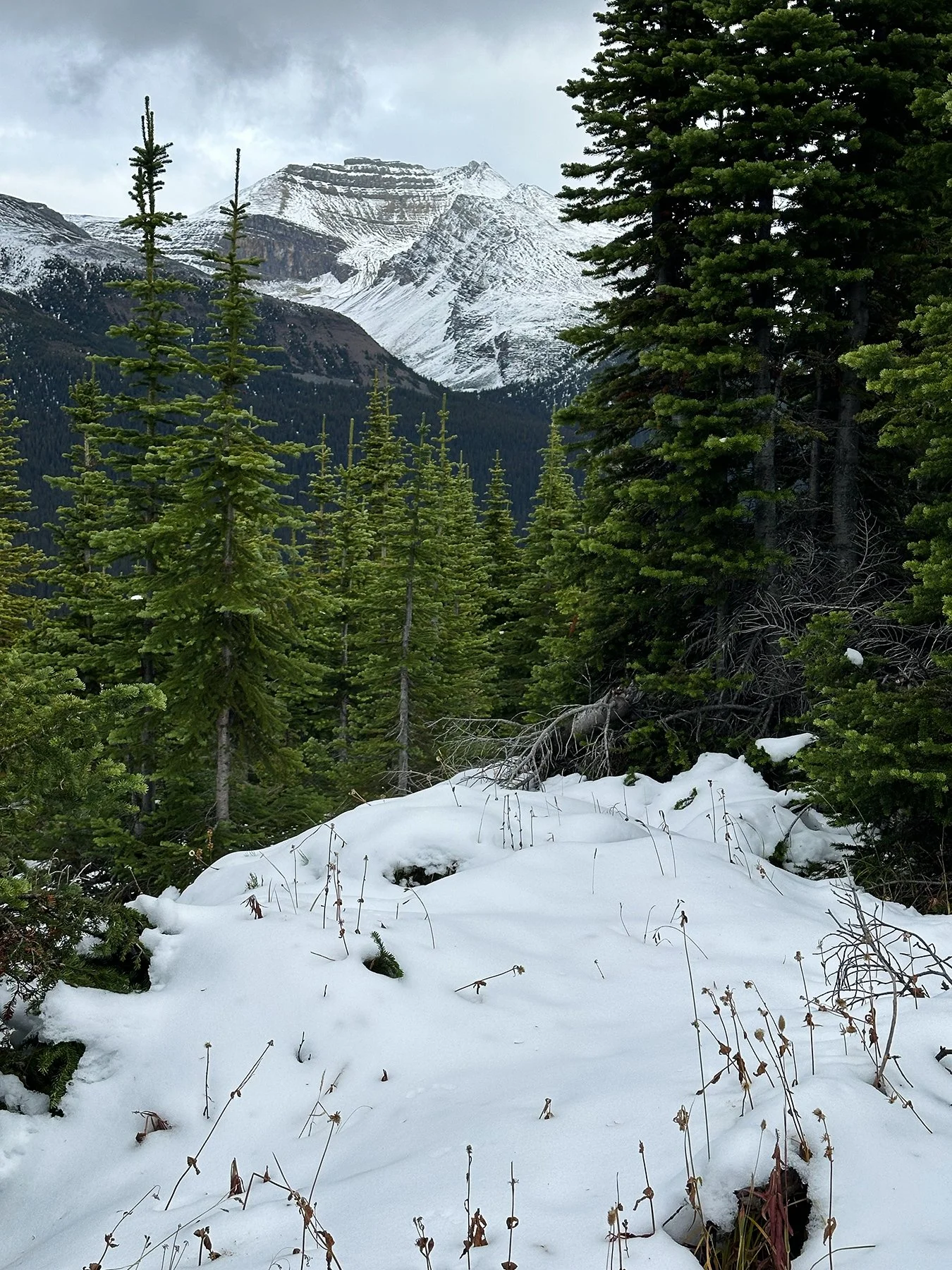
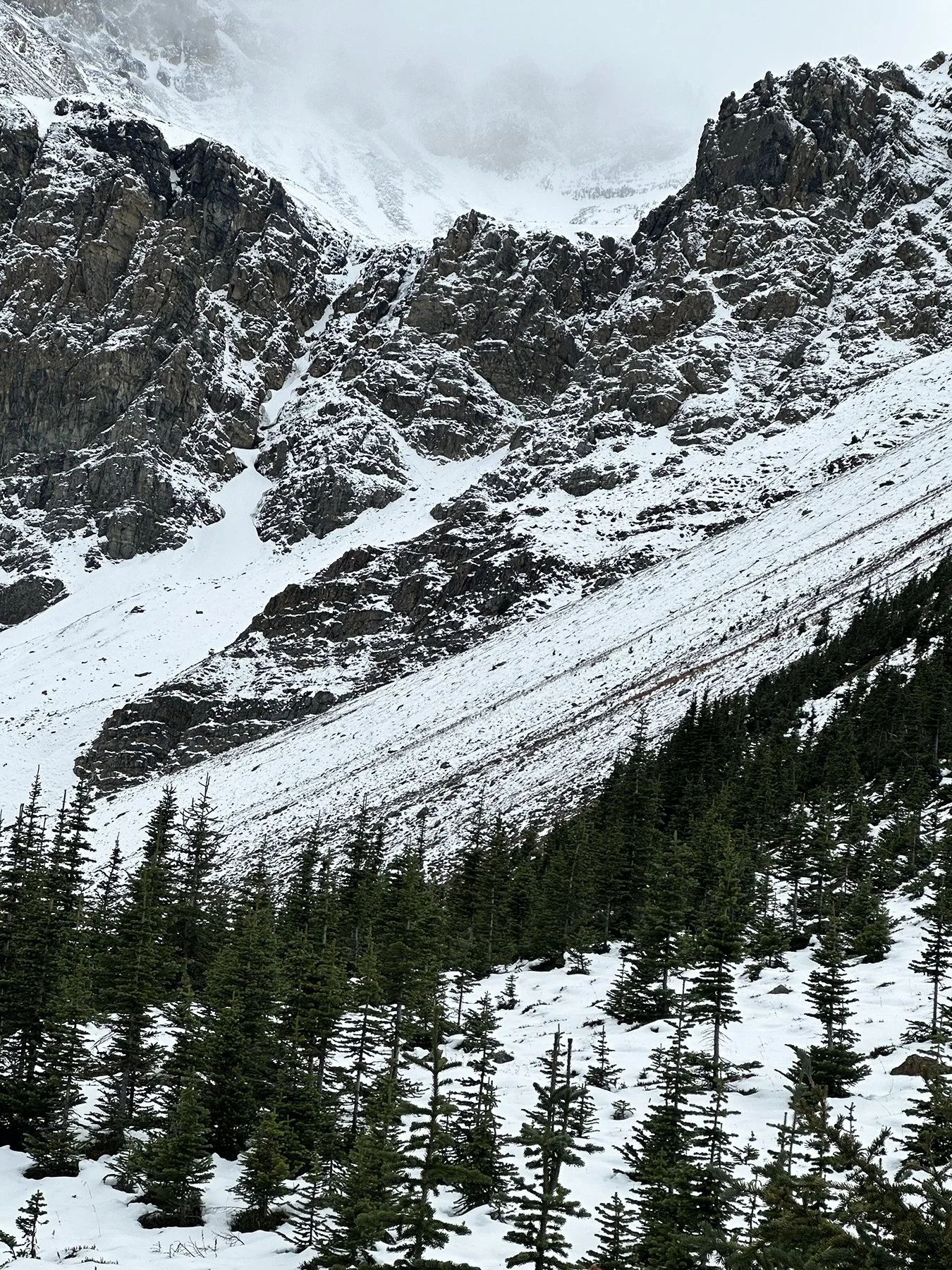
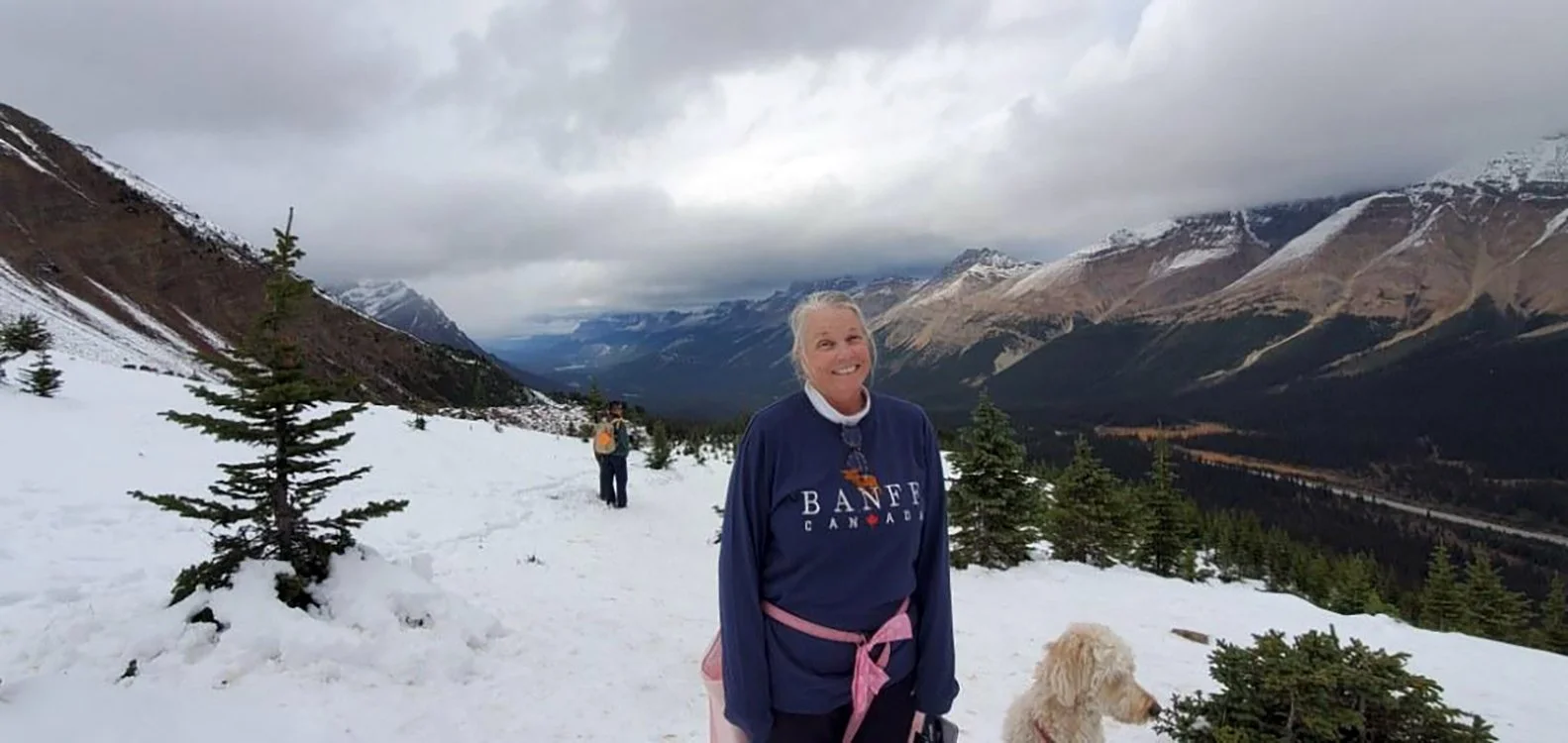
There were a couple of trails from Peyto Lake leading up to Bow Summit. I certainly wanted to hike at least a bit of it. But all the way to the summit? Well, why not? Maisie and I embarked on what ended up being a 4-mile round trip hike, climbing past the tree line along an old fire road into alpine meadows to reach the official Upper Bow Summit Viewpoint. The last half-mile or so was in the snow! IT WAS SO BEAUTIFUL. My phone actually died while nearing the summit (long story; we didn’t have any service up there anyway, but I needed it for photos!). I met a nice couple from Manitoba at the summit, and they agreed to send me some photos.
Day 4: CANMORE
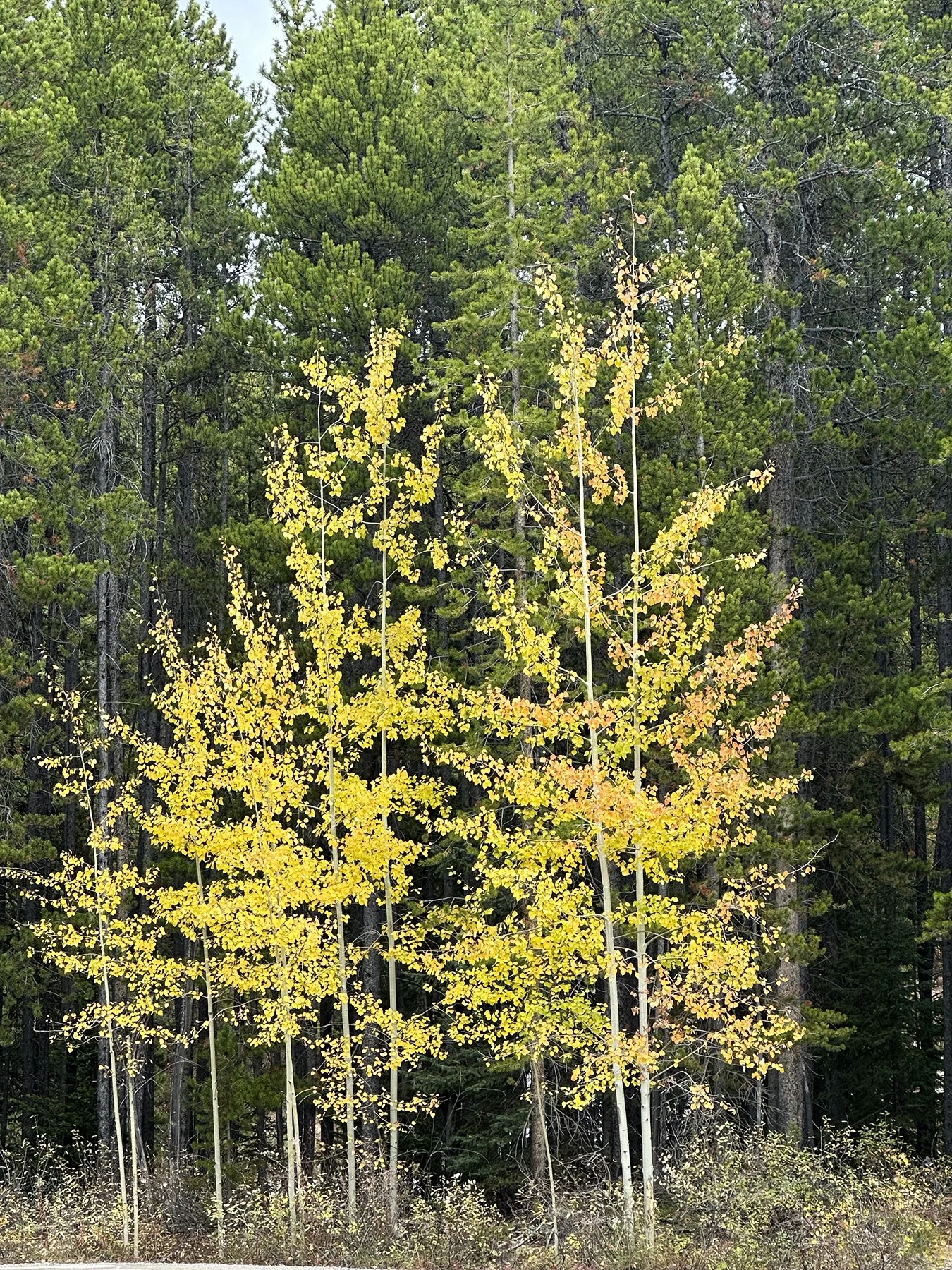
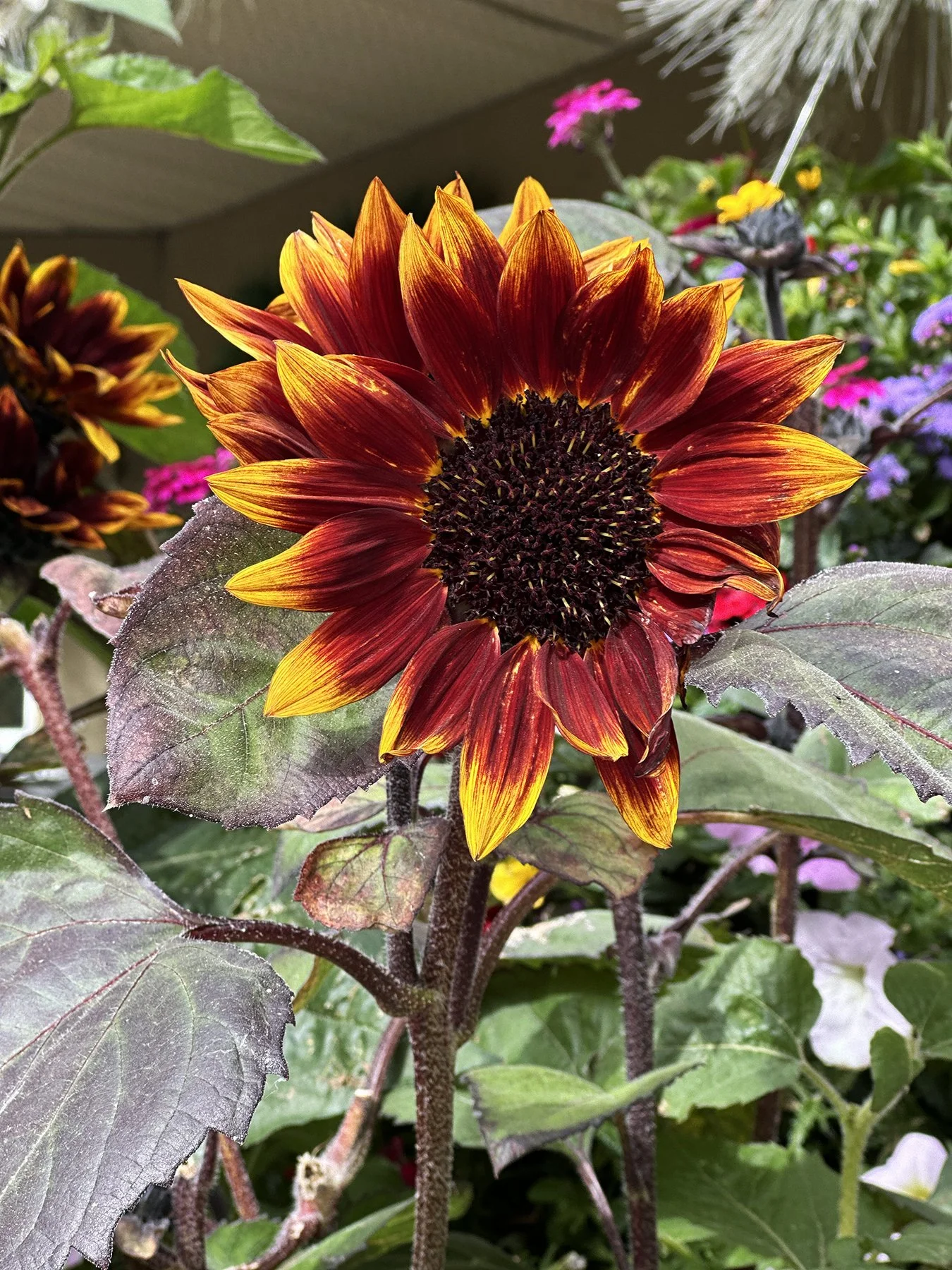
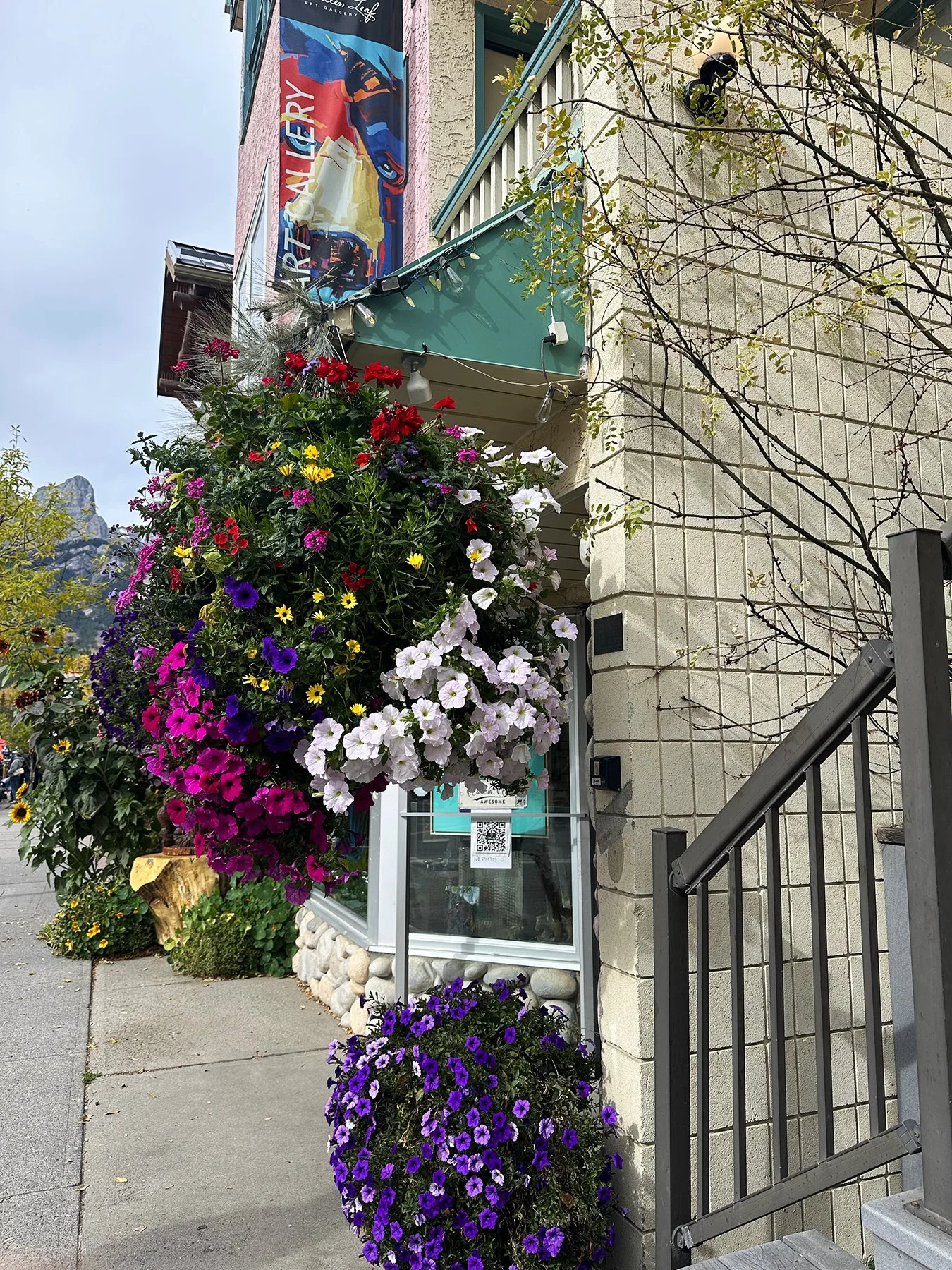
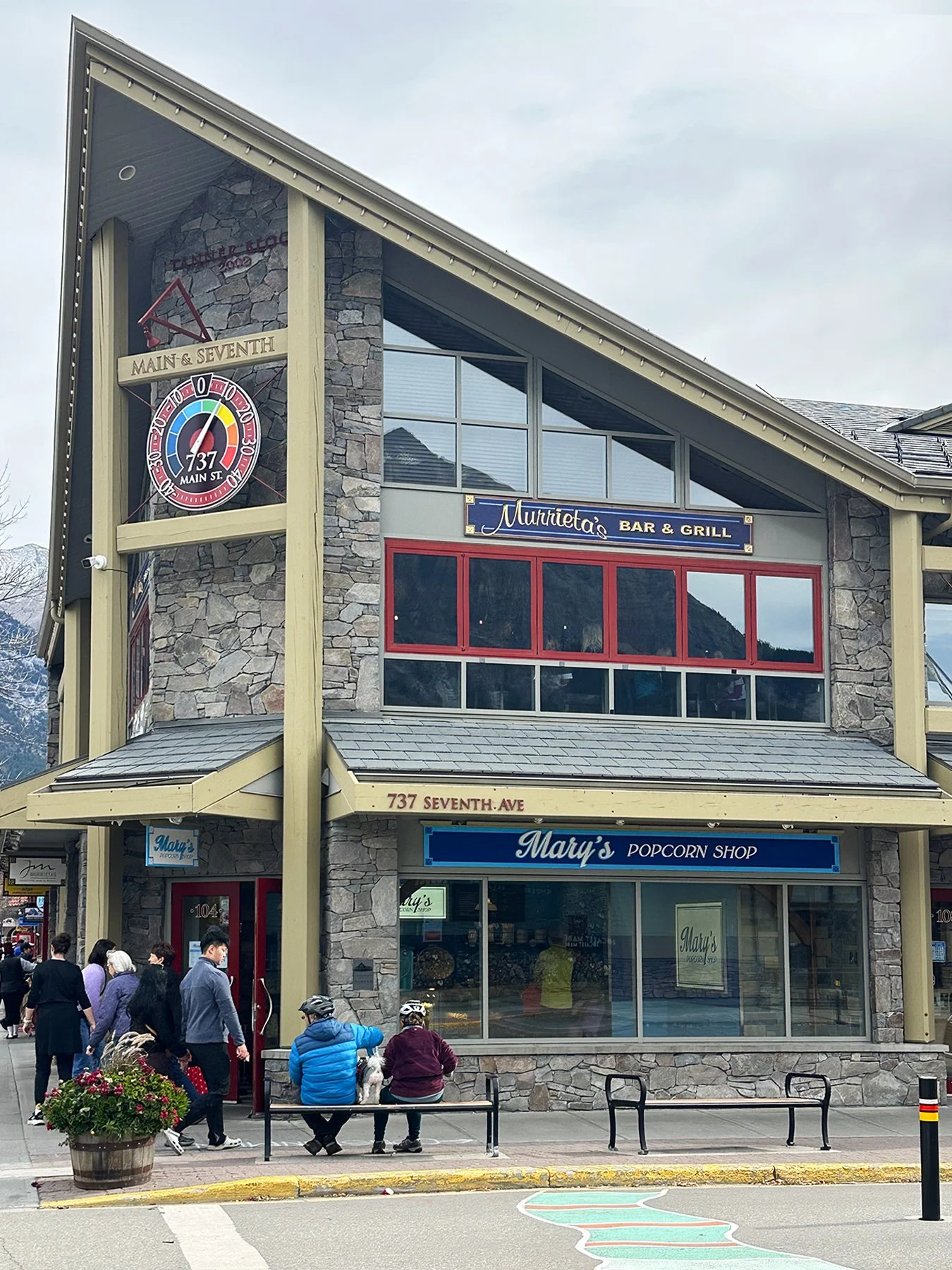
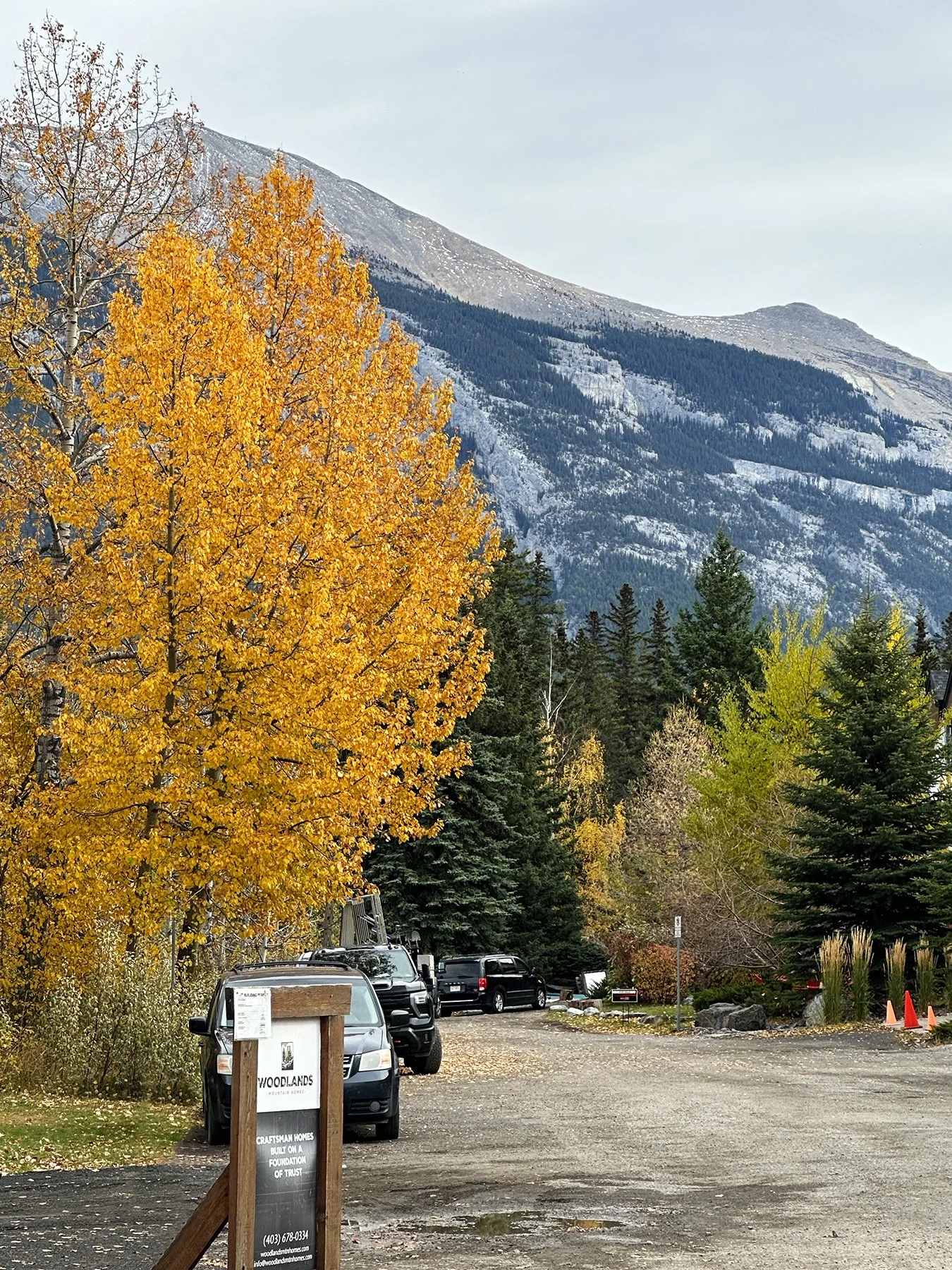
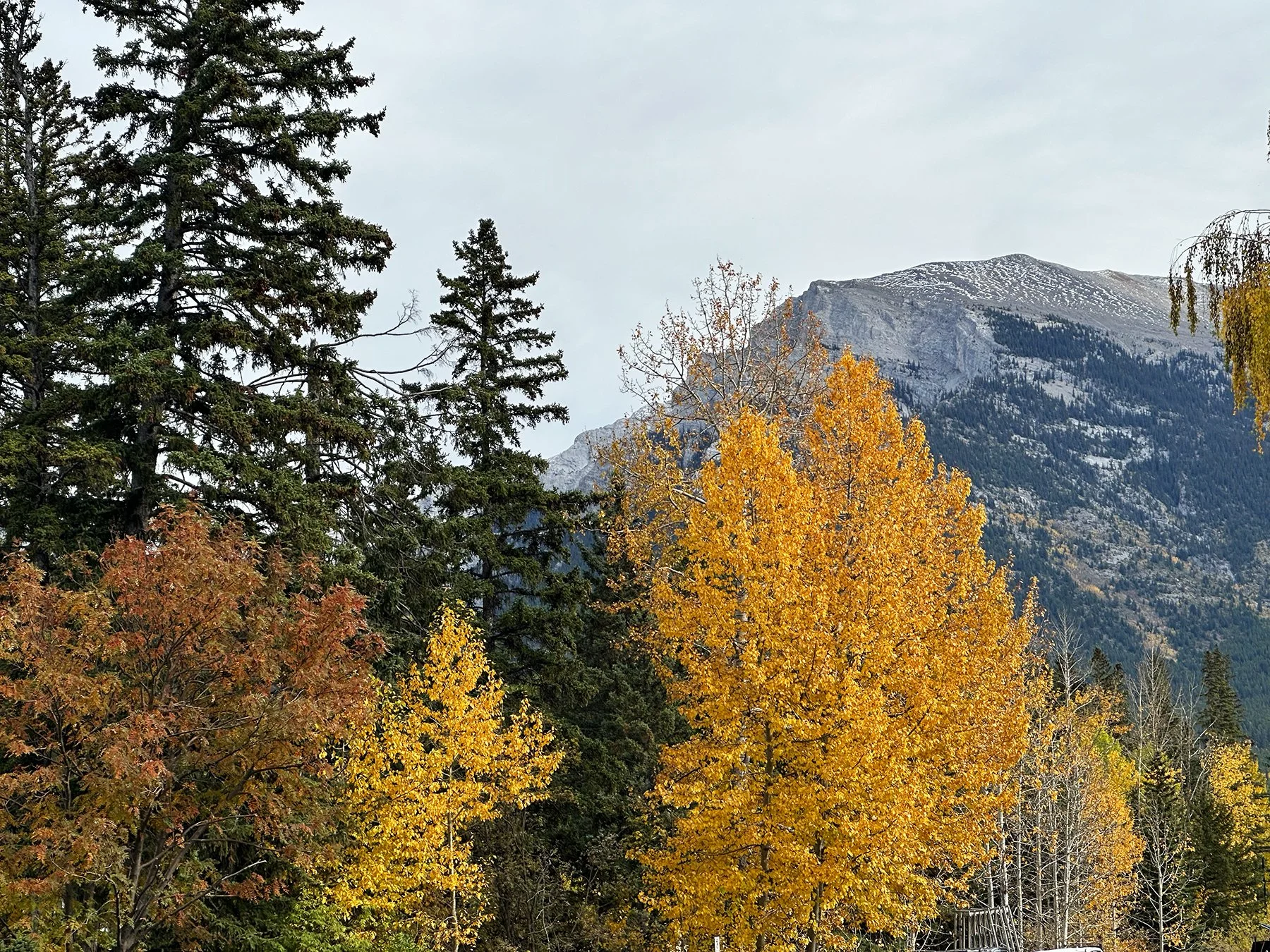
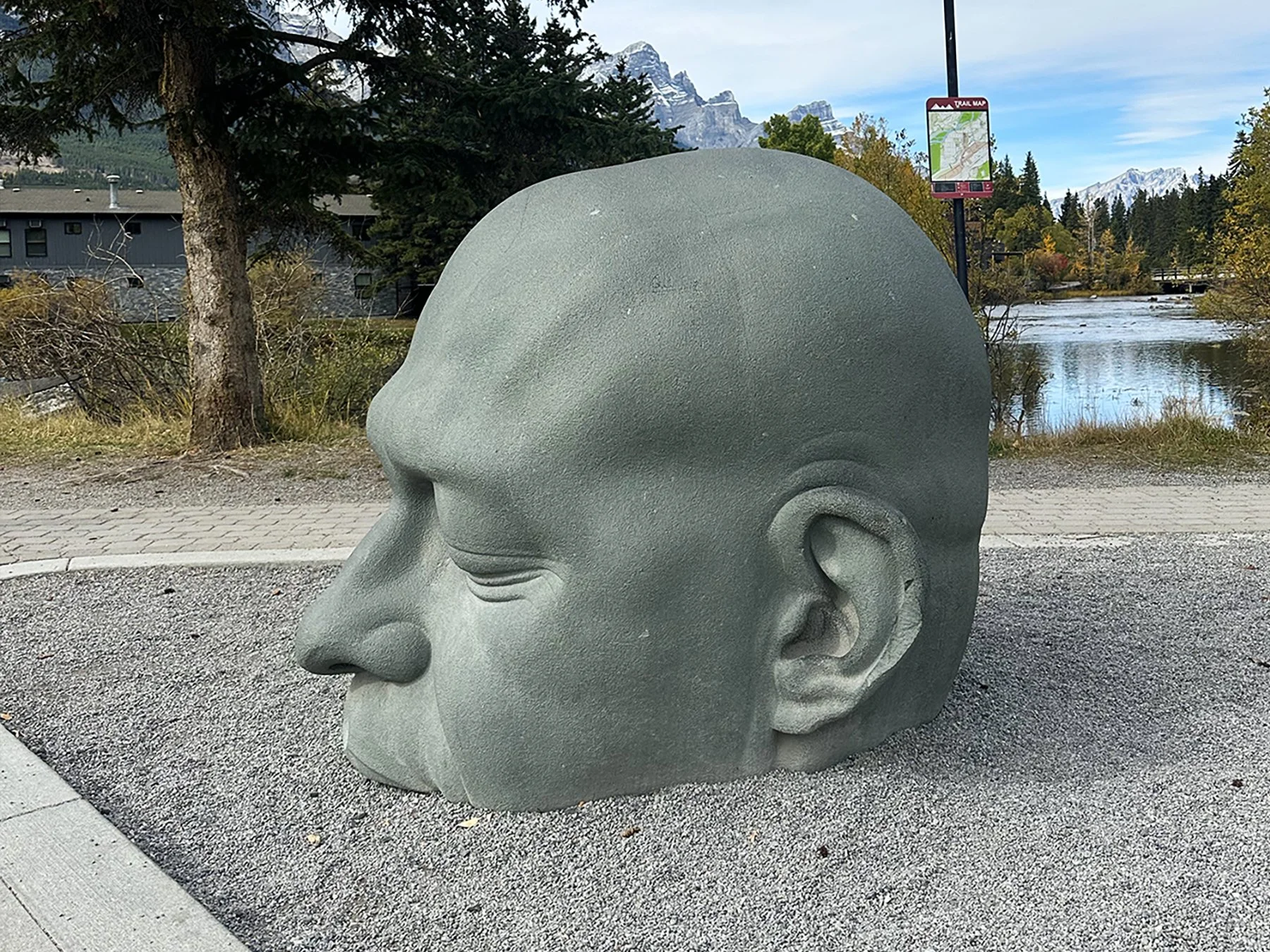
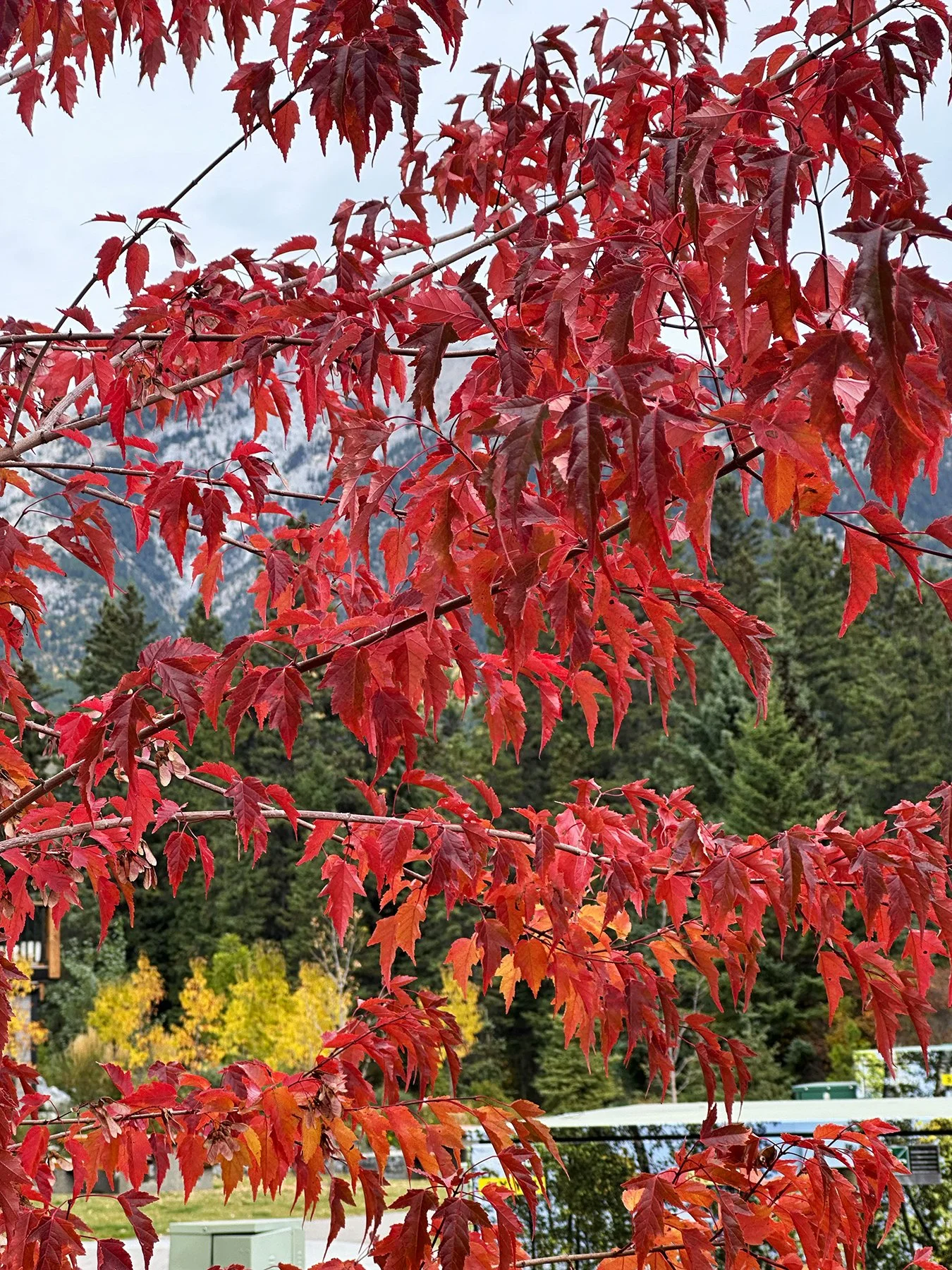
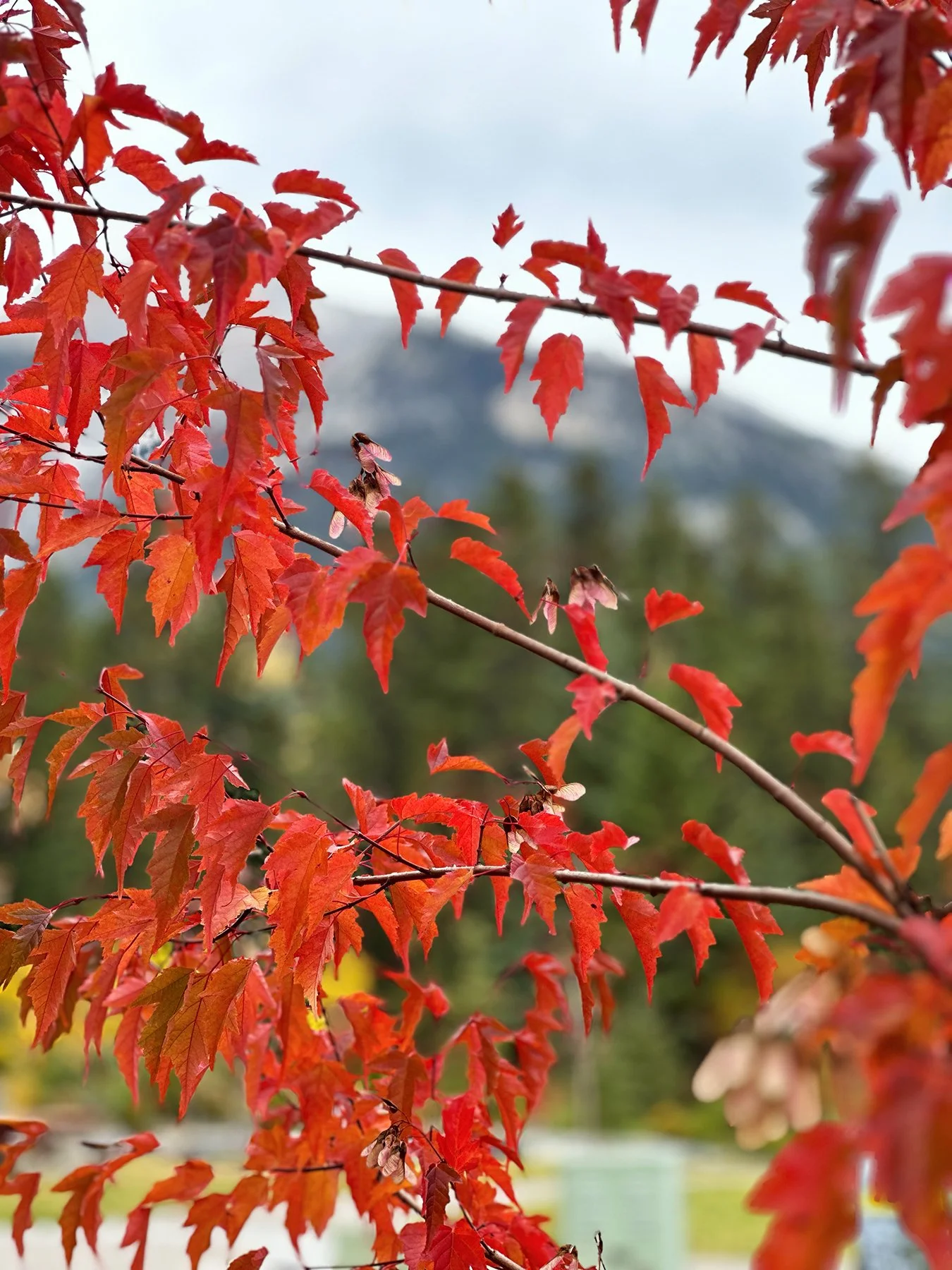
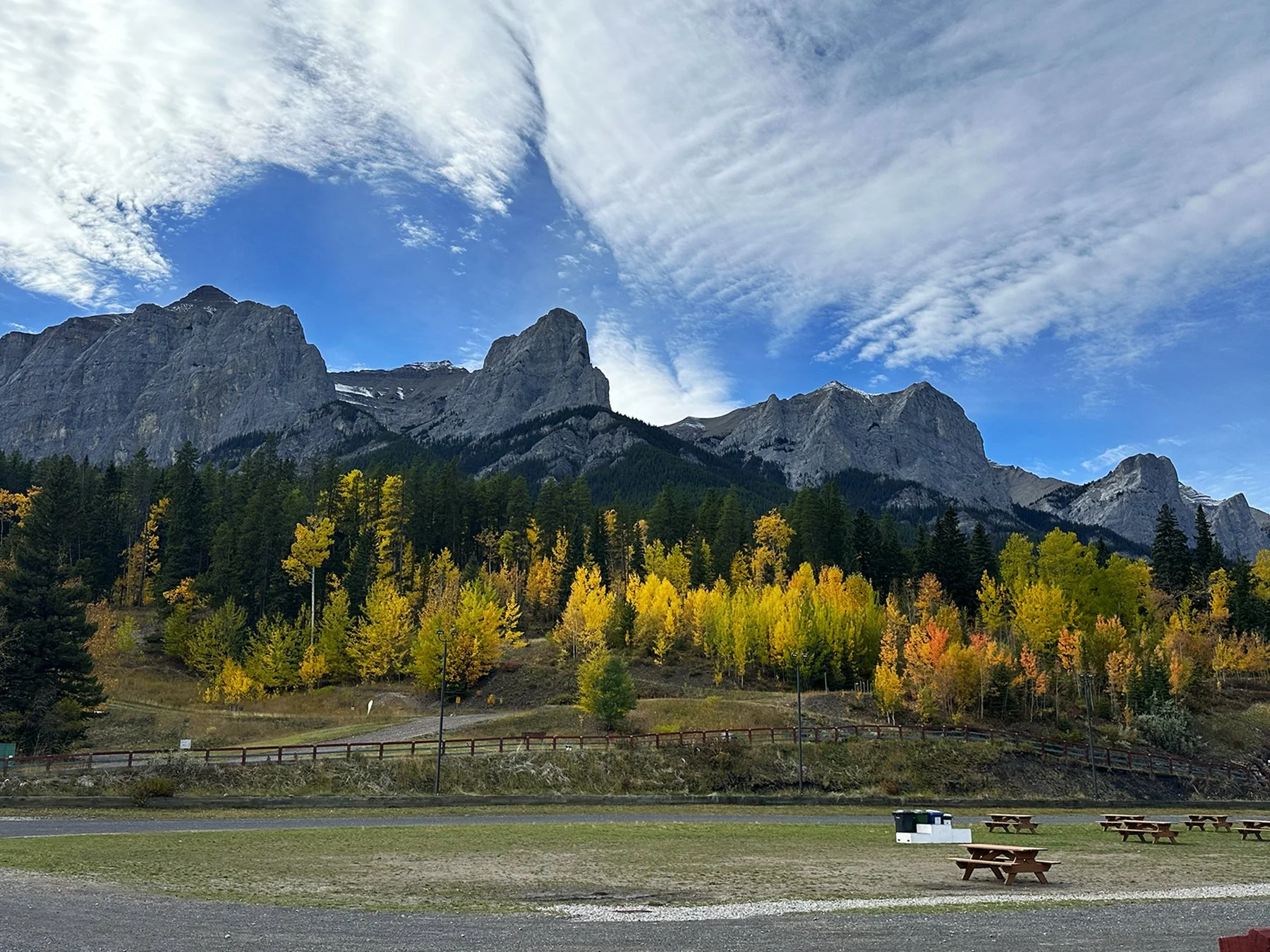
My buddy ChatGPT recommended we spend a day in and around Canmore, another quaint mountain/ski-town about half-an-hour from Banff. And YES! I did enjoy this town more than the town of Banff; it felt considerably more like a real mountain community than the heavily tourist-oriented parts of Banff. There were quite a few easy walking trails around the city and we just soaked up the scenery, with leaves turning vibrant hues and snow-capped mountains behind them.
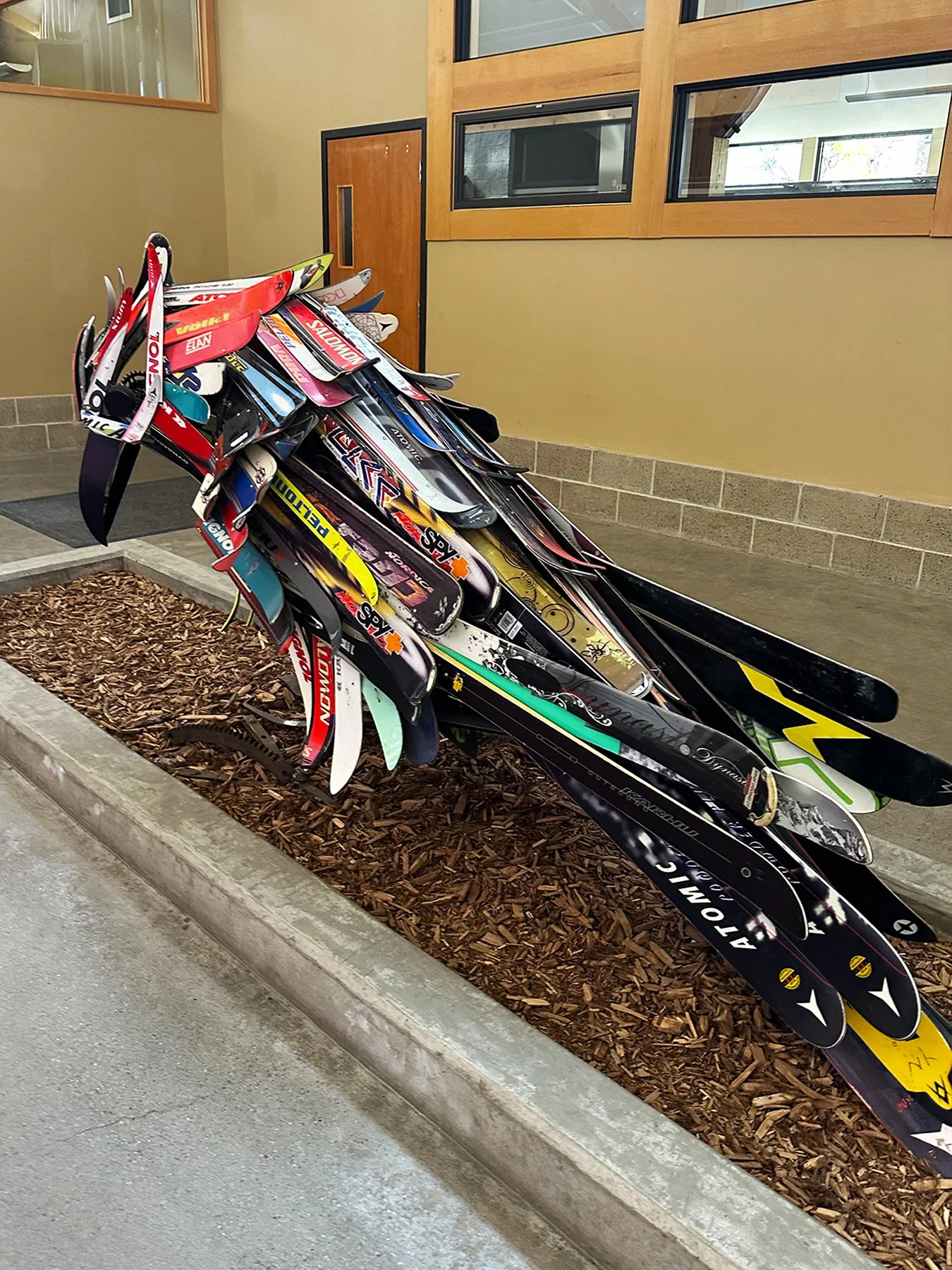
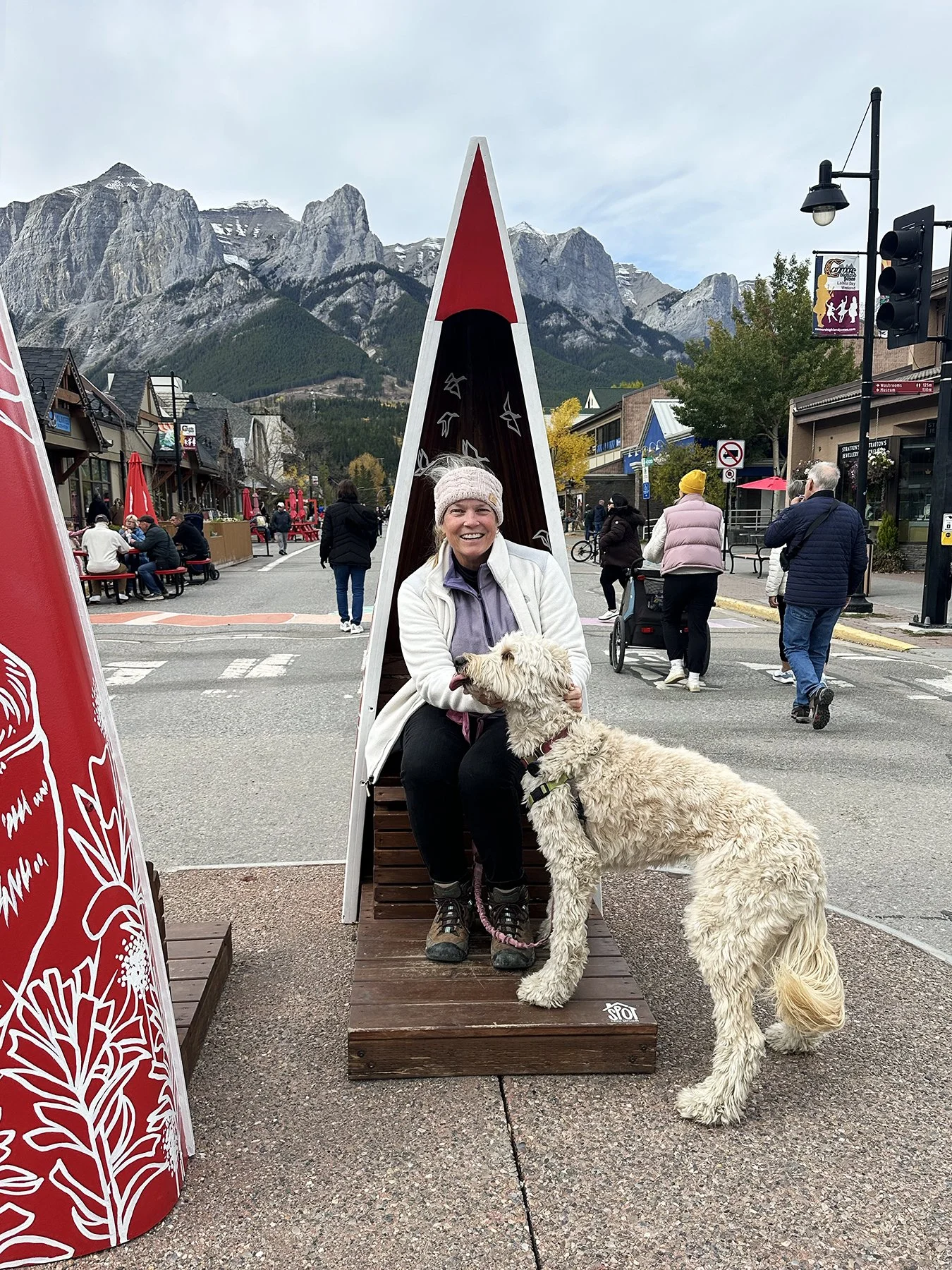
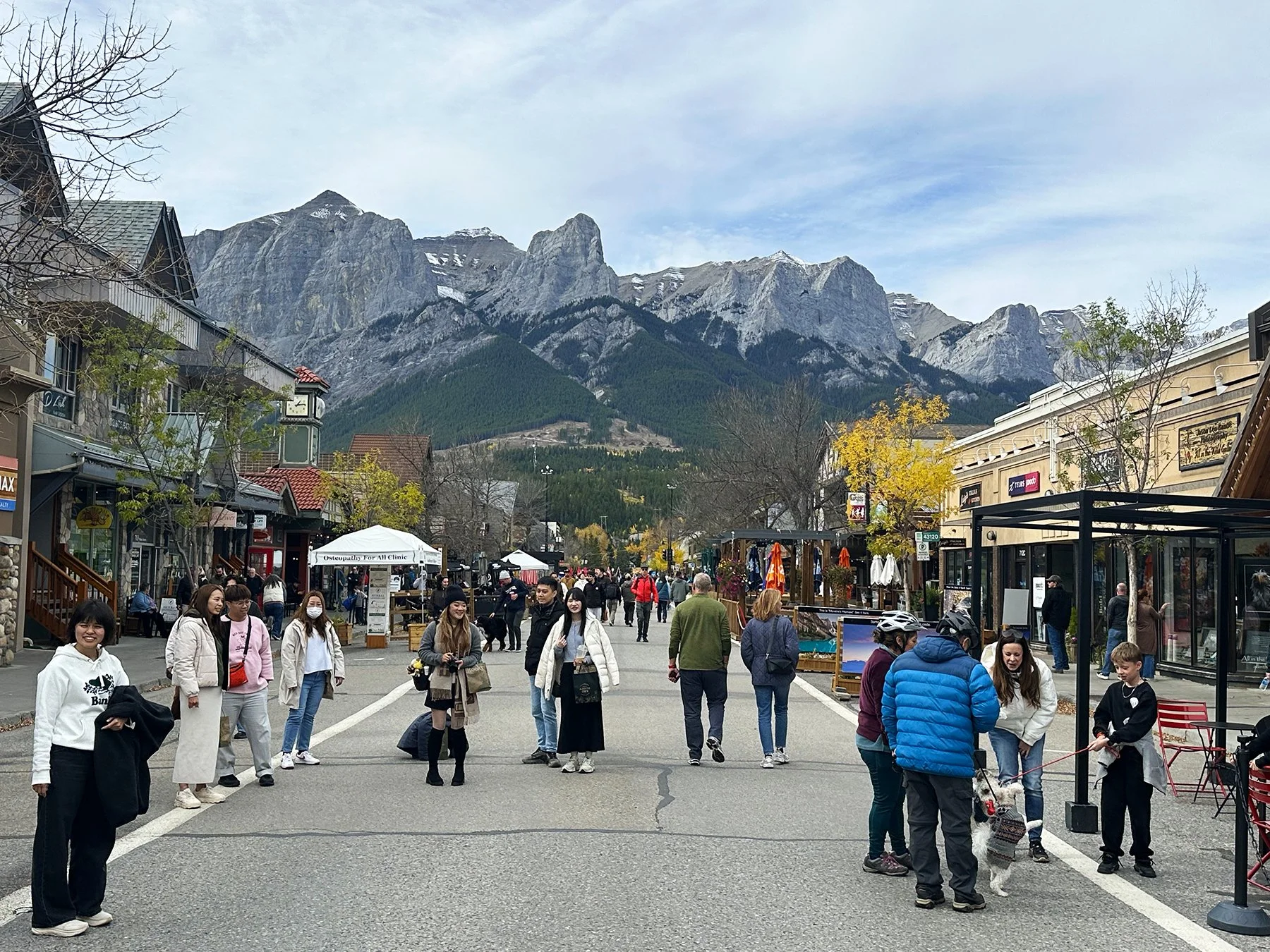
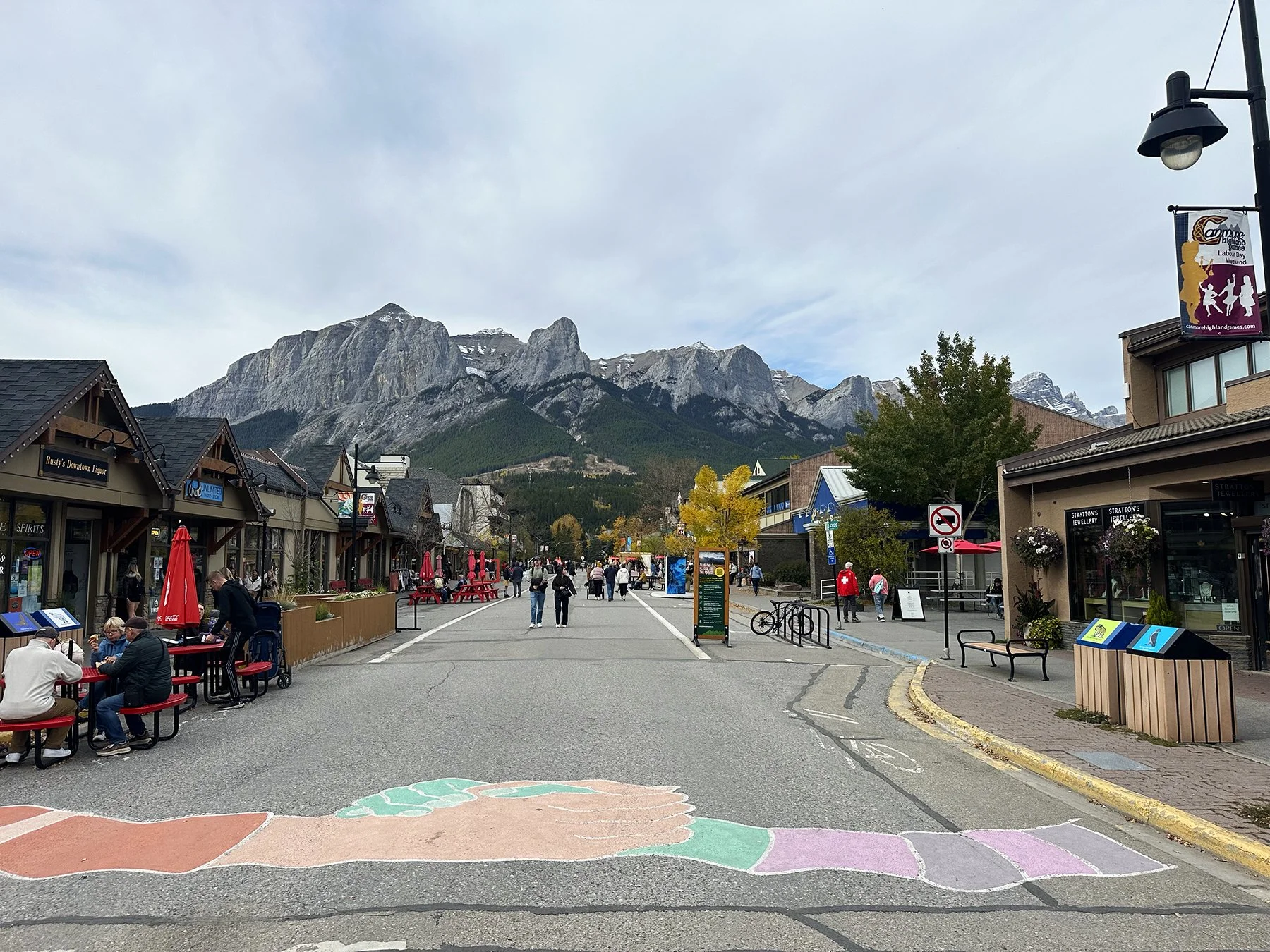
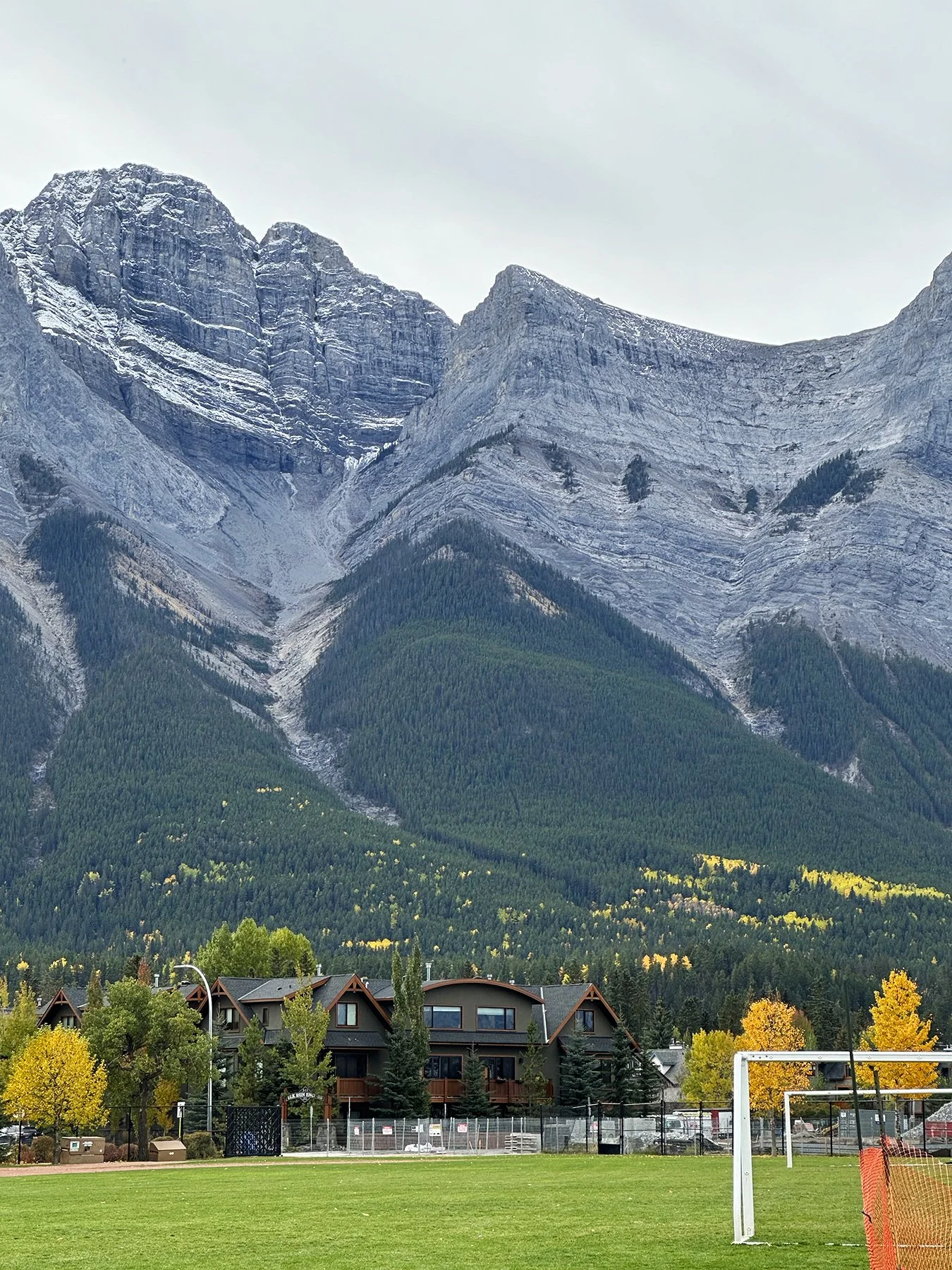
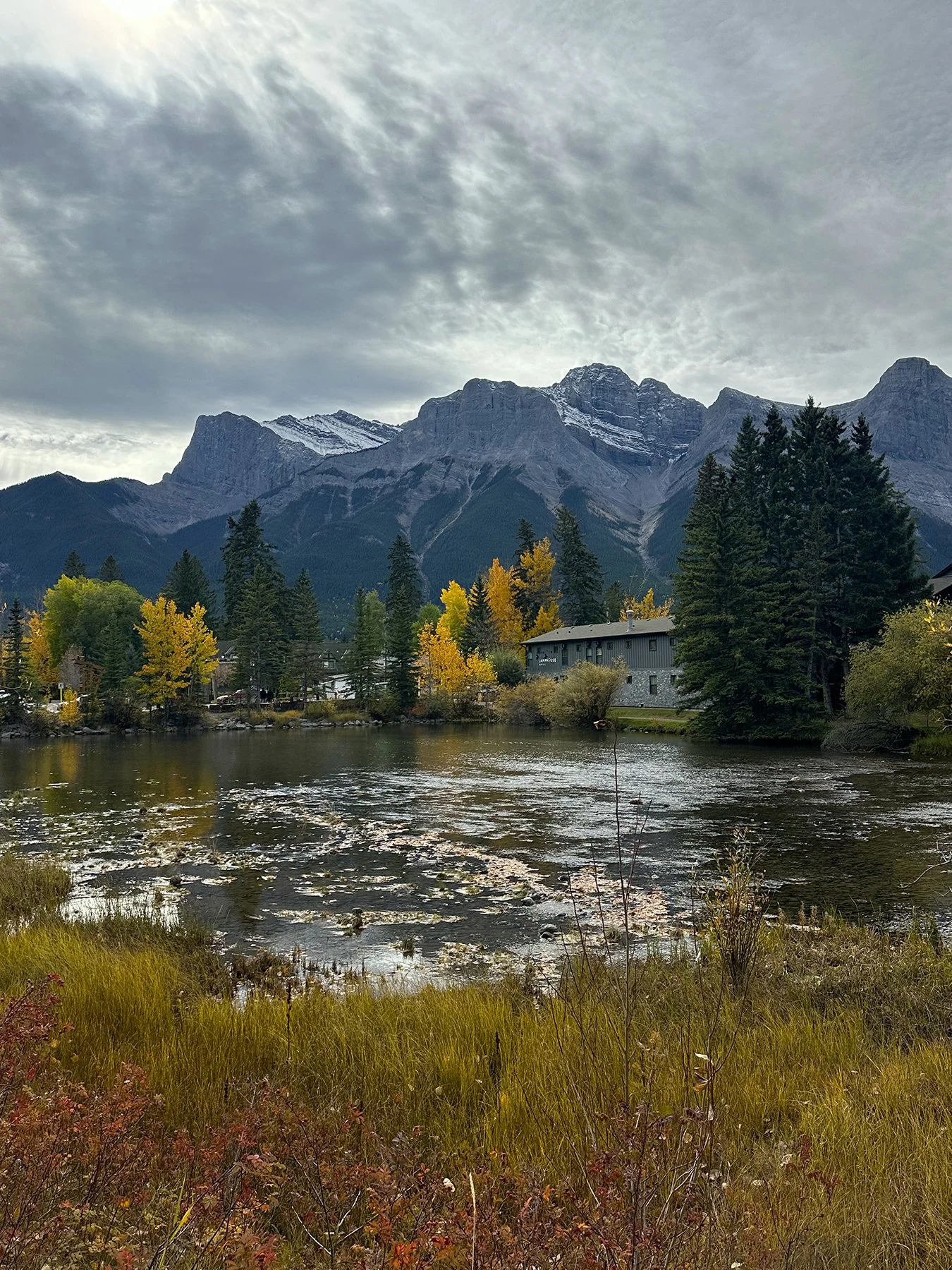
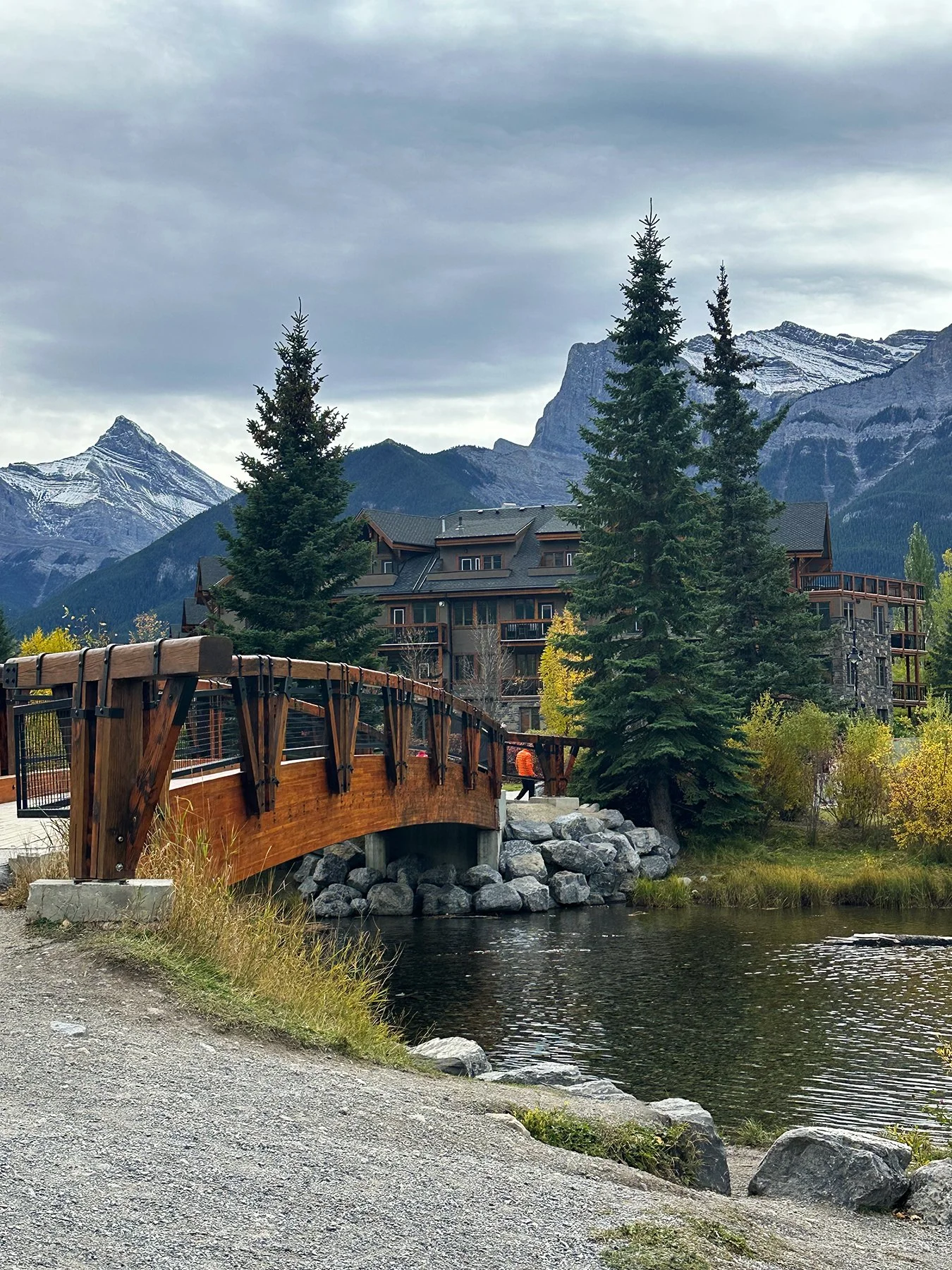
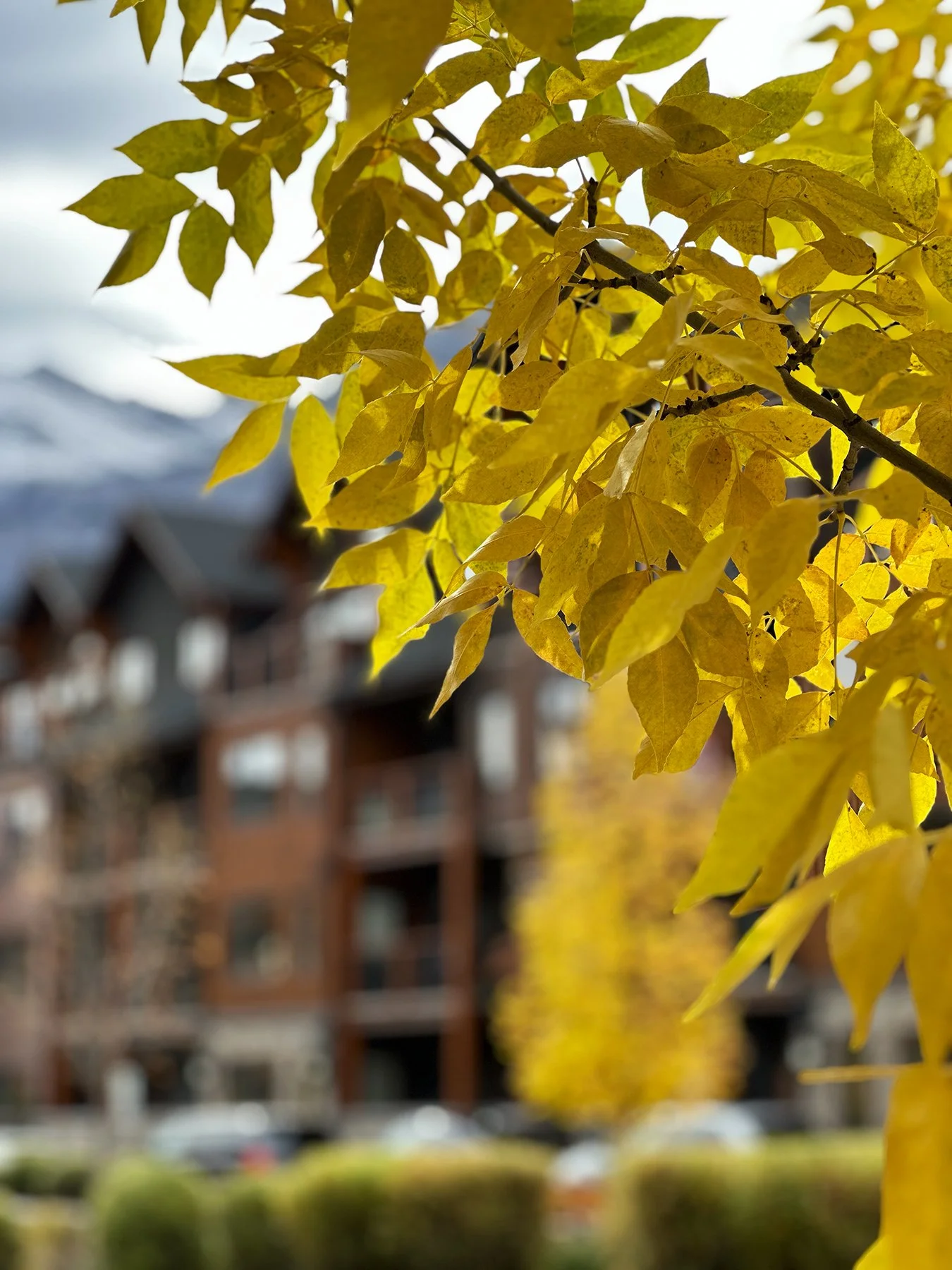
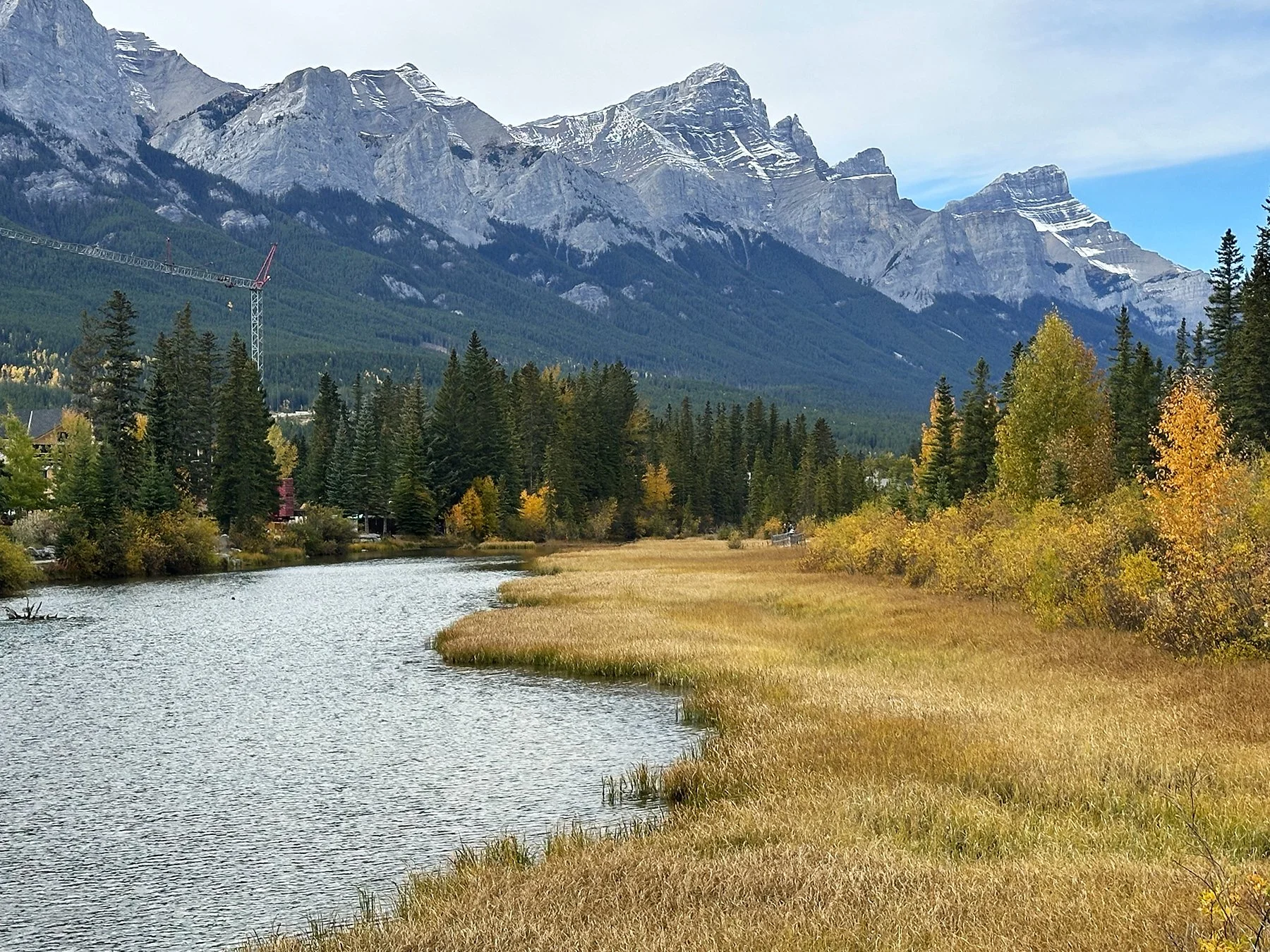
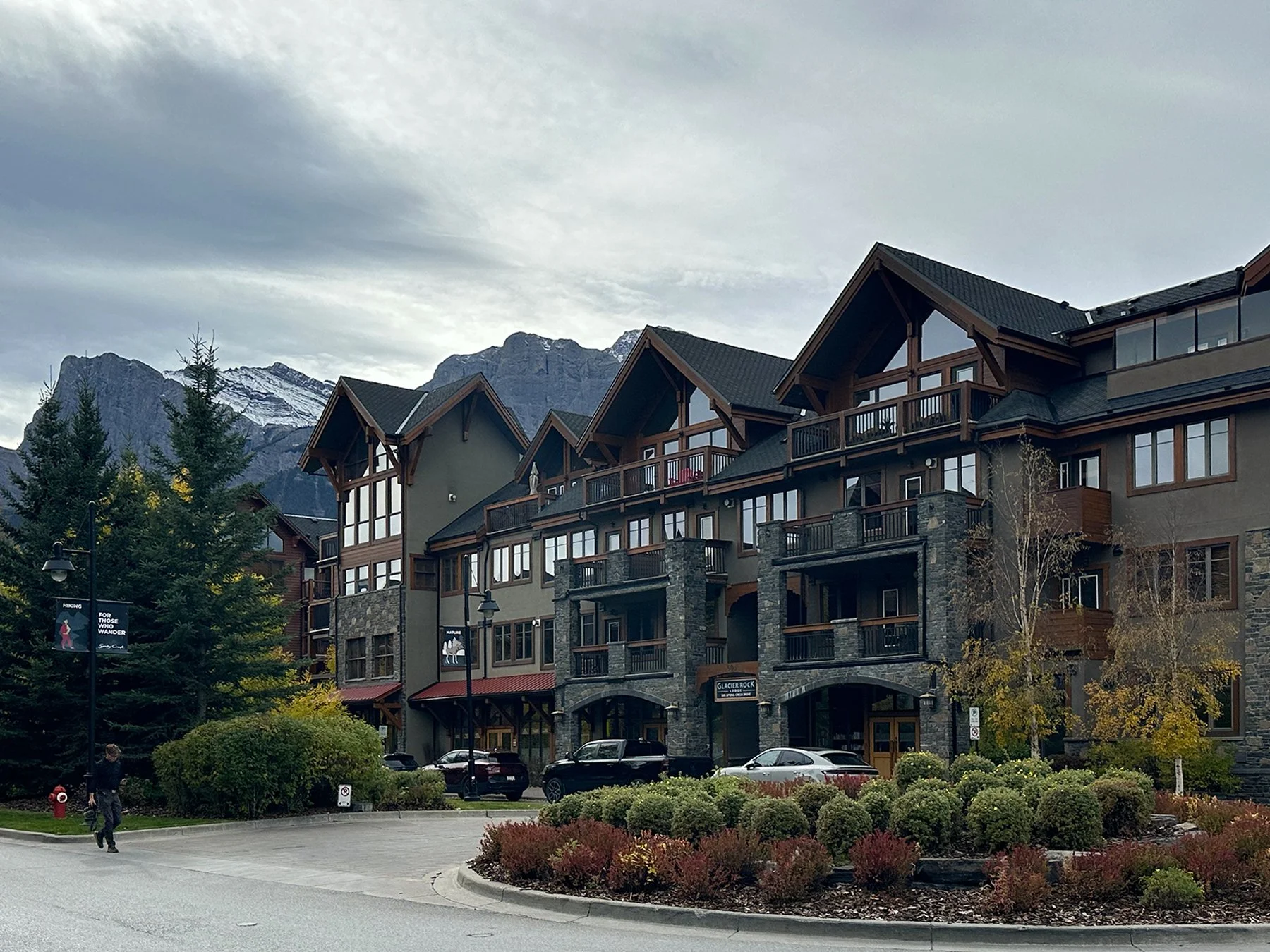
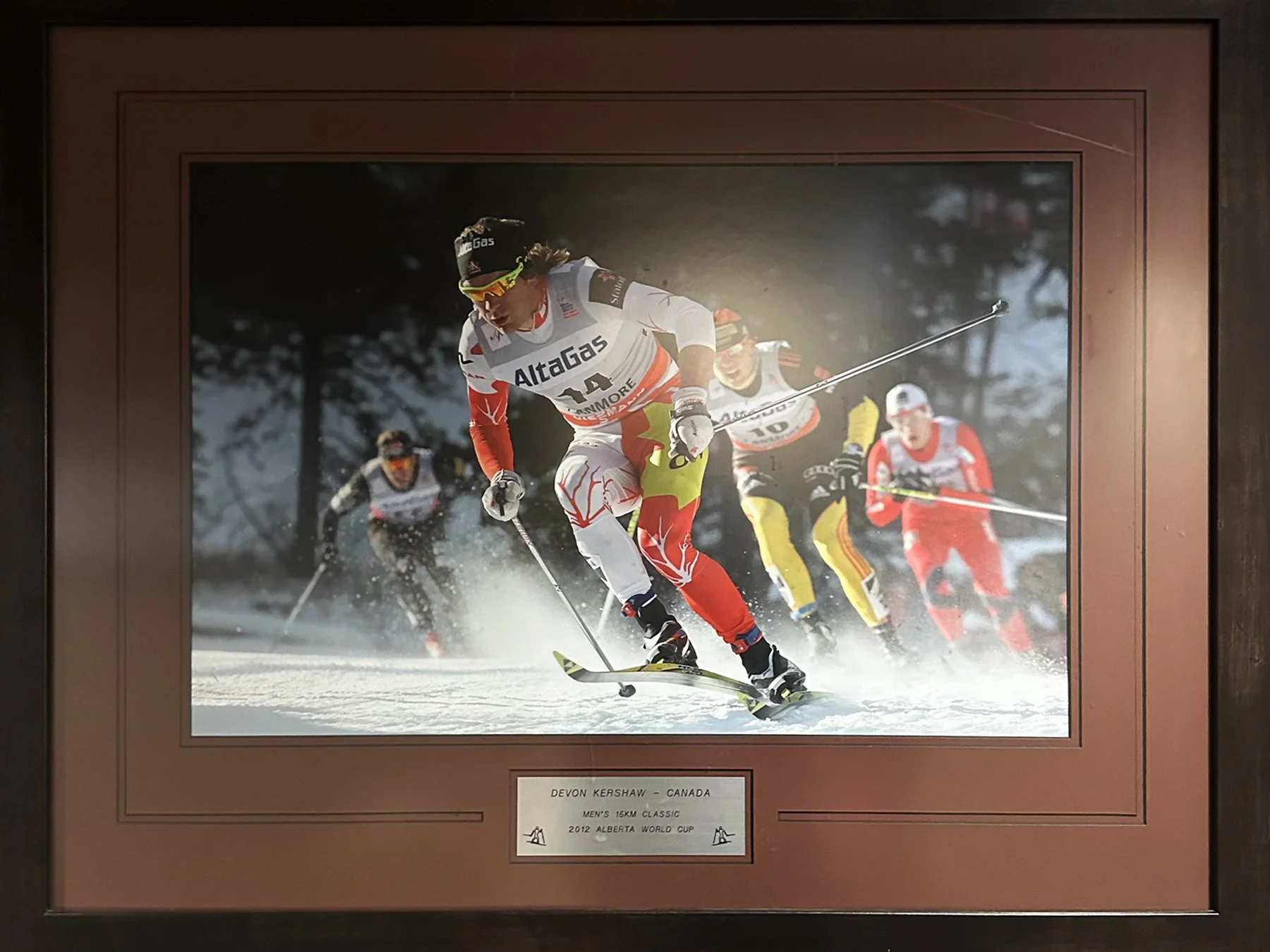
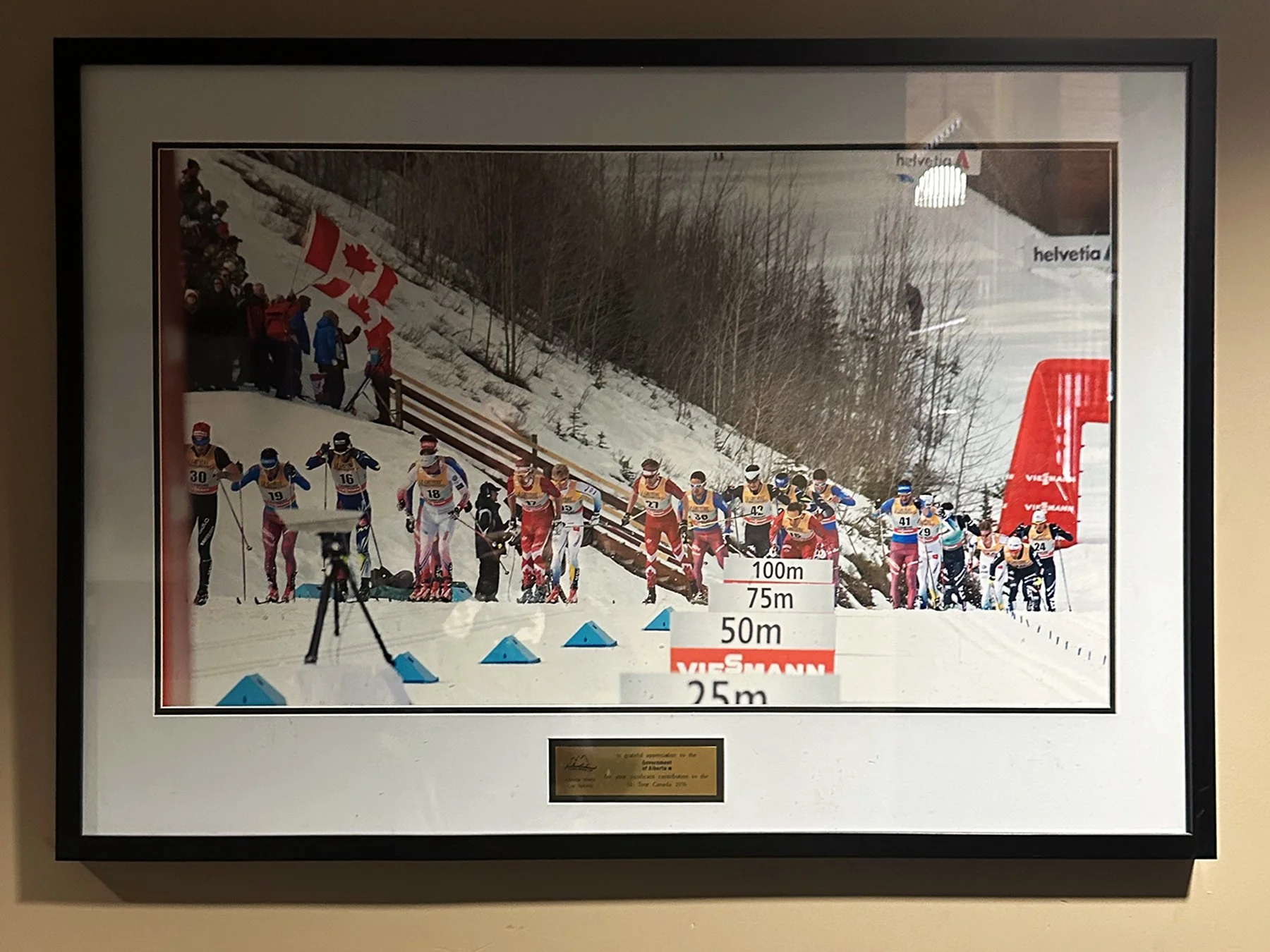
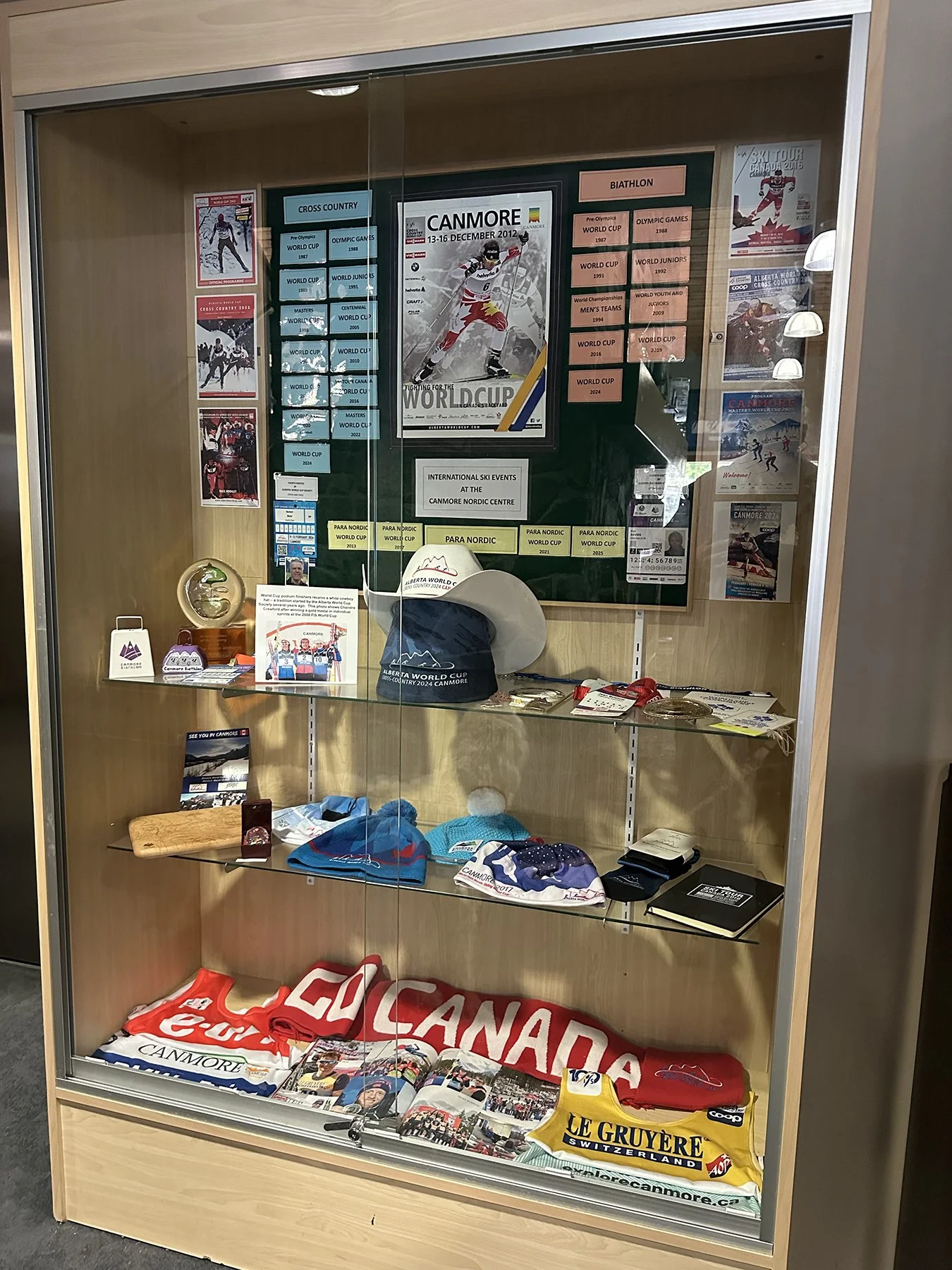
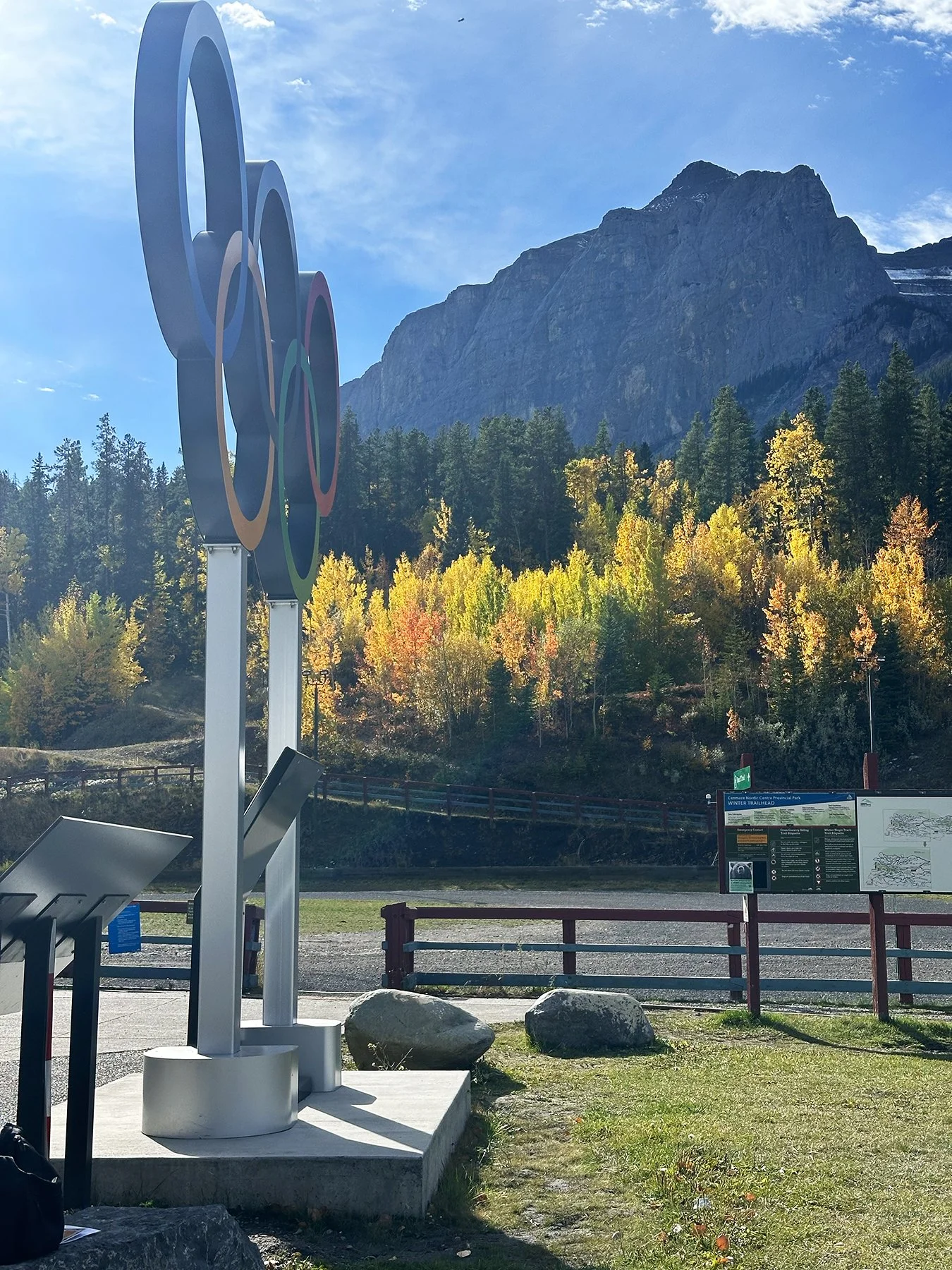
Canmore is about an hour west of Calgary, home of the 1988 Winter Olympics. Okay, y’all—you know how much I love all things Olympics! I just had to go visit the Canmore Nordic Center, home to the Nordic skiing events (cross country, biathlon). Love, love, love!
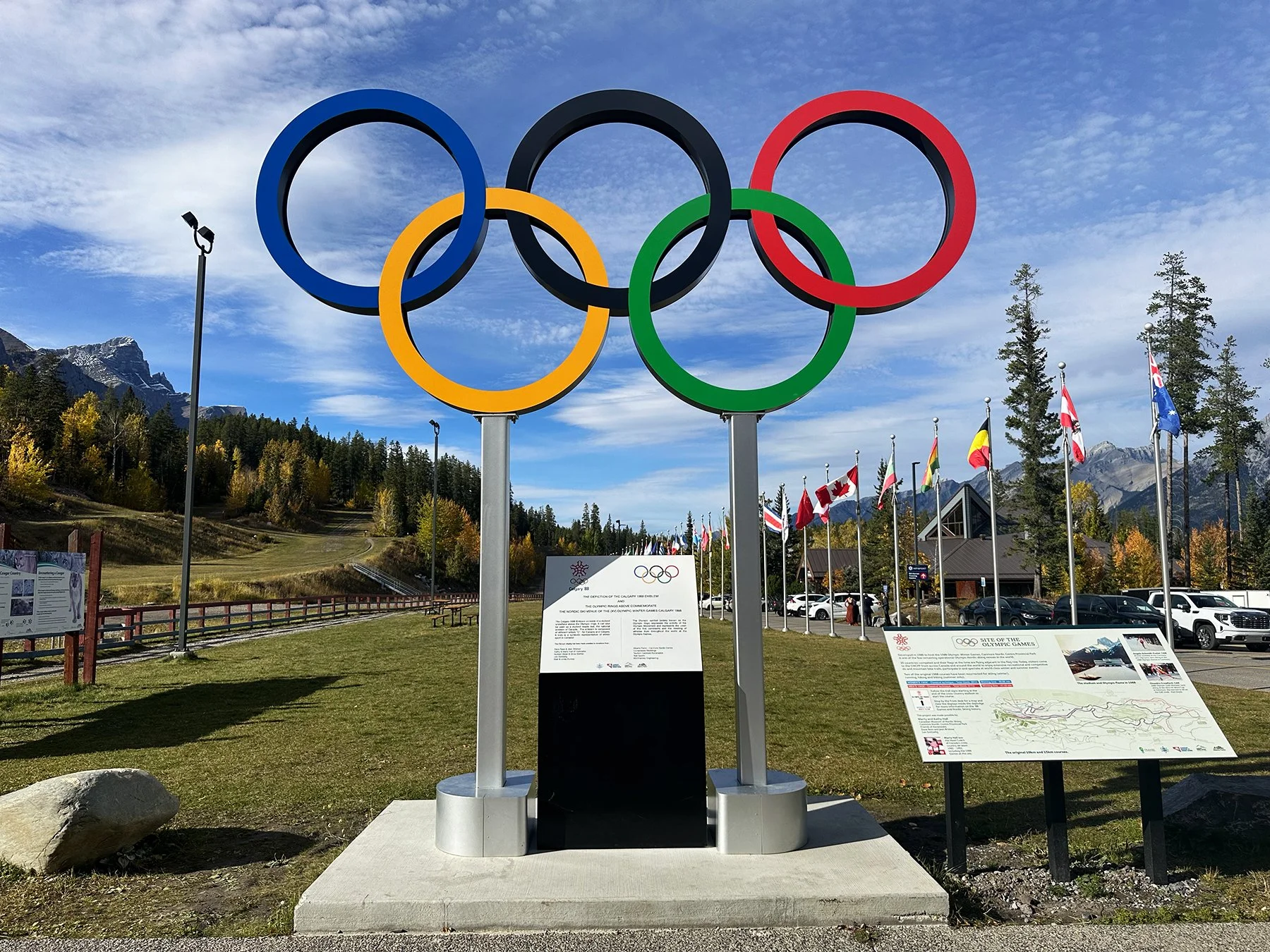
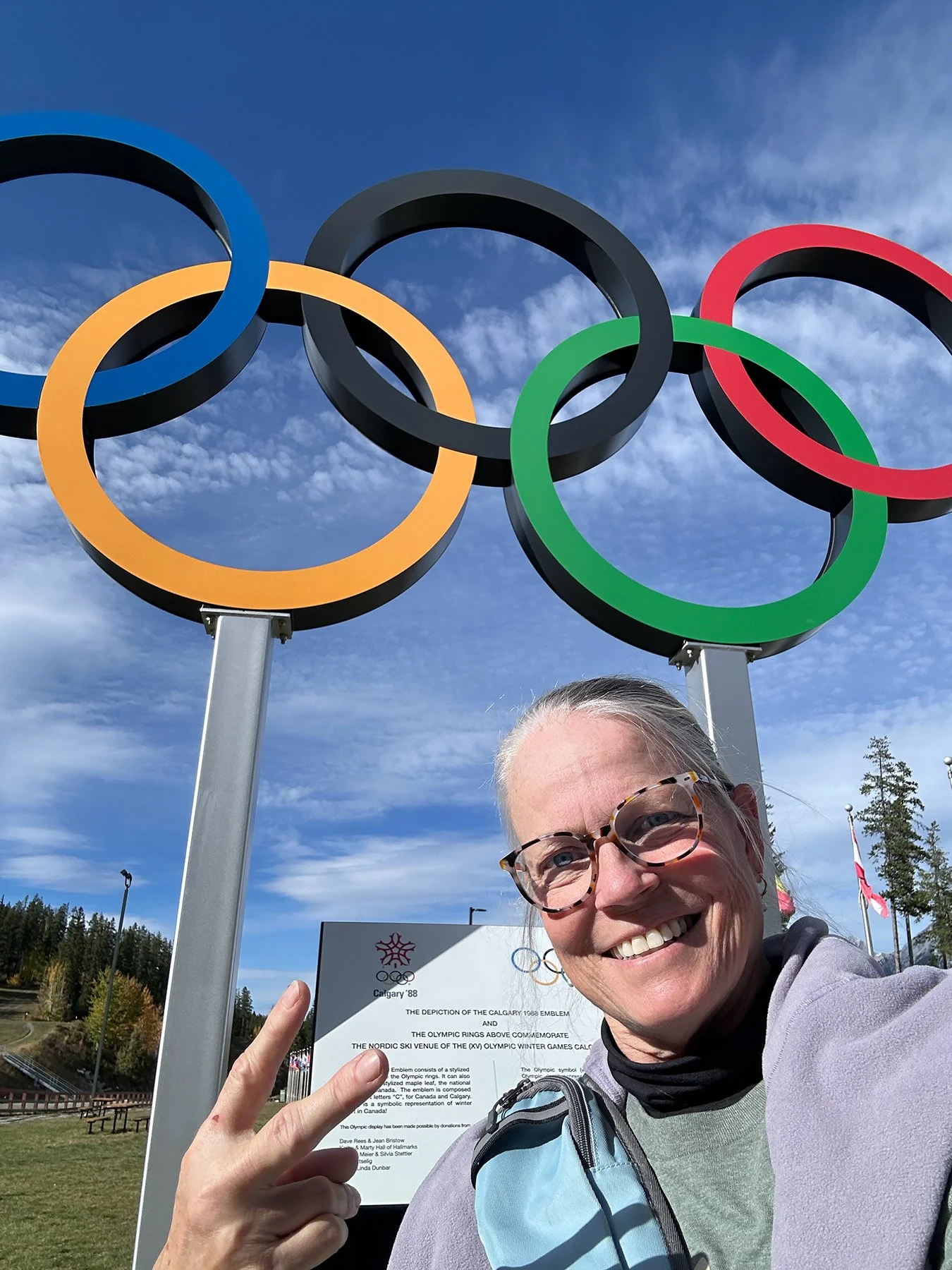
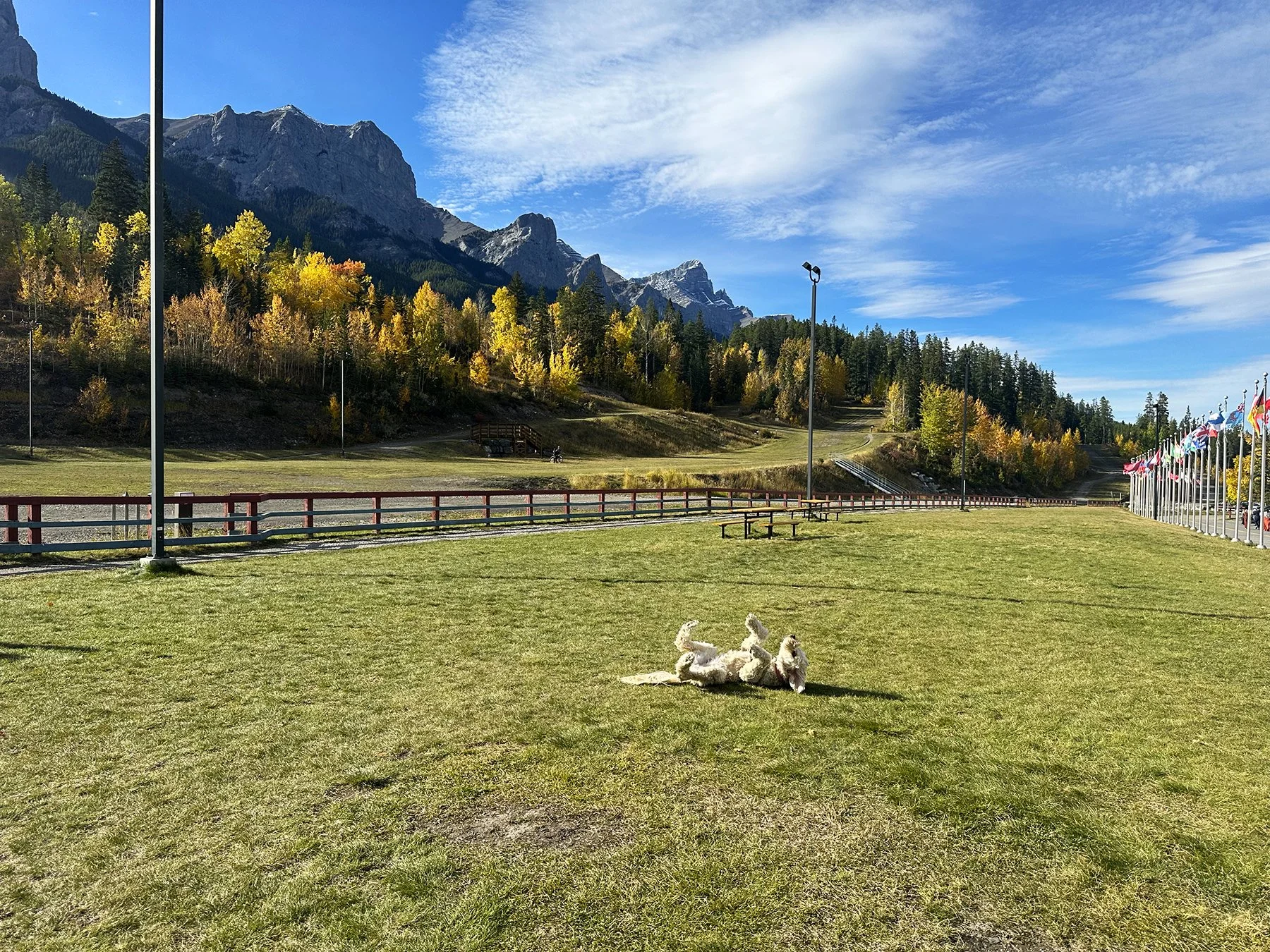
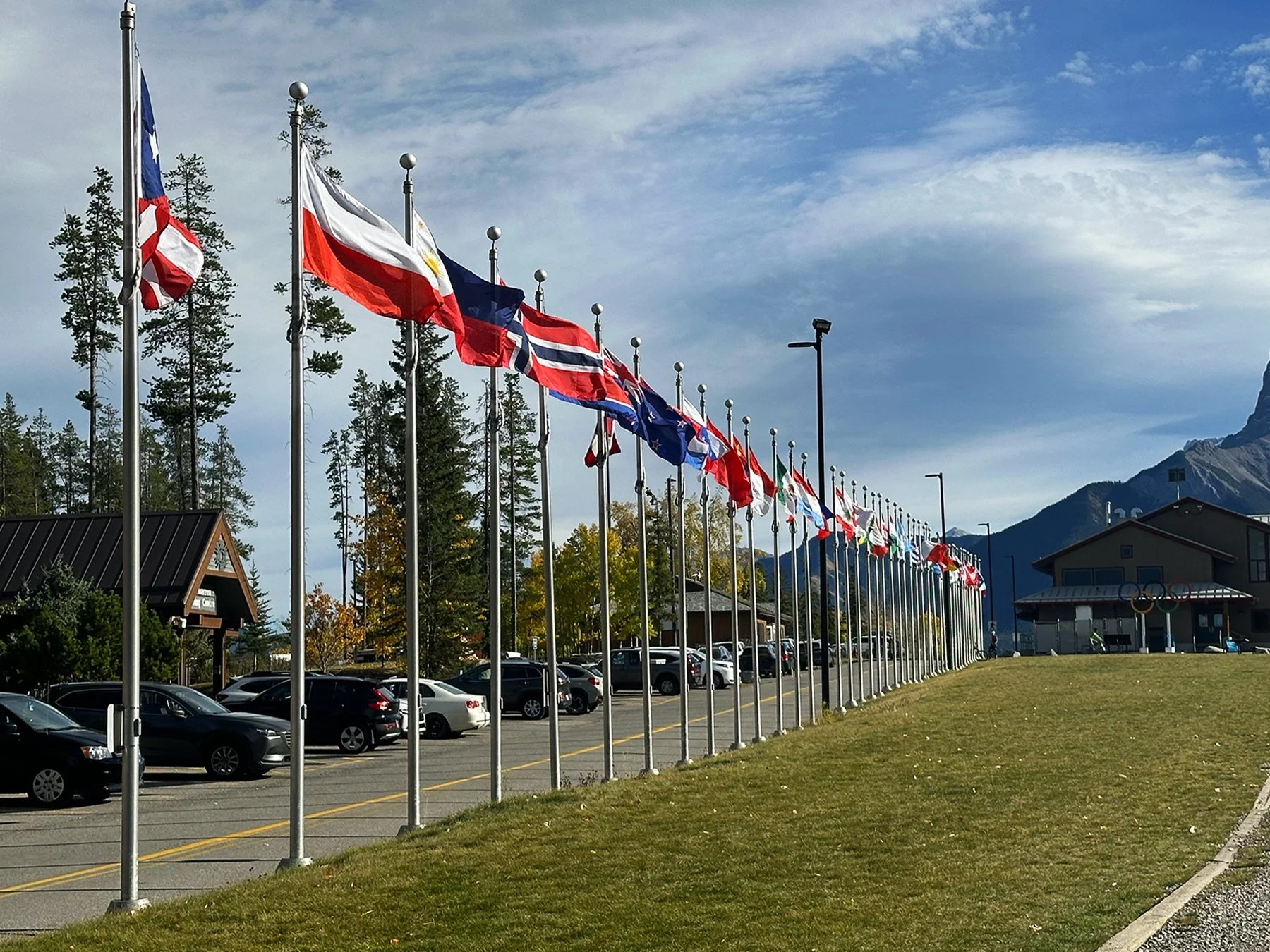
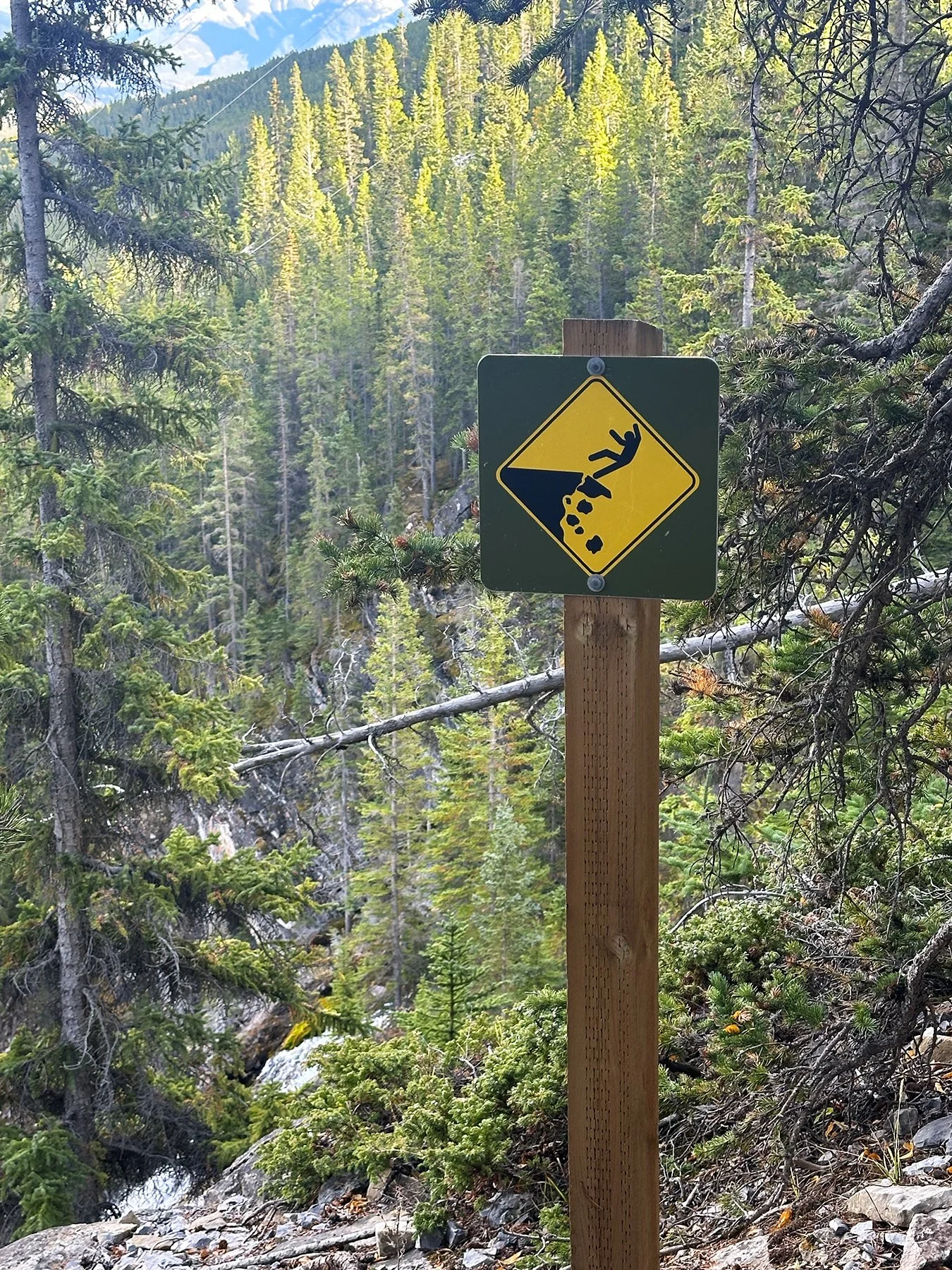
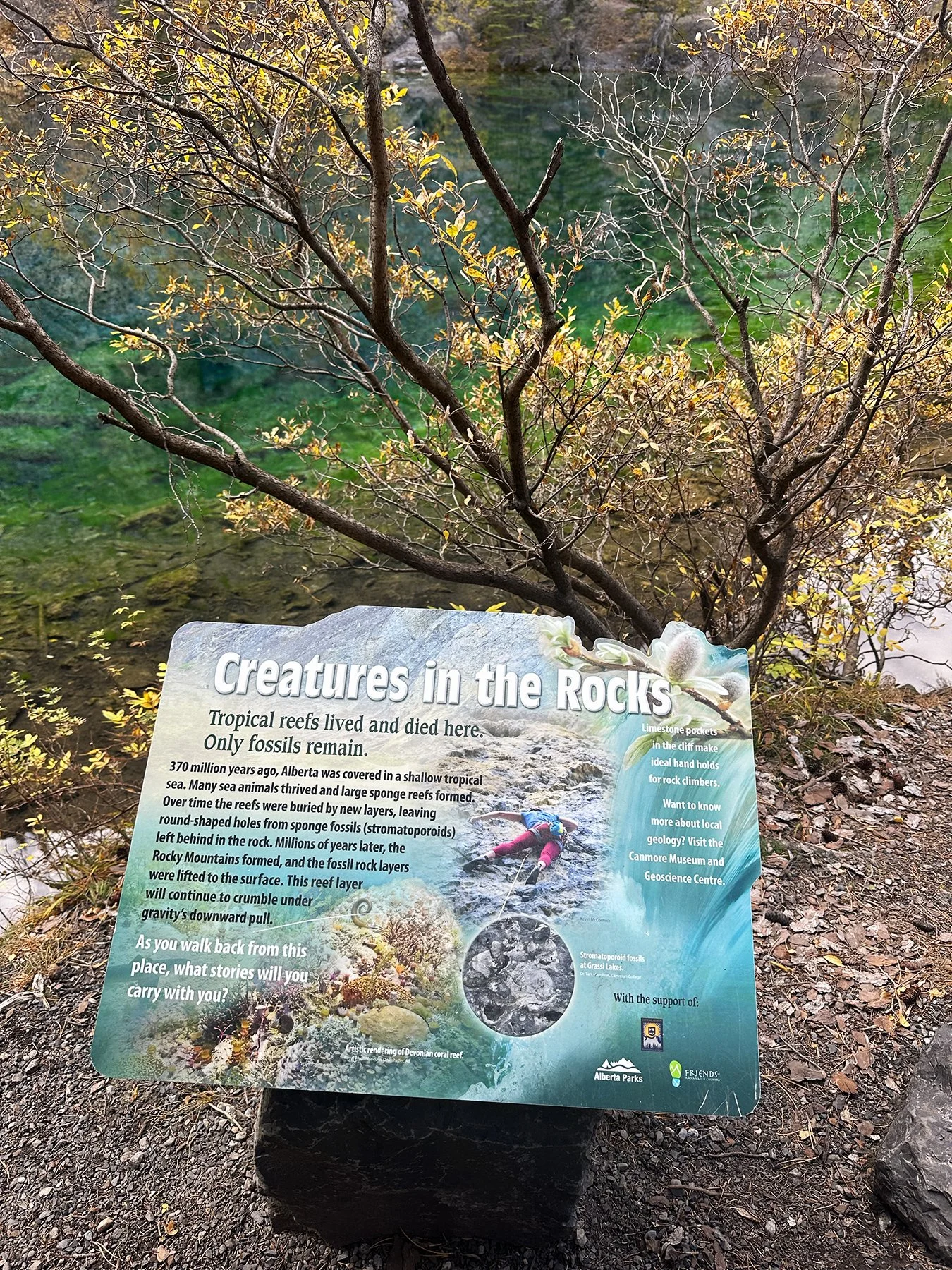
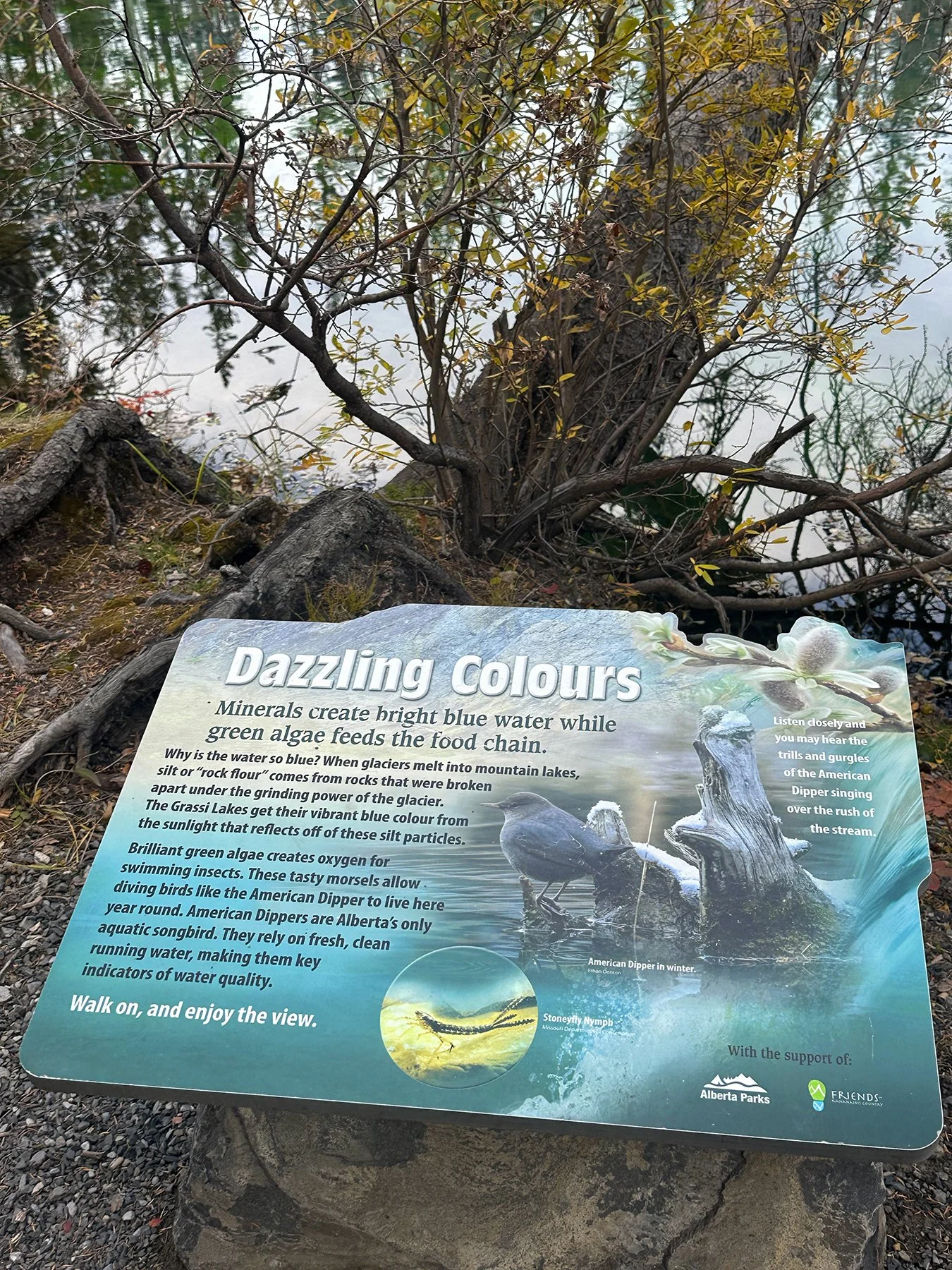
We next headed a bit up the road to hike up to Grassi Lakes, a little-known GEM located just outside of Canmore. There were two trail options up the mountain for us to choose from; one was the “easier” Grassi Lakes Upper trail, which they called the family-friendly version; the other, more difficult route (Grassi Lakes Interpretive) winds through a more rugged, wooded landscape, featuring steep sections, exposed roots, and hand-built stone stairs. Plus a magnificent close-up view of a giant waterfall. Can you guess which one I chose?
My goodness, while both trails had the same overall elevation gain (557 feet), the Interpretive trail saved most of that gain for the last quarter-mile or so. It’s a good thing that Maisie is part mountain goat ;-), because much of the last part of the trail included huge inclines over fist-sized rocks, with water creeping down them! Thank goodness for good hiking boots!
But the reward at the top? OH MY GOD. Two brilliant, crystal-clear turquoise alpine lakes greeted us. It was beautiful beyond words.
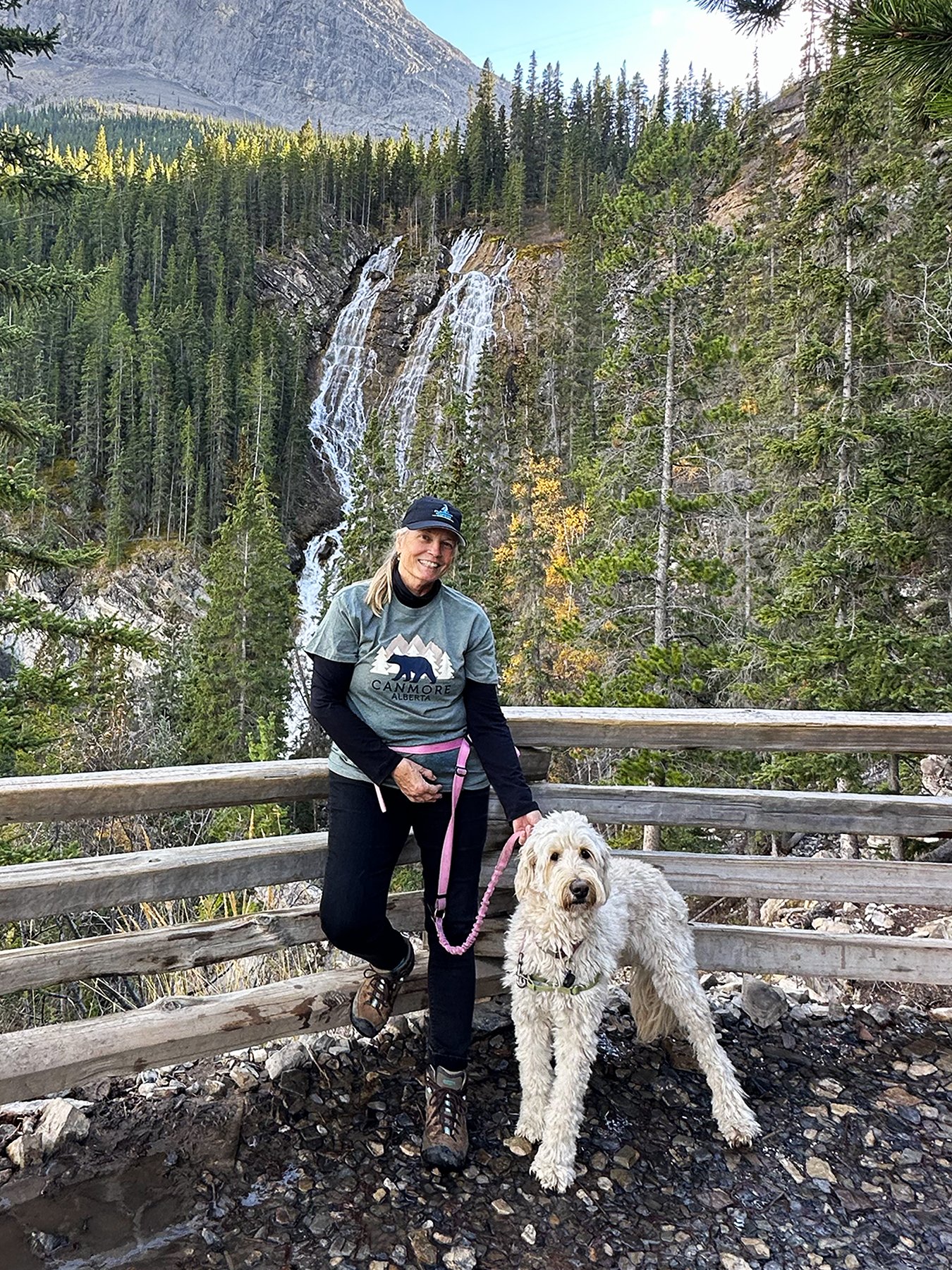
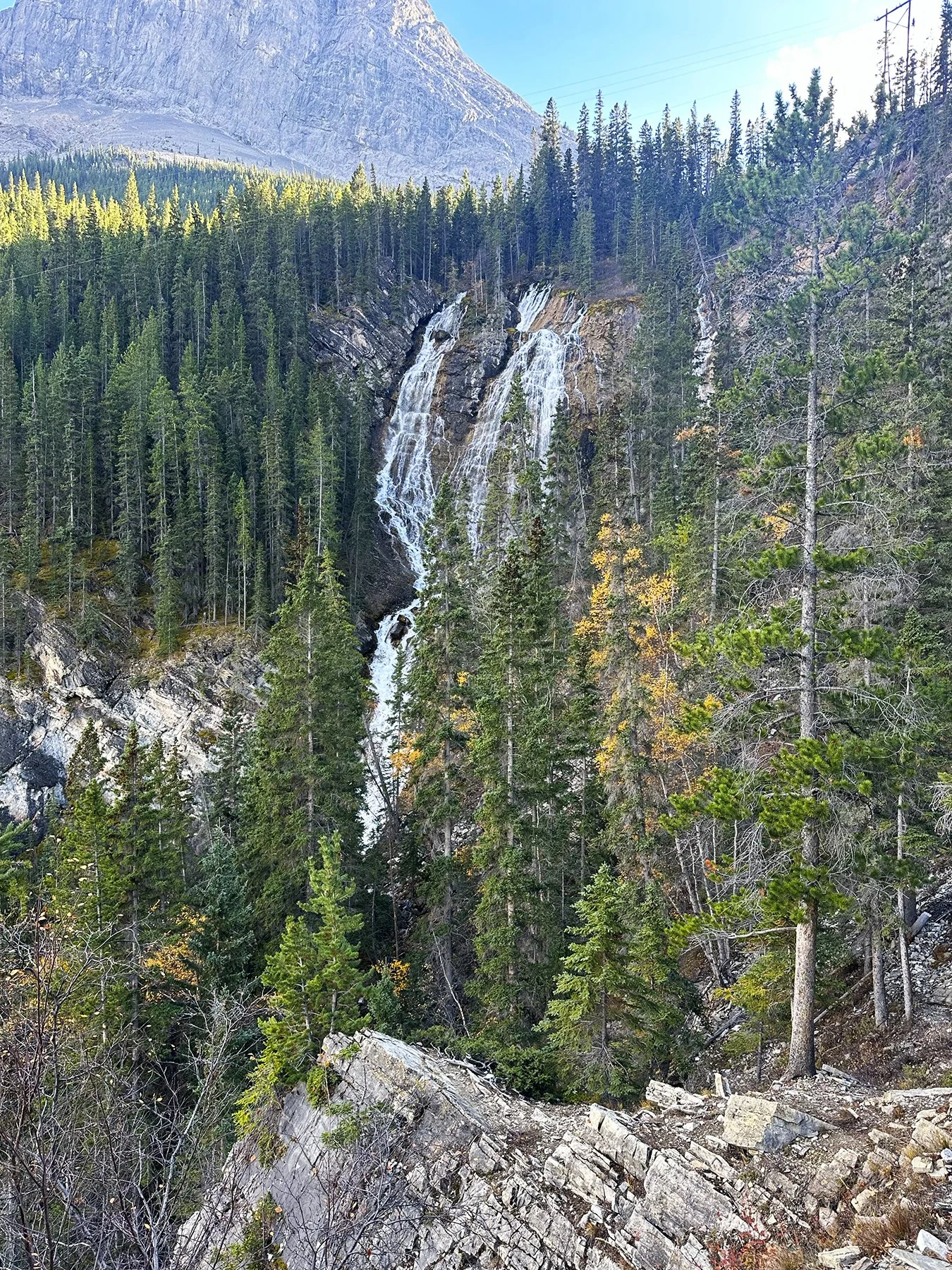
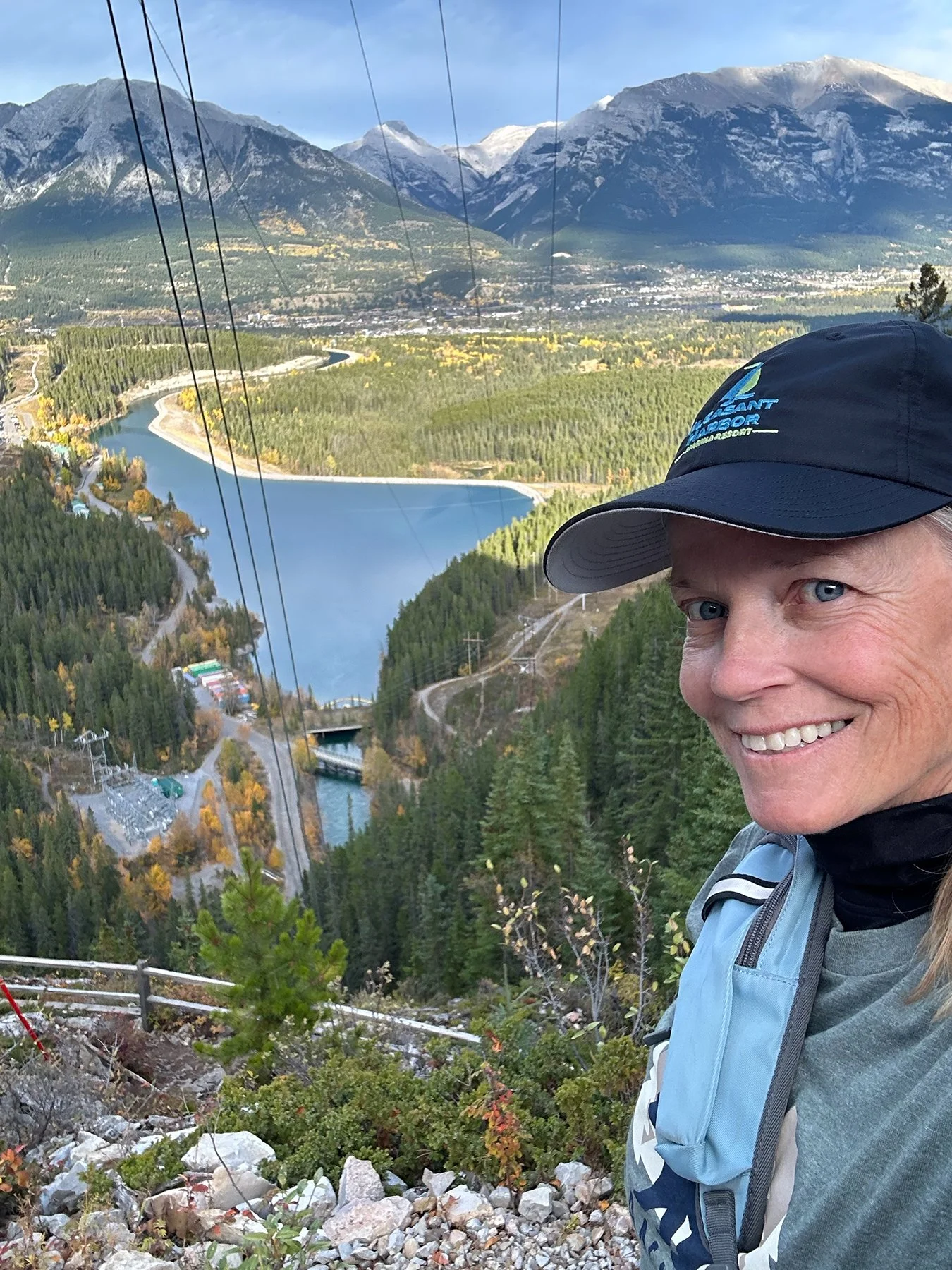
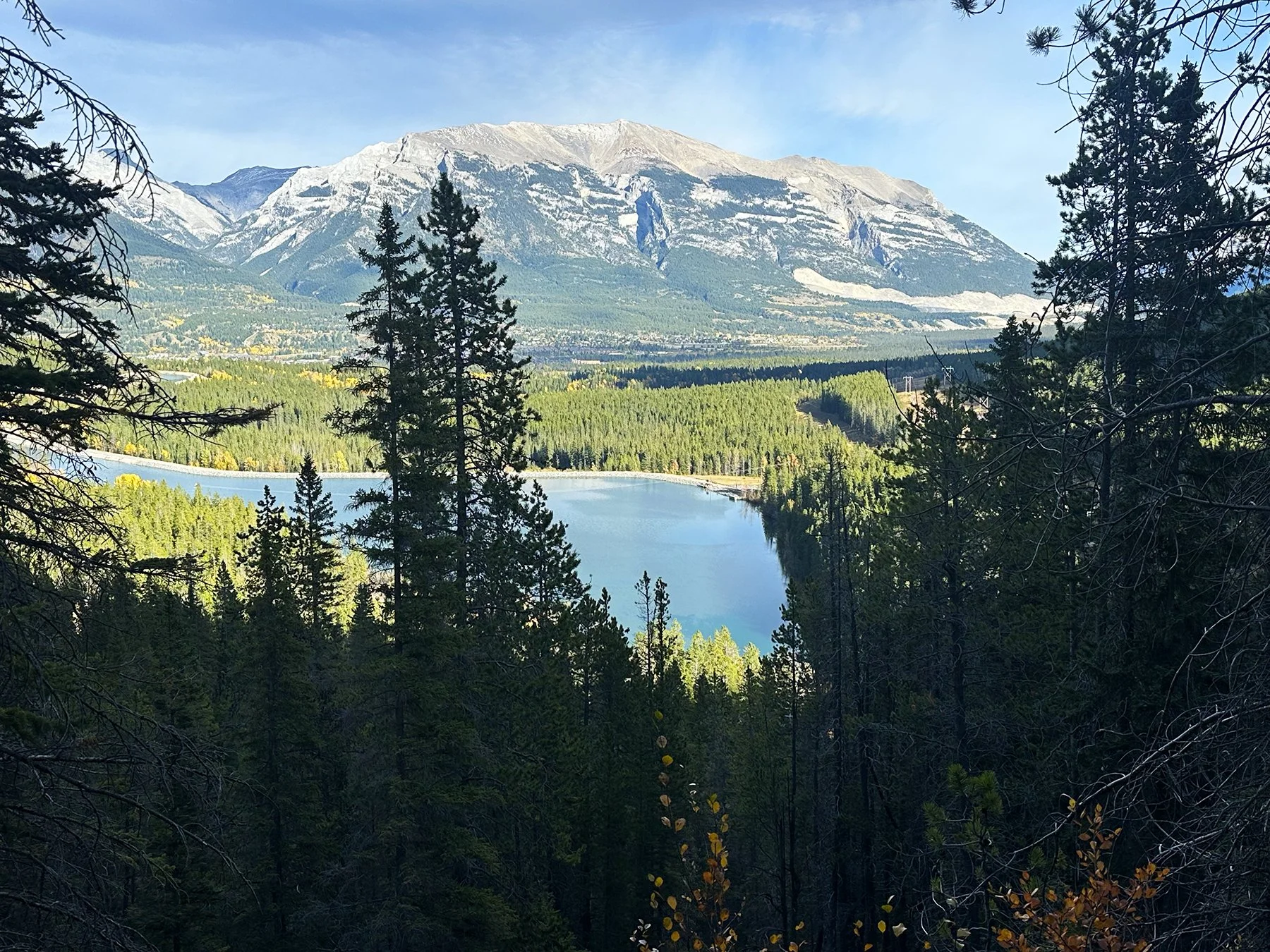
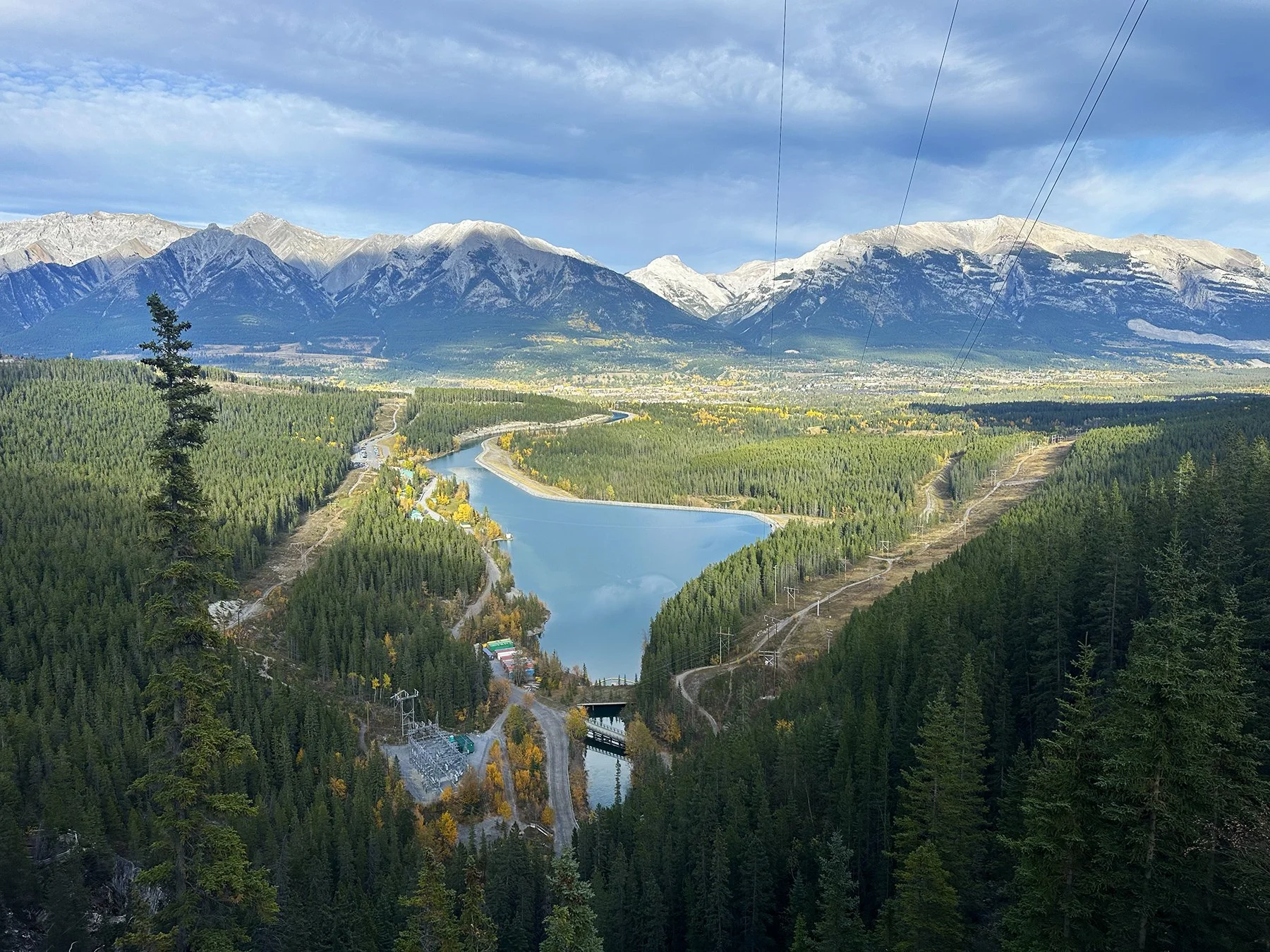
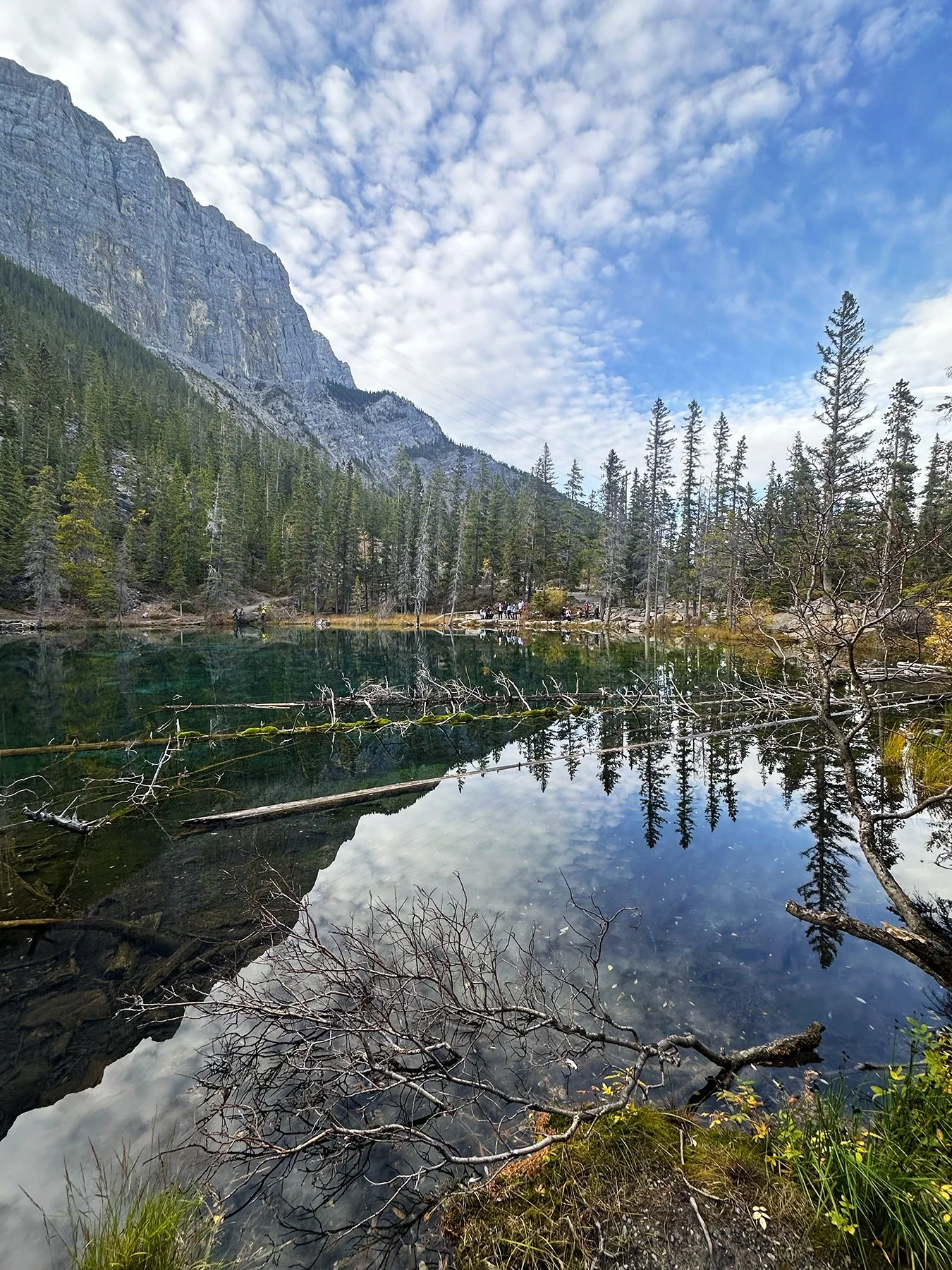
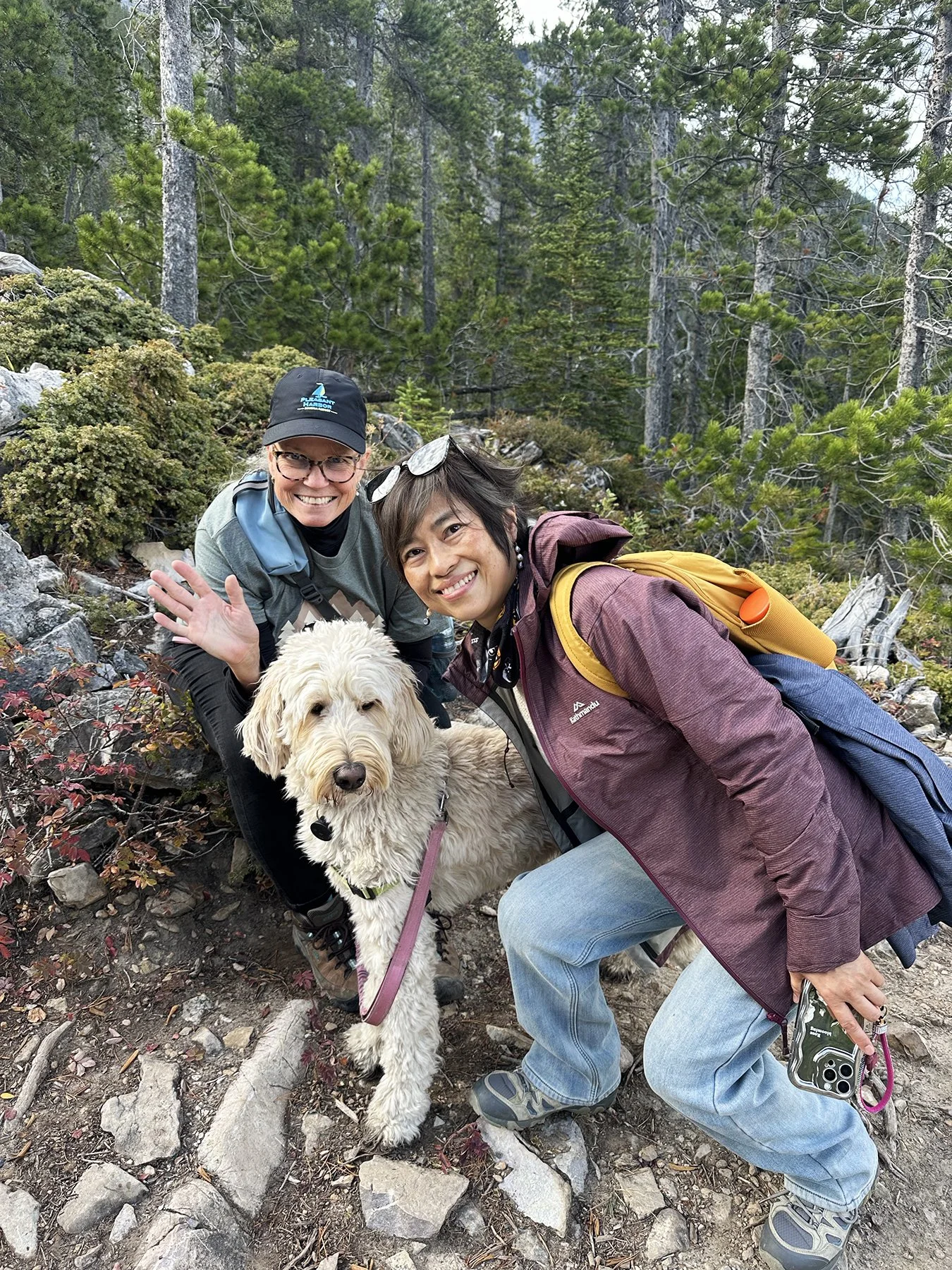
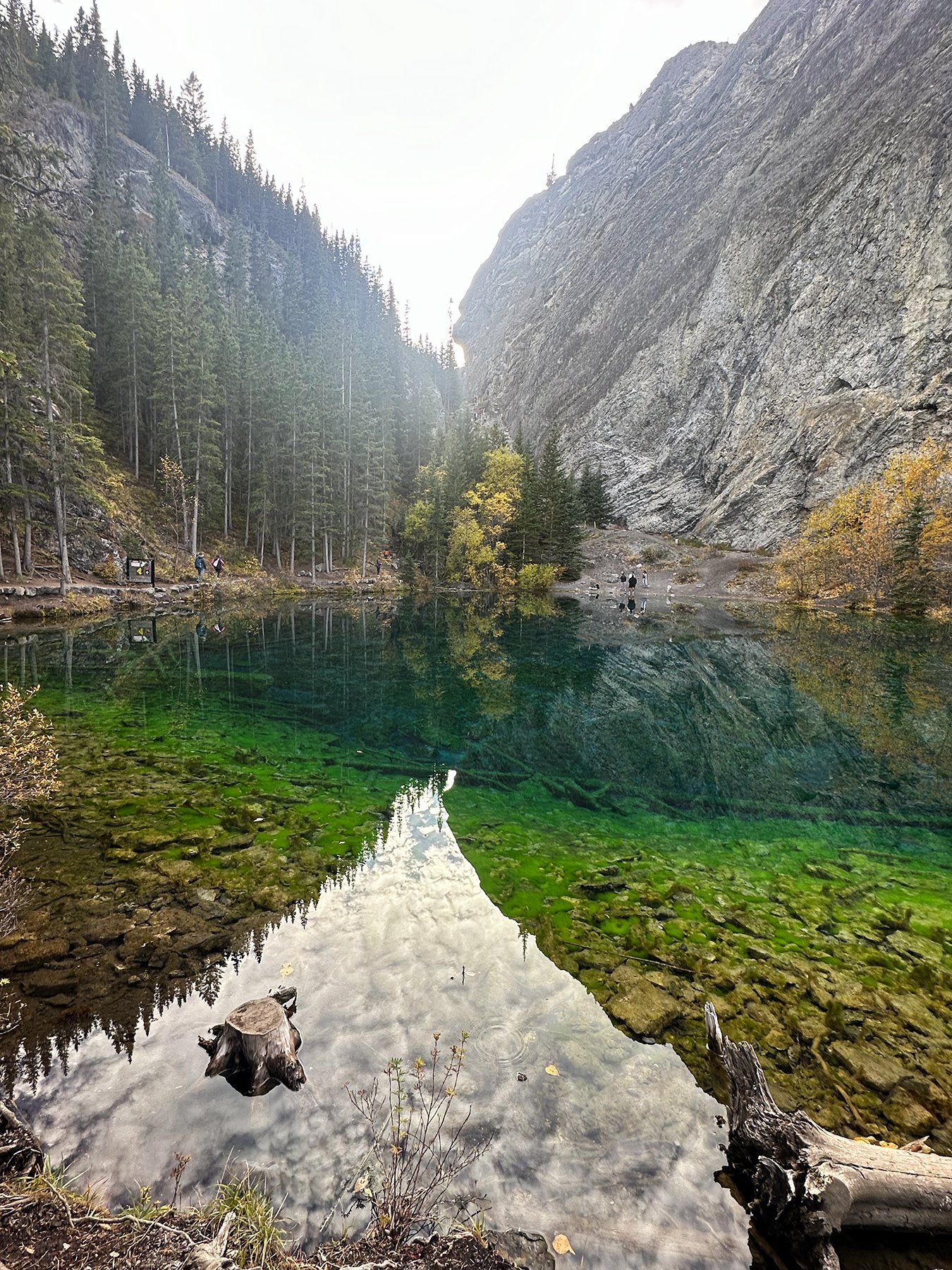
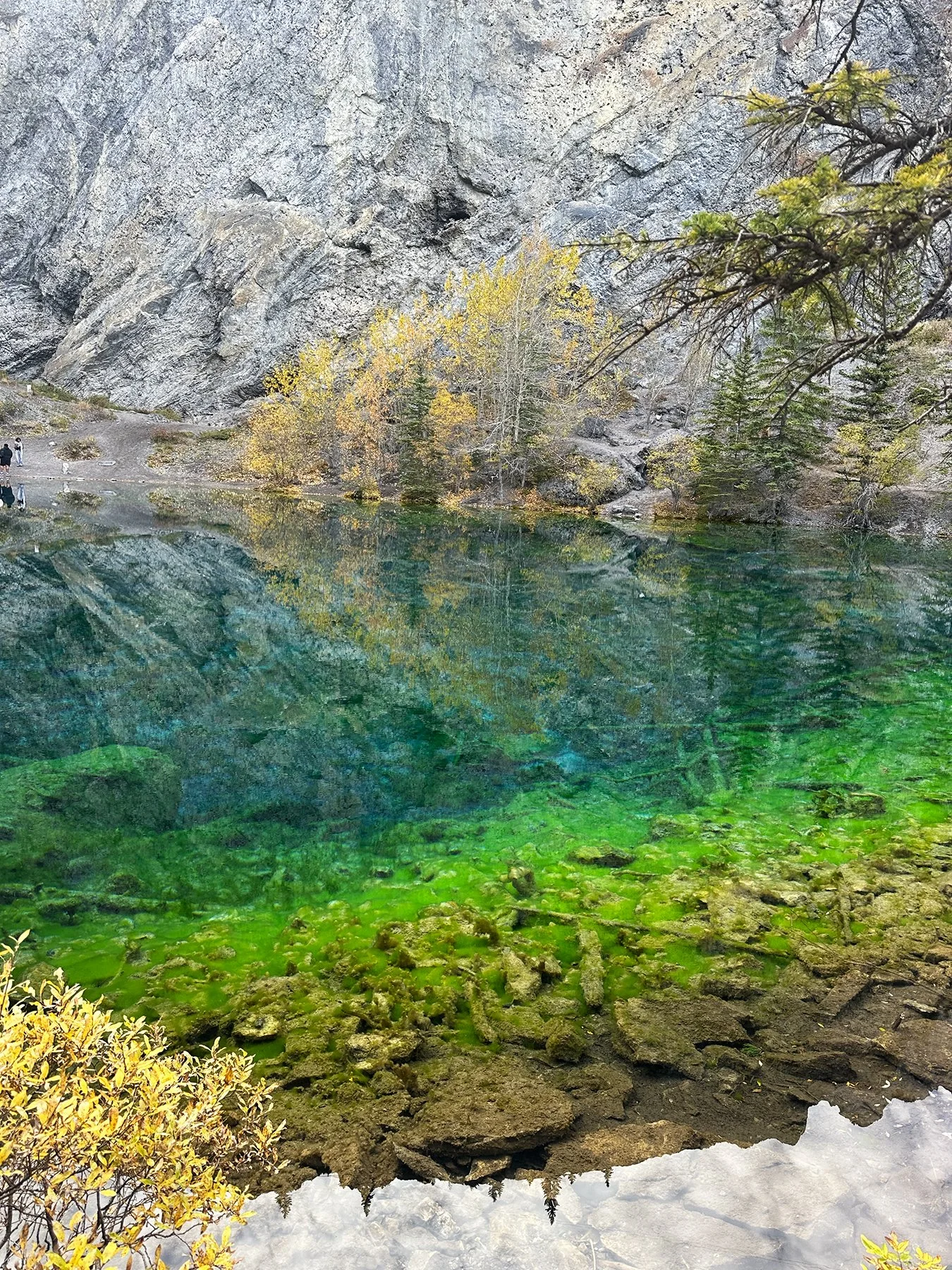
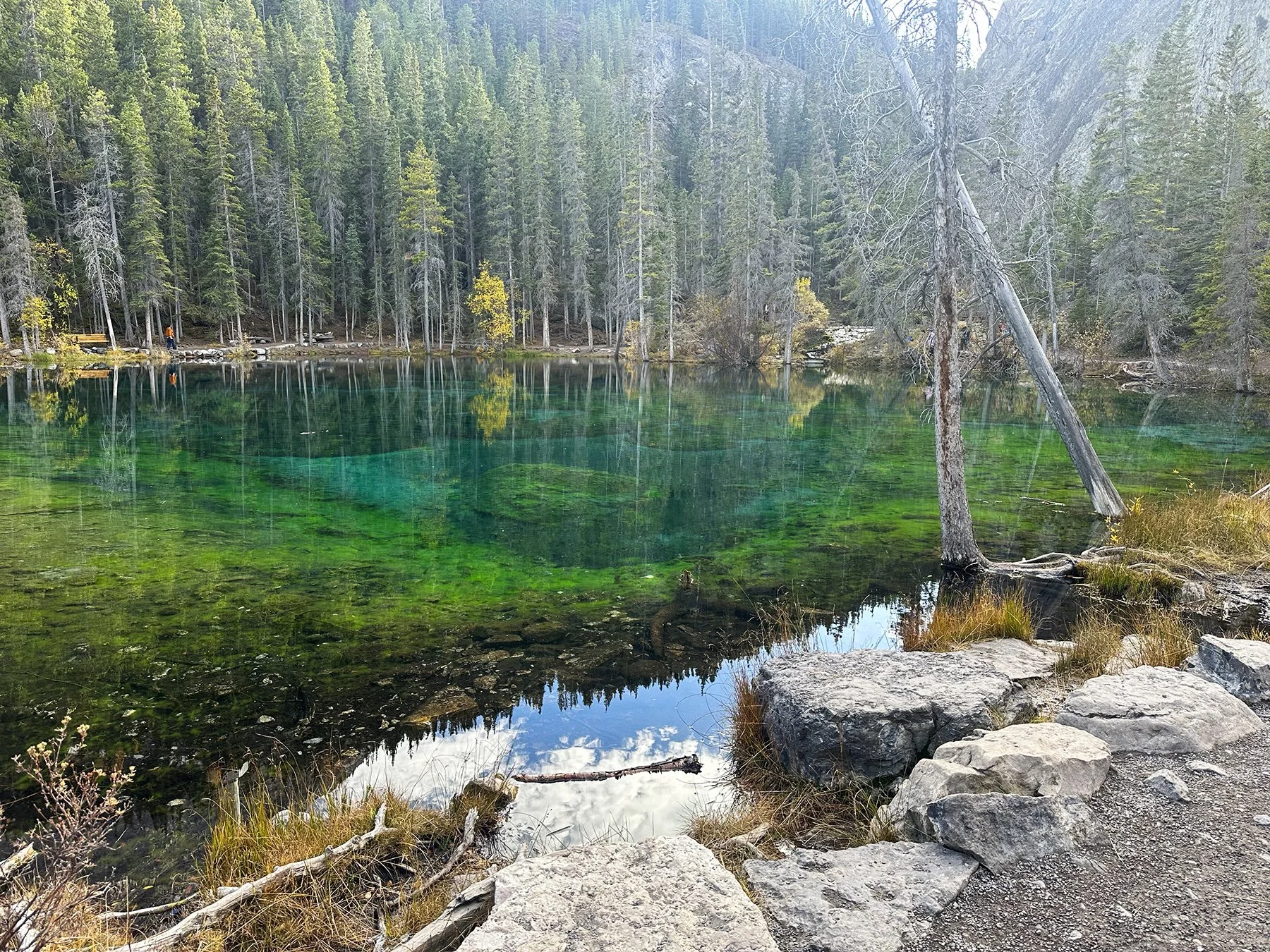
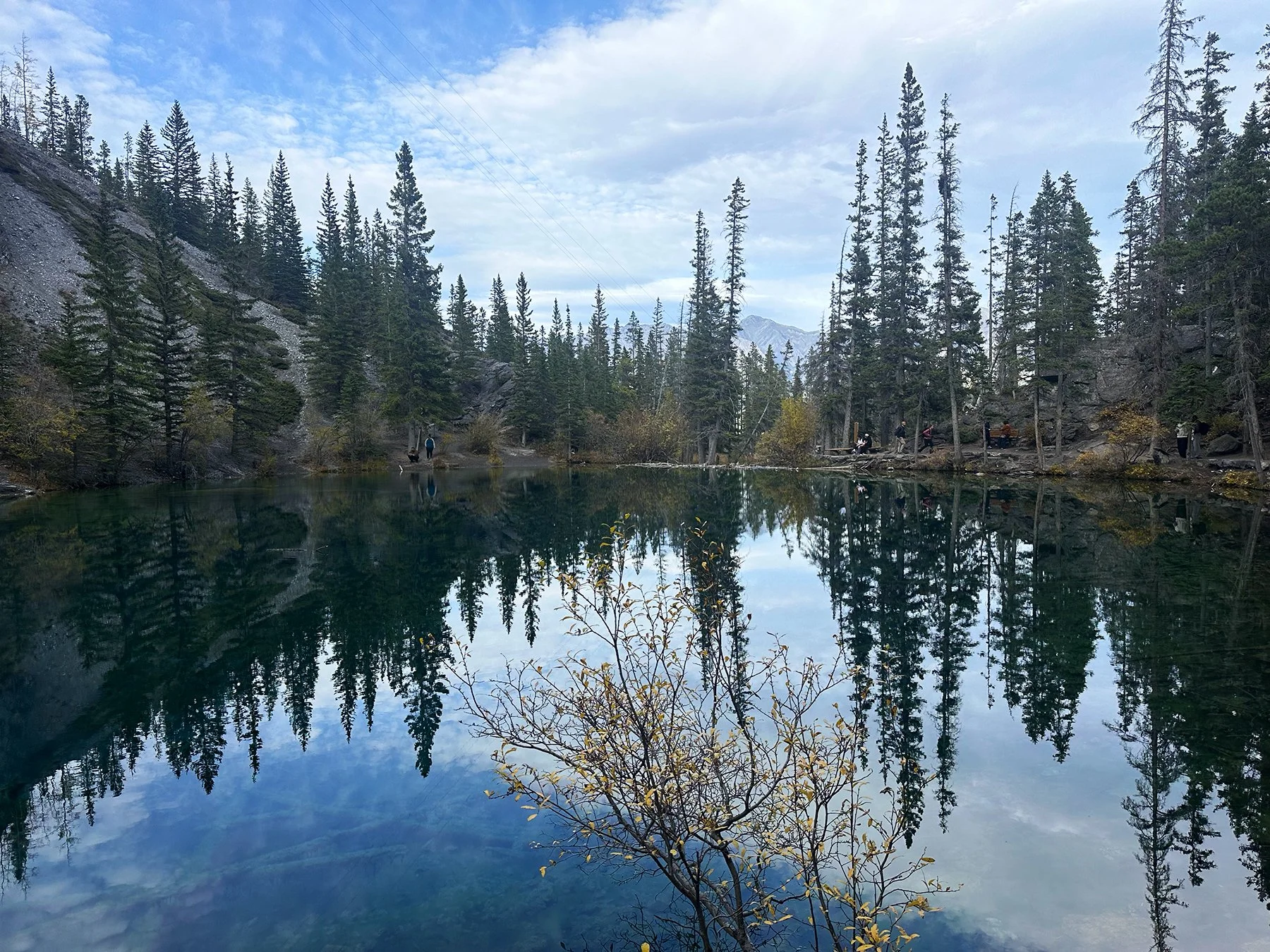
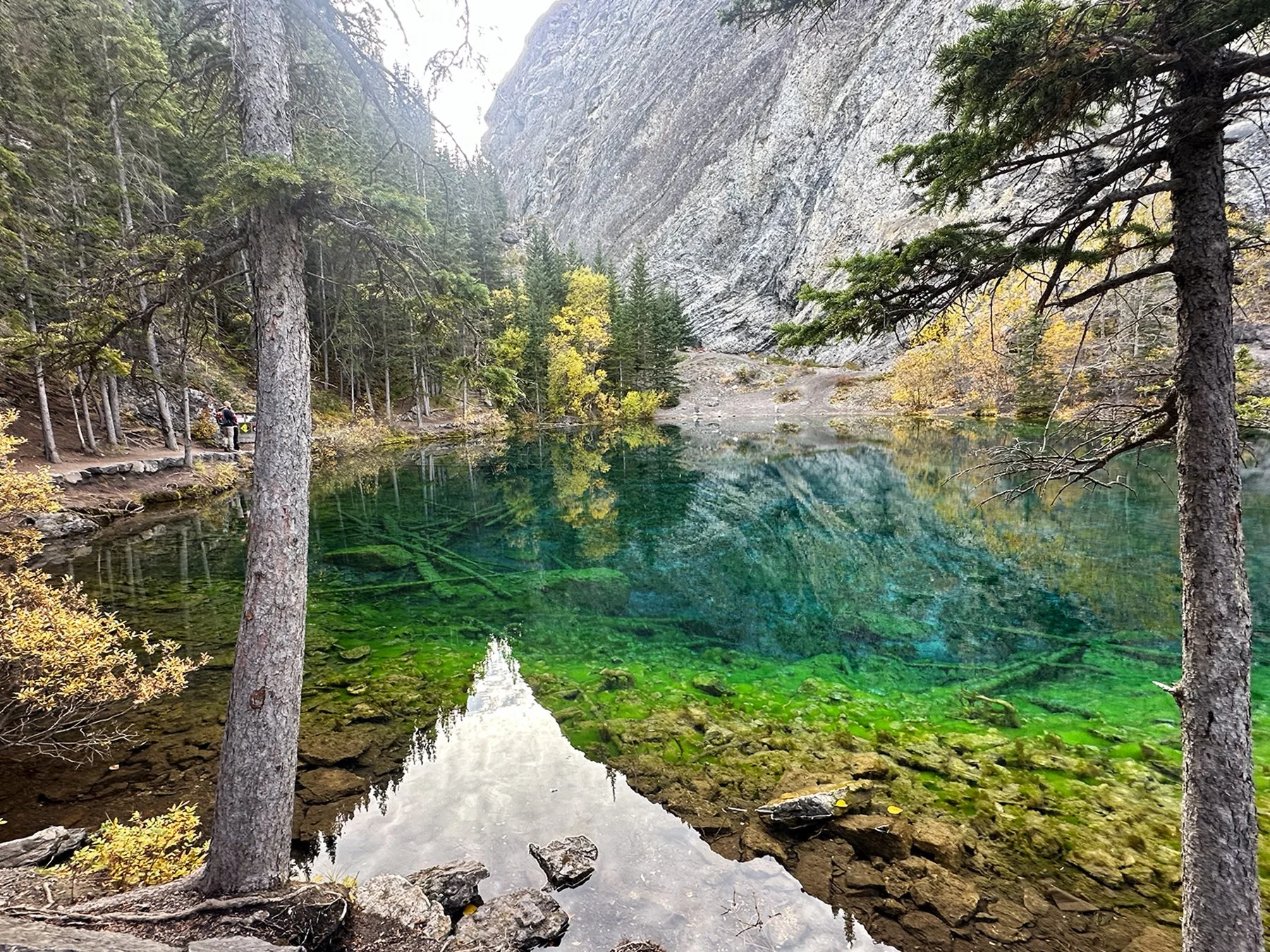
As I have mentioned before, during my travels I have lots of opportunities to meet people from all over the world. Sometimes, it’s just a 1-minute conversation. And then there are times that I spend 20, 30, or 40 minutes visiting with people. One of those times was with a couple I met from Shanghai as I was nearing the summit of the Interpretive trail. Their limited English was definitely better than my non-existent Chinese! But we were able to communicate well enough during those 40 minutes to really get to know each other. I was able to dispel some beliefs they had about Americans. So much so that they decided to plan a visit to the US which they were previously unsure of! Nothing like sharing that Texas hospitality in a foreign country, y’all. They invited me to come visit them if and when I ever make it to the Far East. We even exchanged emails. They were really sweet!
The day was not yet done for us. As the sun creeped toward the horizon, I decided at the last minute to stop by the Norquay Ski Resort. Winding our way up the mountain, we came to an overlook where several cars were parked, so just had to see what drew their attention. How many epic views can one person can take?! There was even a small group of indigenous folks who were singing and chanting toward the beautiful sunset off of the mountains and cliffs overlooking Banff and the Bow River. So magical! The pictures don’t really do it justice, but still say it all.
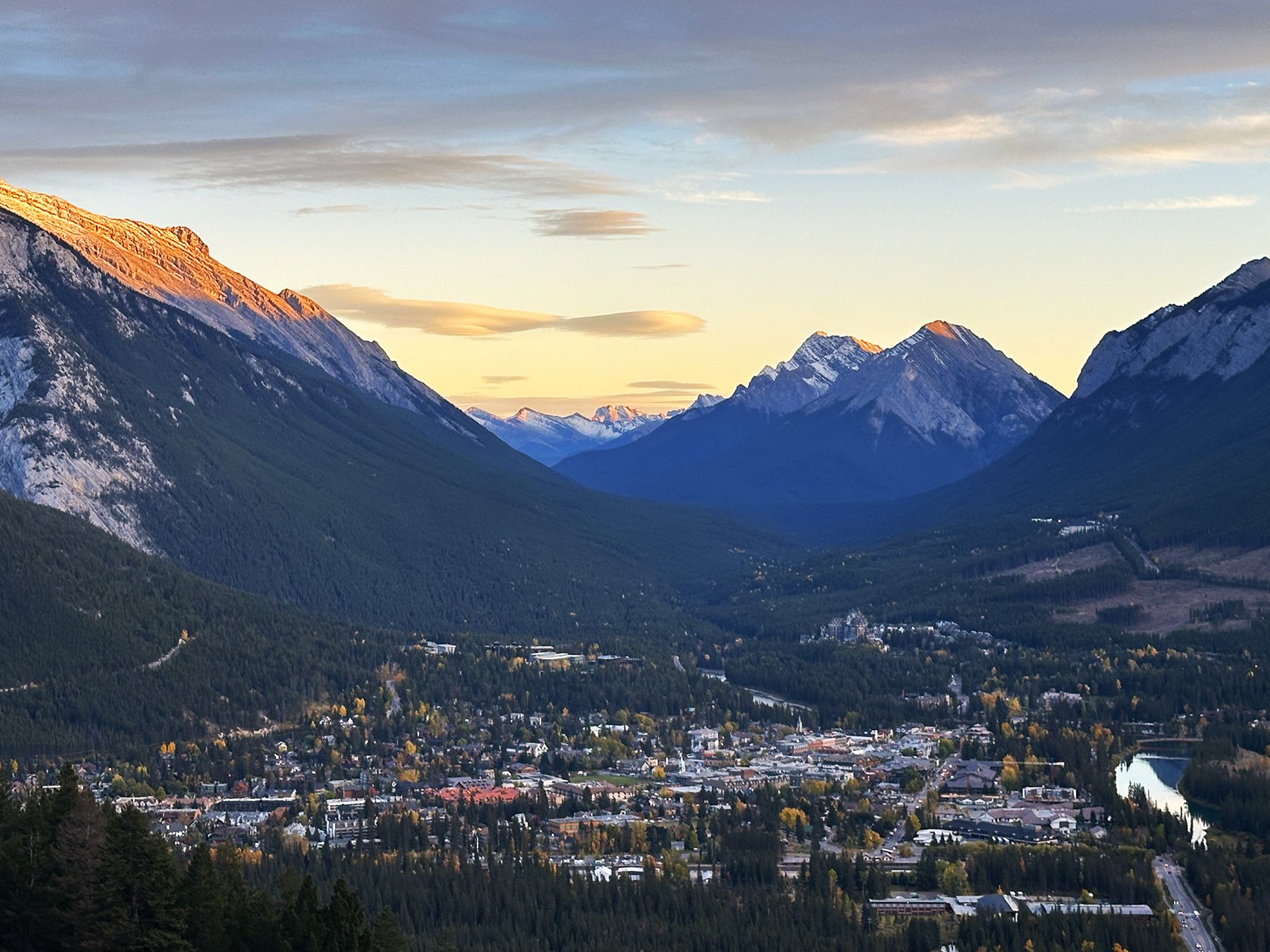
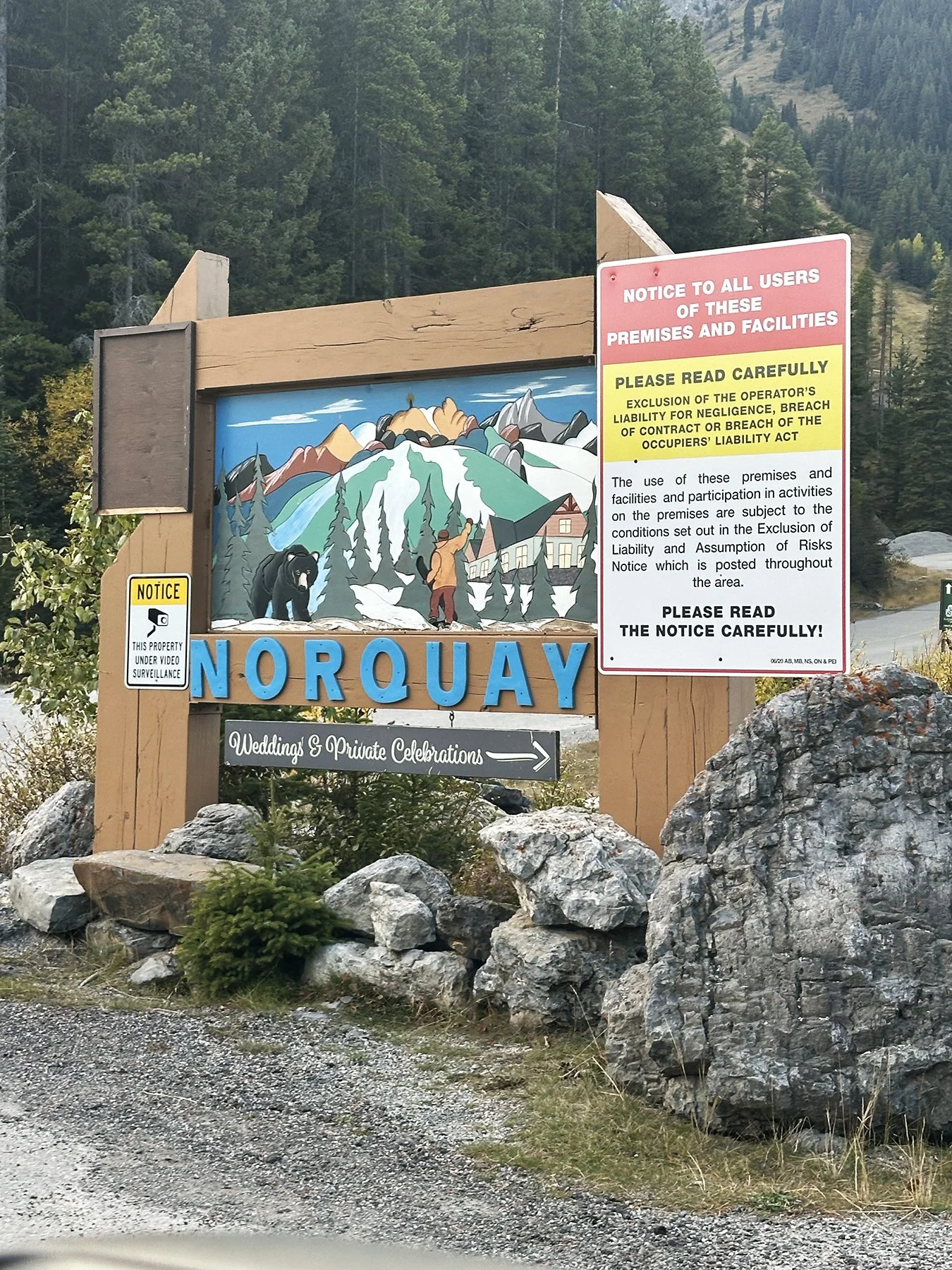
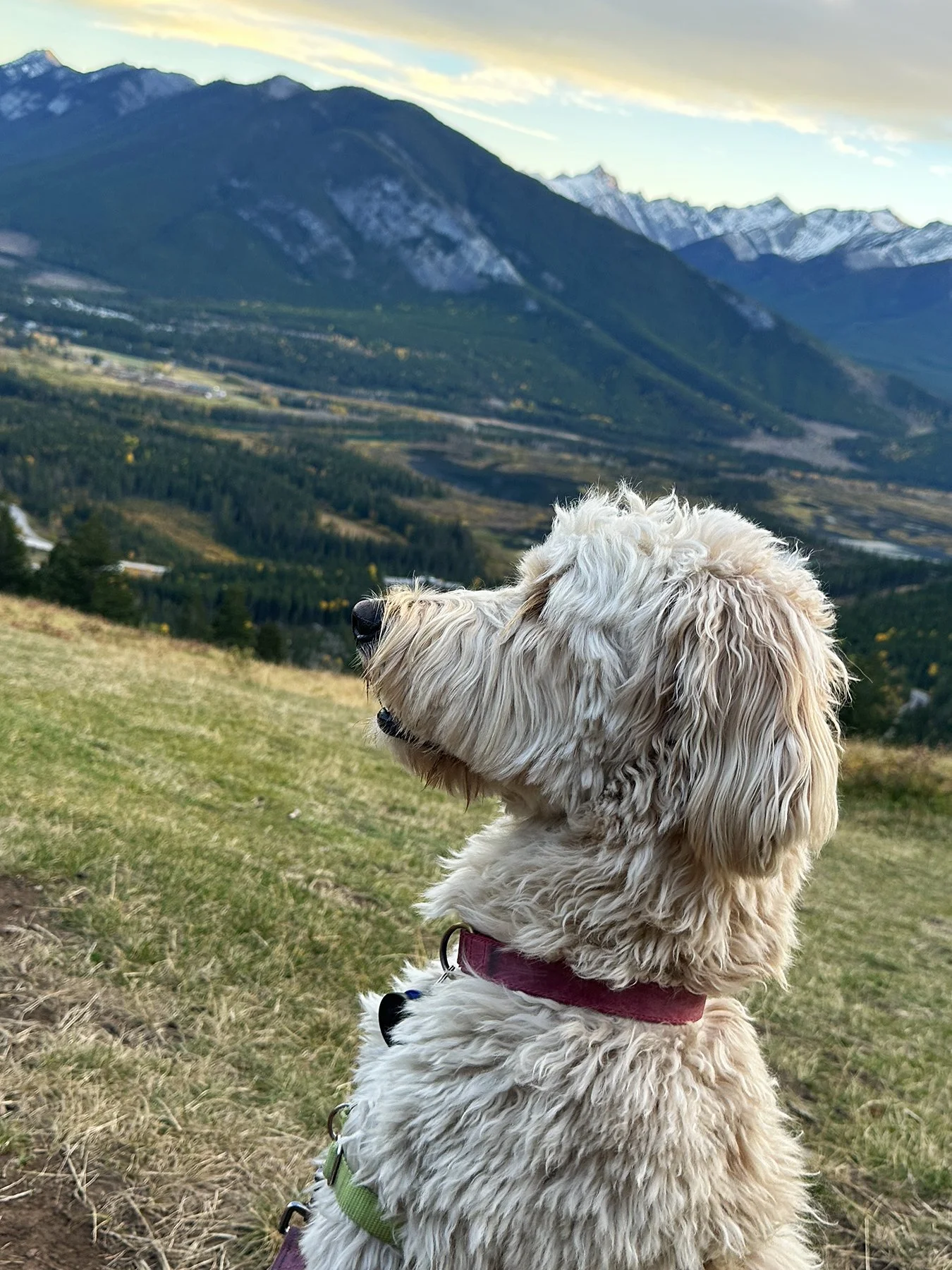
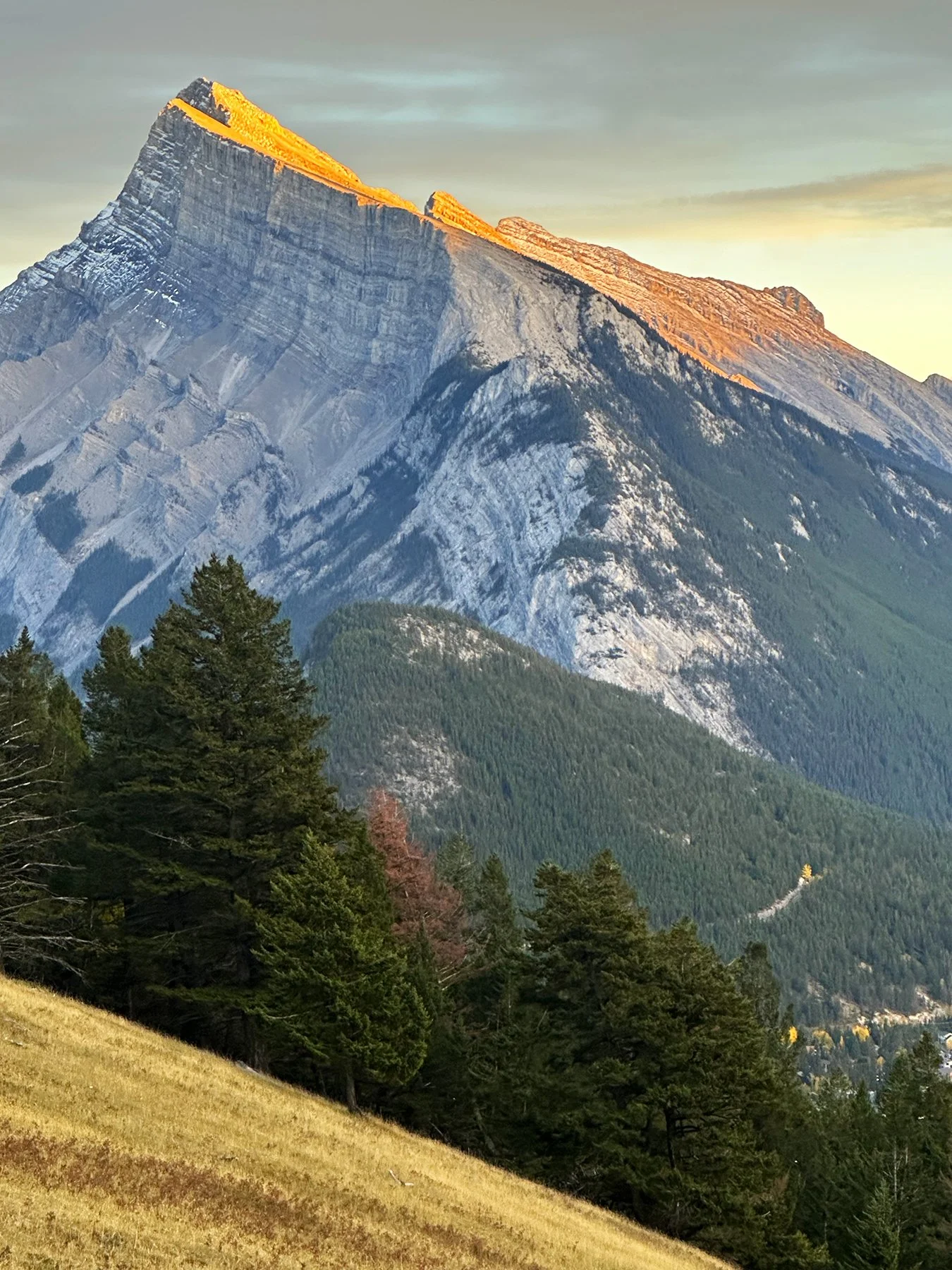
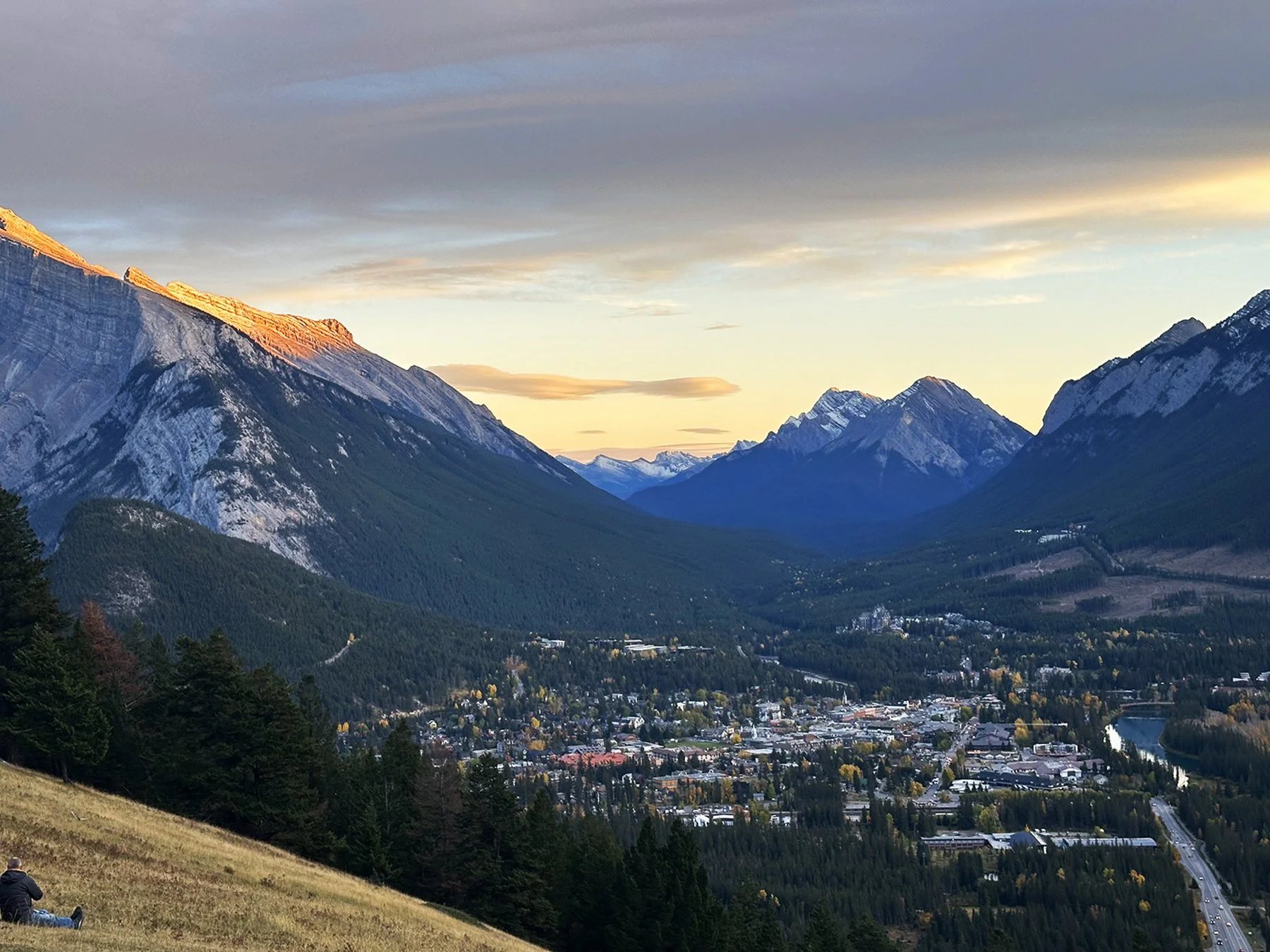
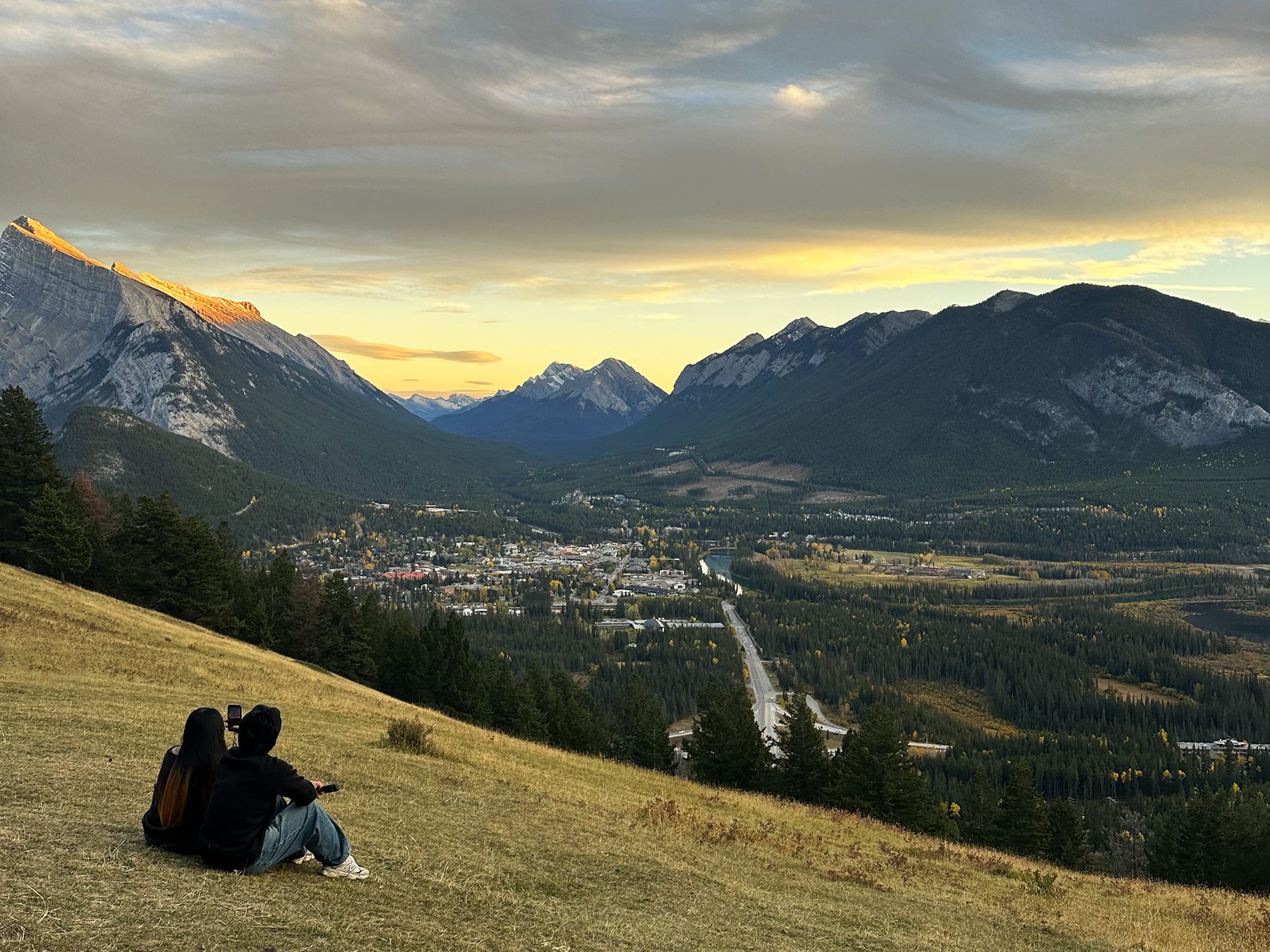
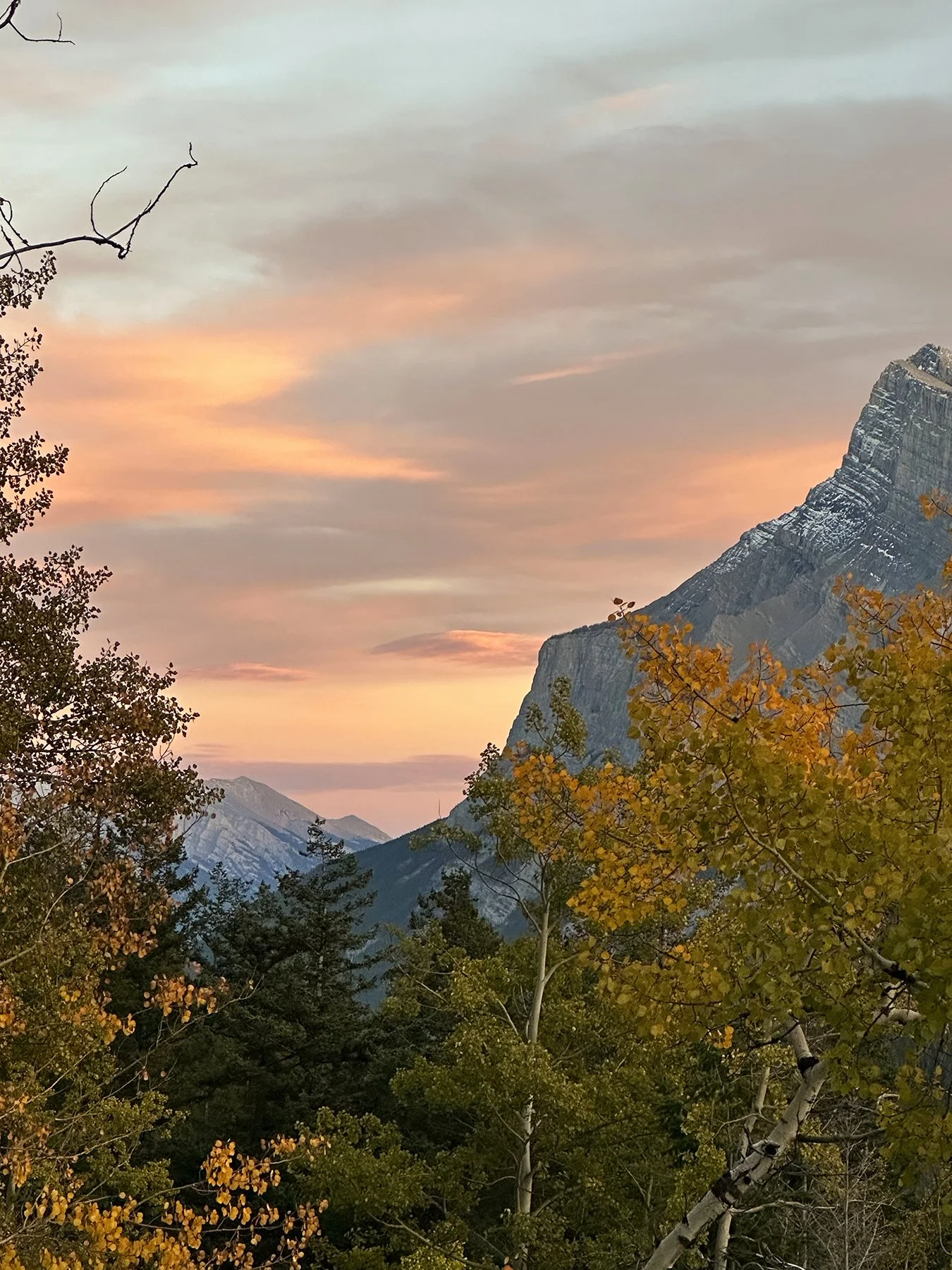
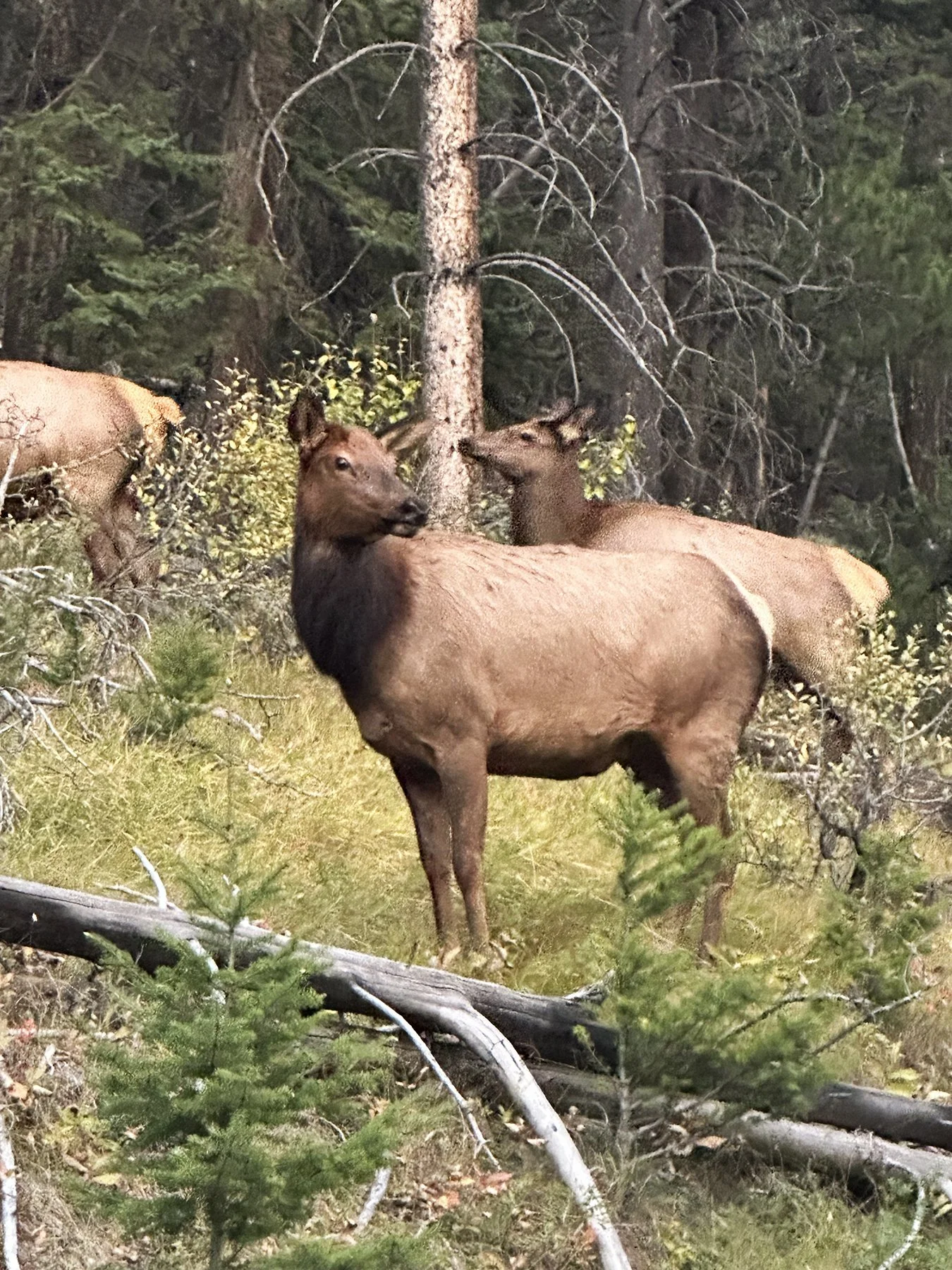
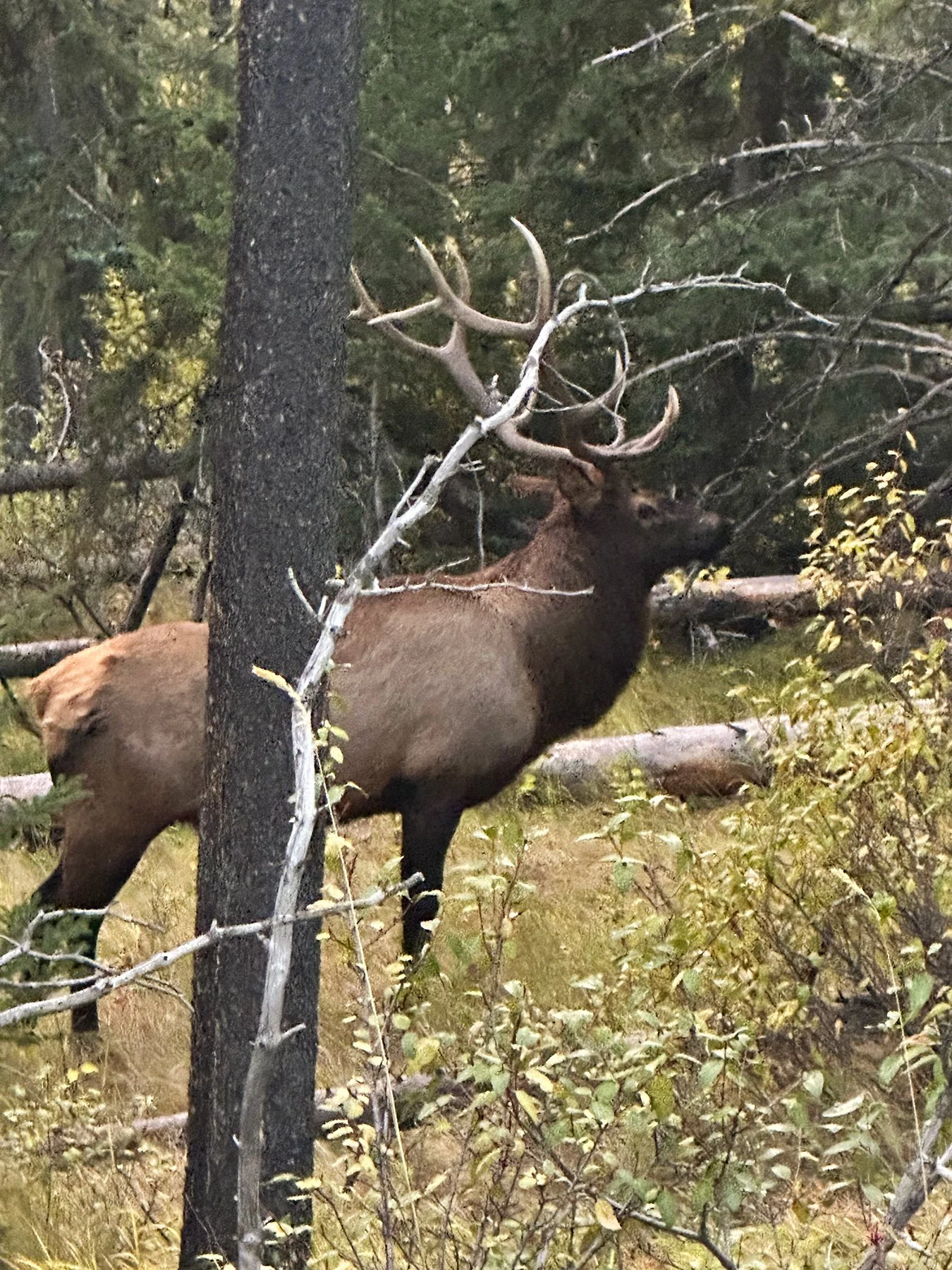
And THEN, on our way back down the mountain, there was a herd of elk crossing the road. EPIC! This is when I geek out. Weird, I know, but it is what it is and I am who I am!
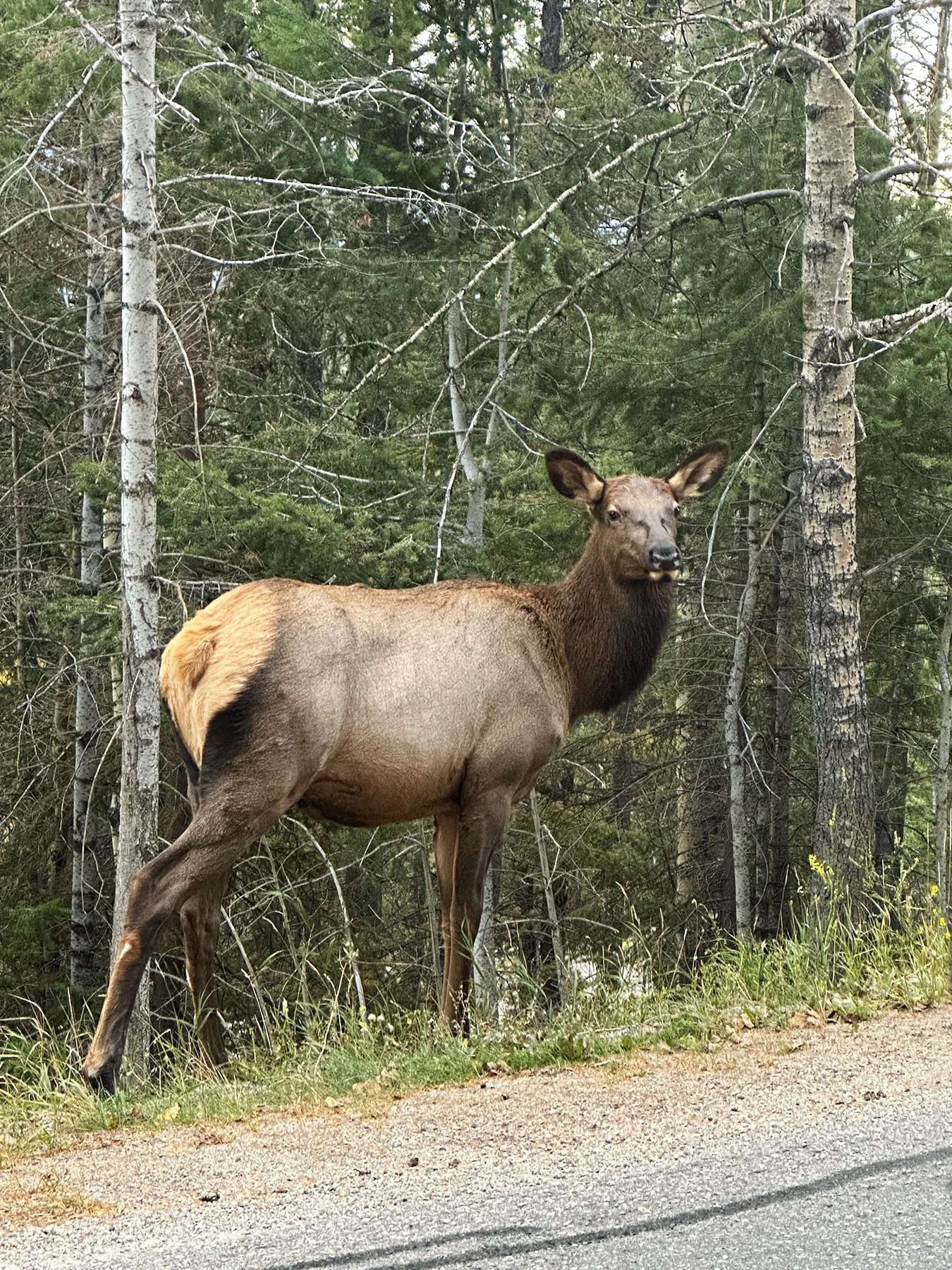
Day 5: YOHO NATIONAL PARK
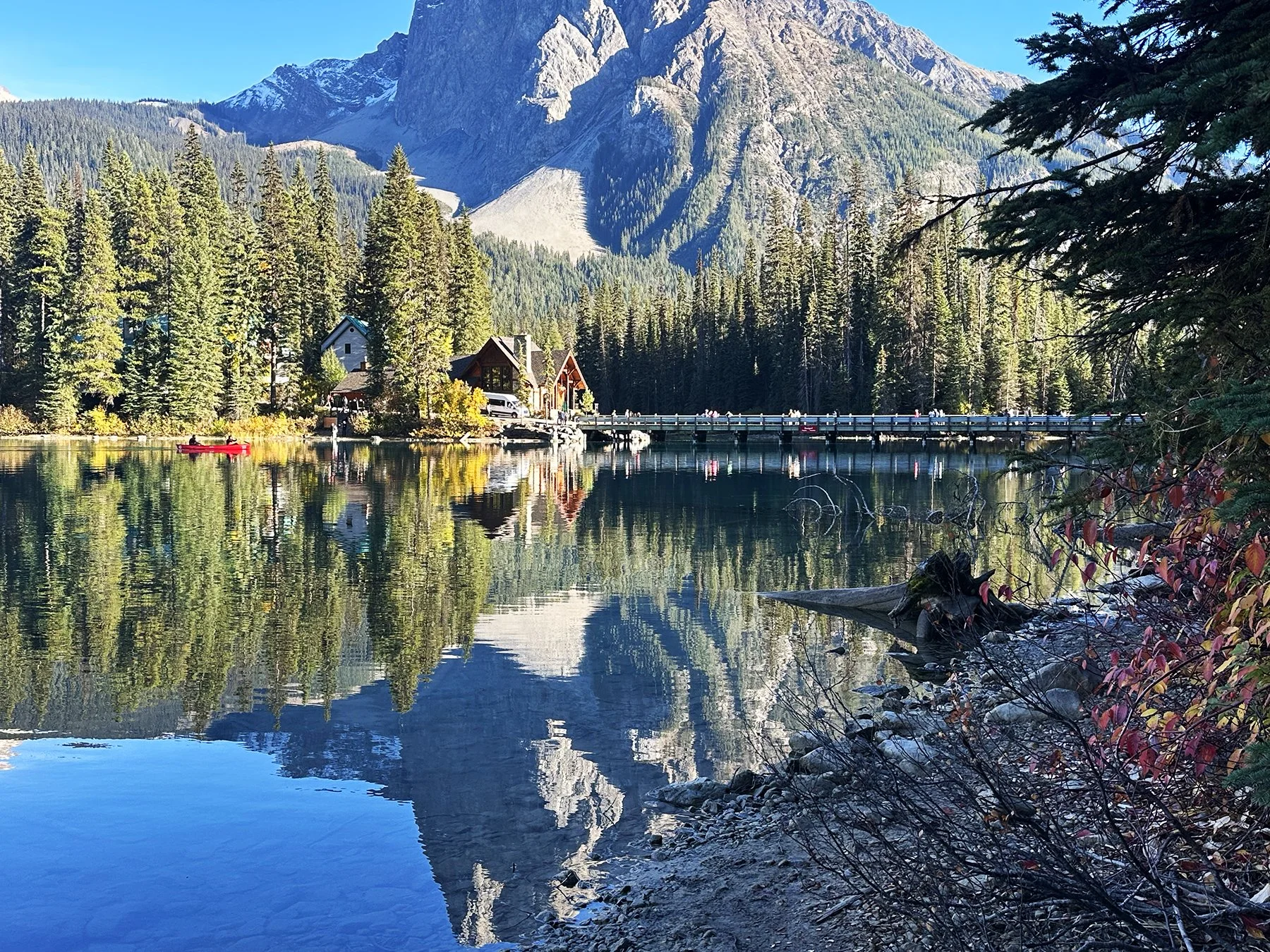
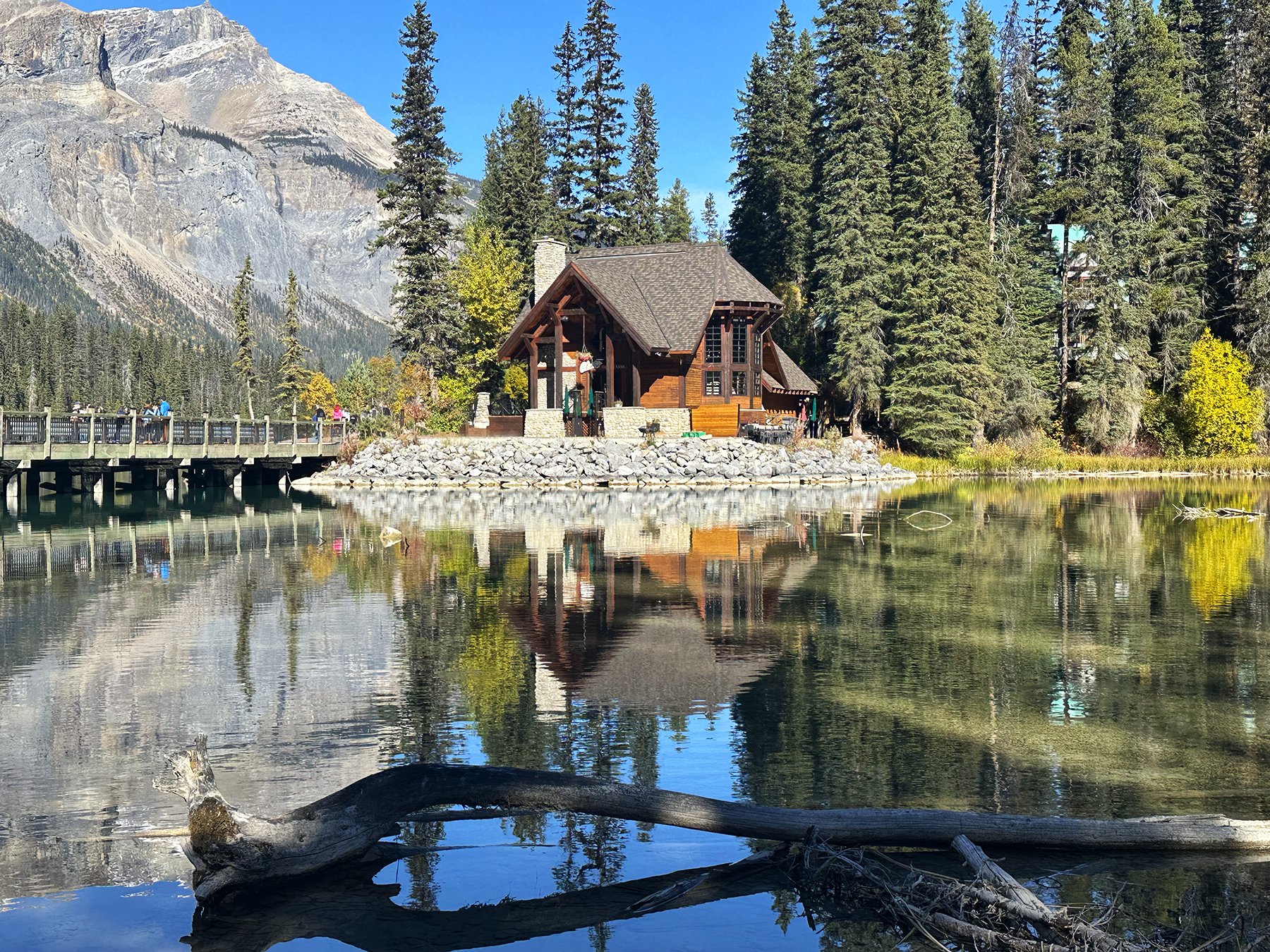
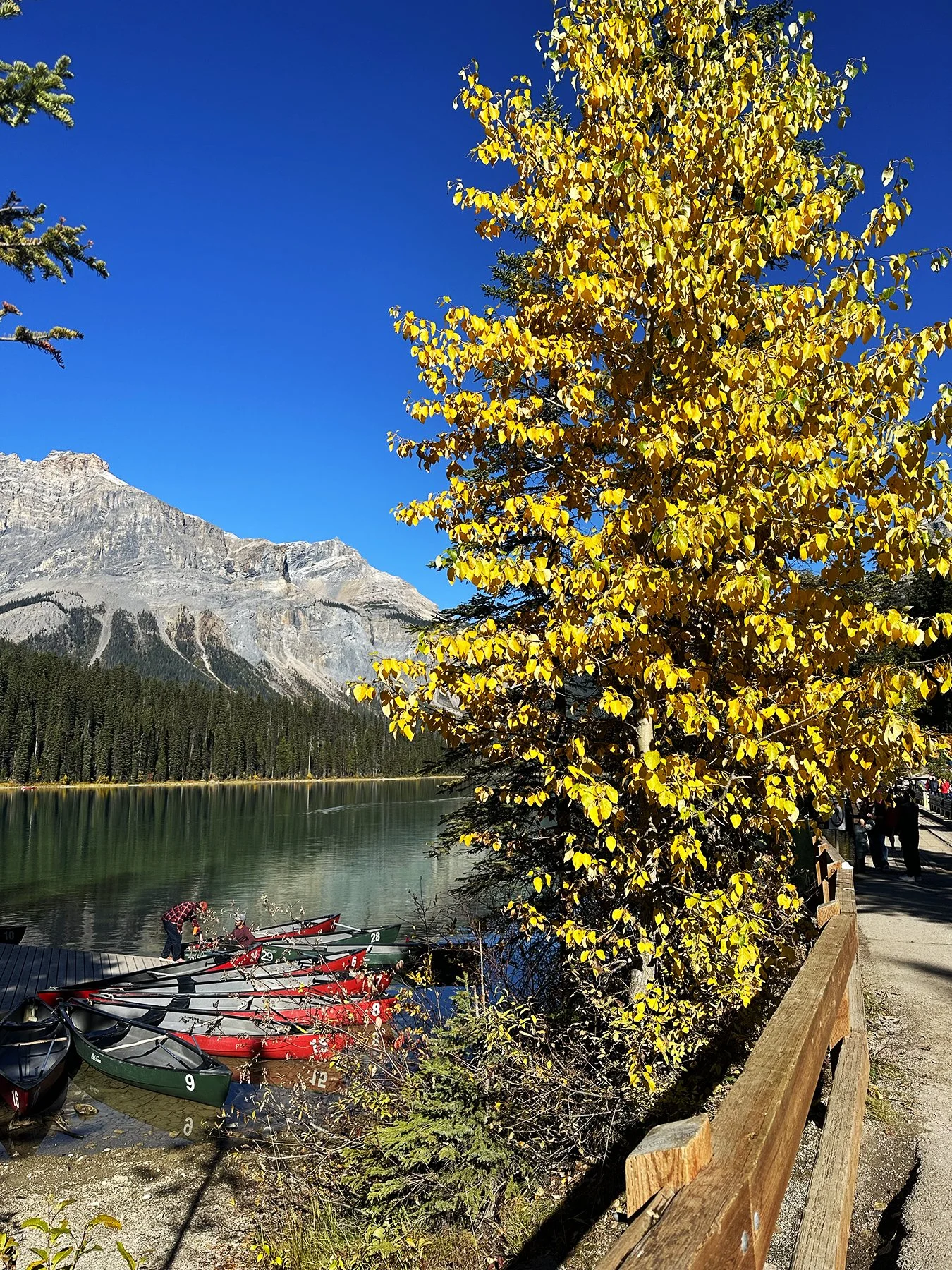
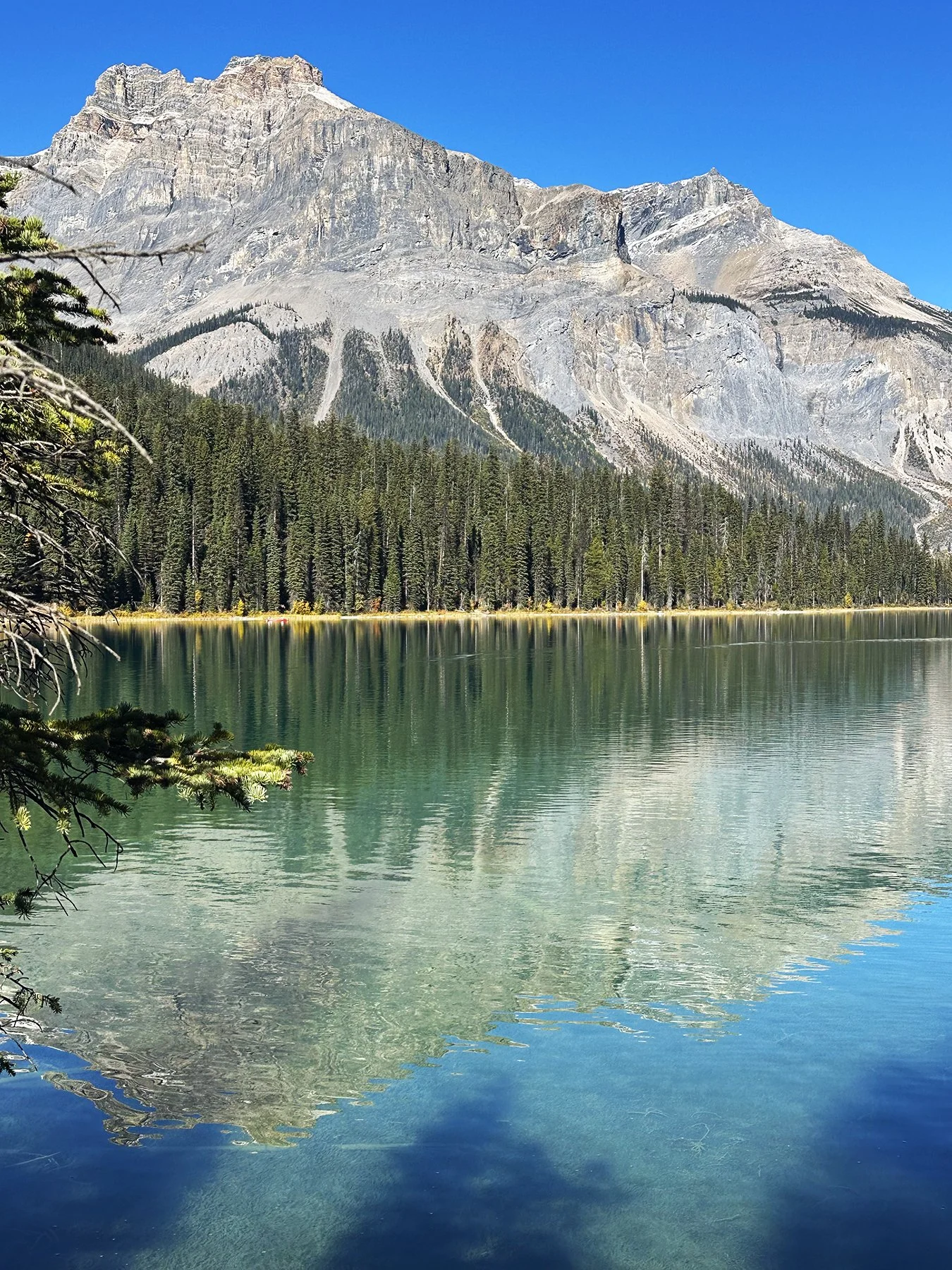
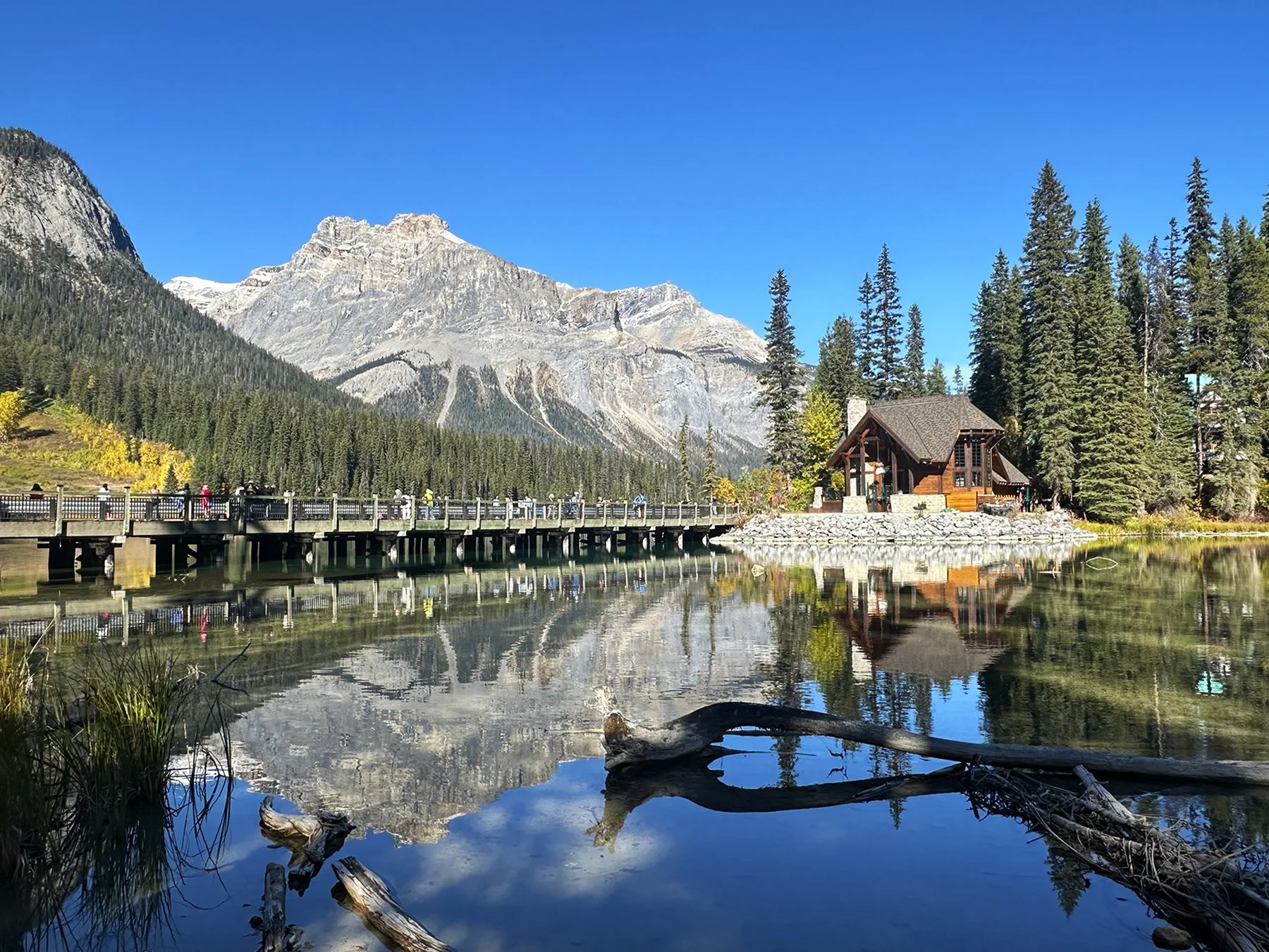
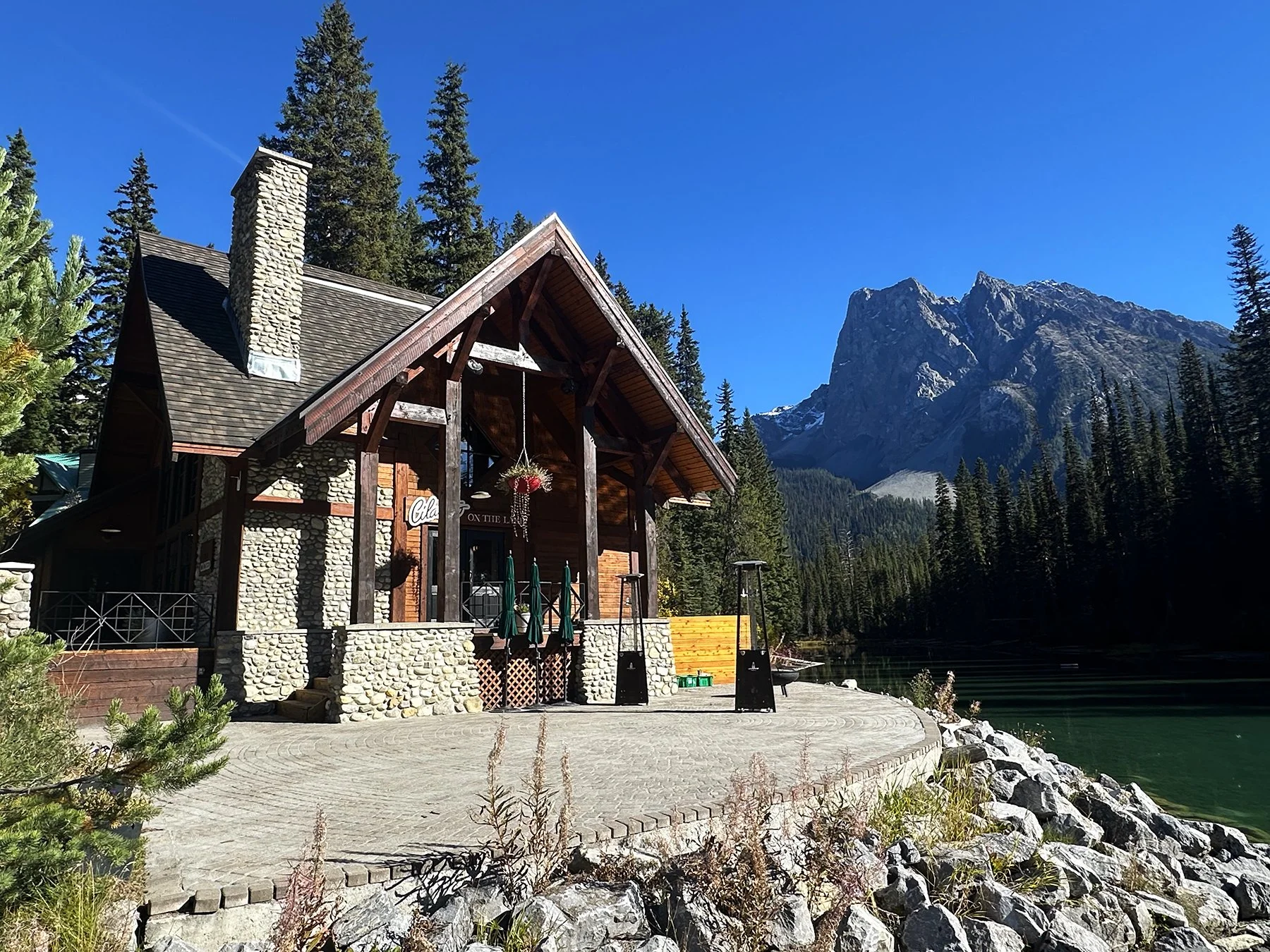
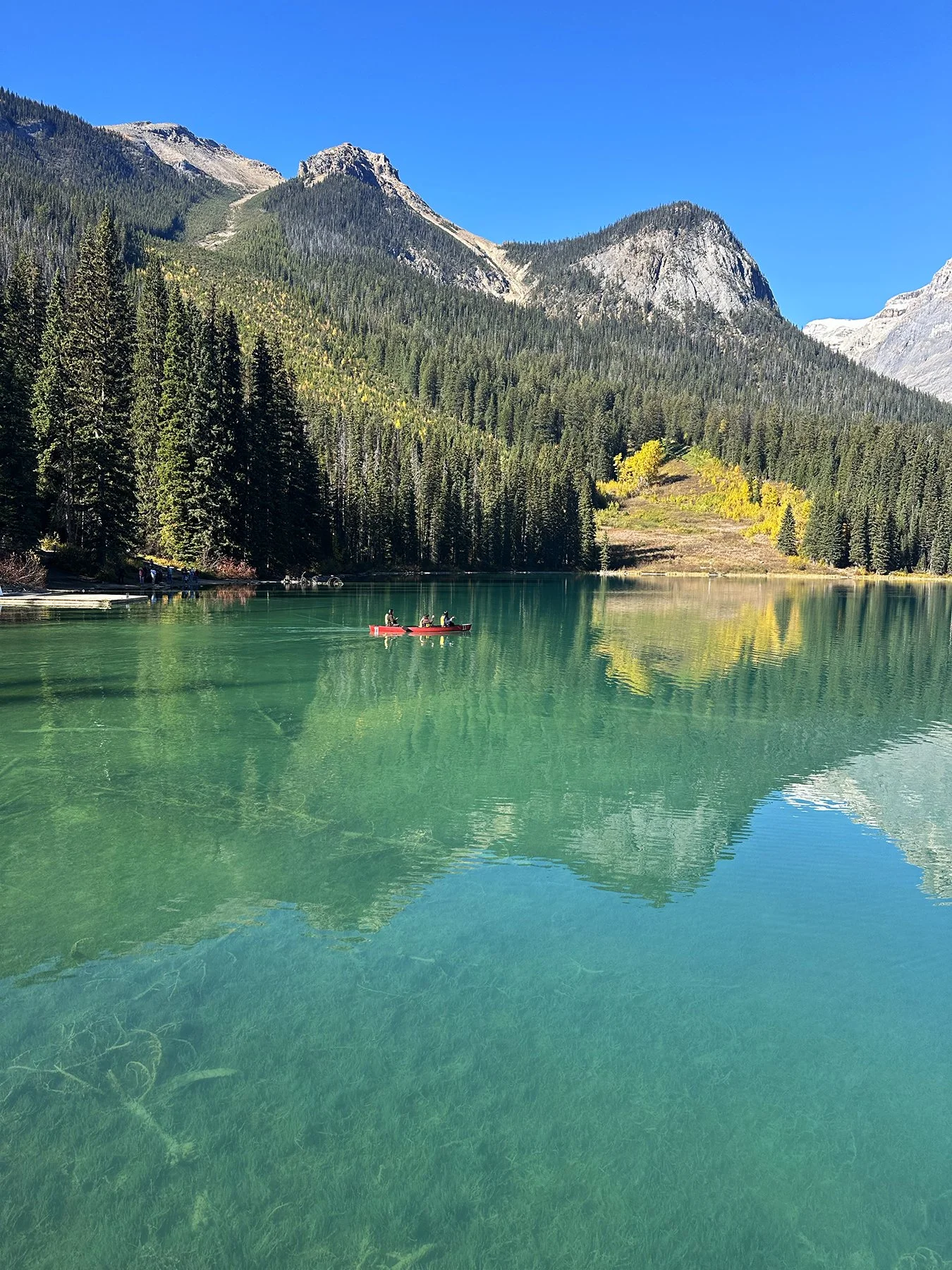
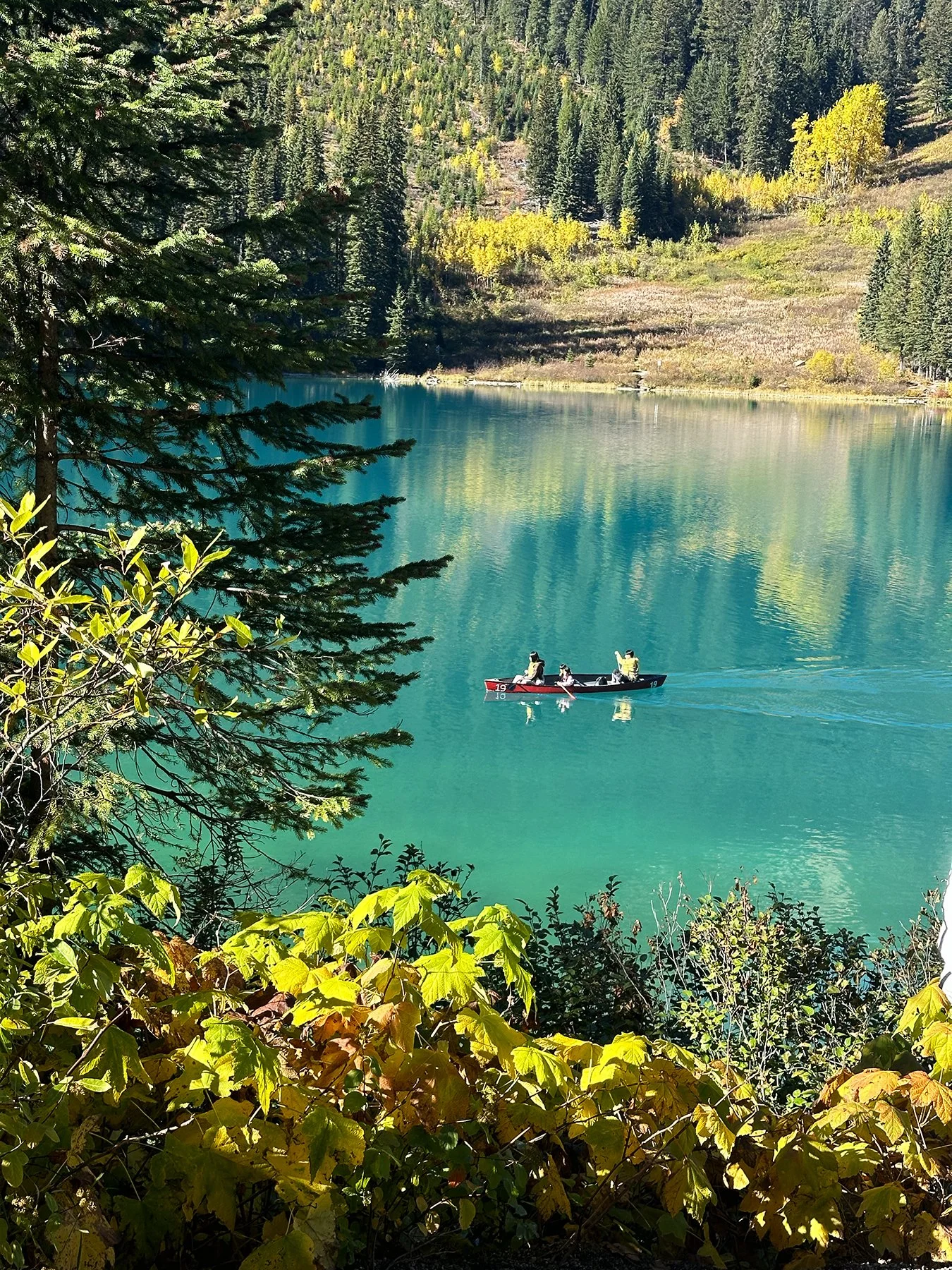
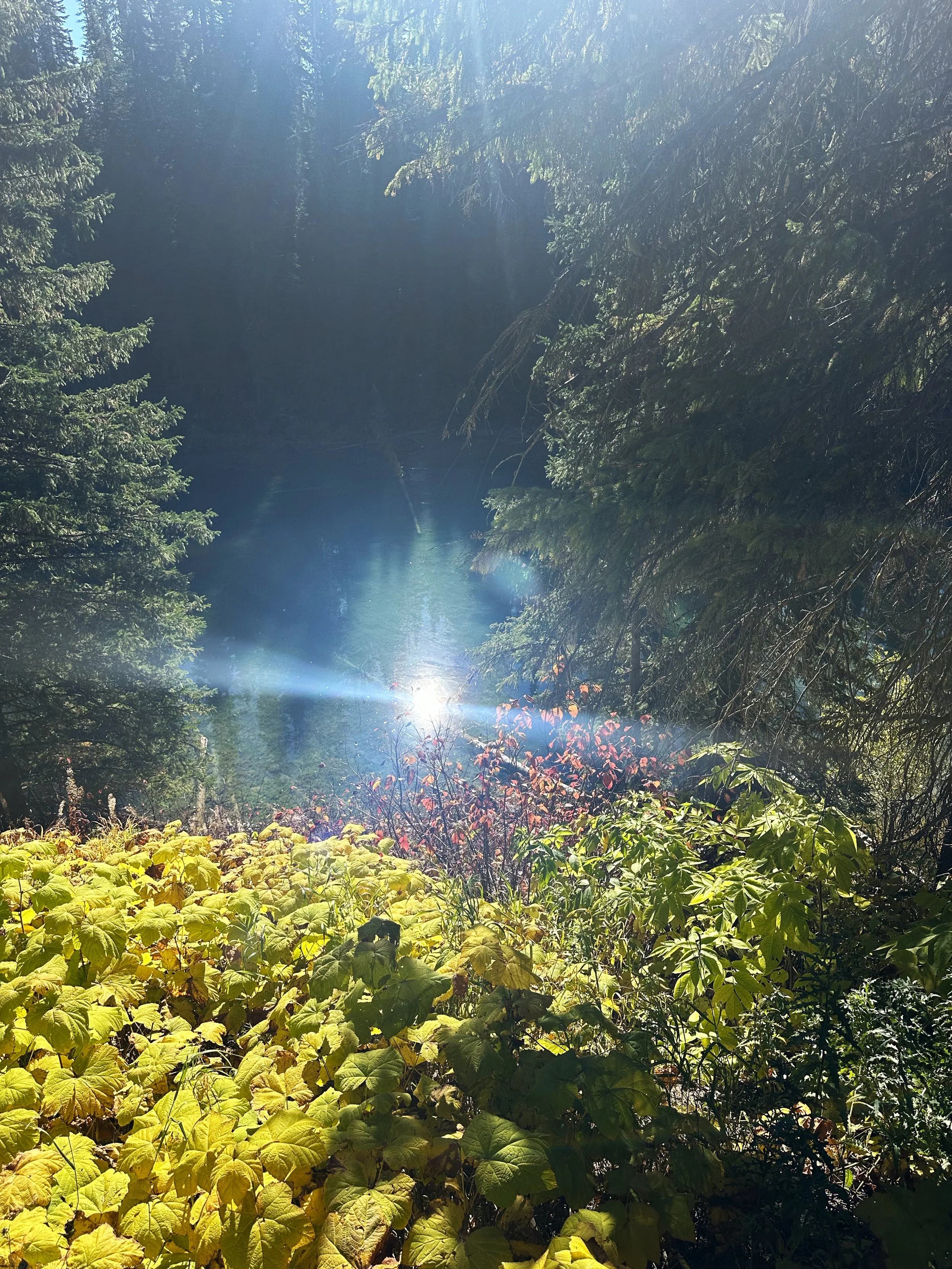
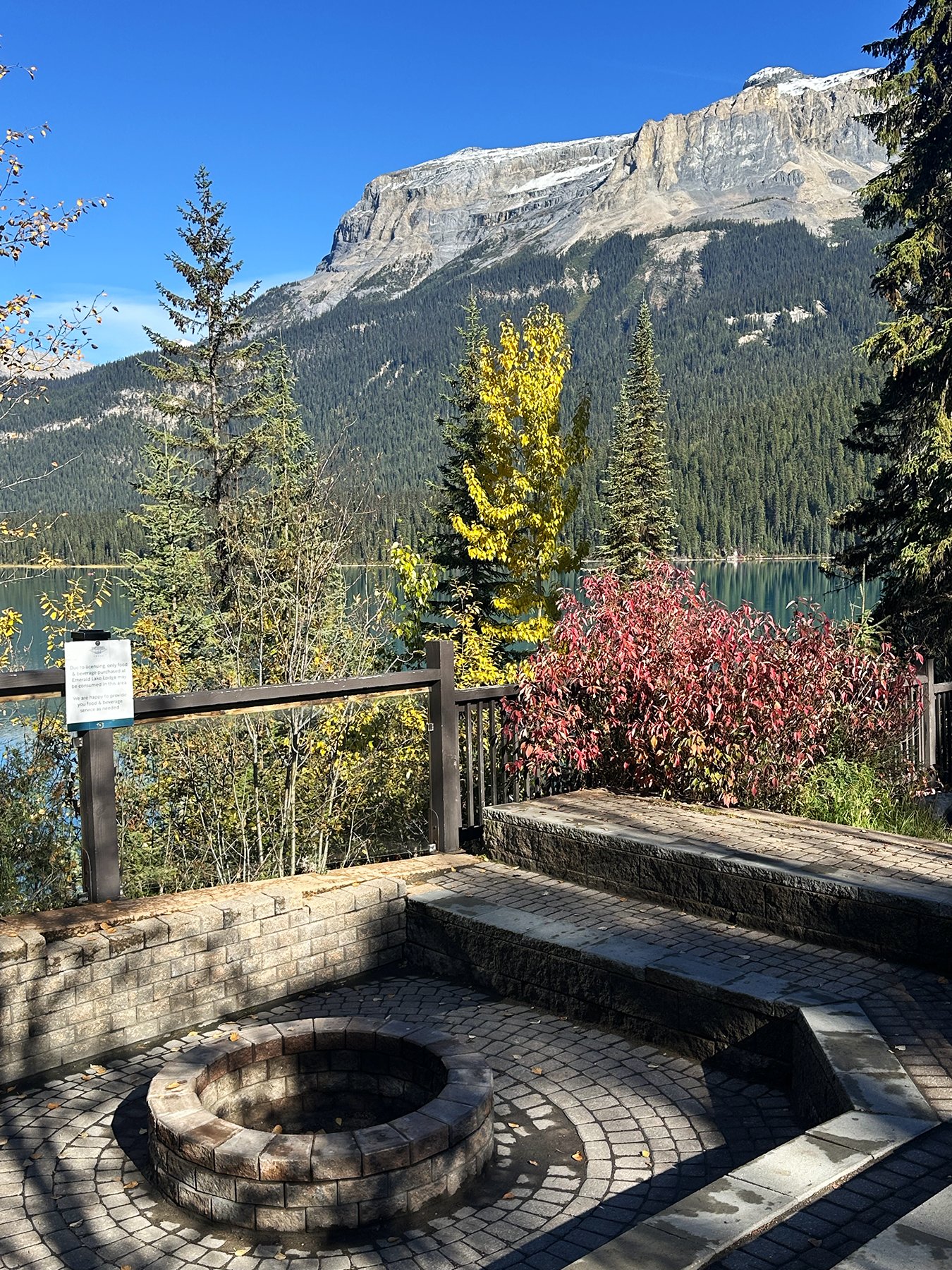
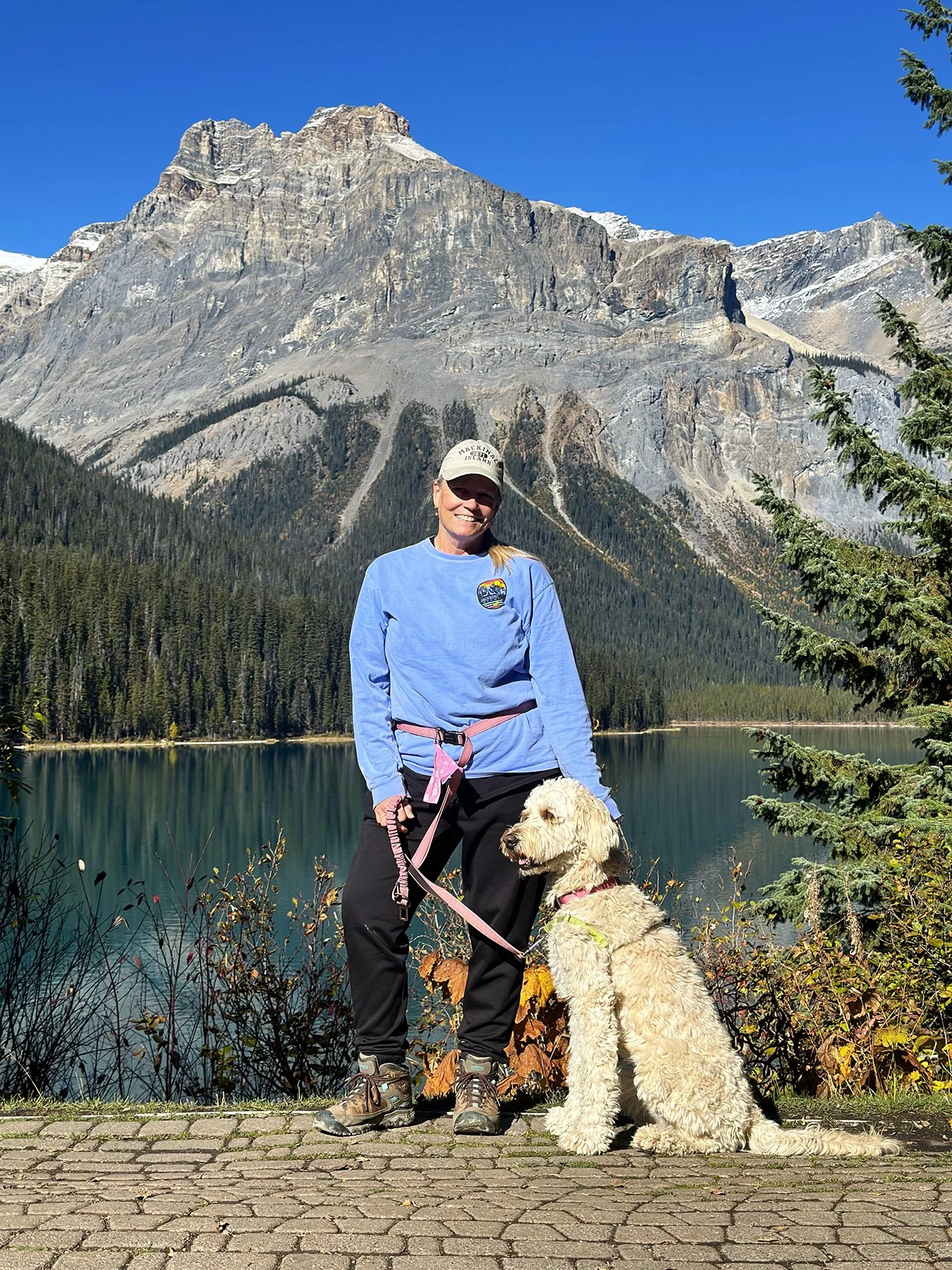
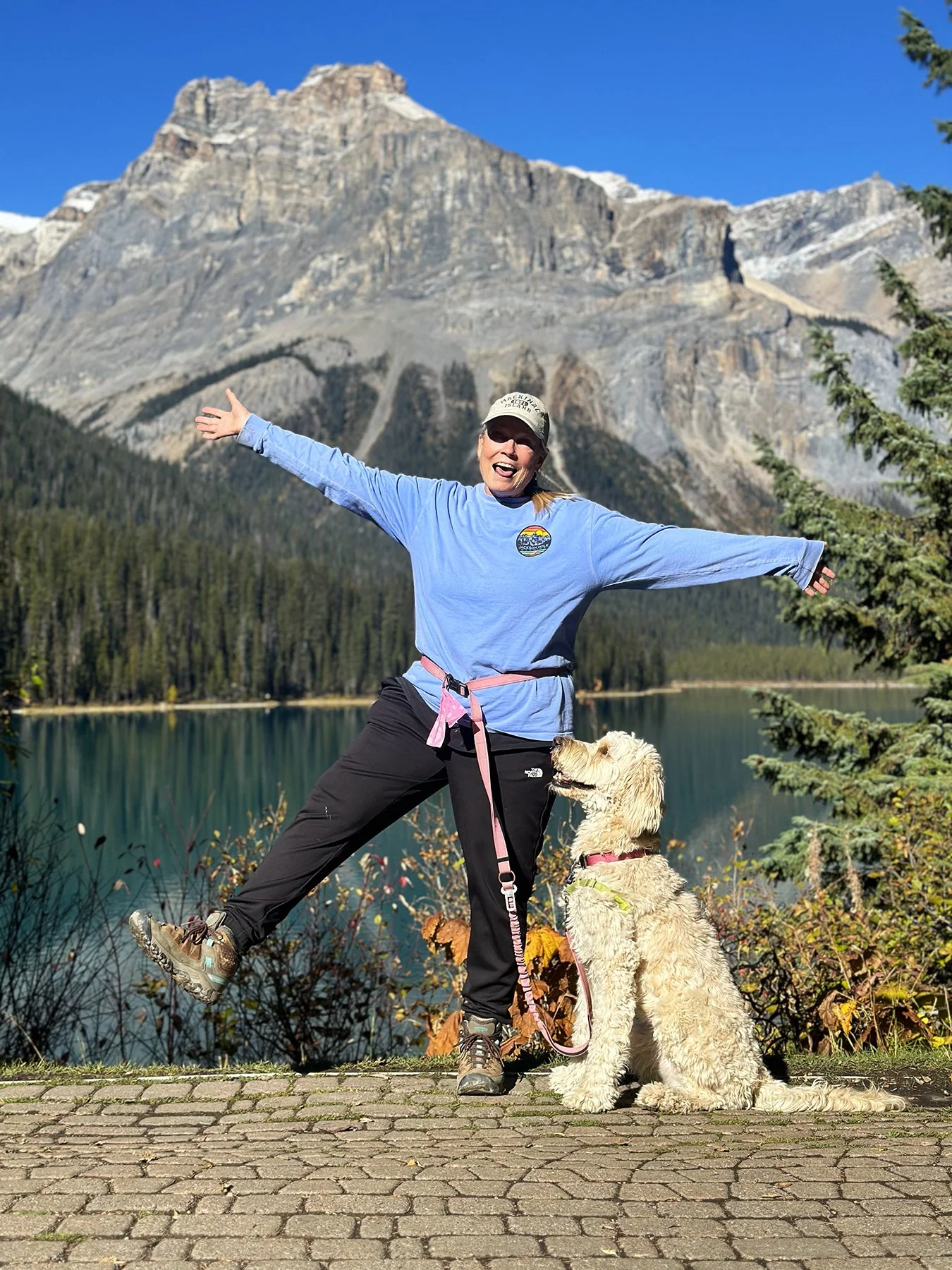
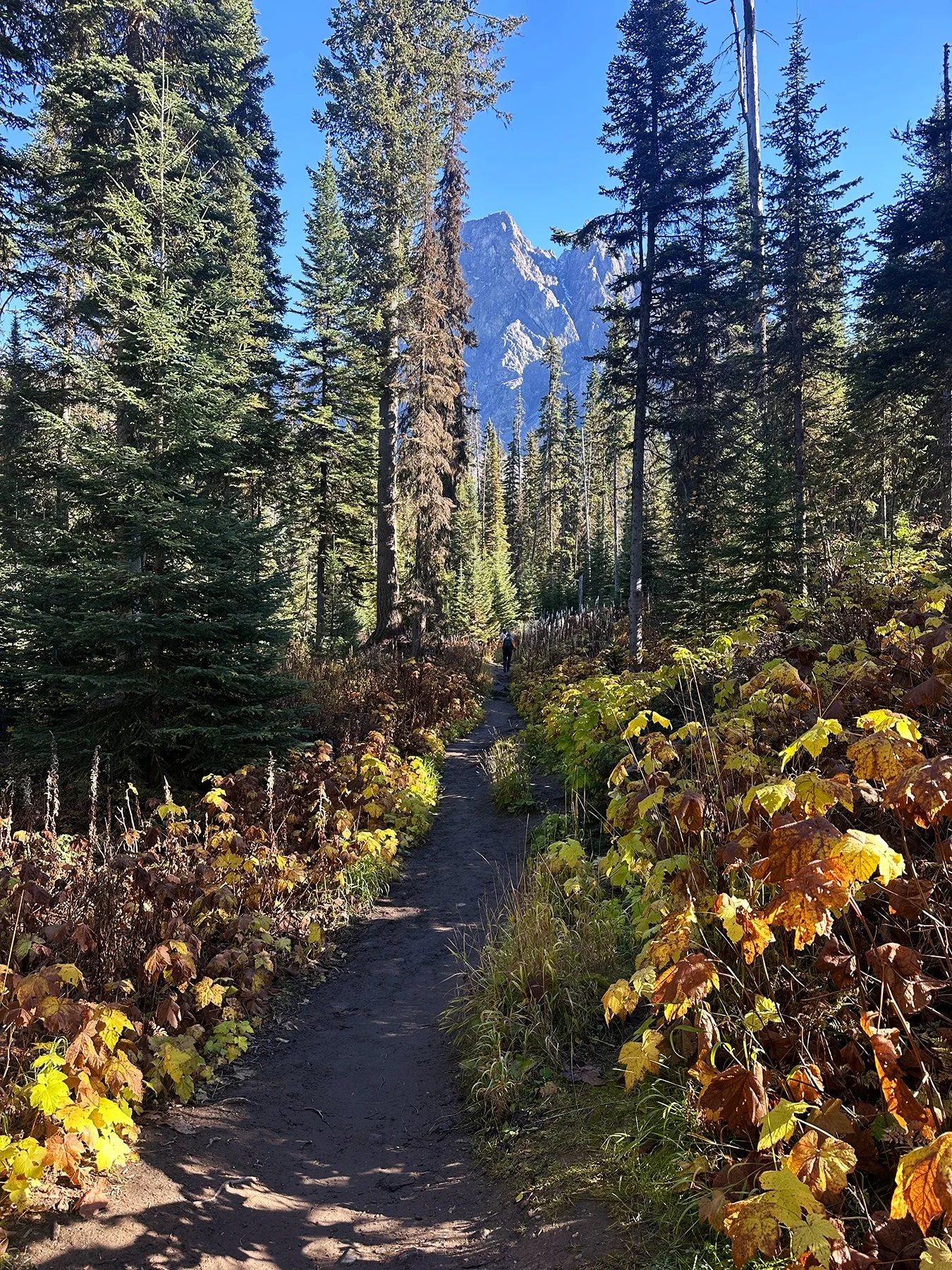
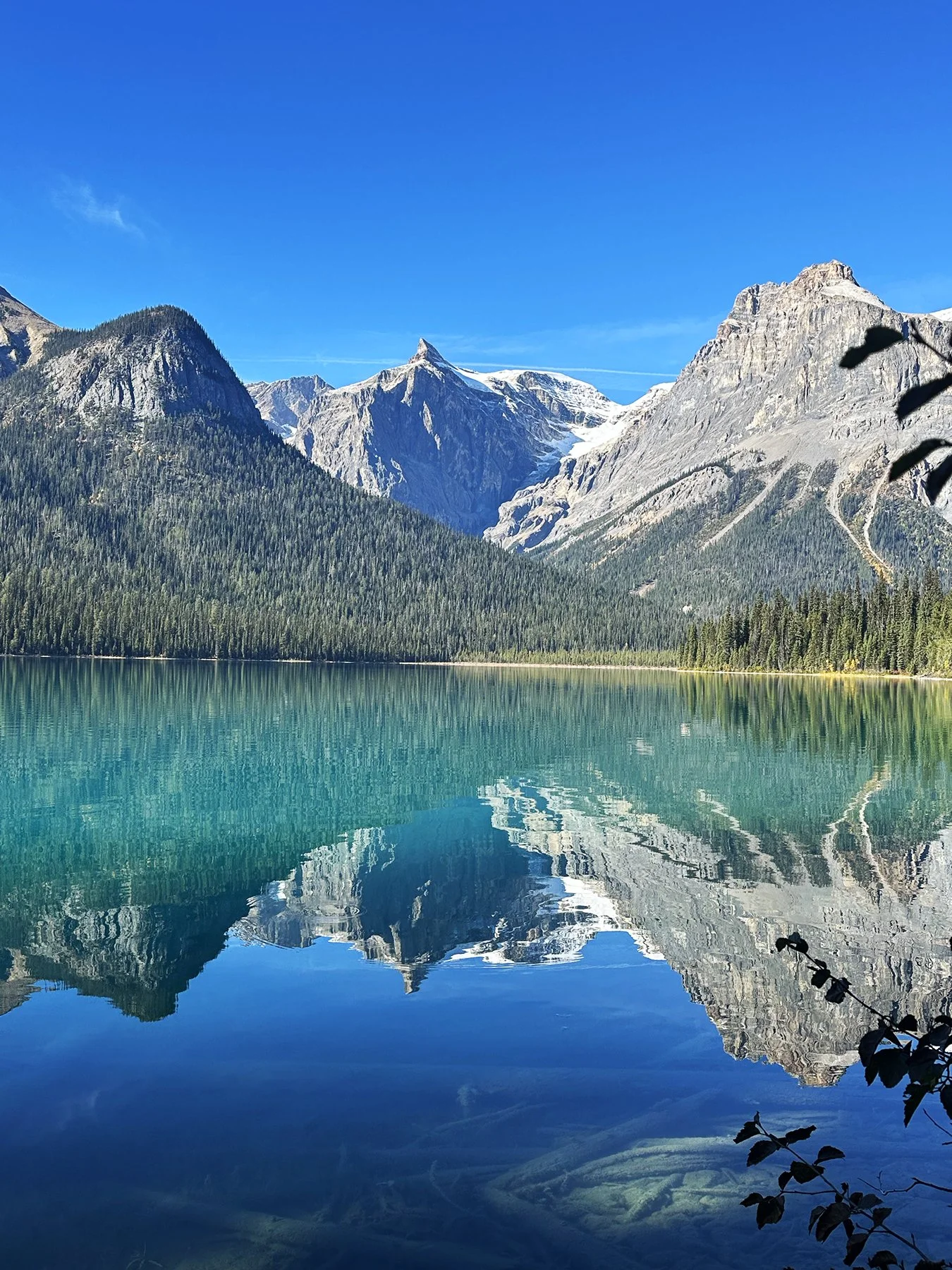
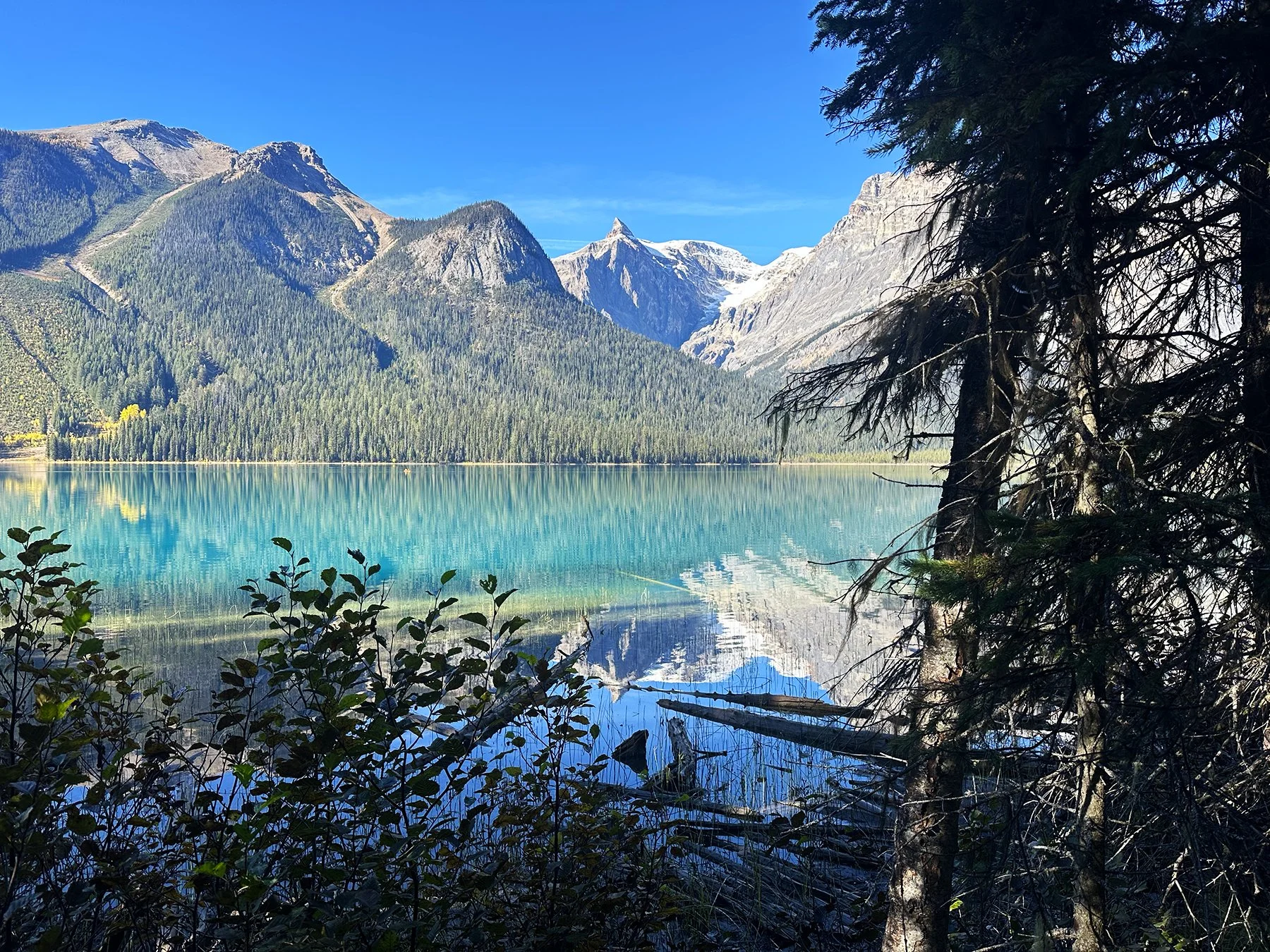
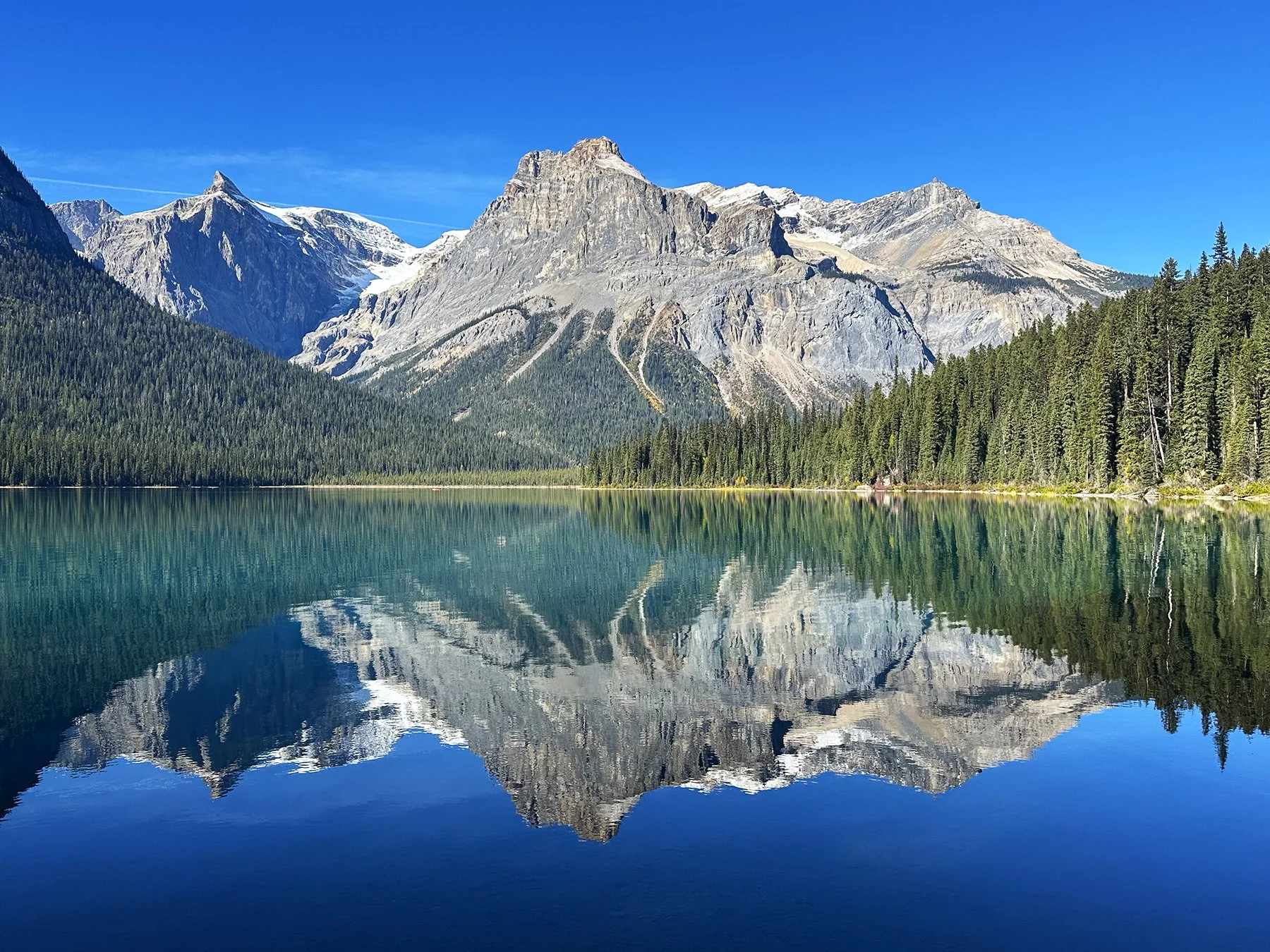
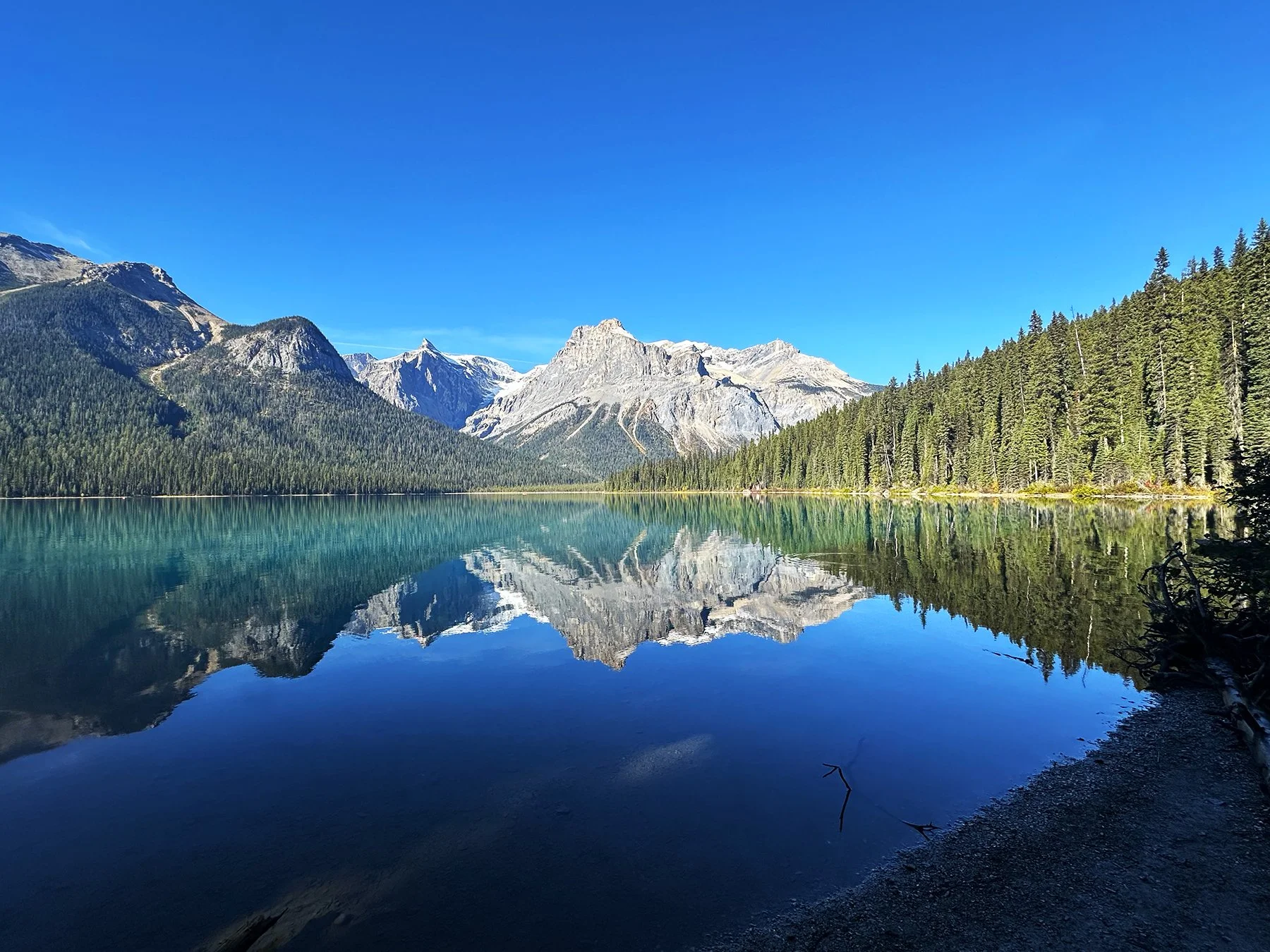
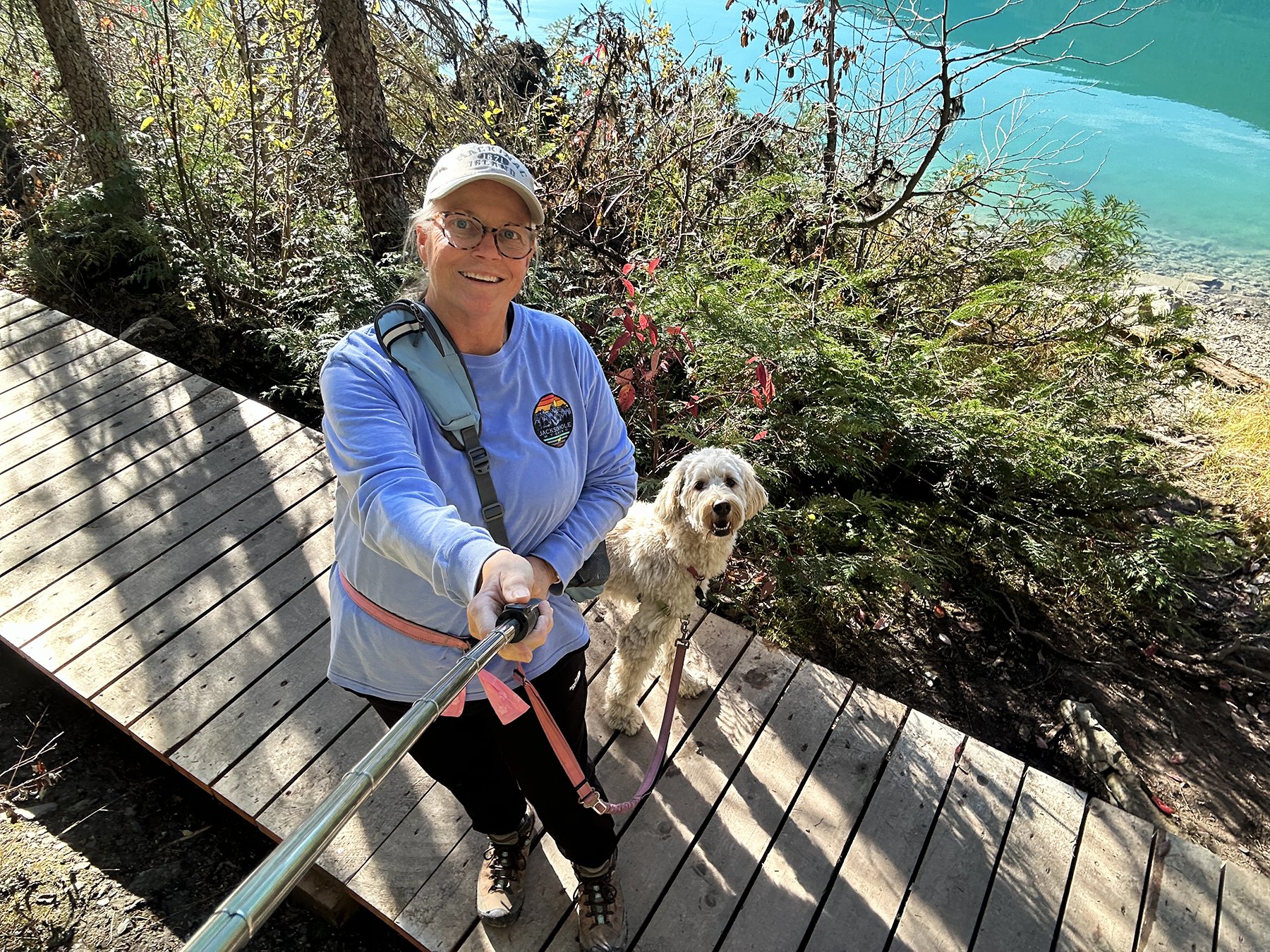
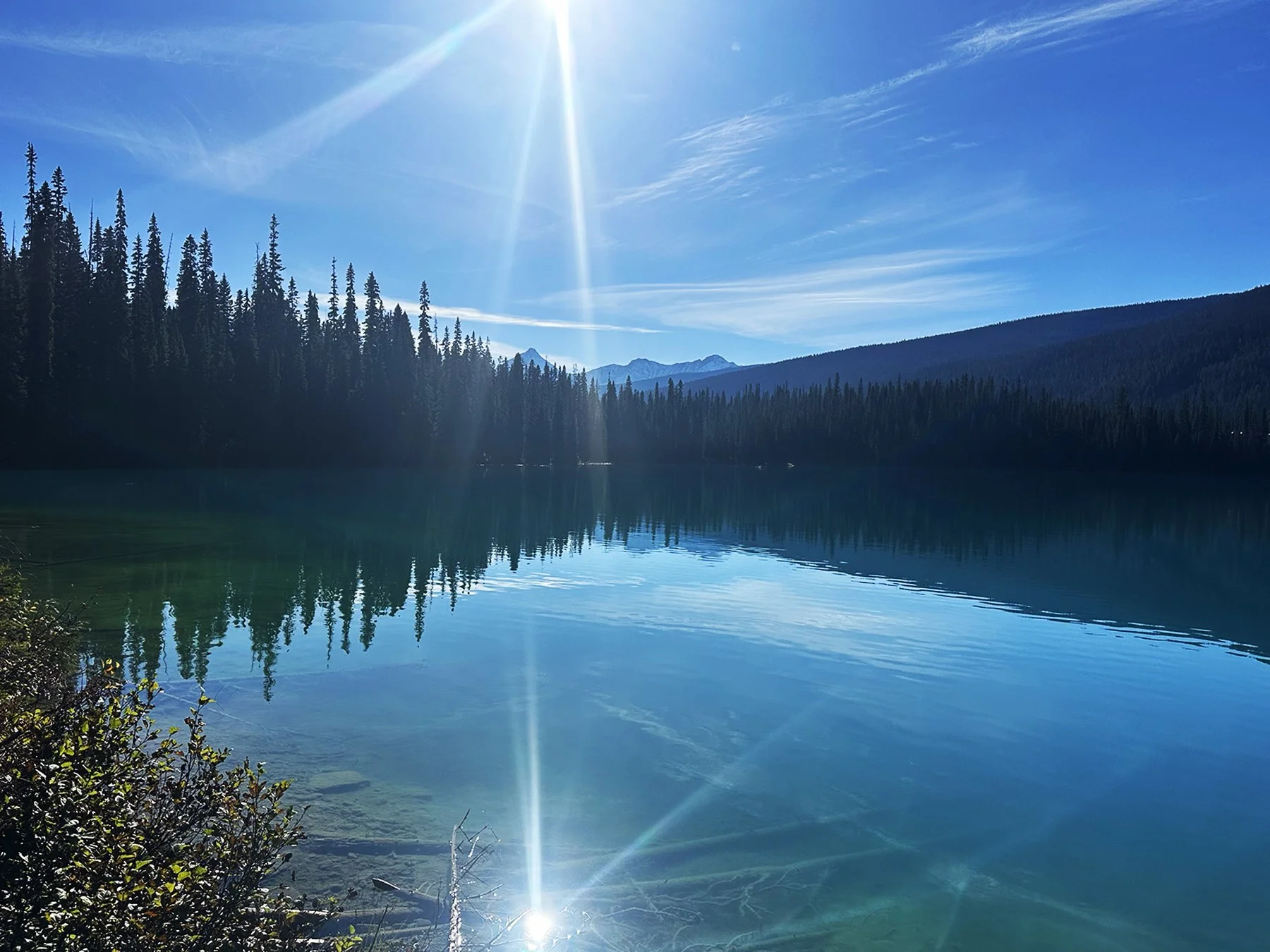
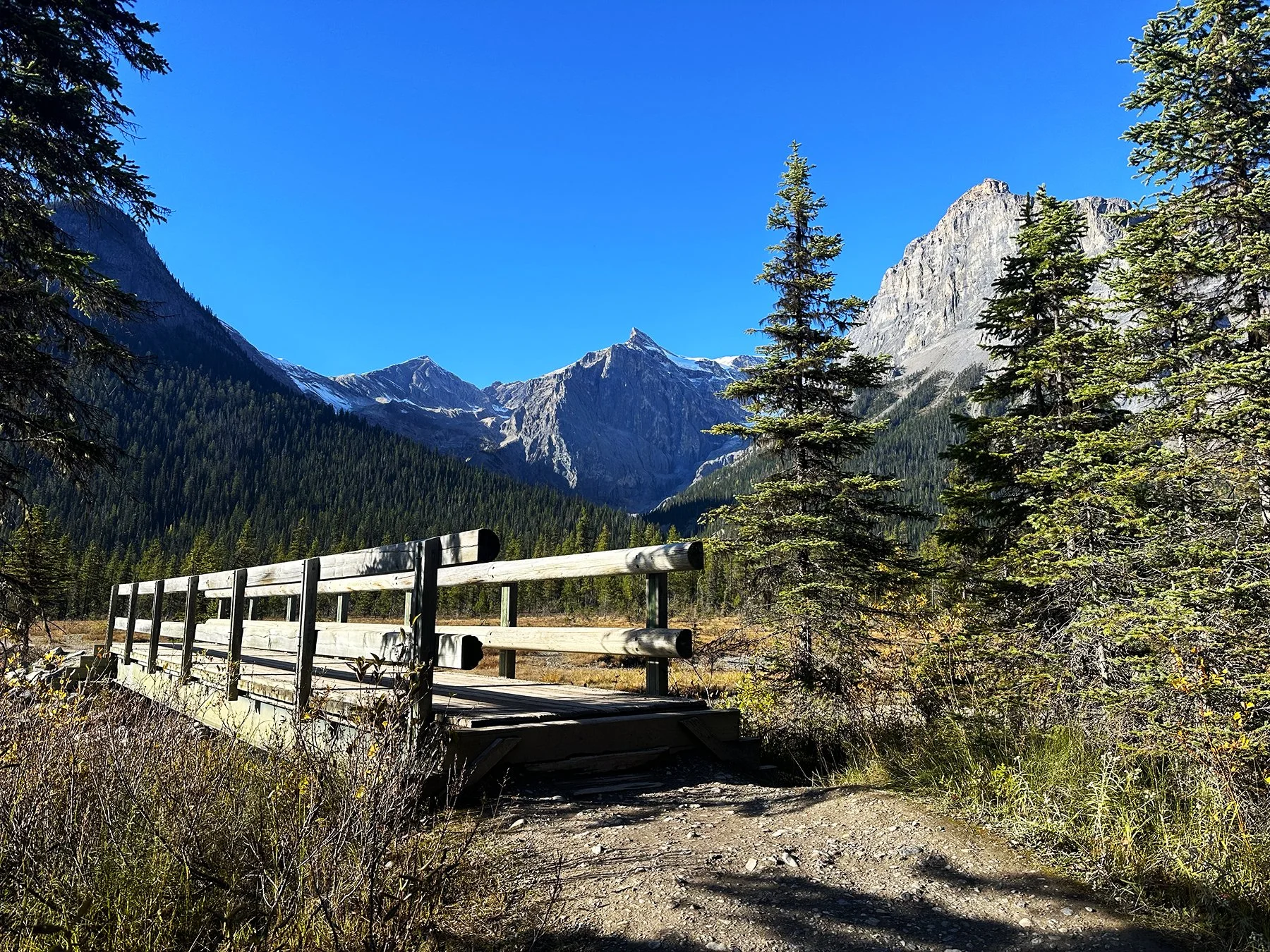
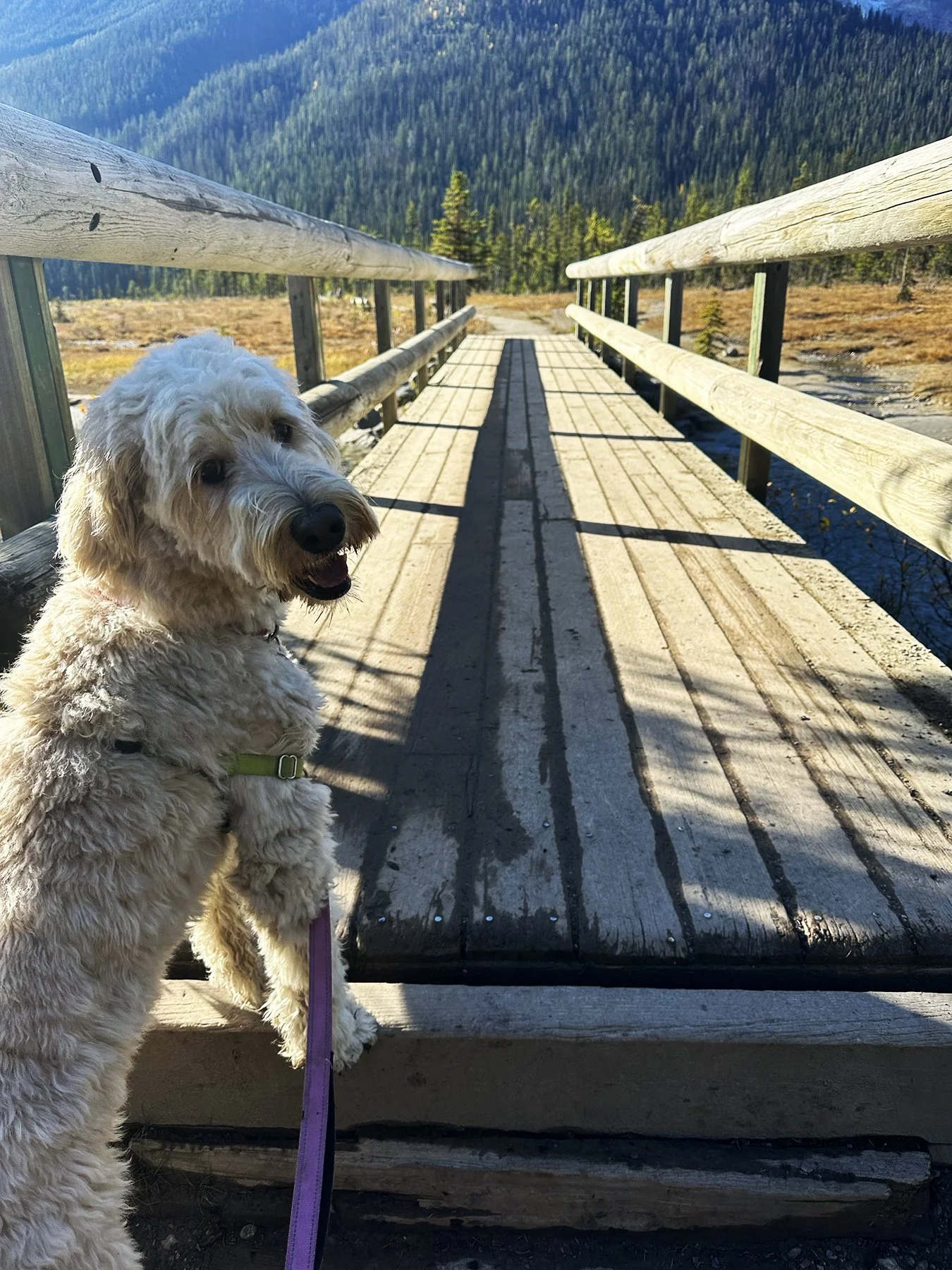
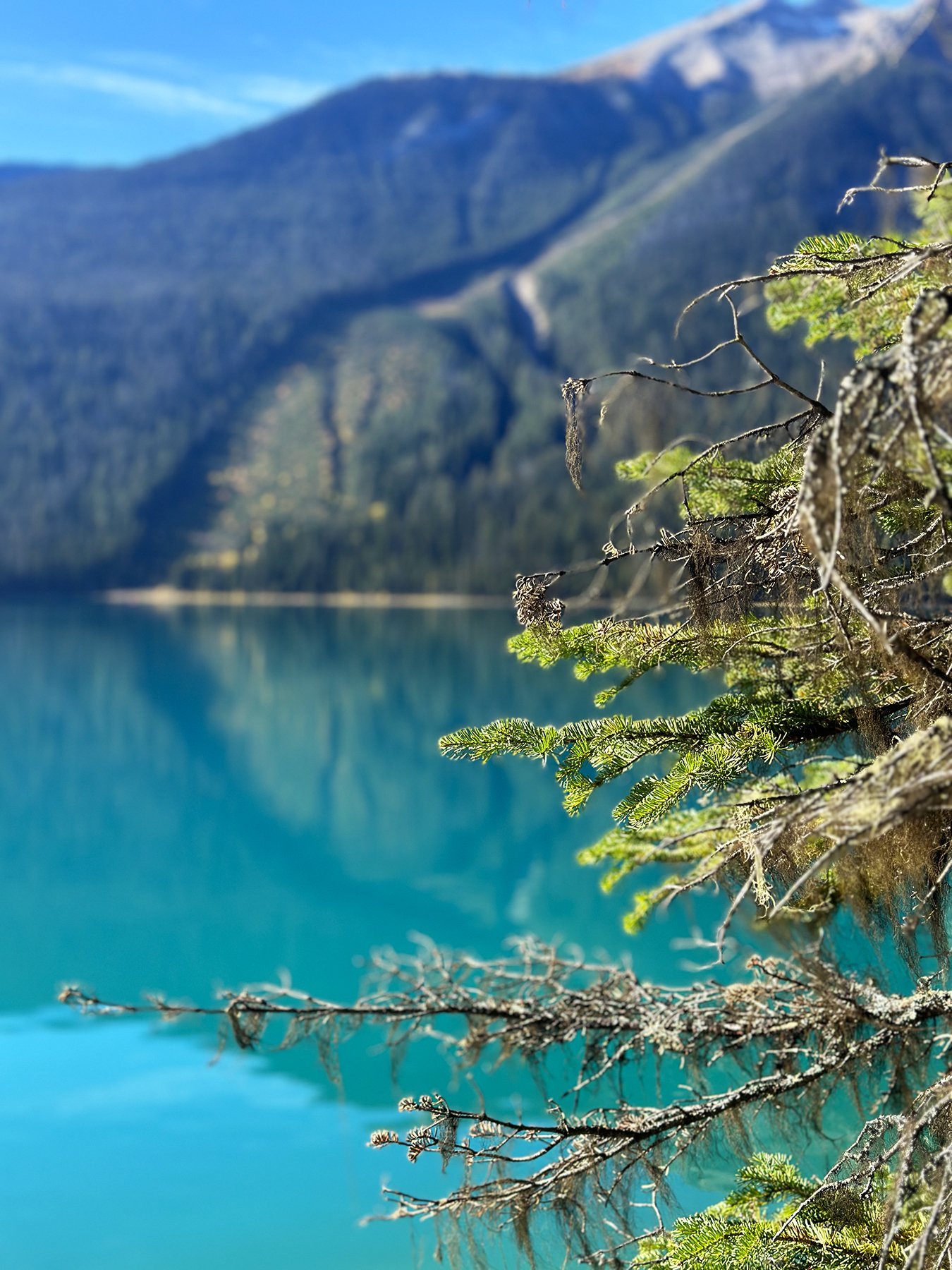
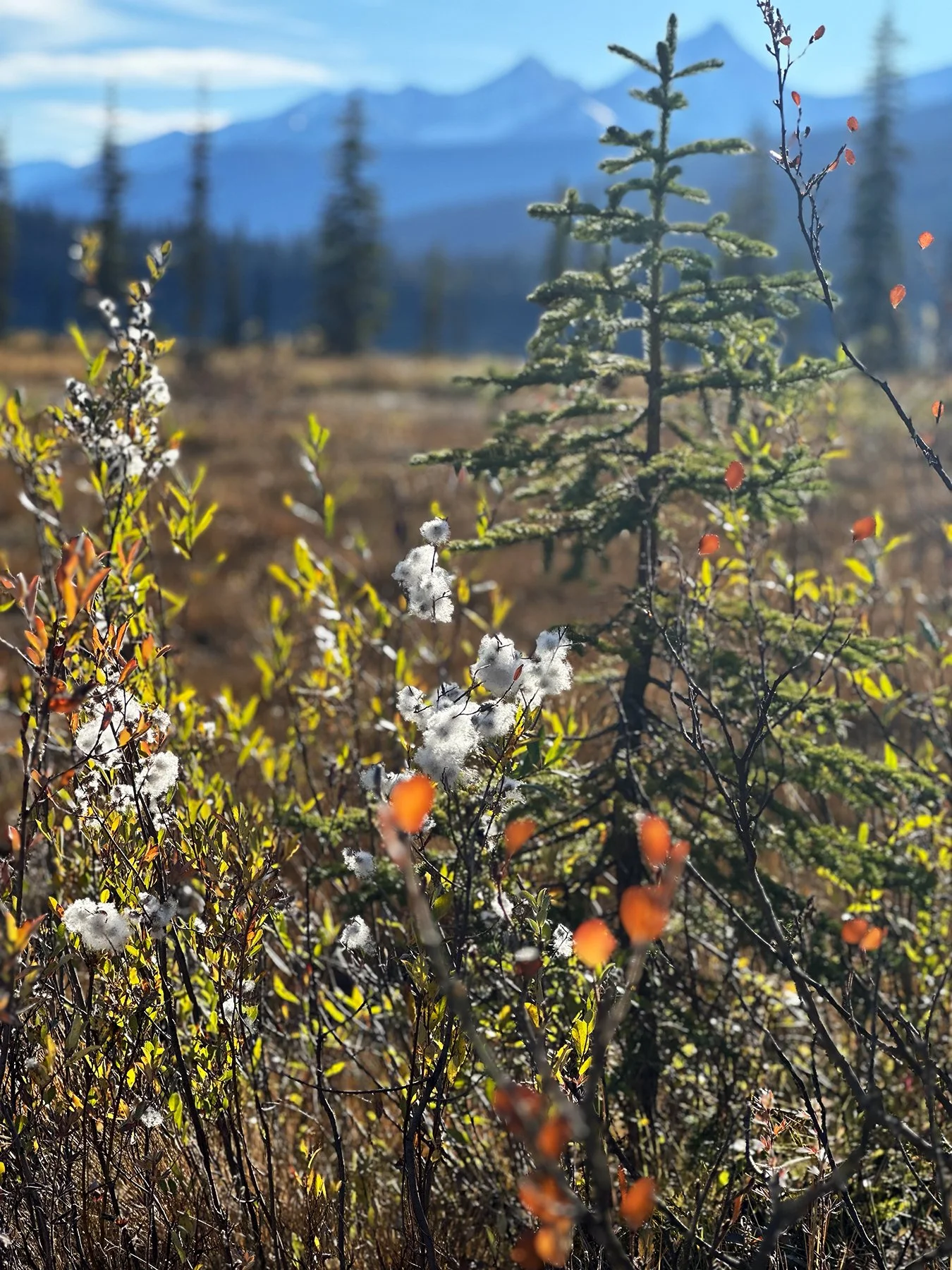
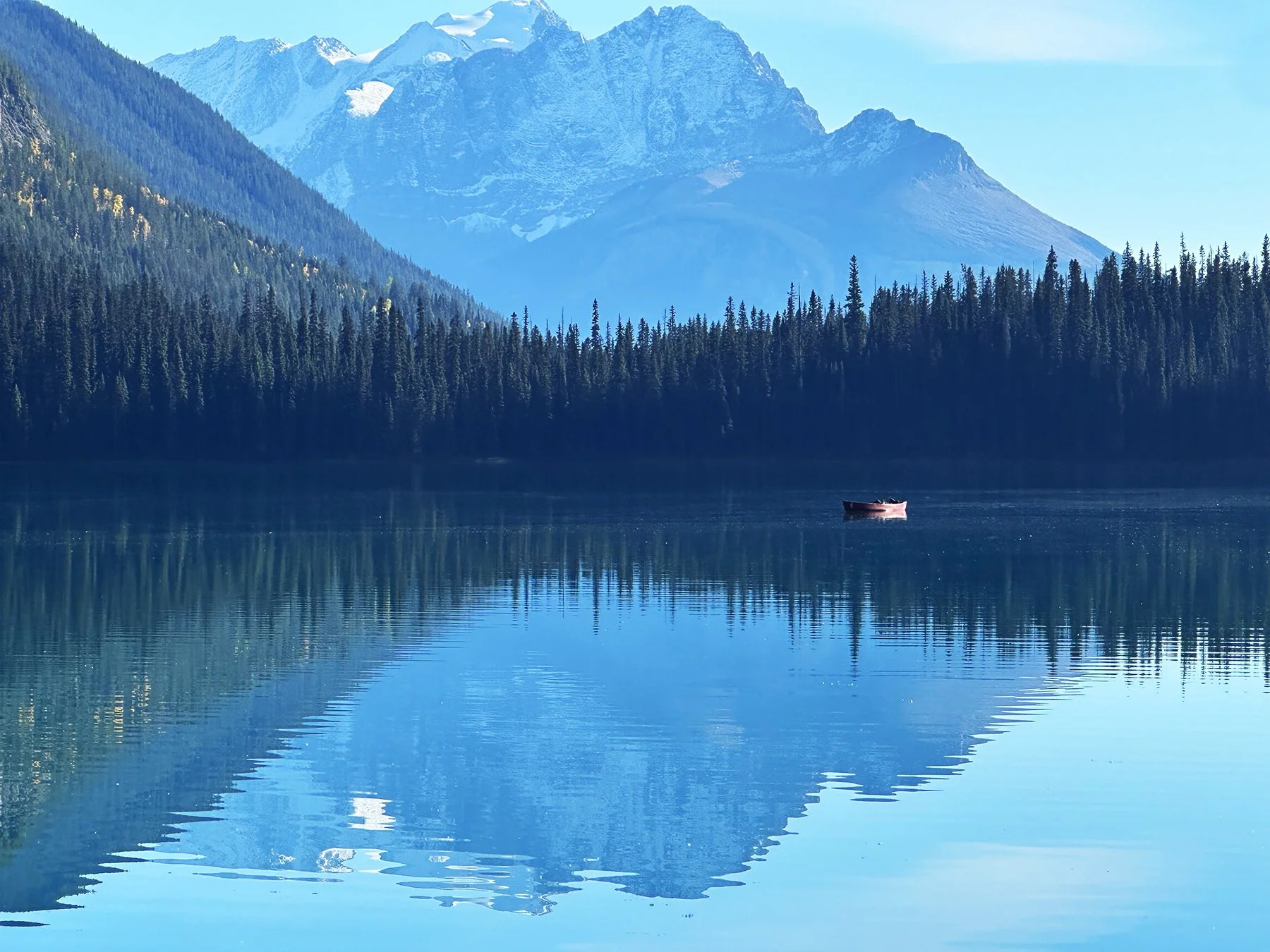
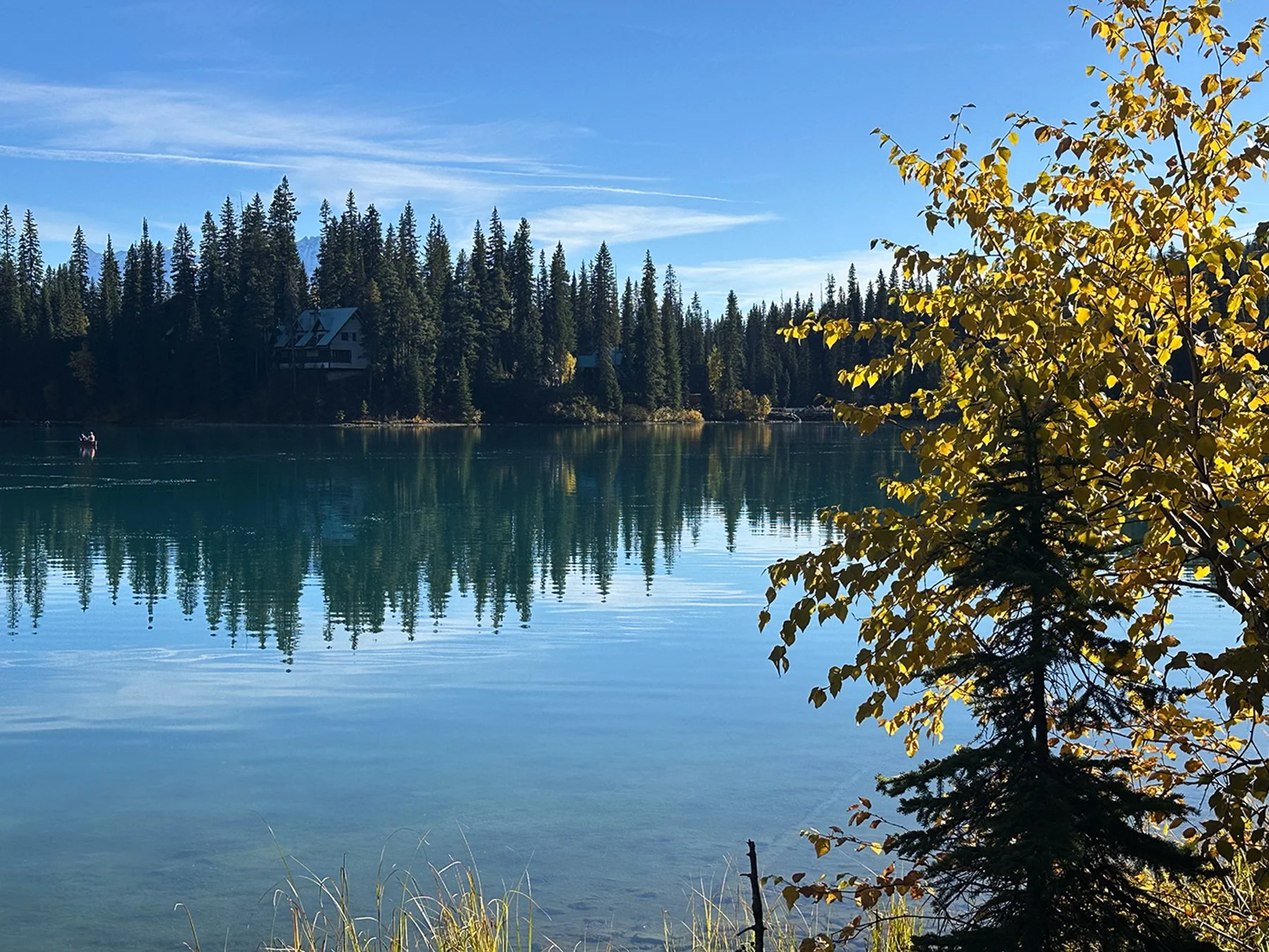
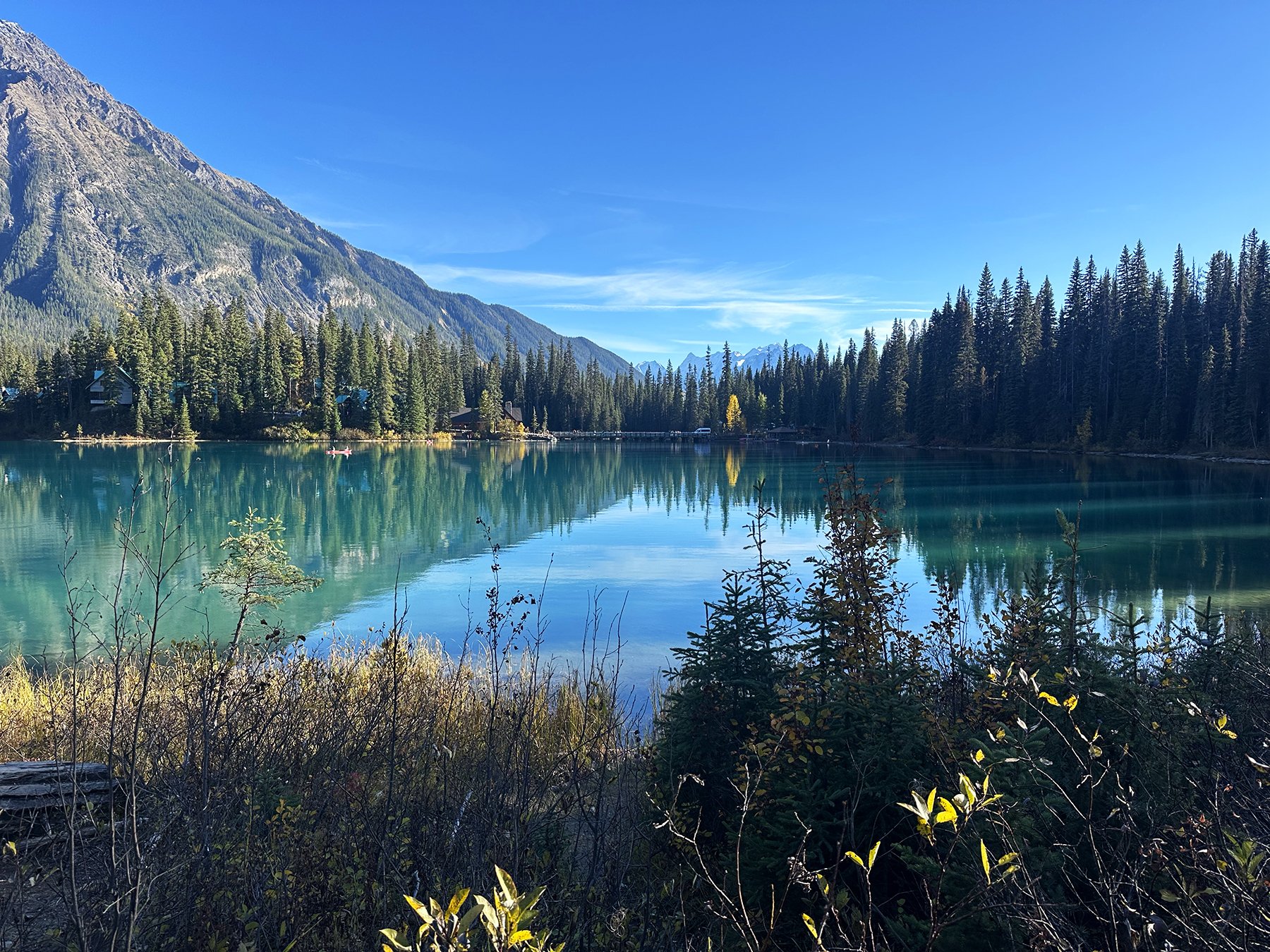
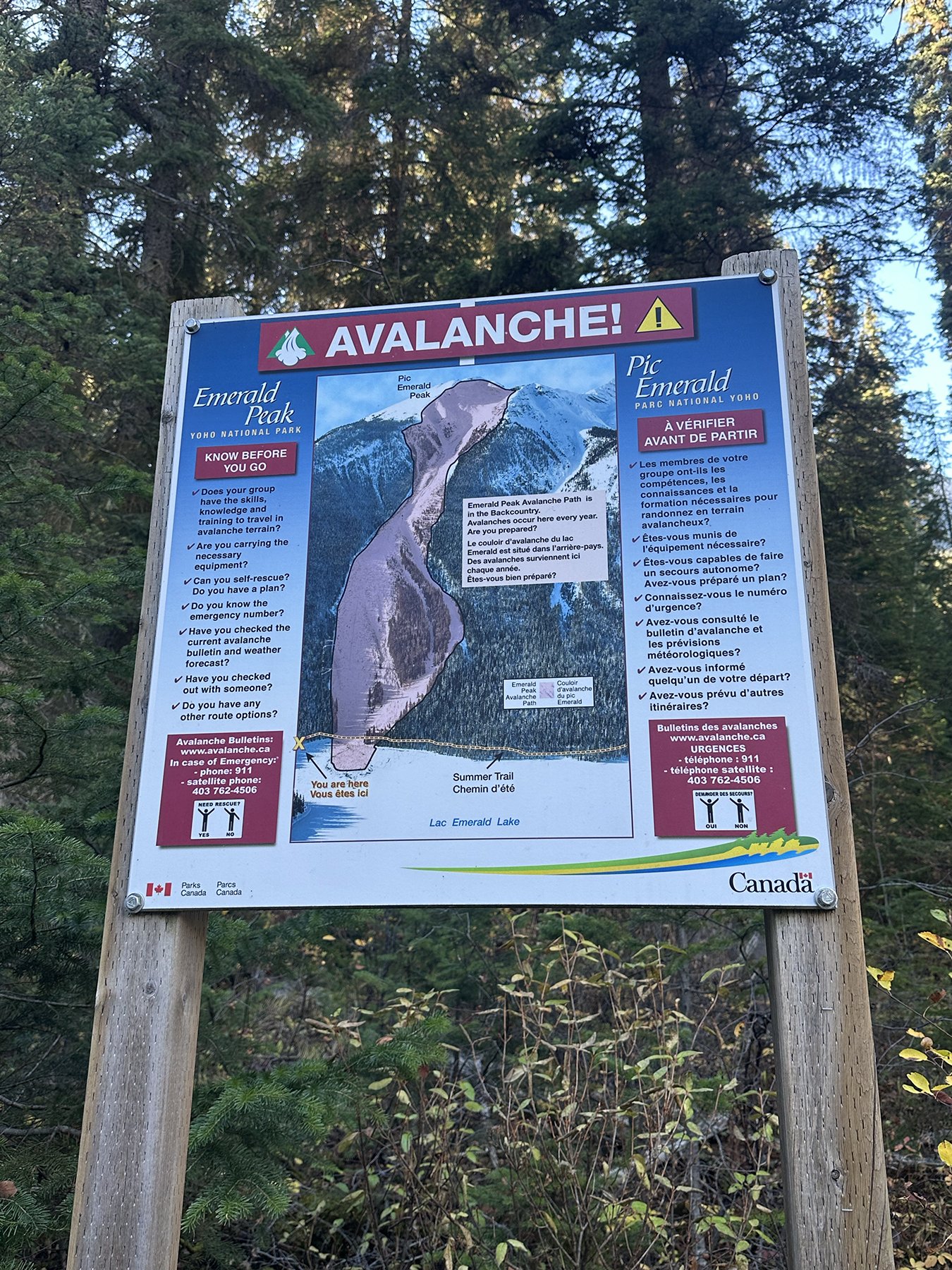
I thought I might take it easy on our last day in this bucket-list area. After chilling most of the morning (literally and figuratively; it was 28 degrees outside), I thought we’d head over to Yoho National Park, just under 30 minutes the other direction from Banff. Is it even possible to match the beauty and adventure of the past four days? I wouldn’t have thought so, but YEP! We made our way to Emerald Lake and were absolutely wowed by the beauty. (I’m running out of adjectives!) We hiked all the way around the lake (about 3 miles), taking in the strong smell of pine and the beautiful views of the lake. Words cannot do it justice, so here are the photos:
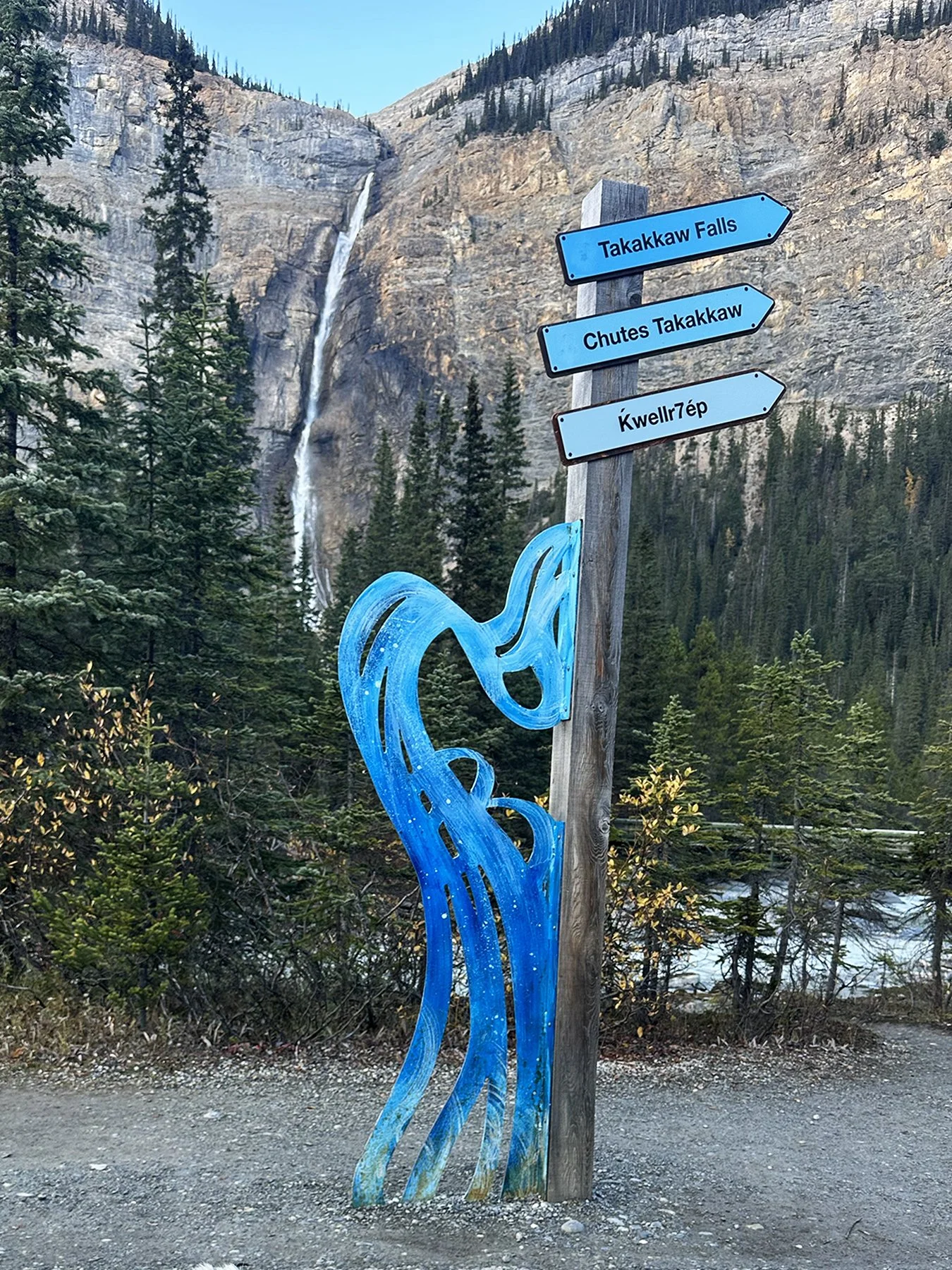
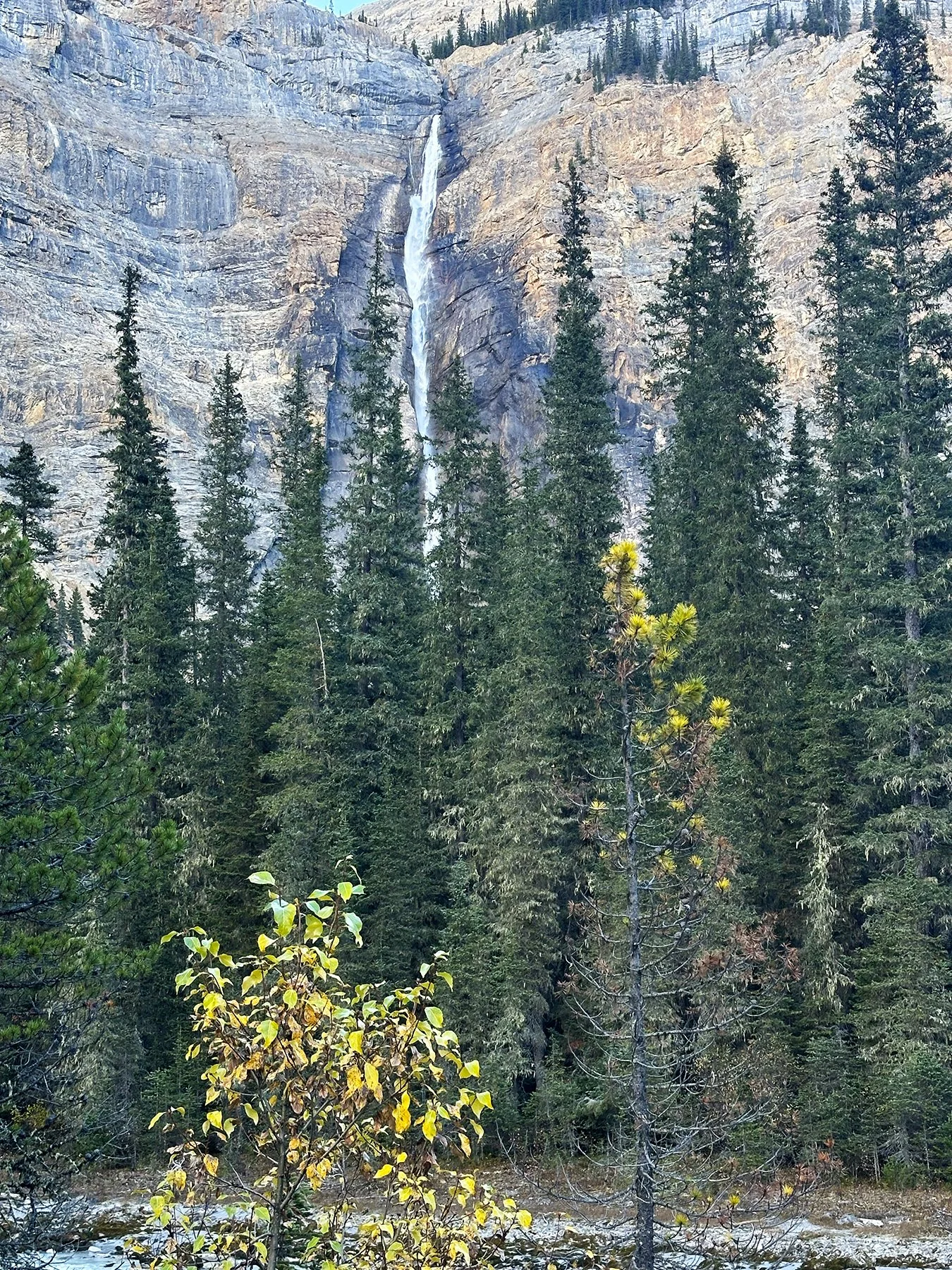
Finally, on our way back to the campstie, we stopped at Takakkaw Falls. An epic way to end an epic trip.
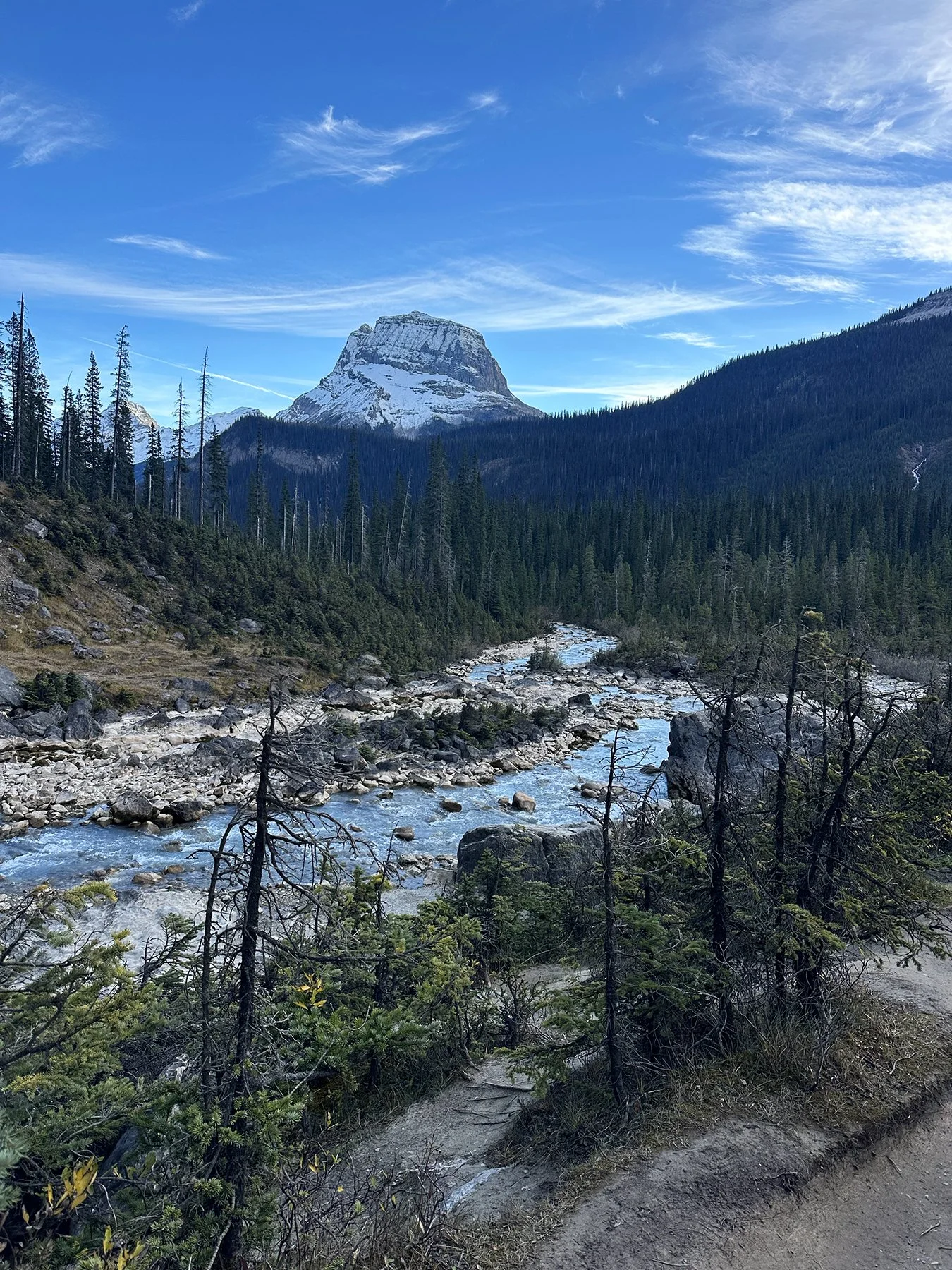
All-in-all, Banff National Park met my bucket-list expectations. I urge you to plan a trip there if you haven’t been before. It is just so very magical!!
Next, we’re off to Calgary!