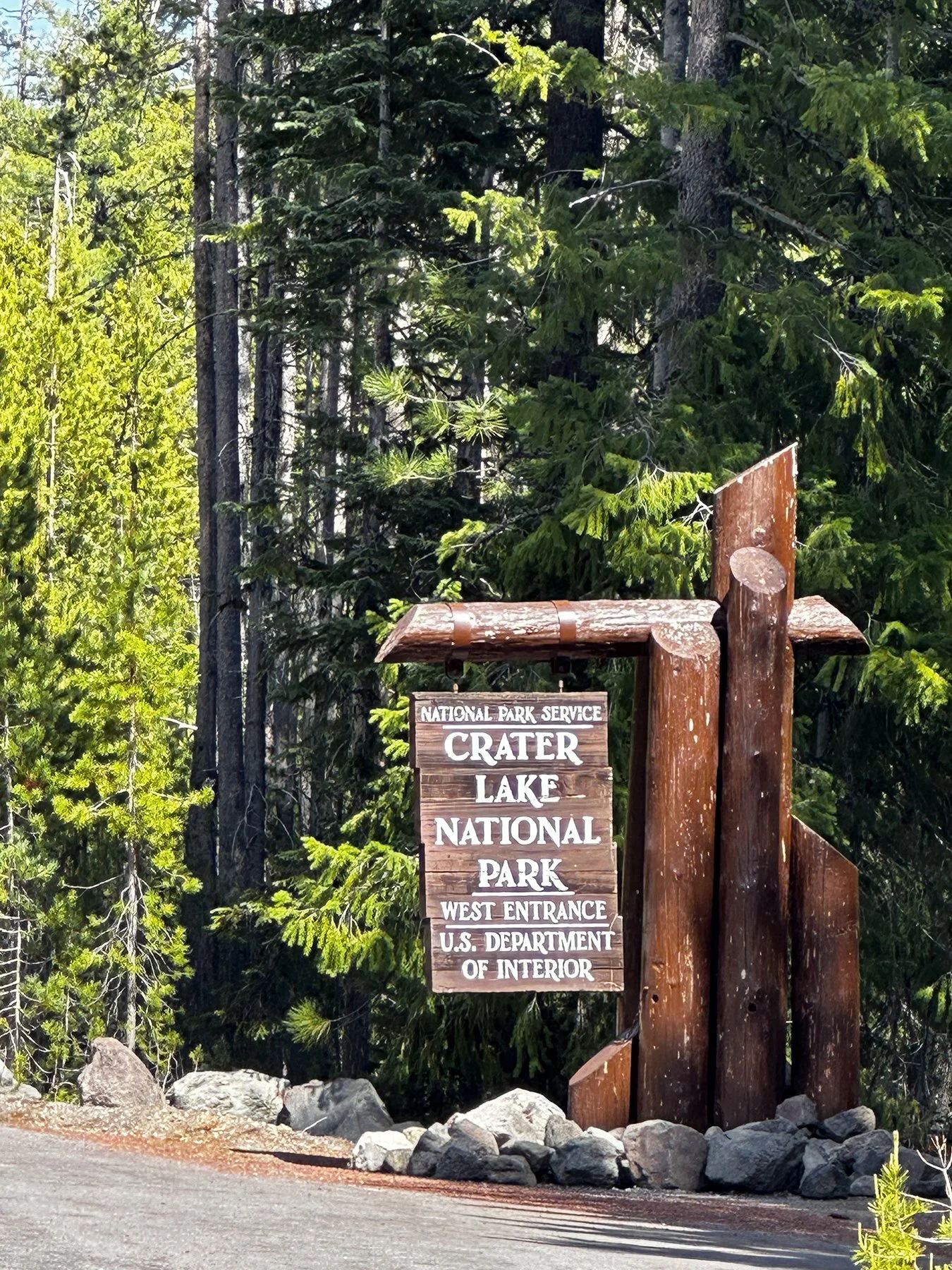
Crater Lake National Park
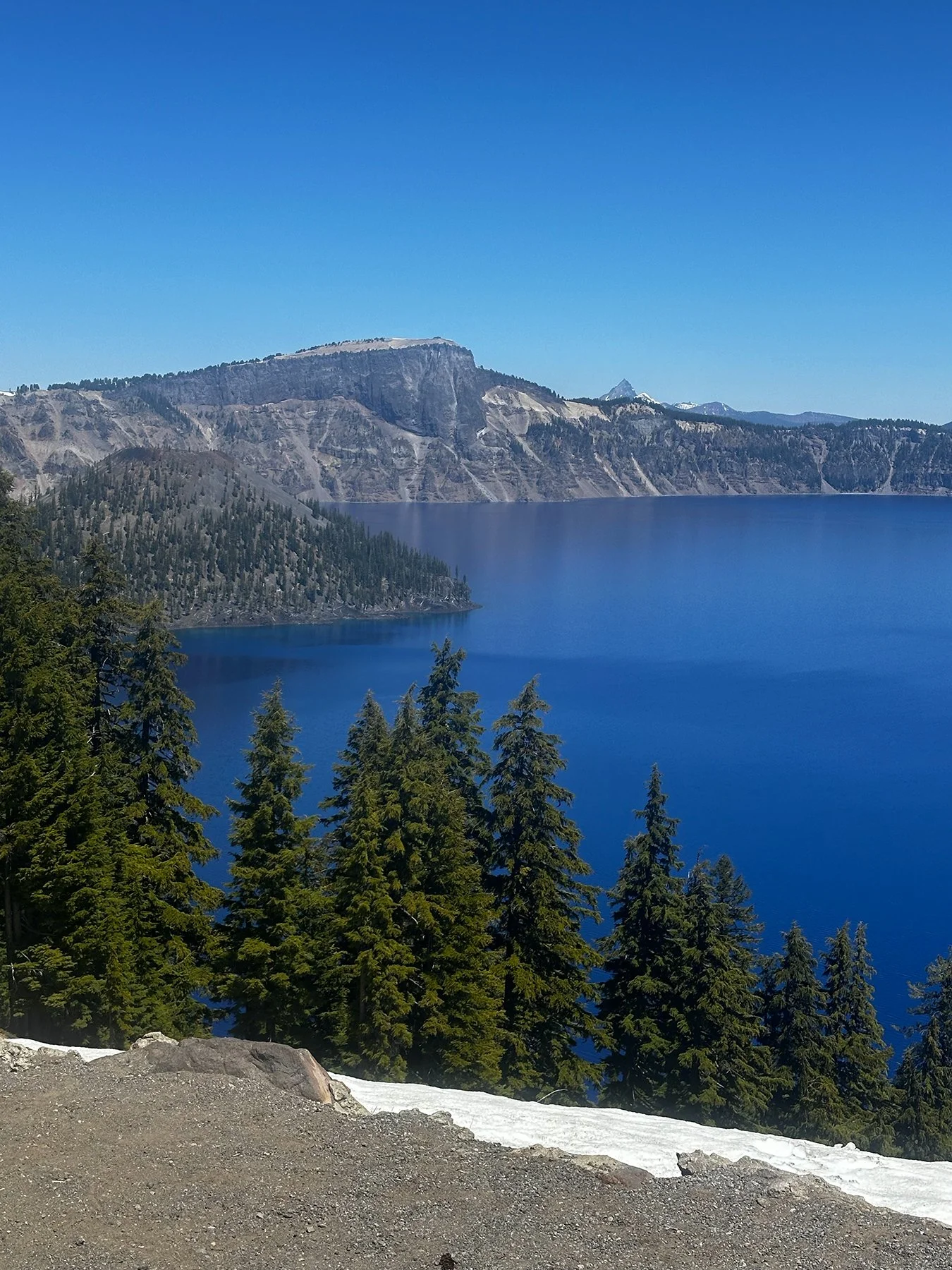
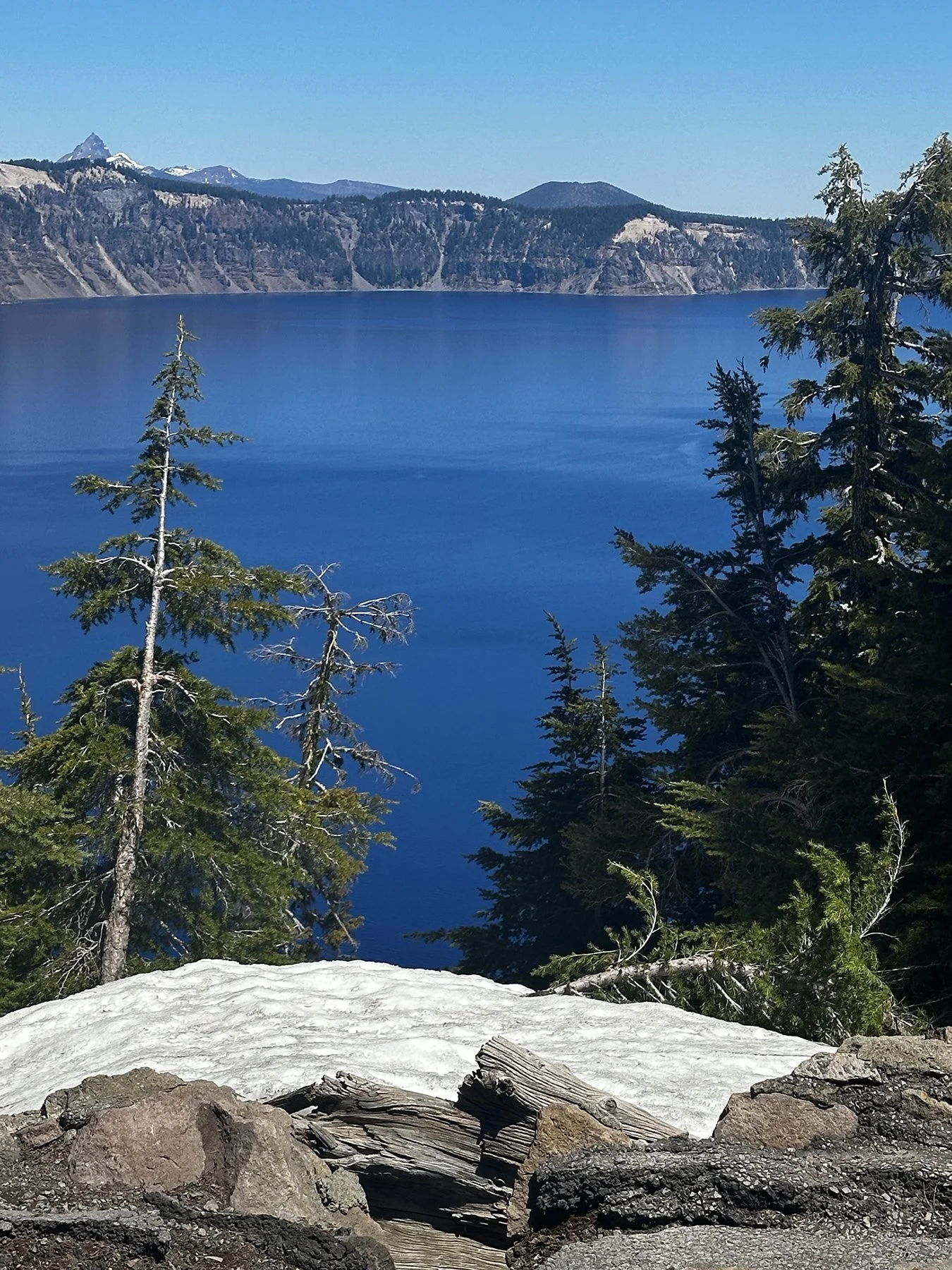
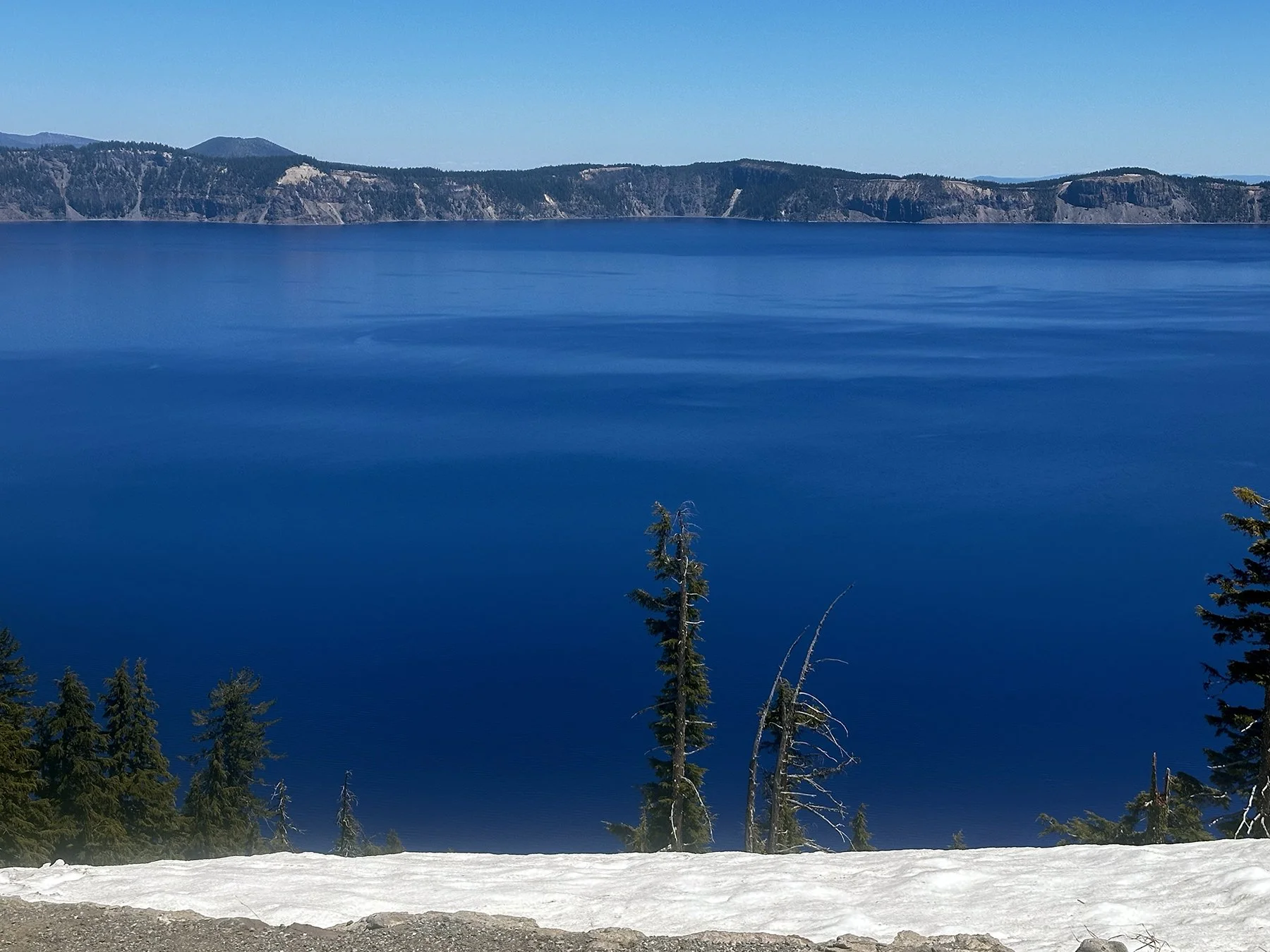
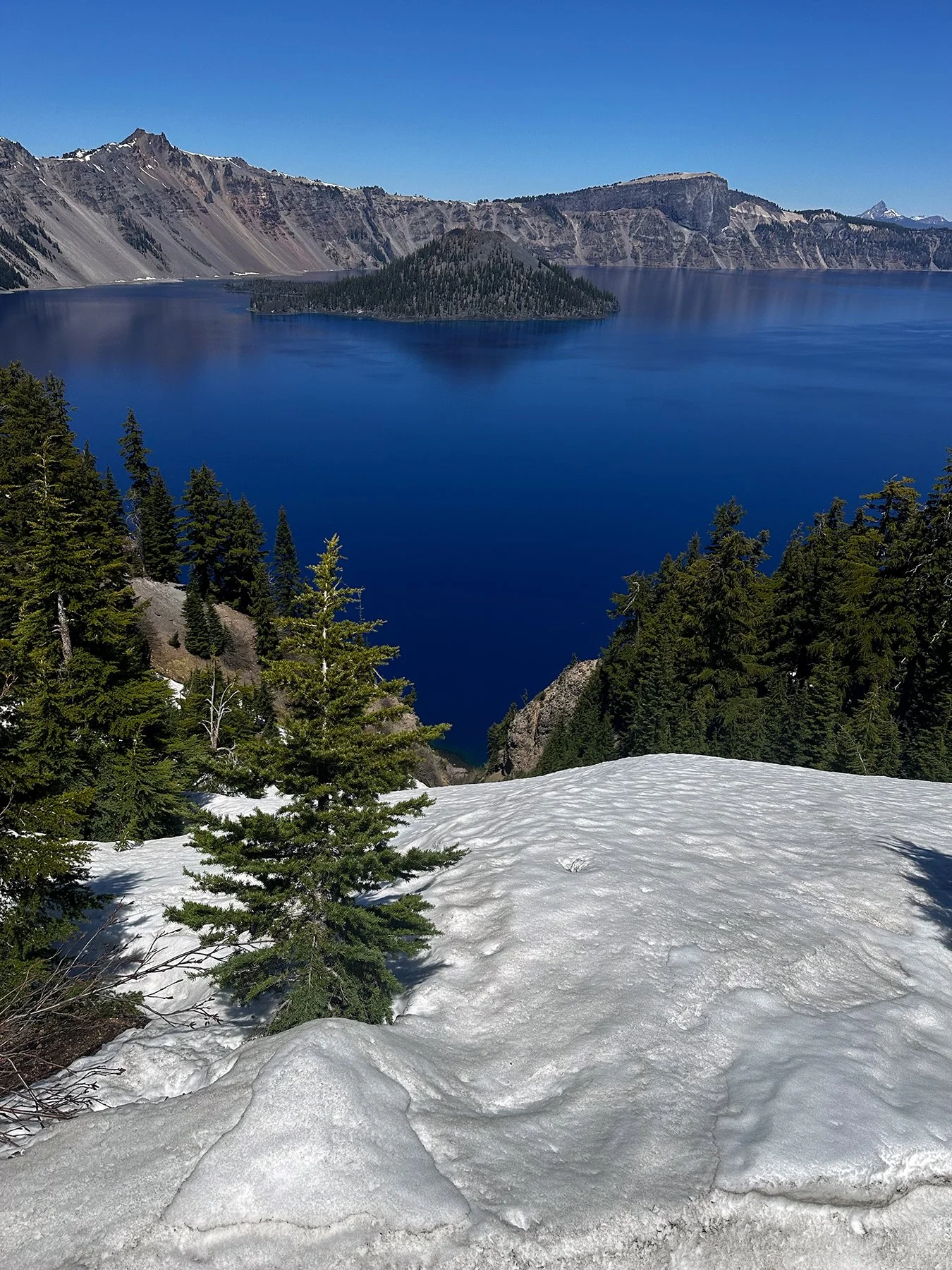
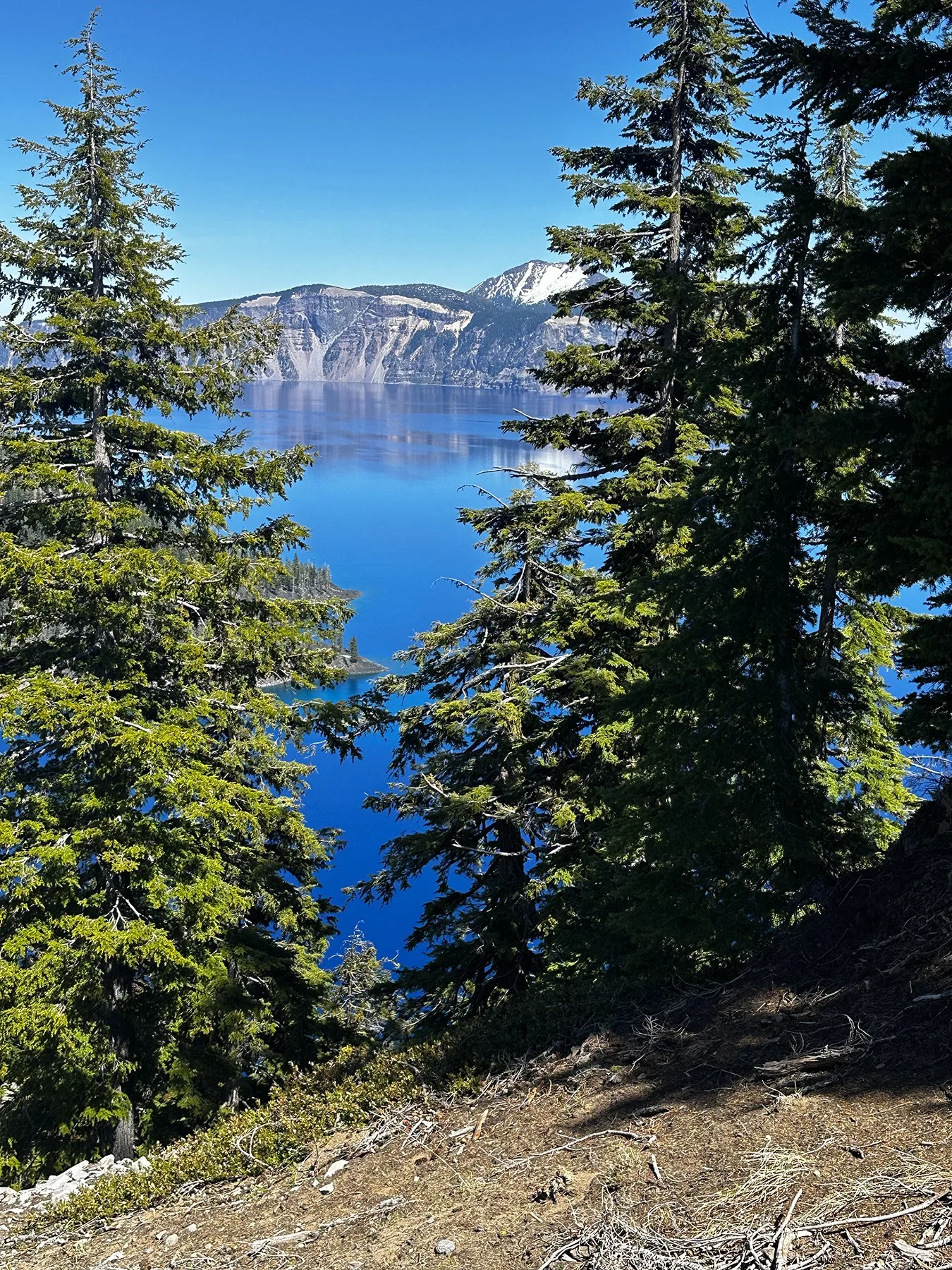
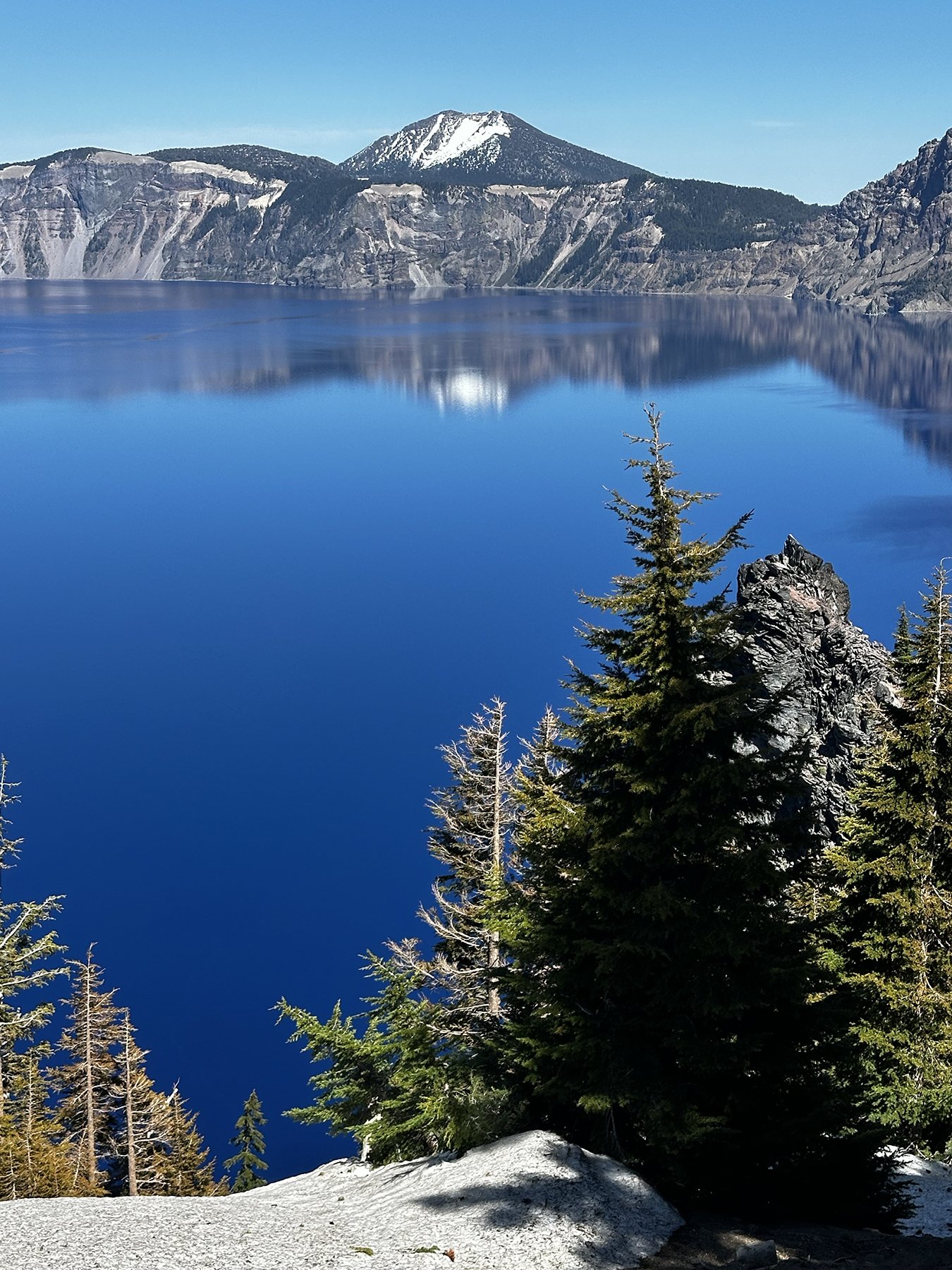
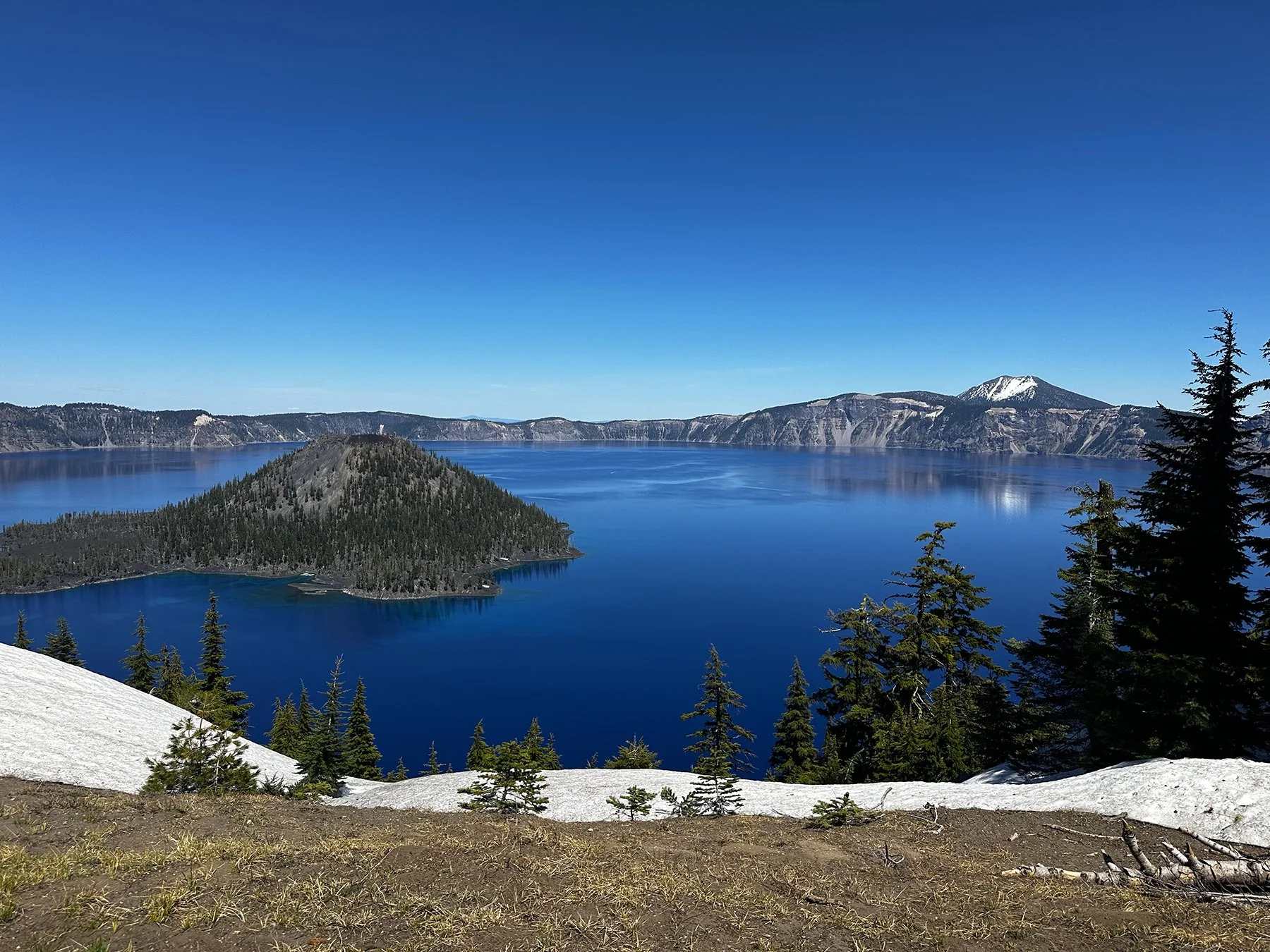
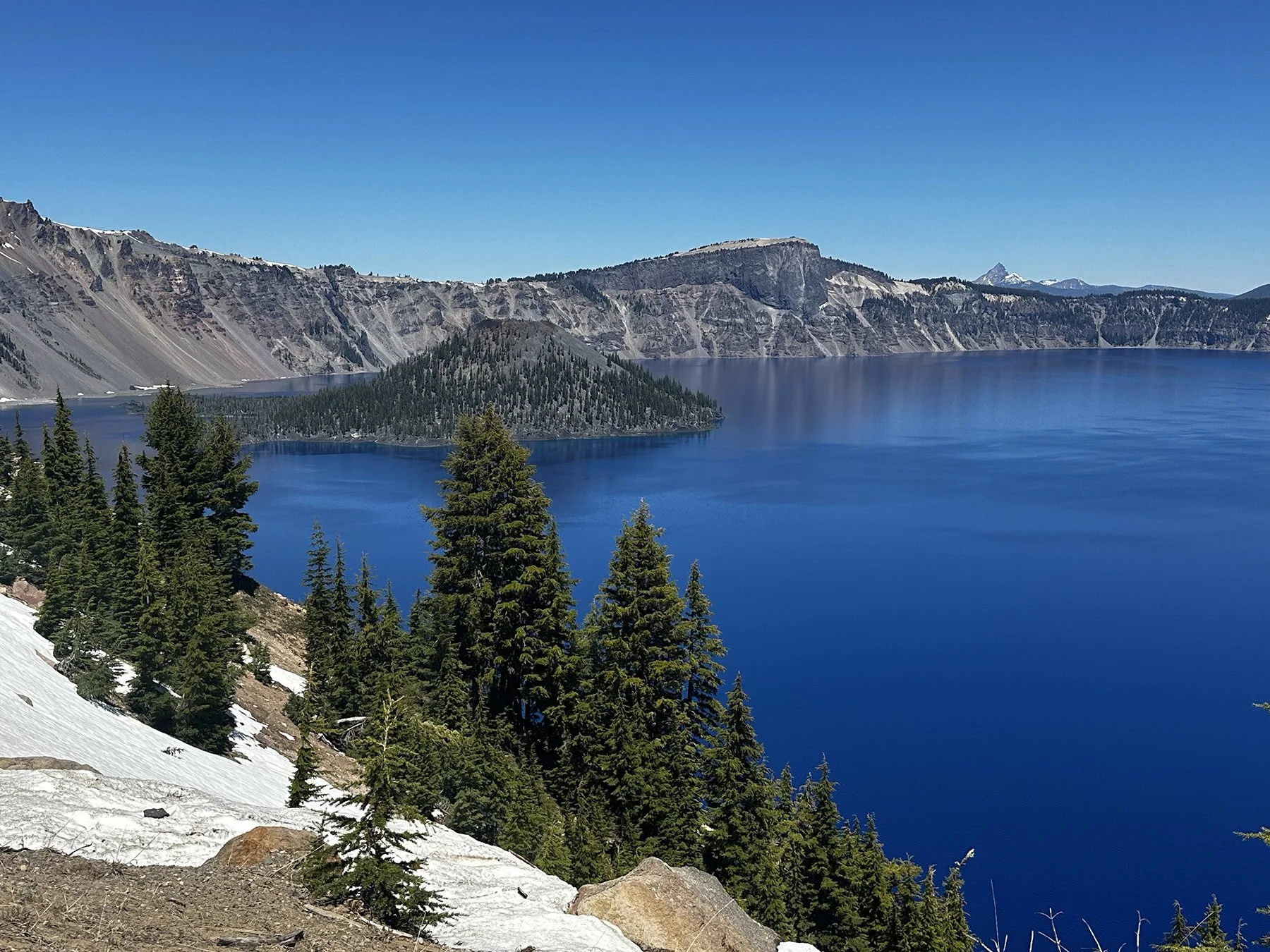
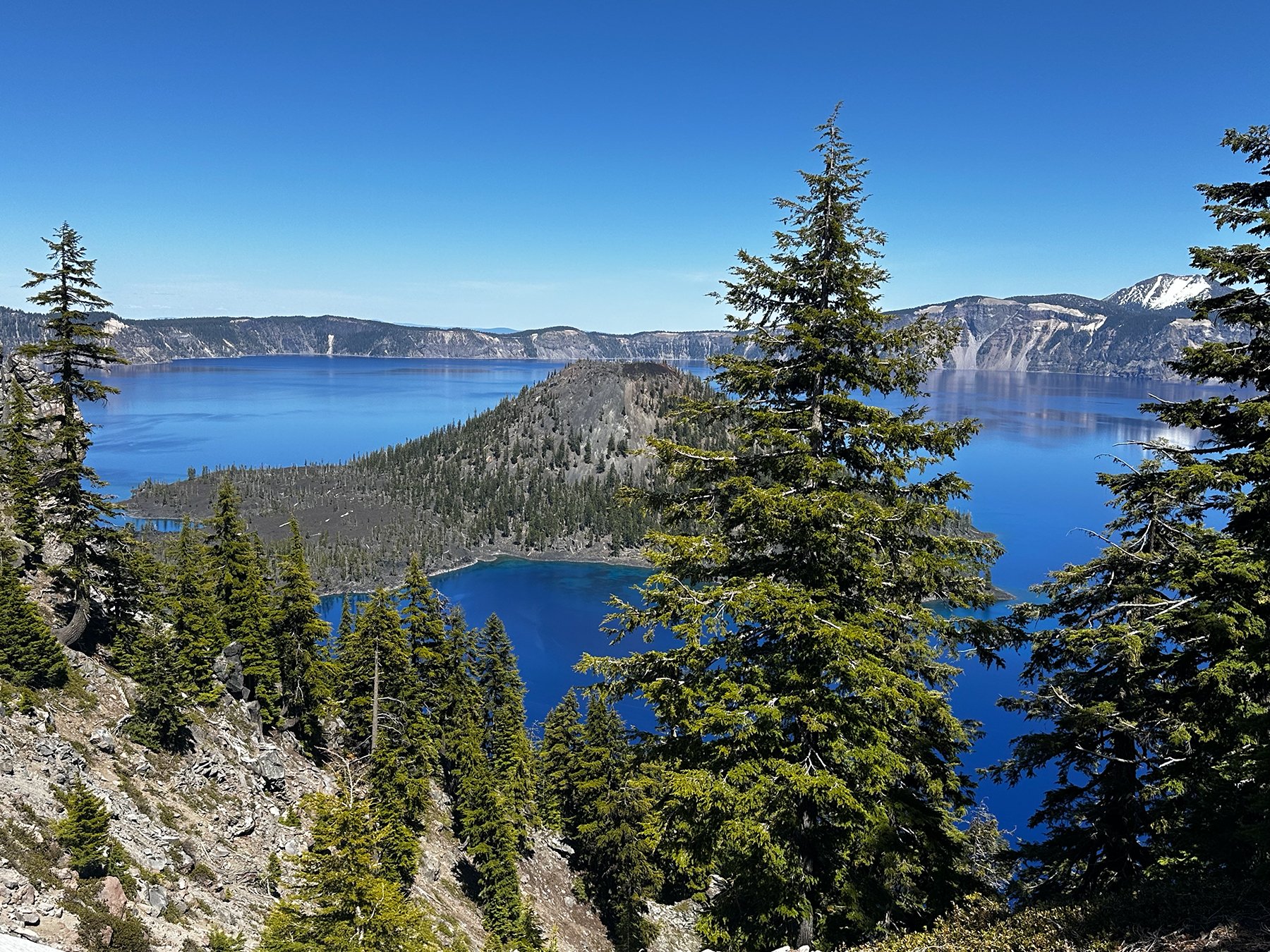
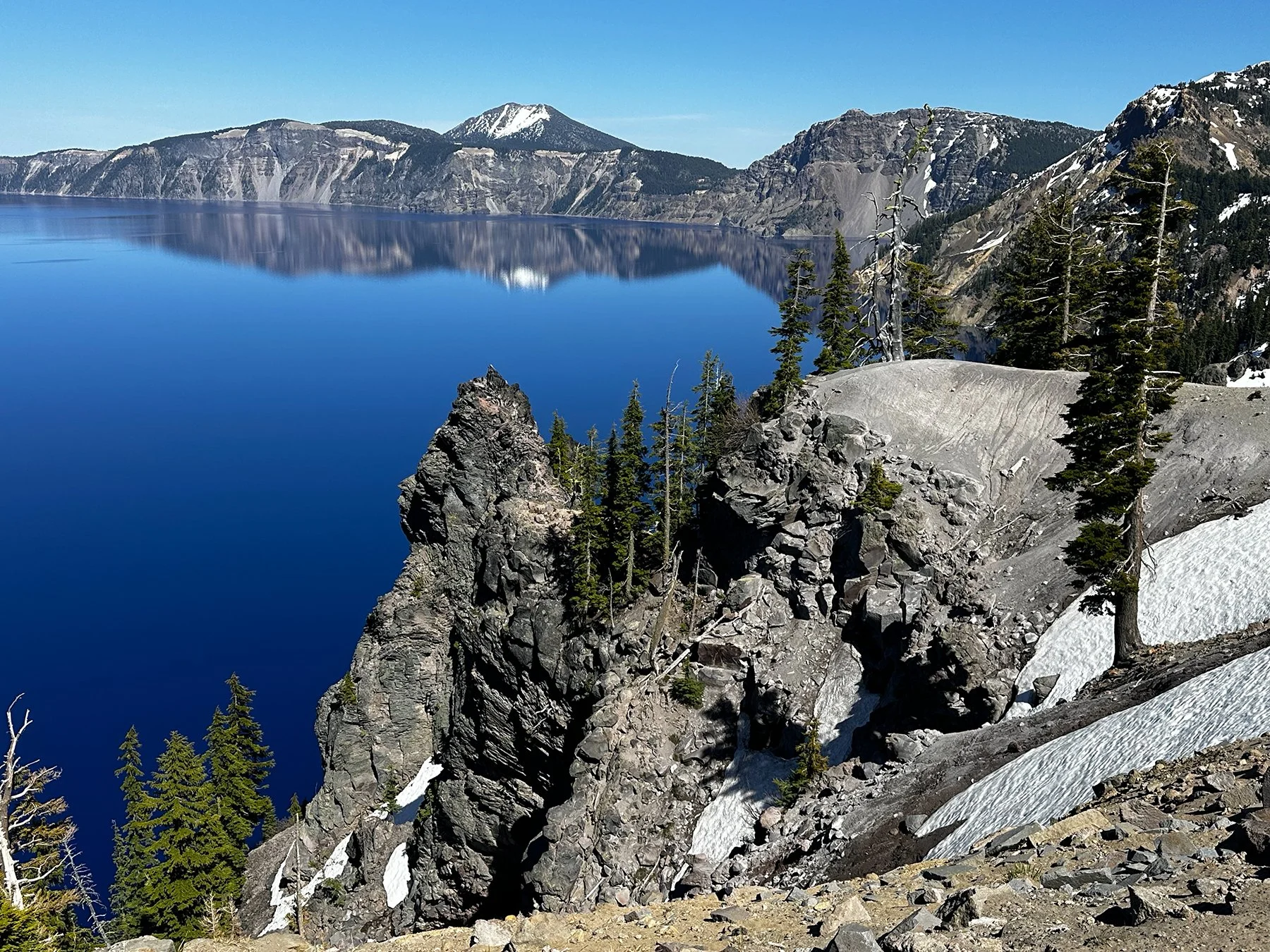
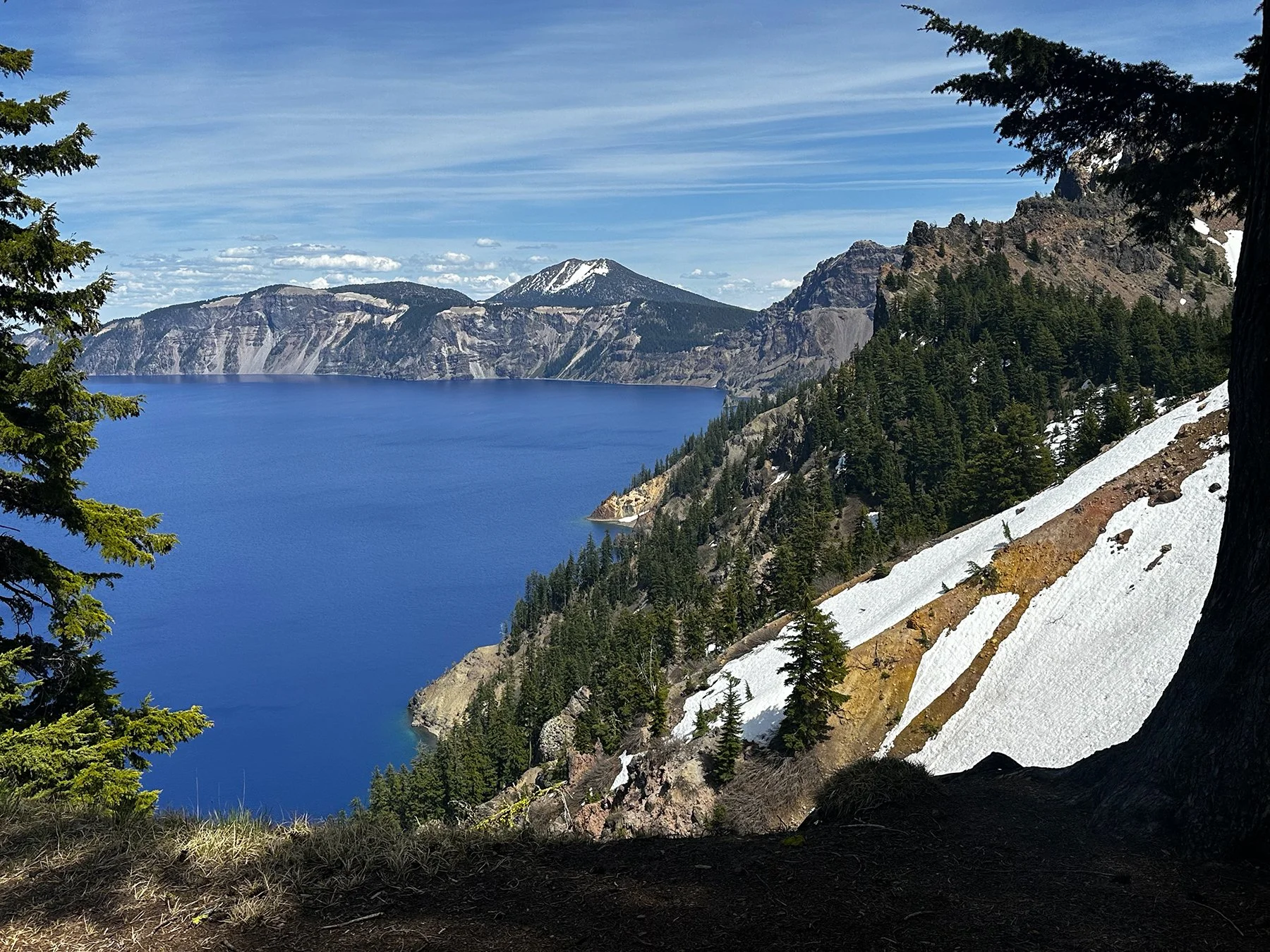
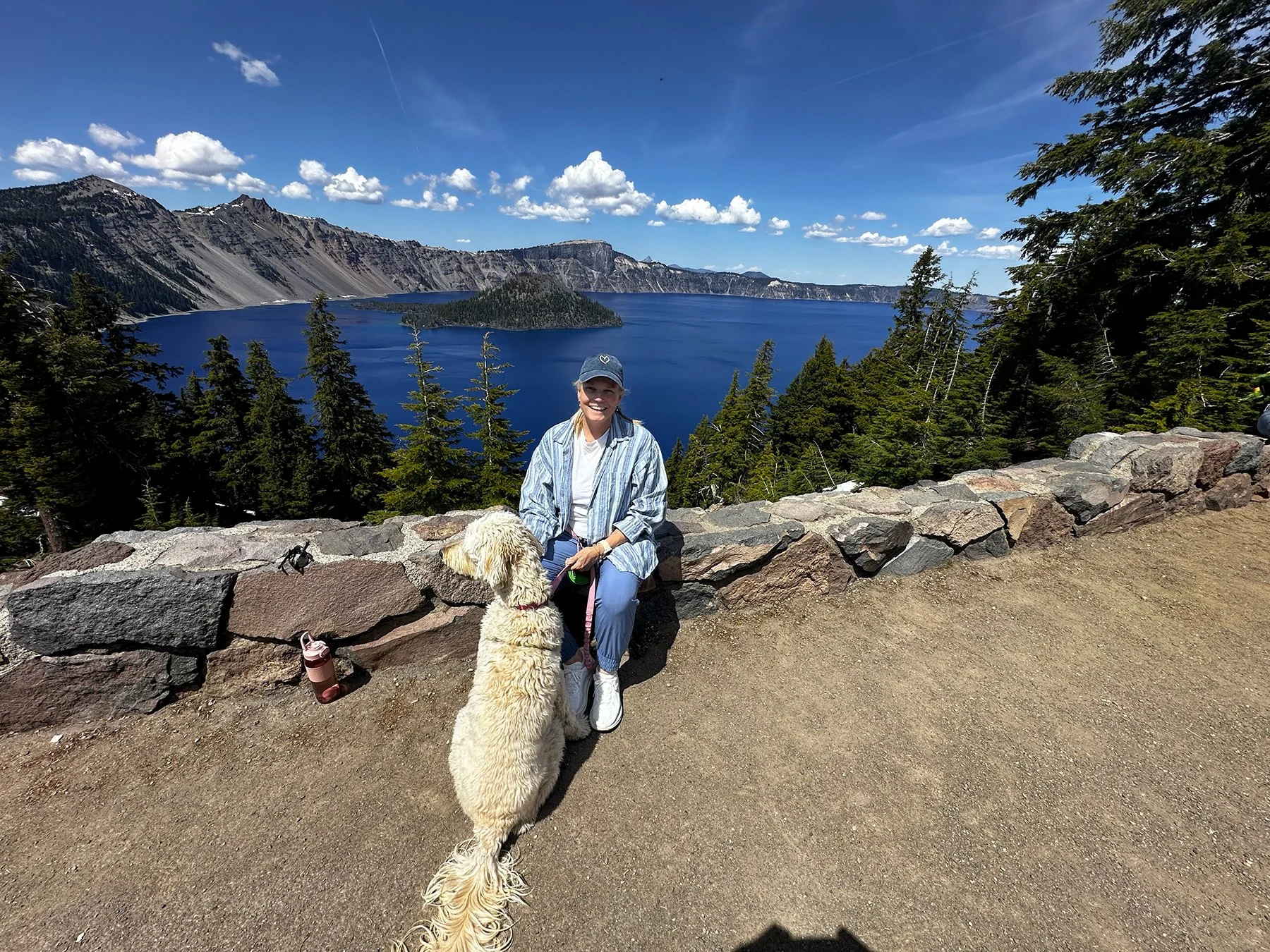
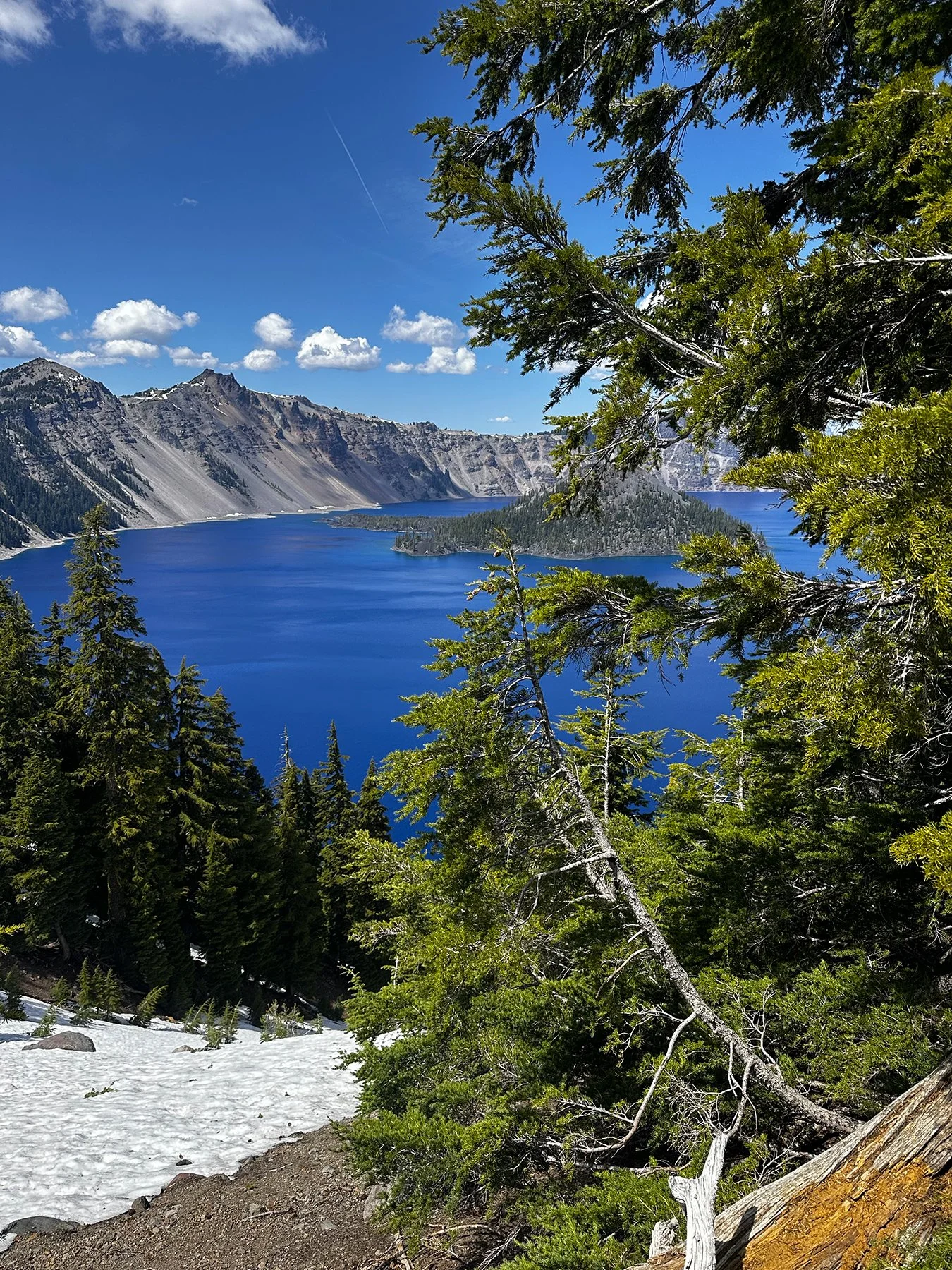
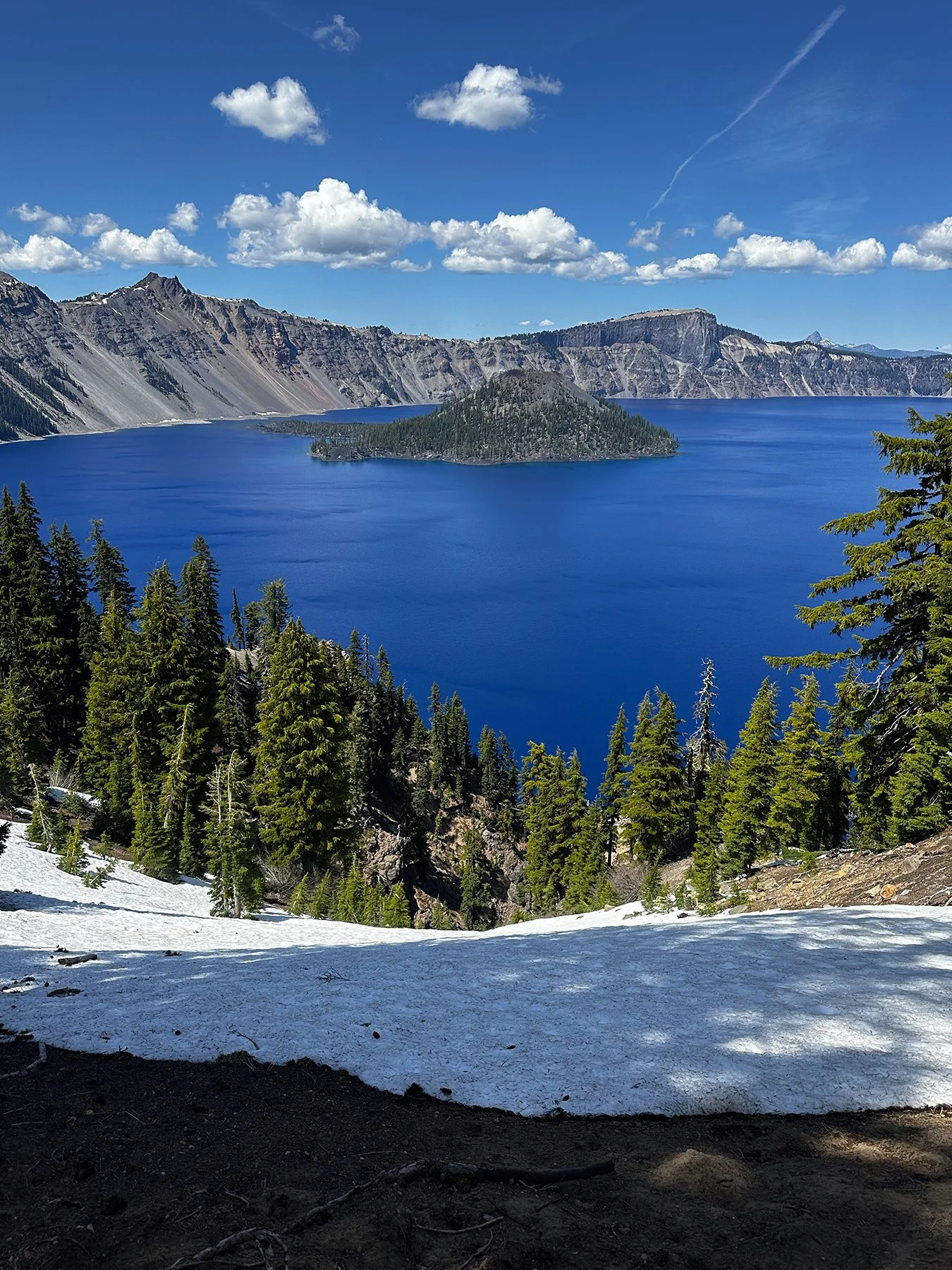
Y’all. Close your eyes for a second. Now picture the bluest blue you can imagine to ever see in nature. THAT is Crater Lake. Add the sweeping curve of the caldera wall, massive cliffs overhanging the lake, and the extravagant beauty of the lake itself? Another slice of heaven on earth.
According to the NPS, Crater Lake is famous for being the deepest lake in the United States and one of the purest and most pristine bodies of water on Earth. Located inside the collapsed caldera of the ancient Mount Mazama volcano in Oregon, it is renowned for its striking, deep blue color.
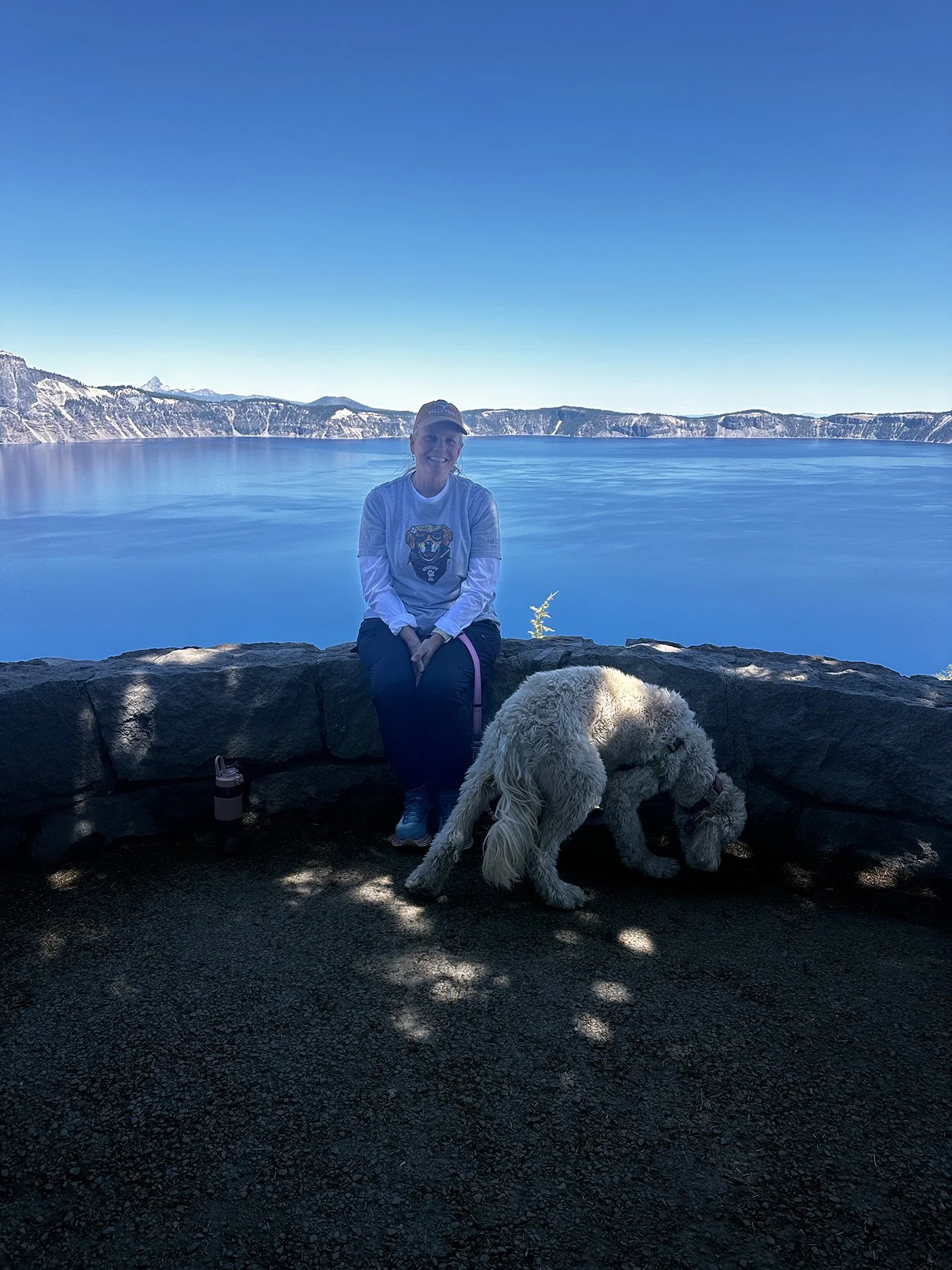
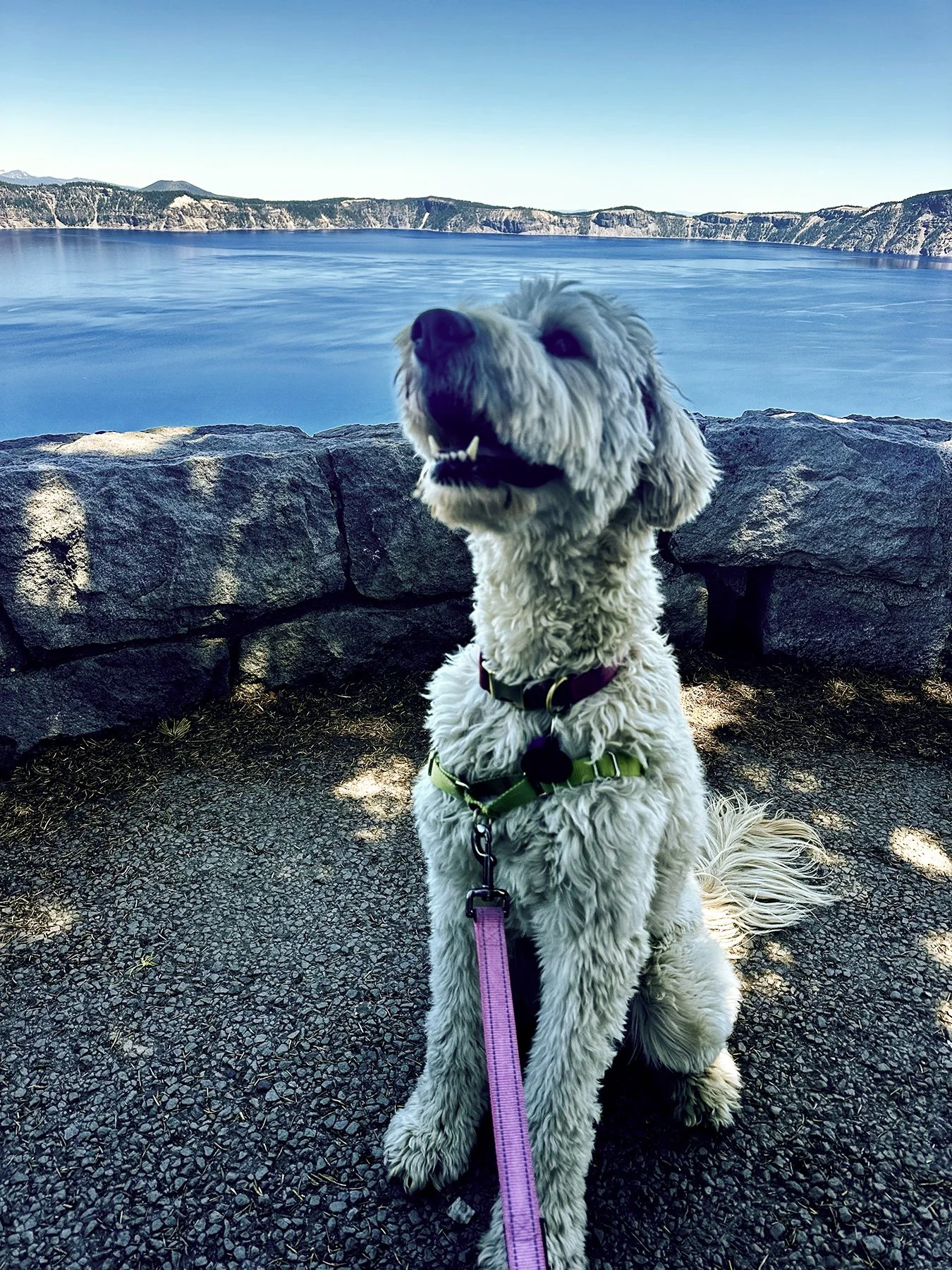
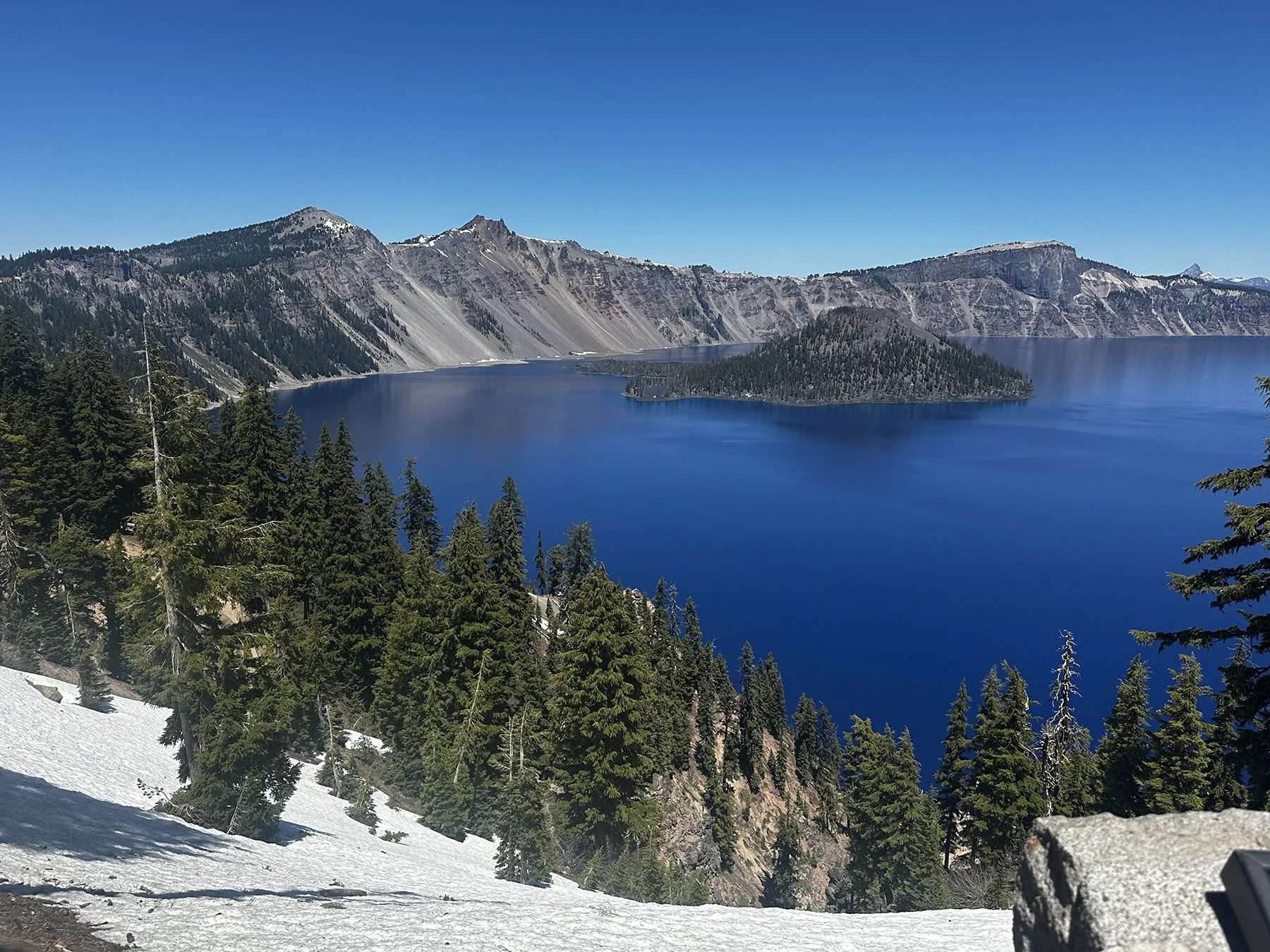
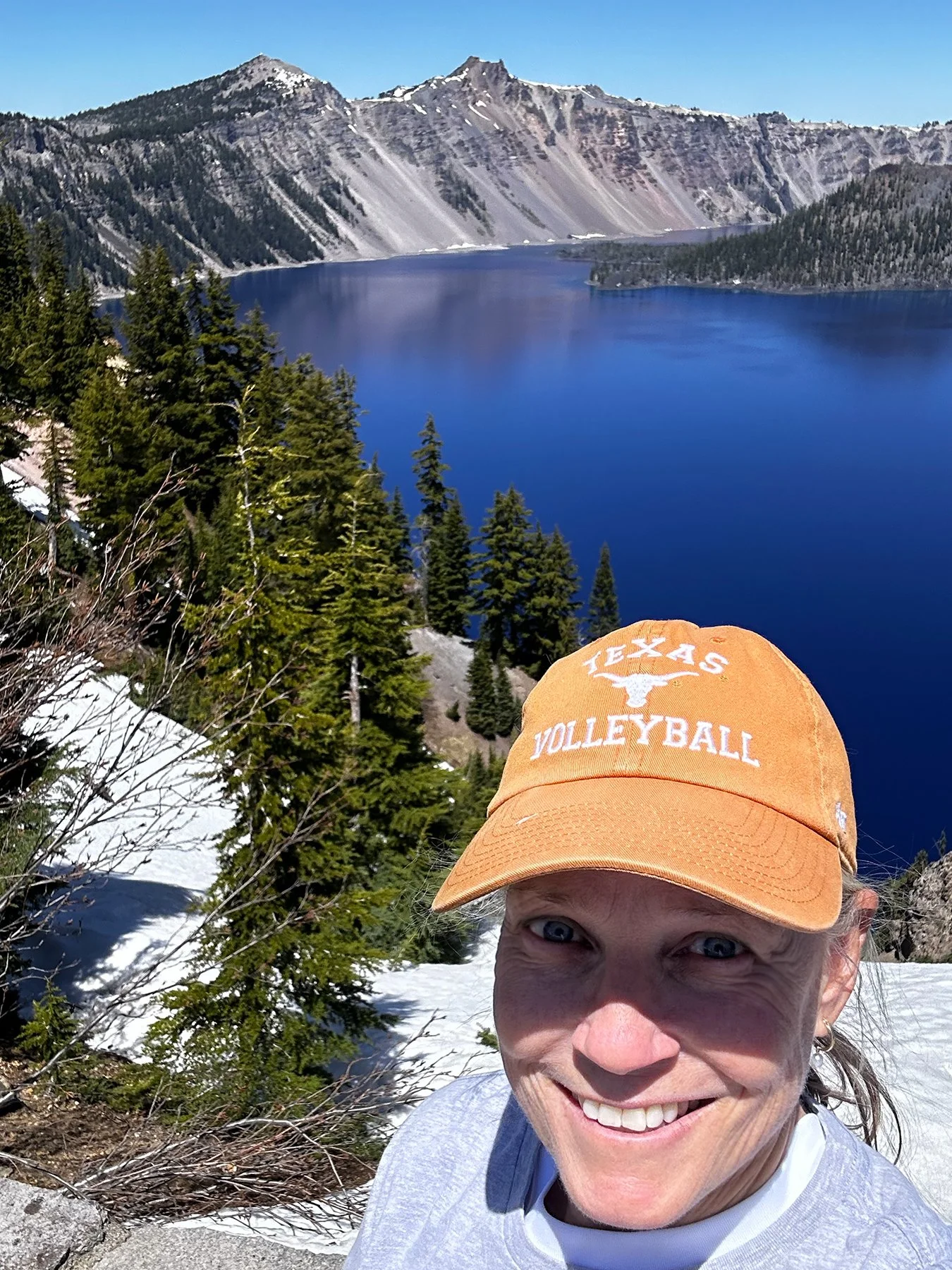
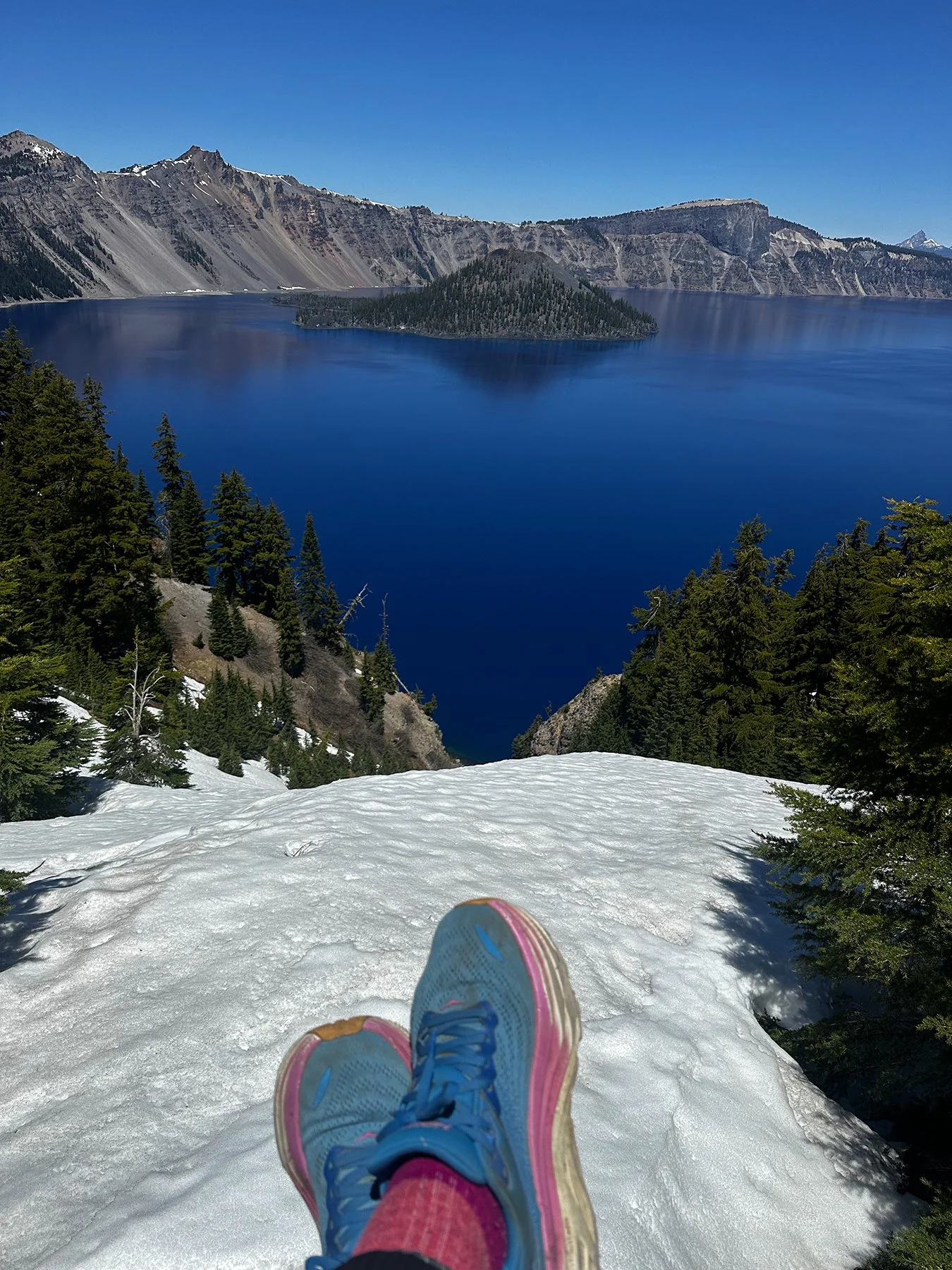
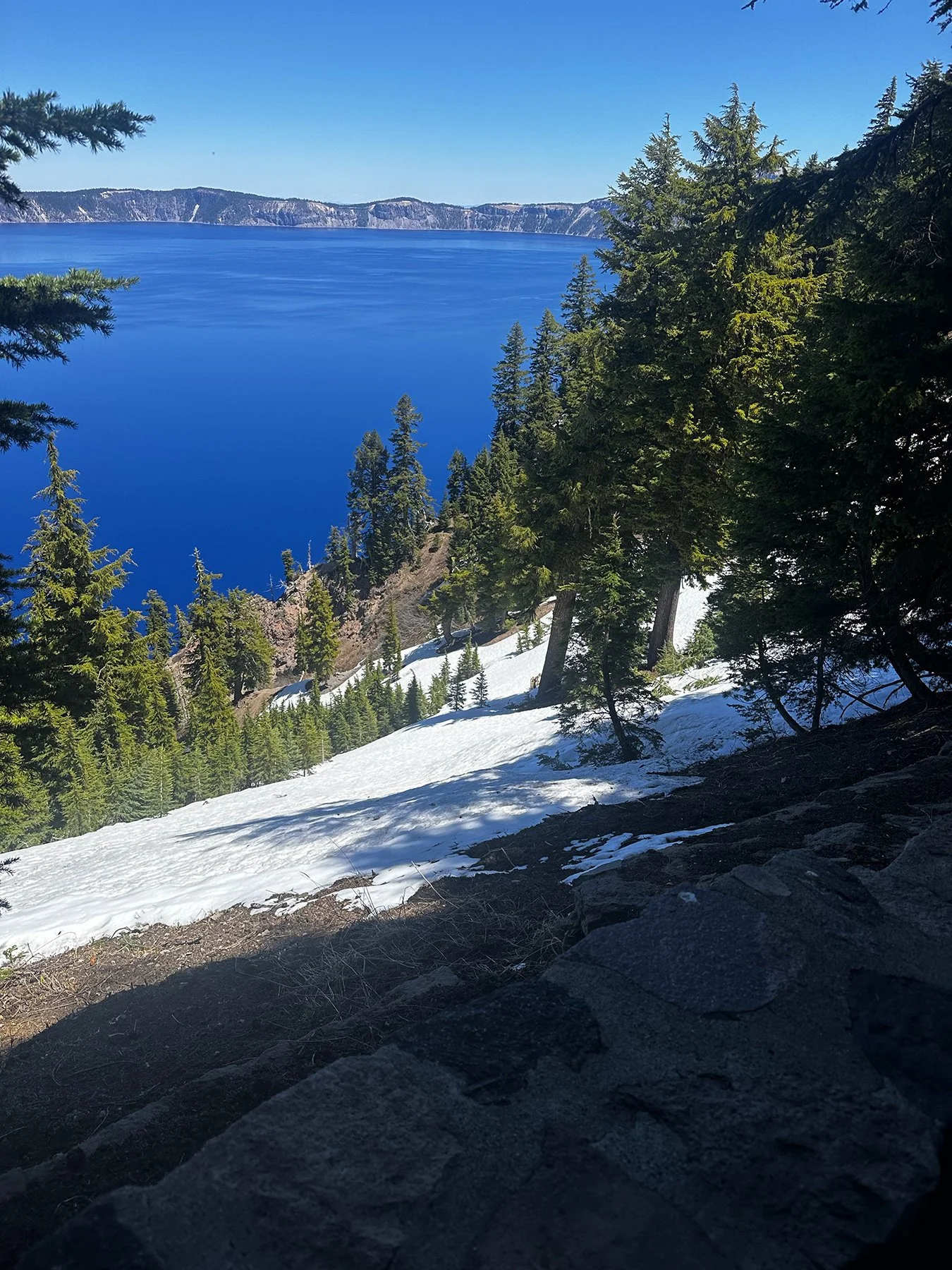
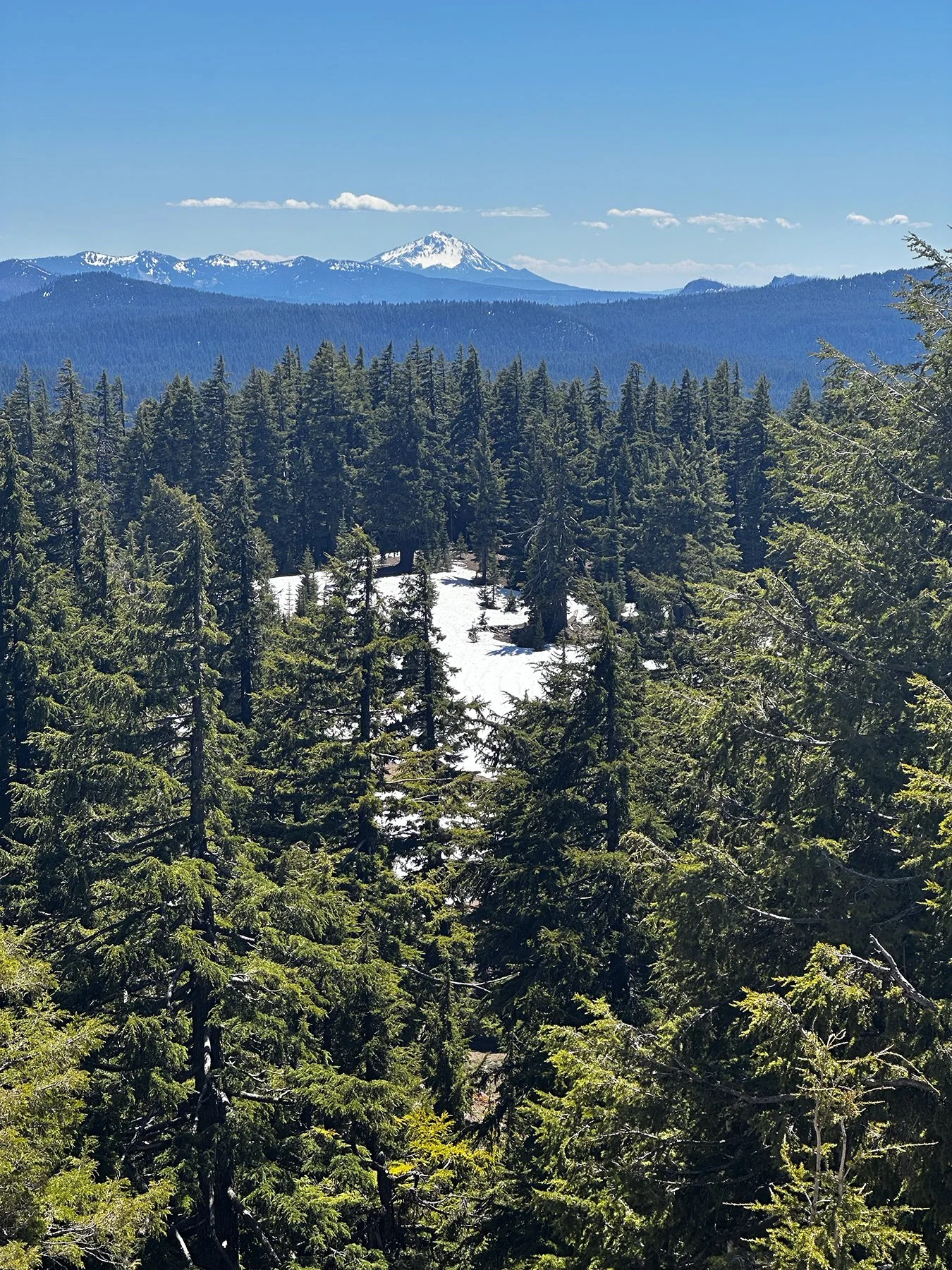
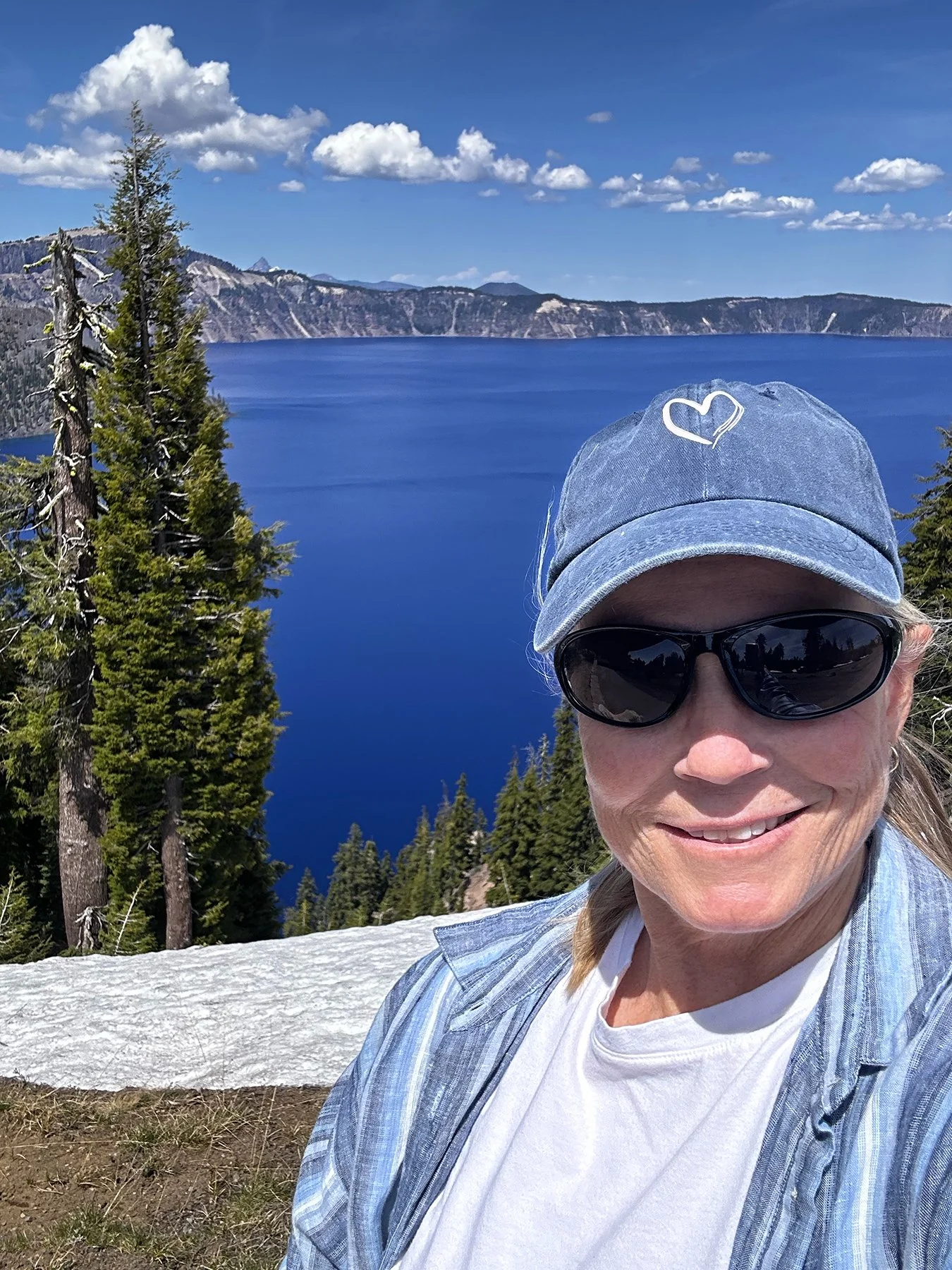
Of course, it is challenging to replicate the depth of the colors in a photo, particularly one taken with a phone, then transferred to a laptop, then uploaded to a website, then viewed on another device. But still. Hopefully these will give you a feel of the immense beauty of this area.
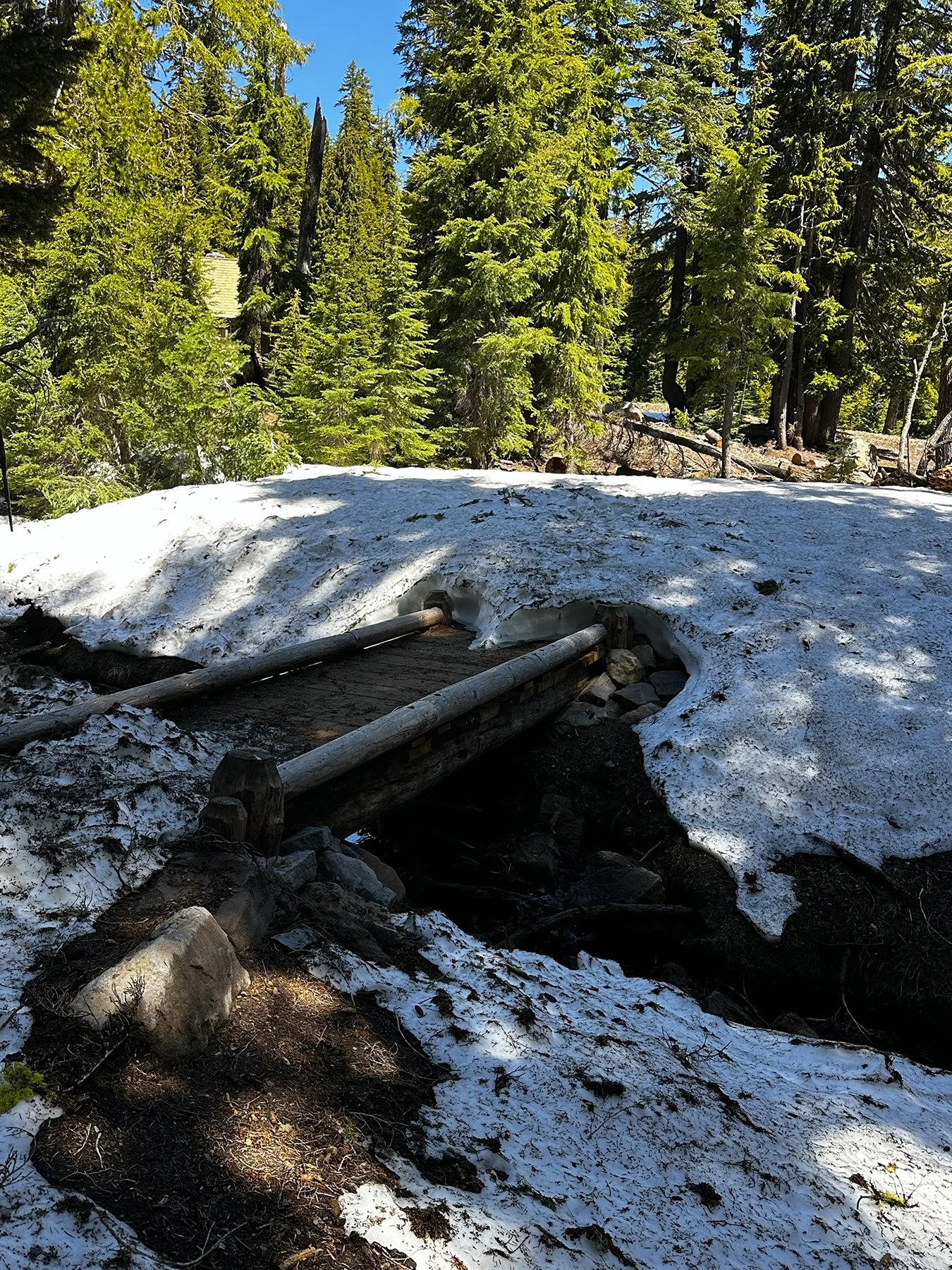
We were only able to explore one edge of the lake, from about 1,000 feet above, because even in May, there was still a fair amount of snow. So trails down the caldera wall to the level of the lake were closed, as was the 33-mile scenic drive around the rim. I nonetheless just gasped every time I turned around and caught a different angle. It really did take my breath away, time and time again!
For a quick history: There was a massive volcanic eruption and collapse 7,700 years ago that left a deep basin where a 12,000-foot volcano had grown for almost half a million years. The destruction of this mountain, now called Mazama, took only days. An initial blast sent large volumes of rock and ash skyward, blanketing the Pacific Northwest in two feet of ash. Flows of hot gas-rich lava flooded from new vents encircling the mountain, draining the magma chamber beneath and removing its support, resulting in the mountain’s collapse. Thick lava then oozed from the volcano, helping to seal the basin. Over the next three- to four-hundred years, smaller eruptions continued to help seal the floor, allowing rain and snowmelt to fill the basin and create Crater Lake. The eruption is known to be the largest in the U.S. in the last ½ million years.
Crater Lake National Park is one of the snowiest inhabited places in America. Each winter, storms from the Pacific Ocean dump an average of 42 feet of snow at Park Headquarters and more than 50 feet at Rim Village. 50 feet! The most snowfall they’ve ever had? 73 feet, back in 1932-33. Just wow.

Prospect, Oregon
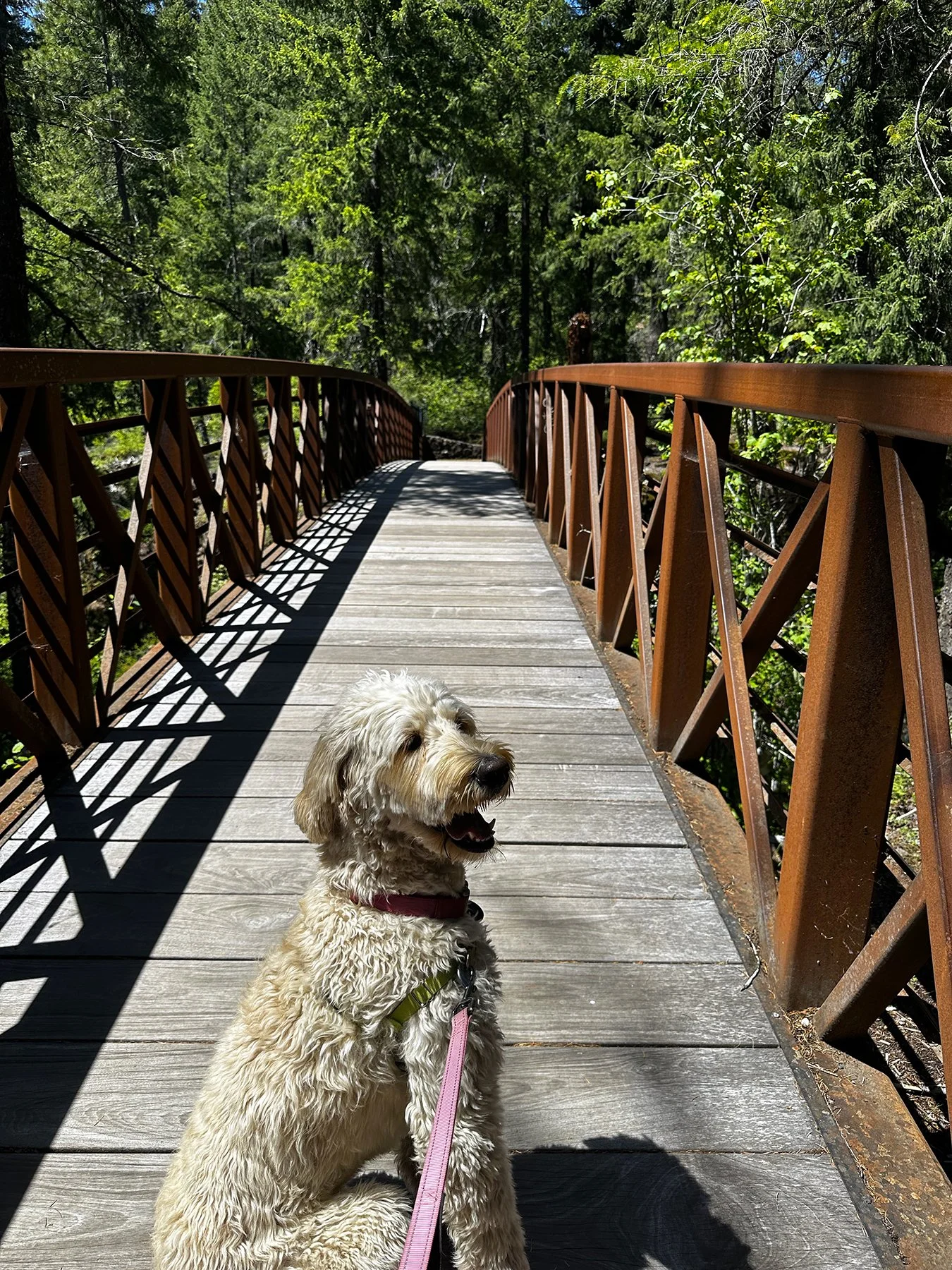
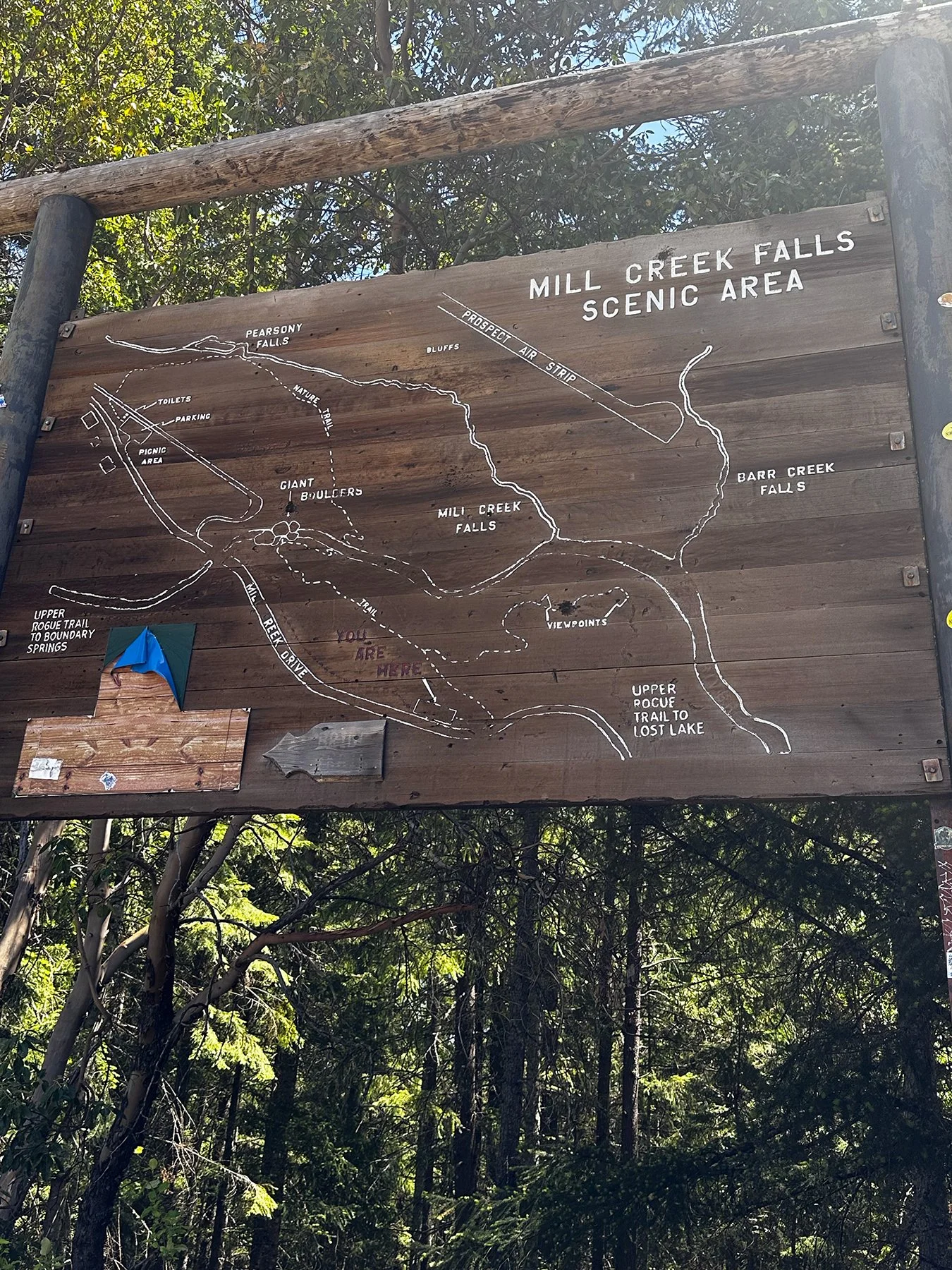
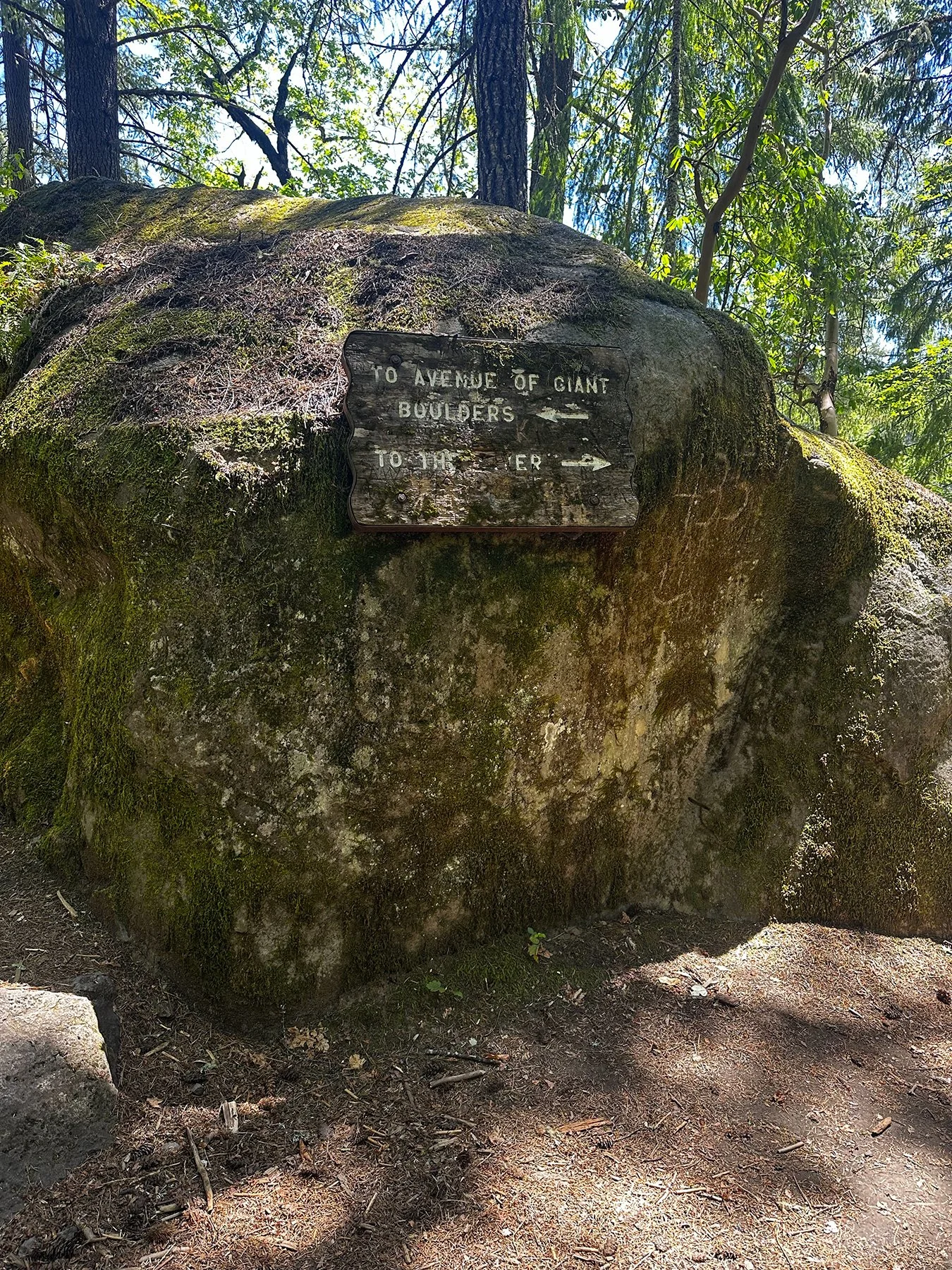
Our campsite was a good 30 miles from the park, and I was quite pleasantly surprised at the beauty all around us. We explored a number of outrageous waterfalls and hiked forested trails and giant boulders, meeting a bunch of nice people along the way.
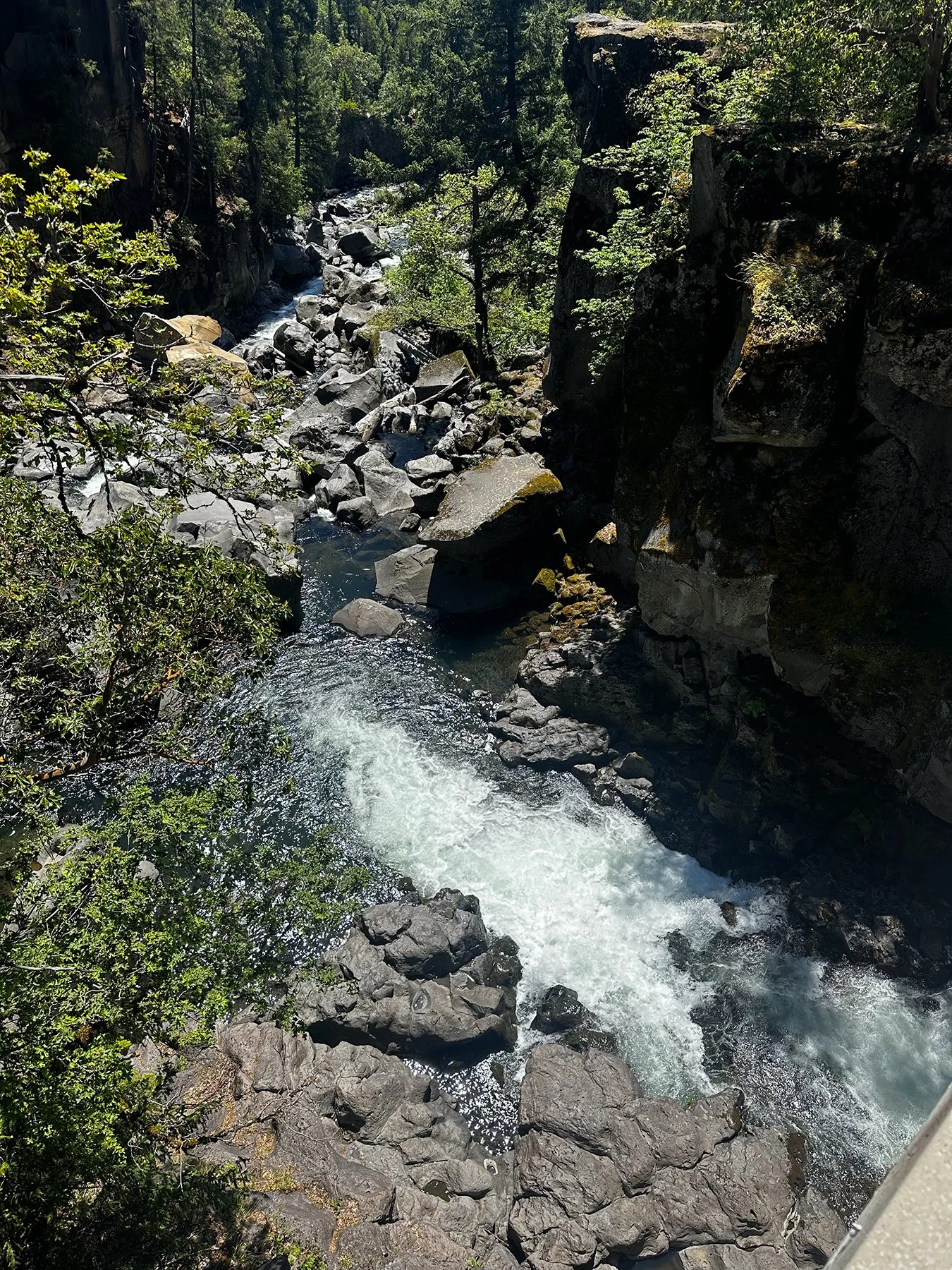
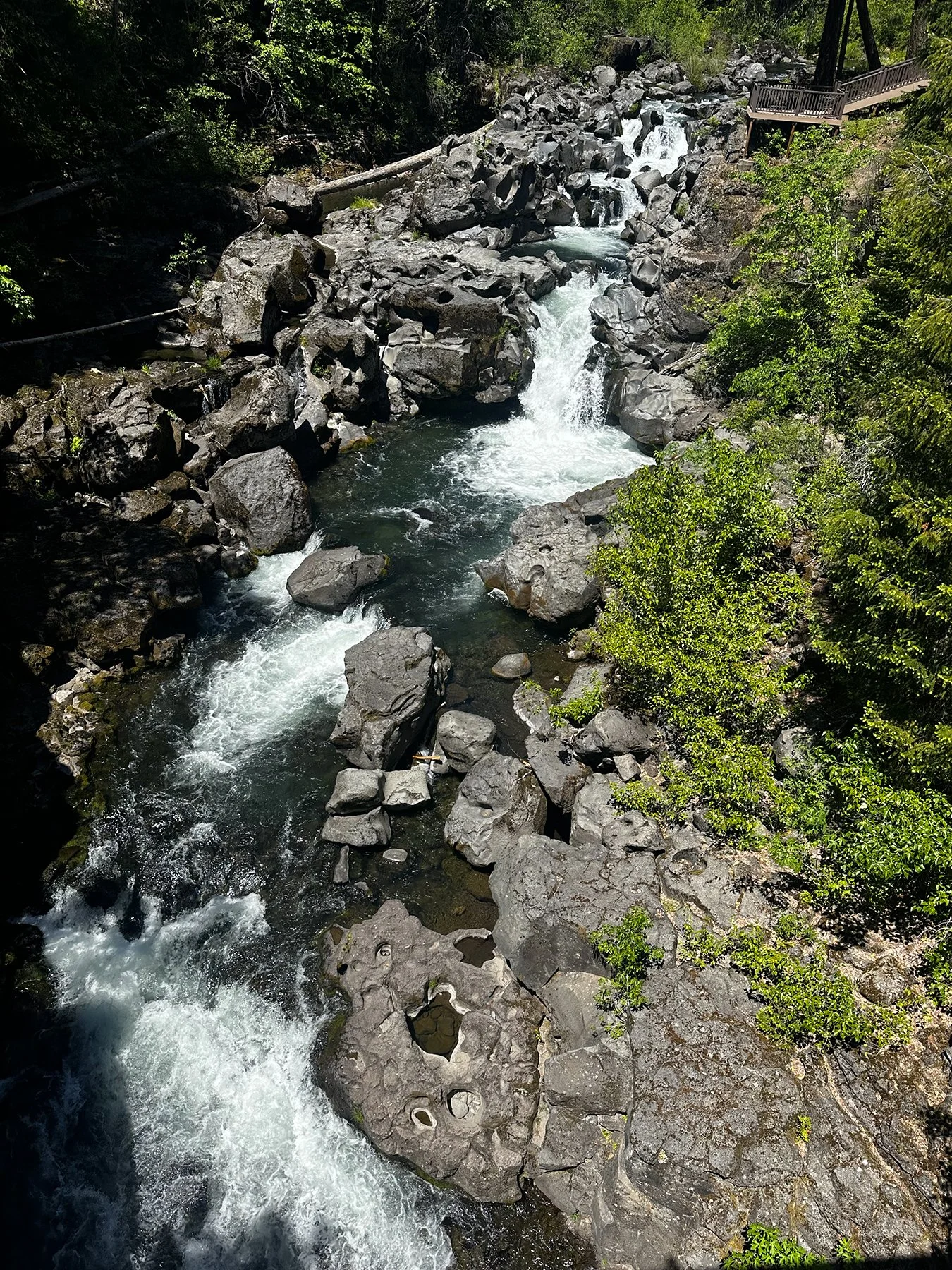
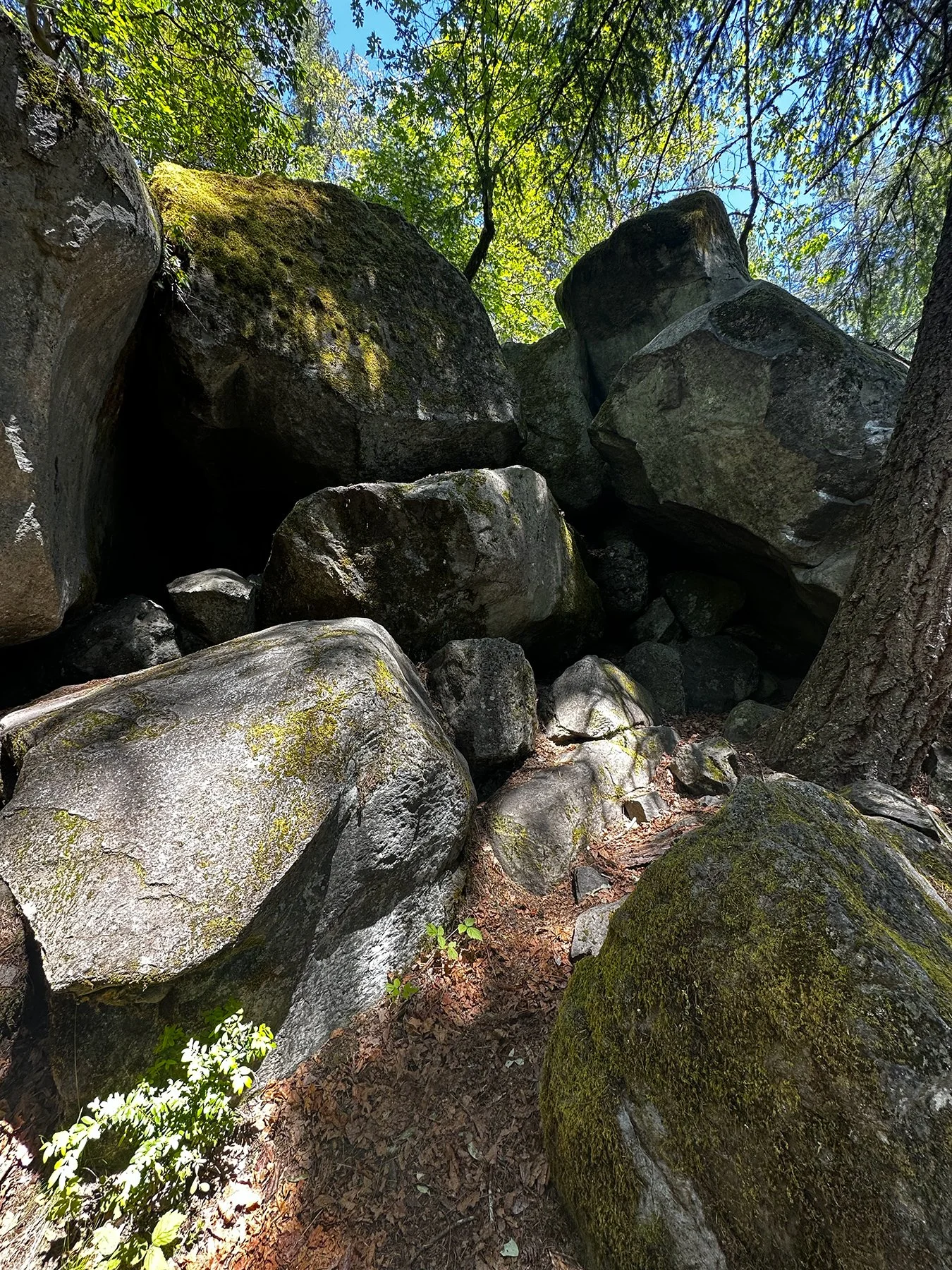
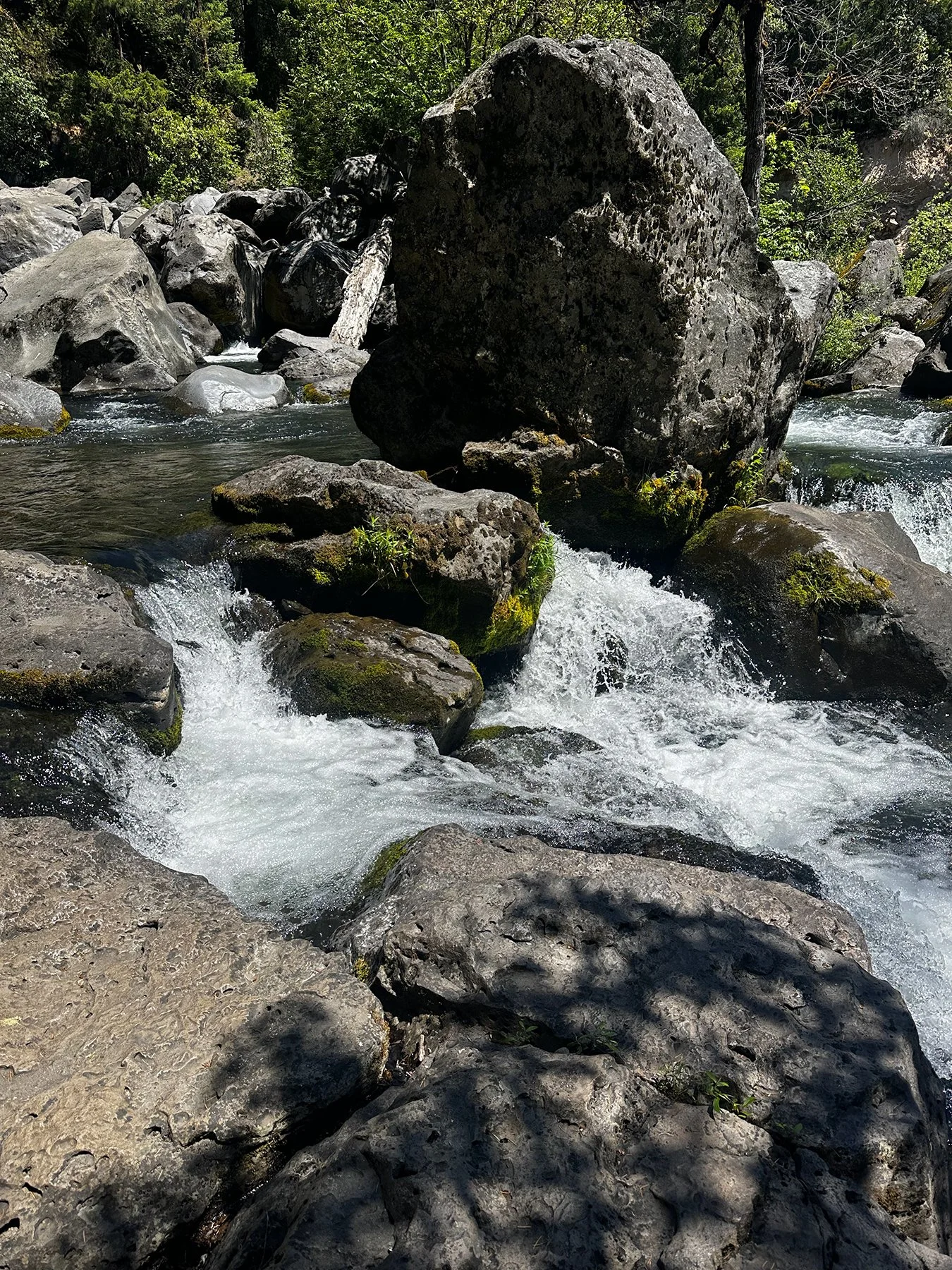
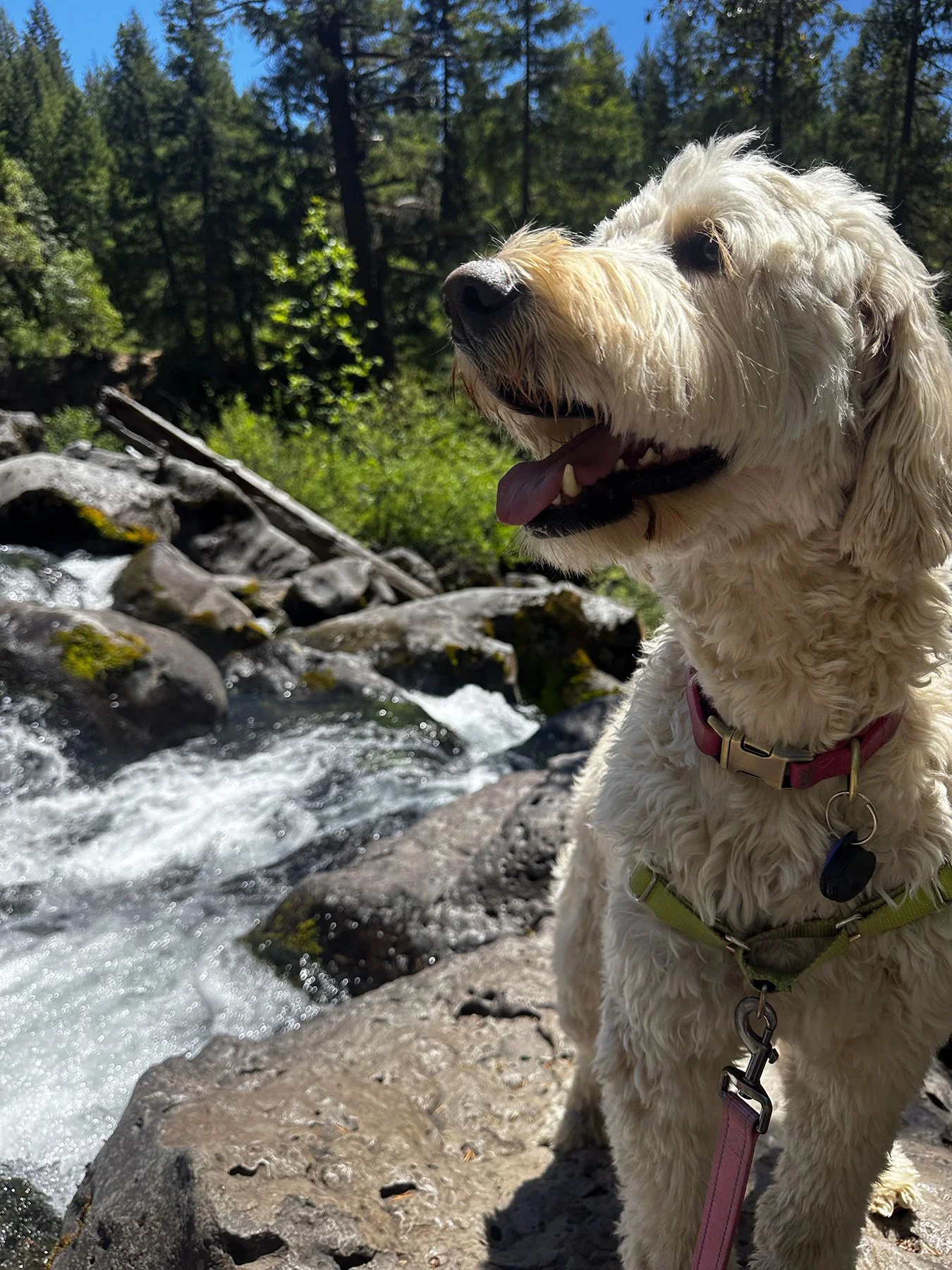
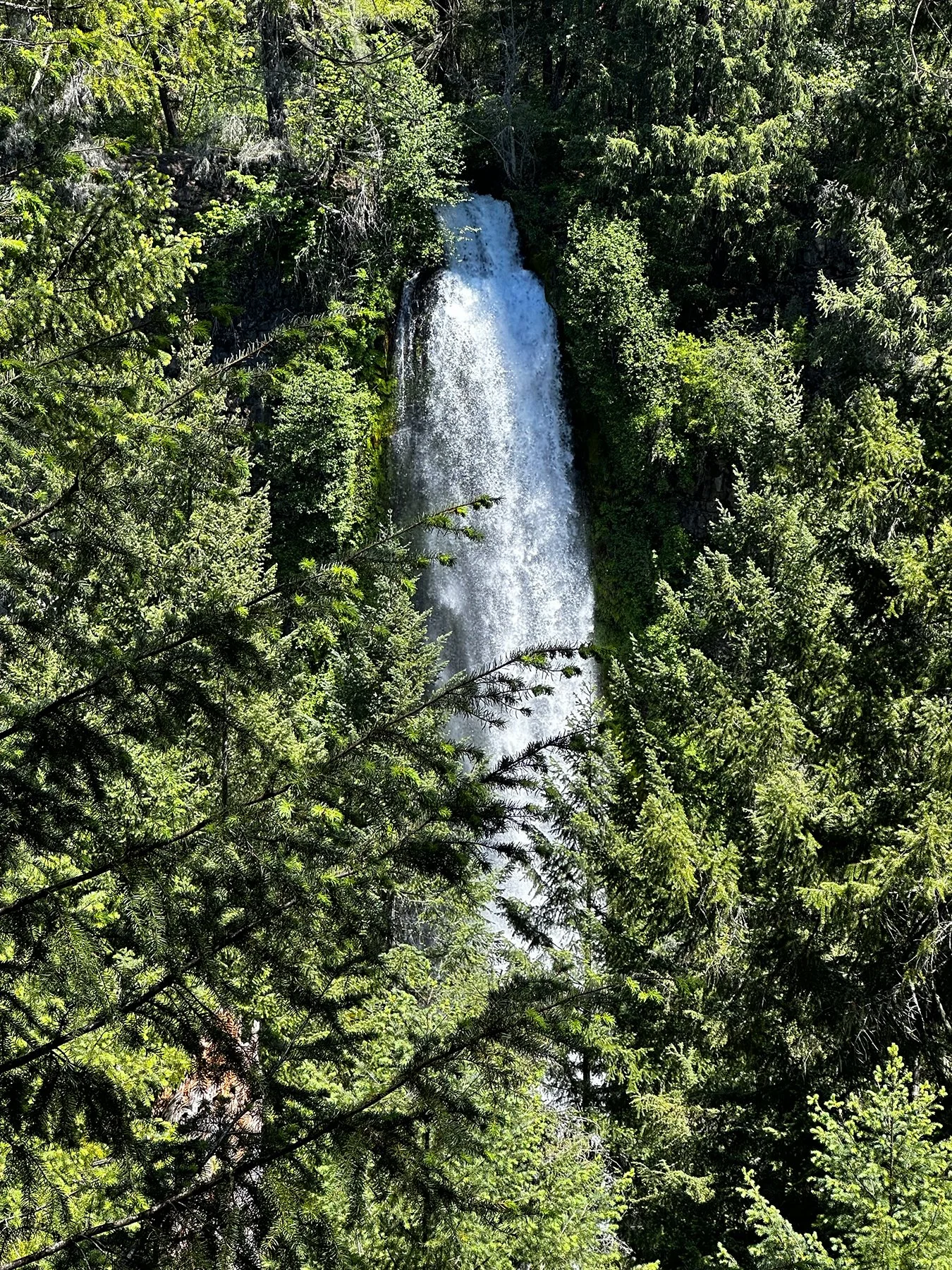
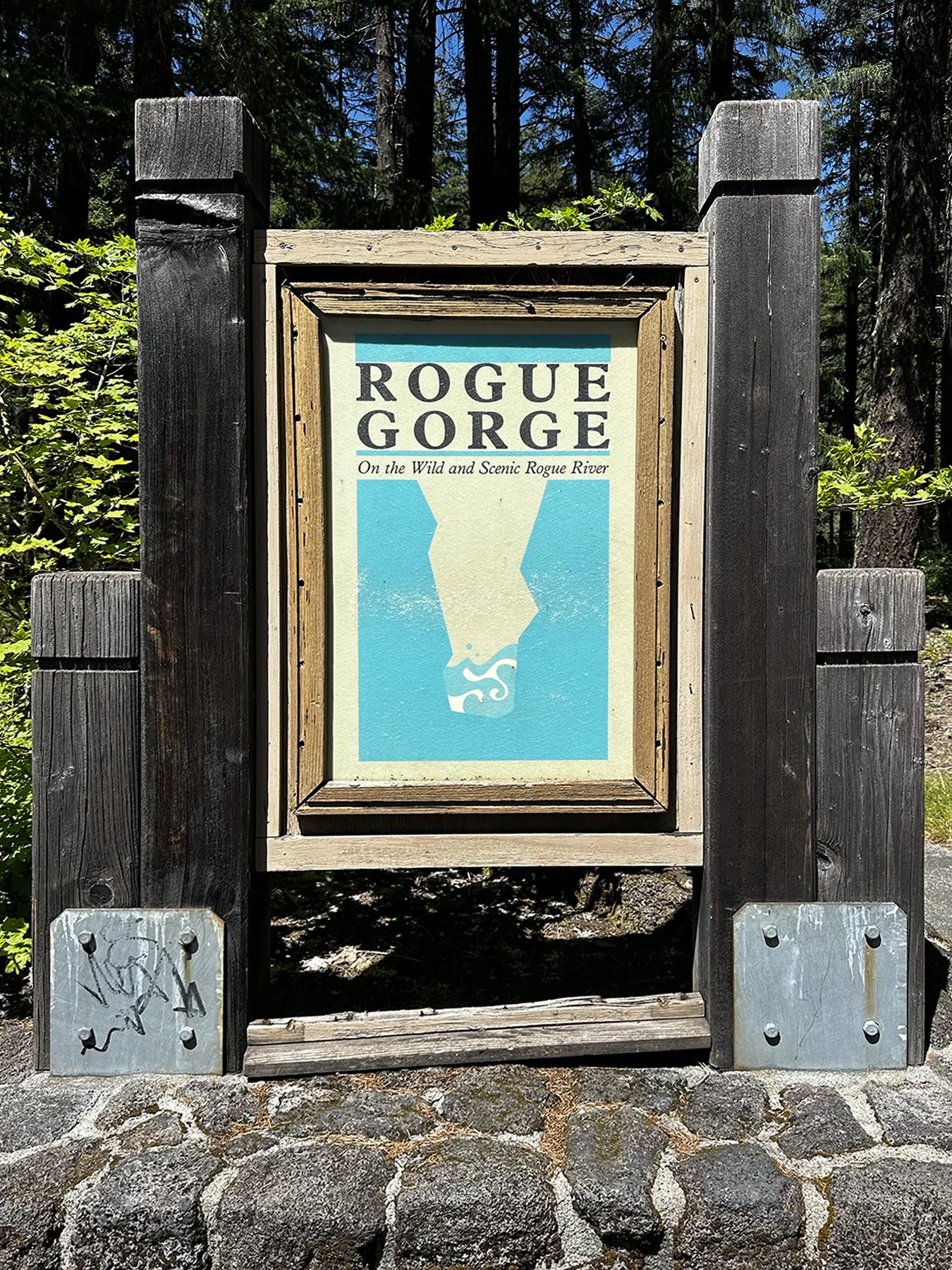
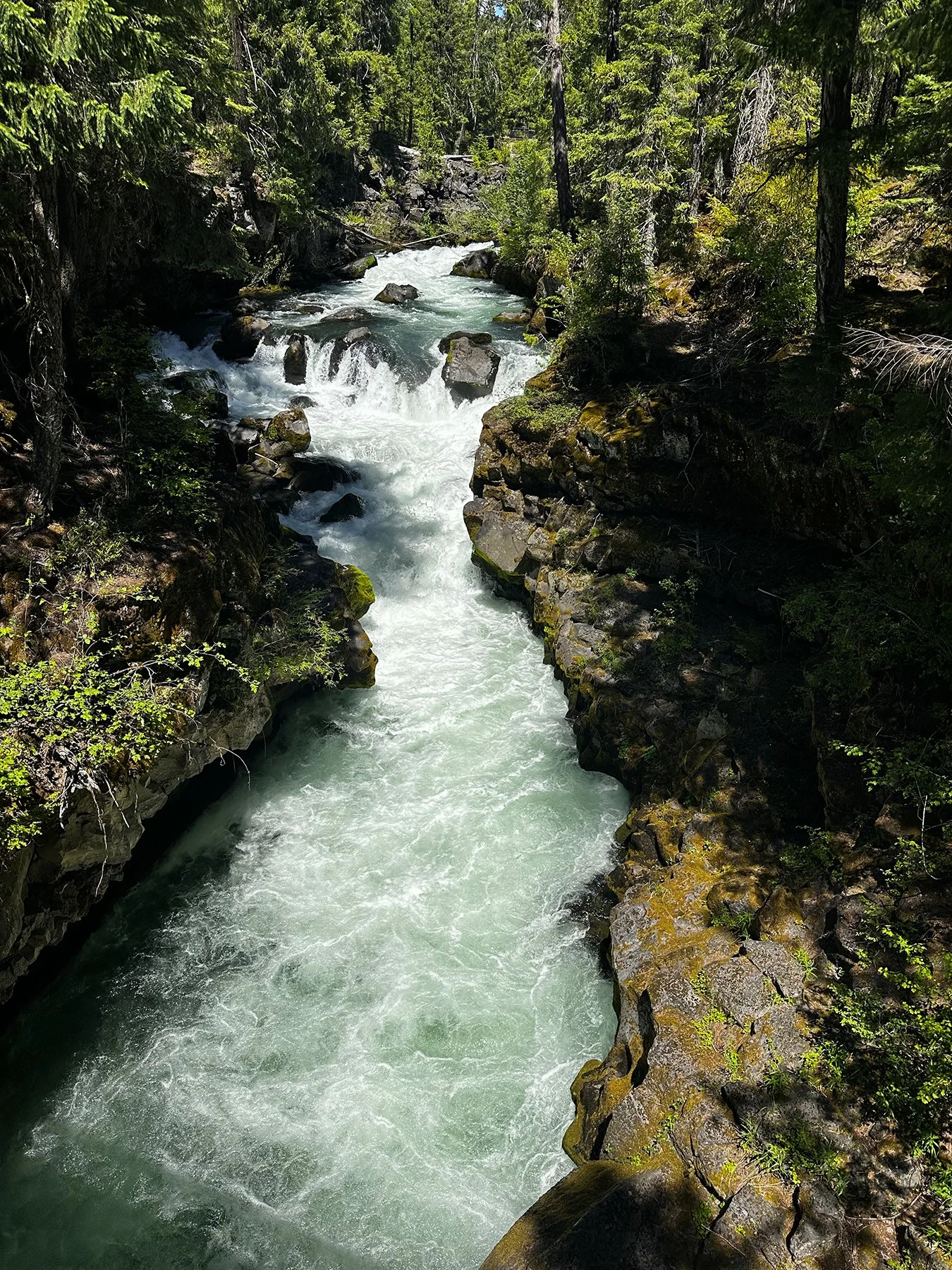
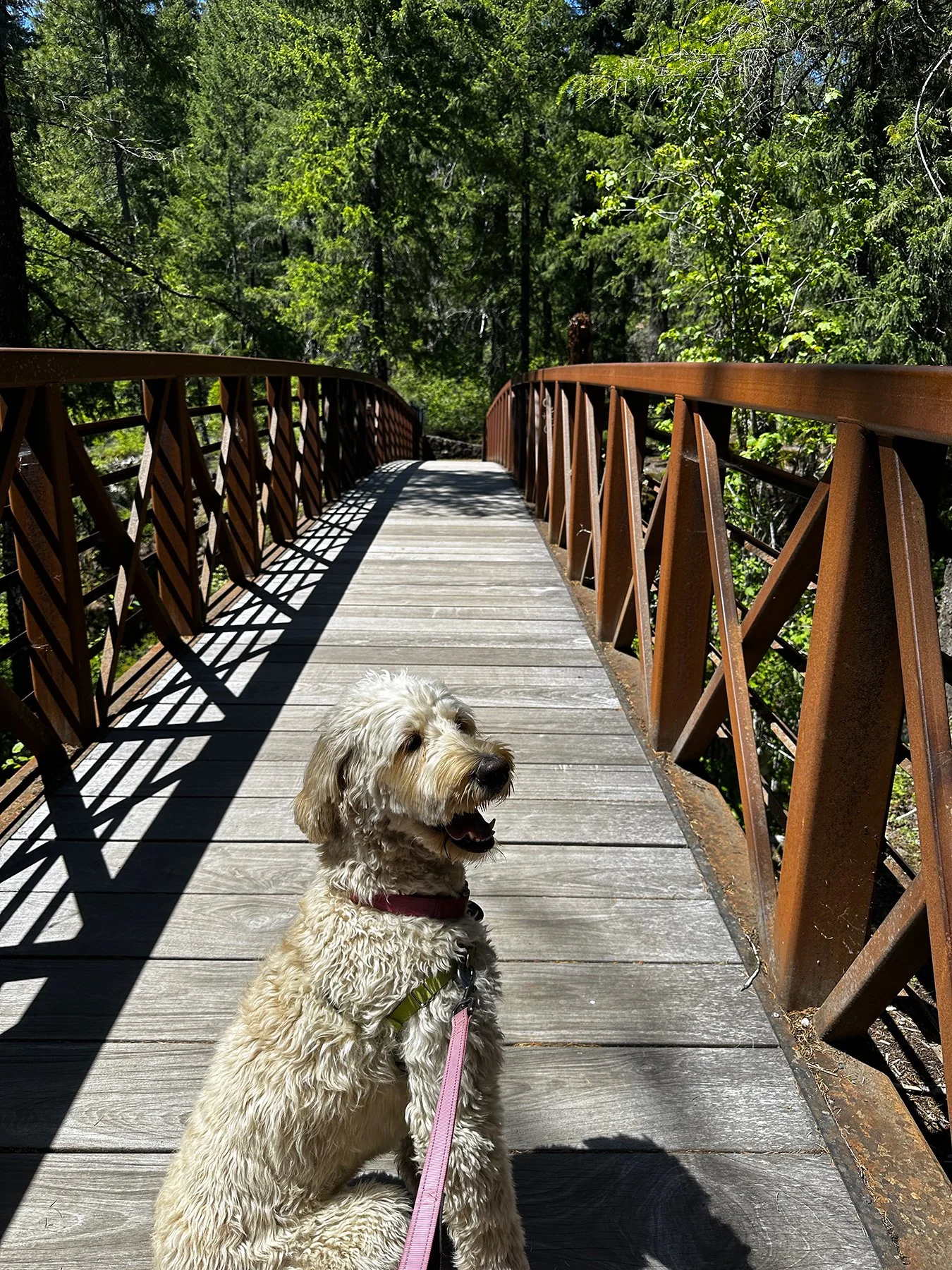
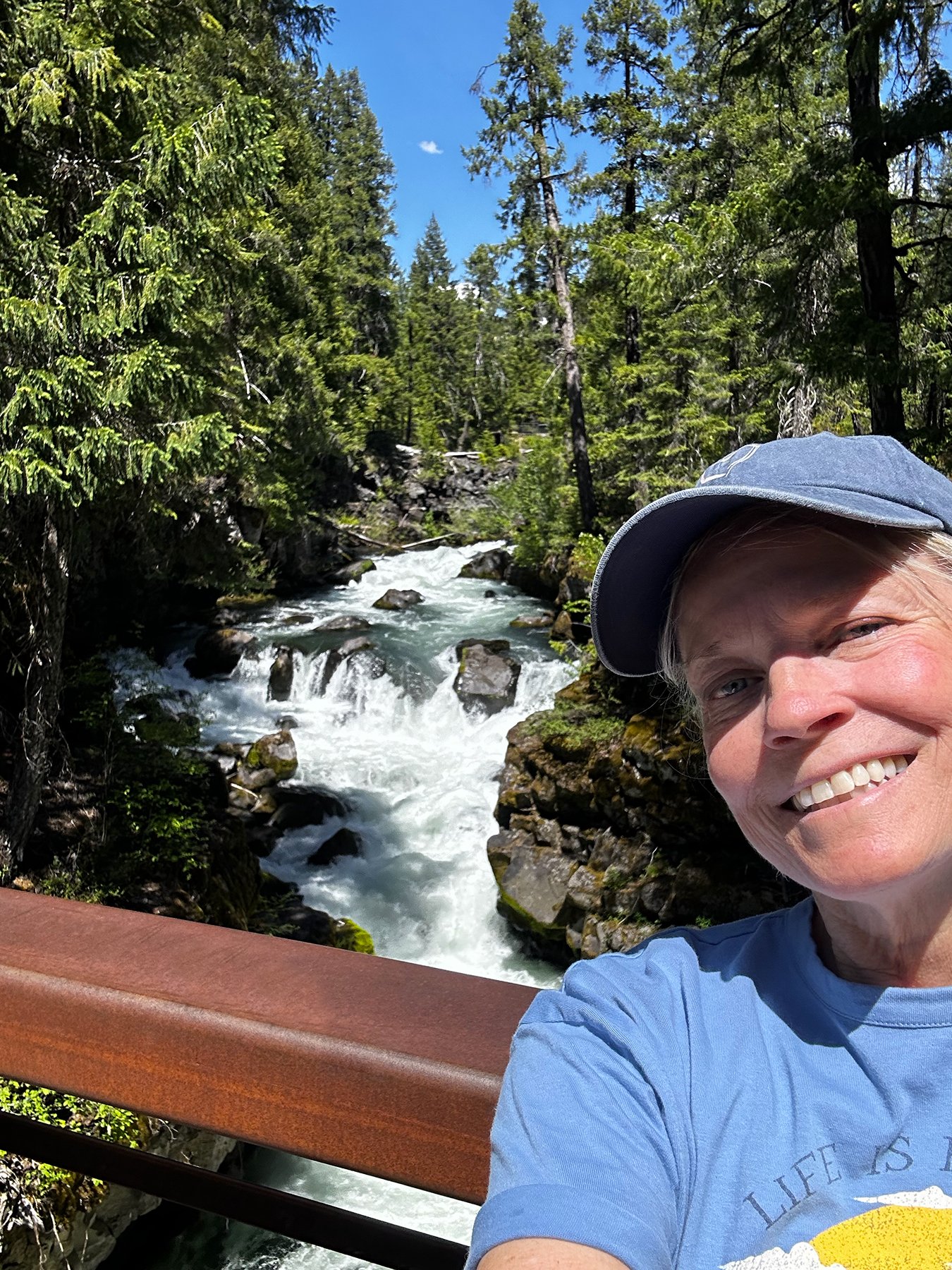
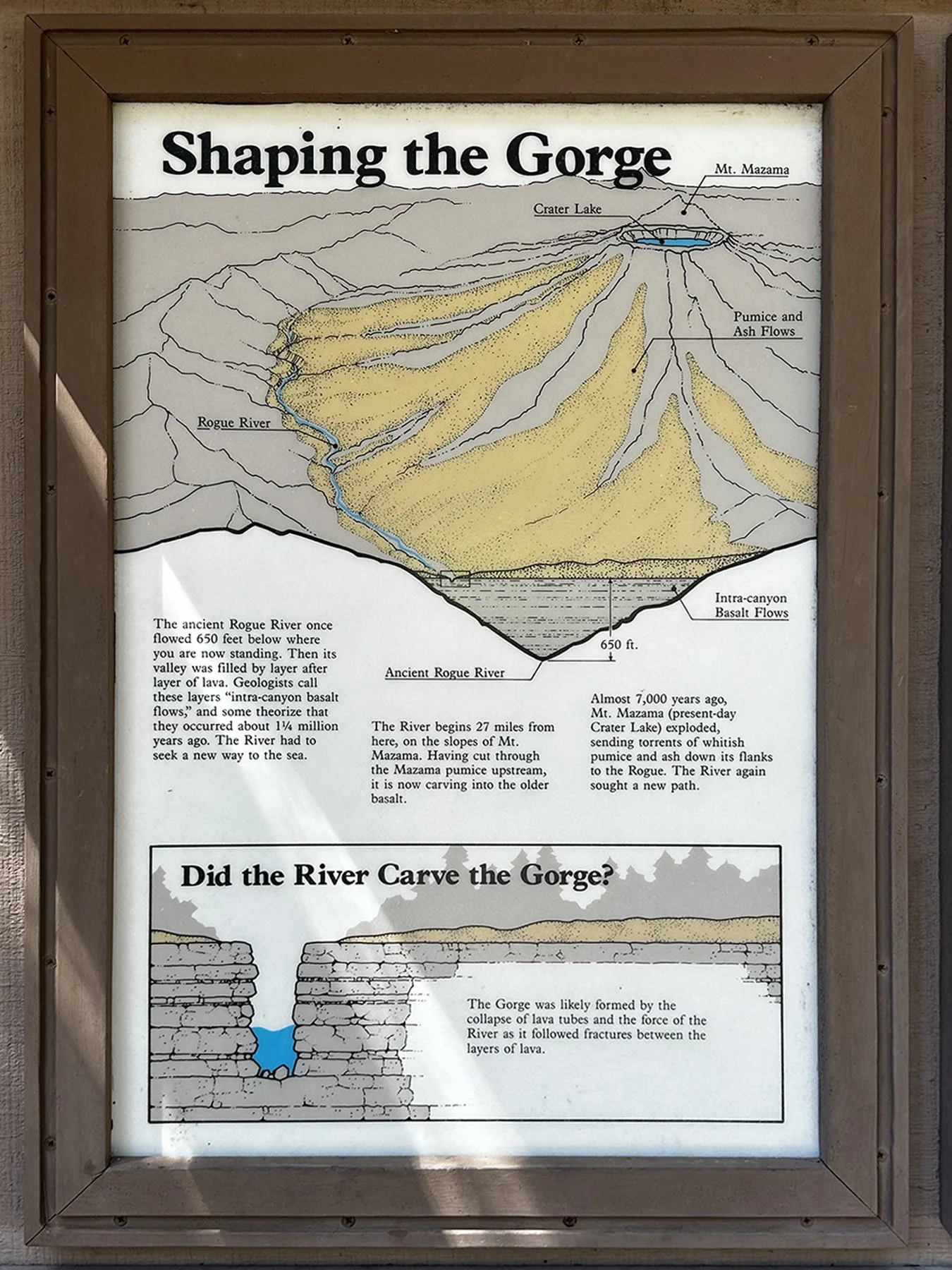
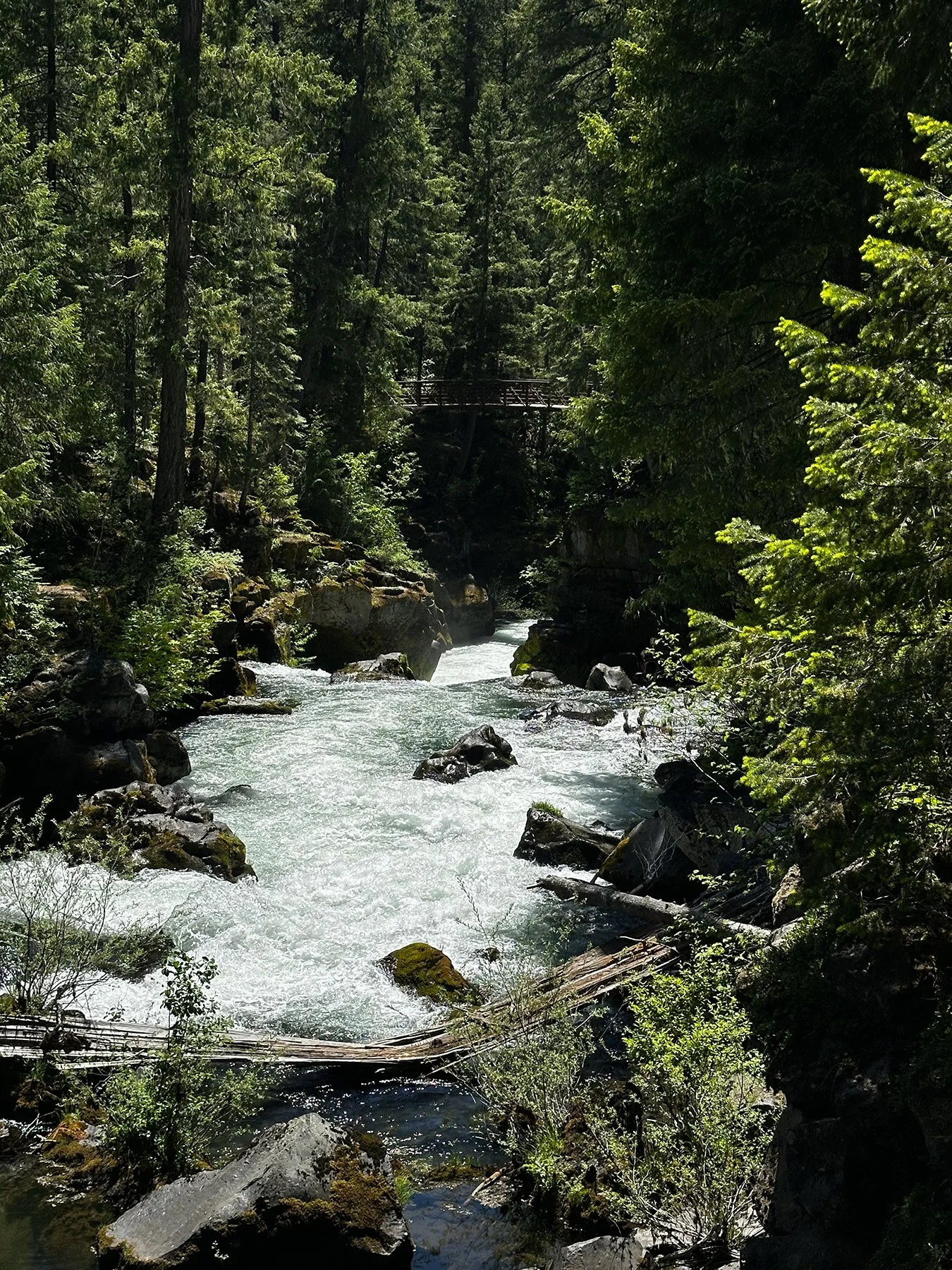
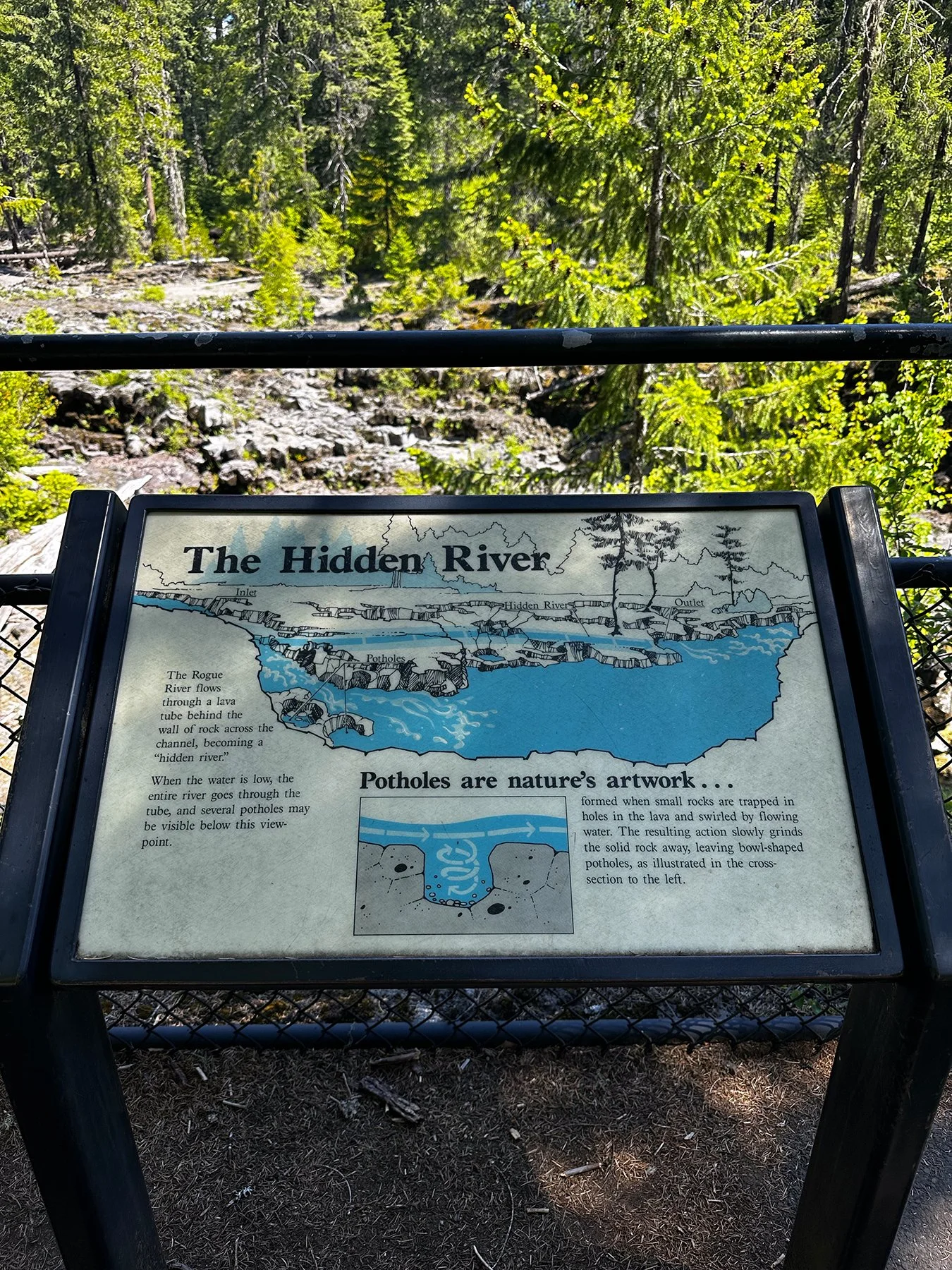
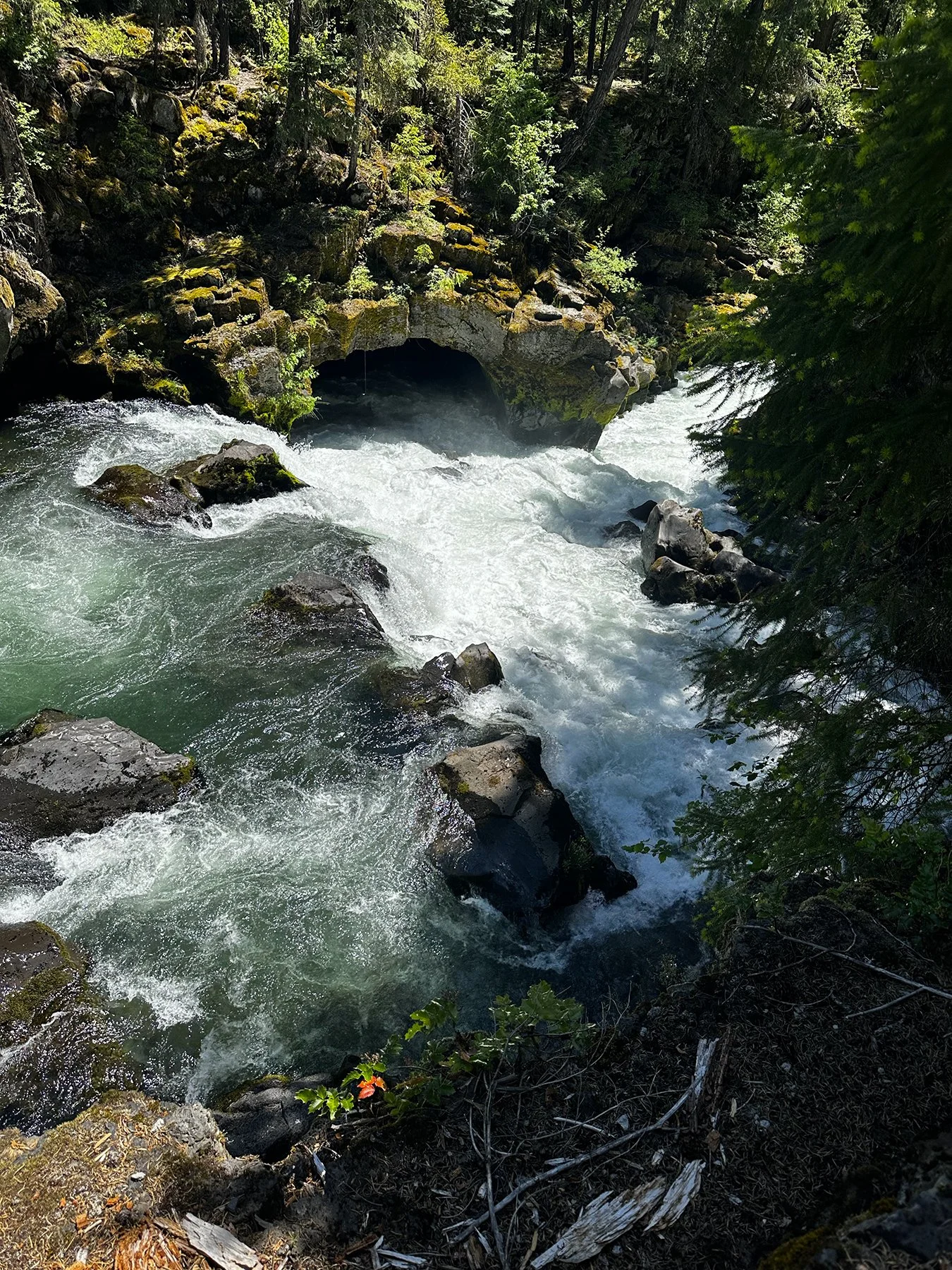
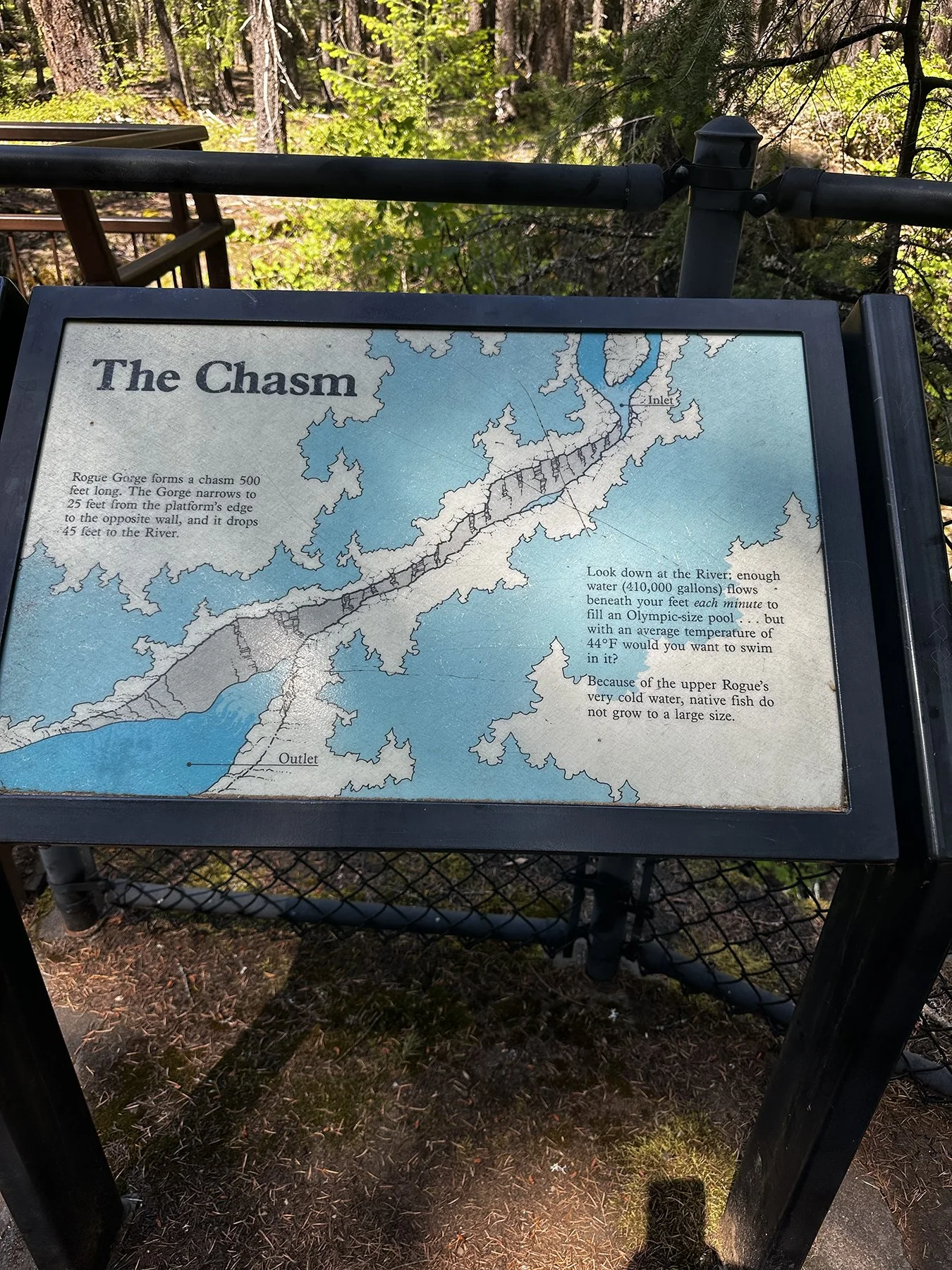
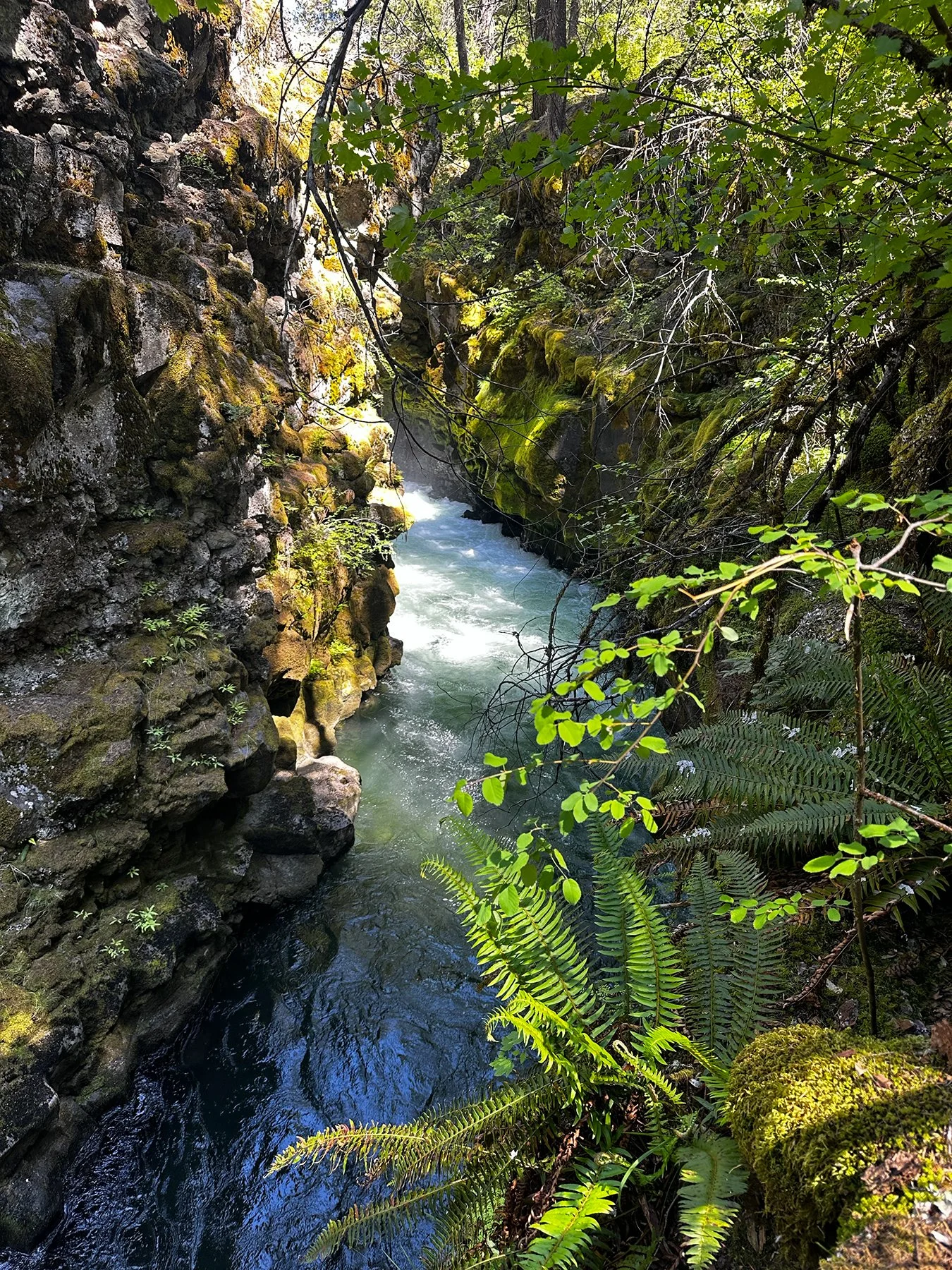
Then we ventured over to “The Wild and Scenic Rogue River.” The Rogue Gorge Trail offered spectacular views of the river and the narrow basalt canyons that it cuts through. The Rogue River is actually well-known for its nationally-recognized steelhead and salmon fishing. If I ever get back to this area, I would love to go white-water rafting further down the river. Who’s in?
On our third and final day, we headed back to Crater Lake to explore the lodge at Rim Village. What a beautiful place to sit and catch up on my blog! The huge log-and-stone building was the perfect setting for just relaxing and taking in the beauty of the lake. Overstuffed leather furniture, a massive stone fireplace (which had a glowing fire, even in May!), and beautiful lodge décor made the perfect setting to round out our trip to this amazing place.
What’s next for Maisie and me? How about the spectacular Oregon coast?